

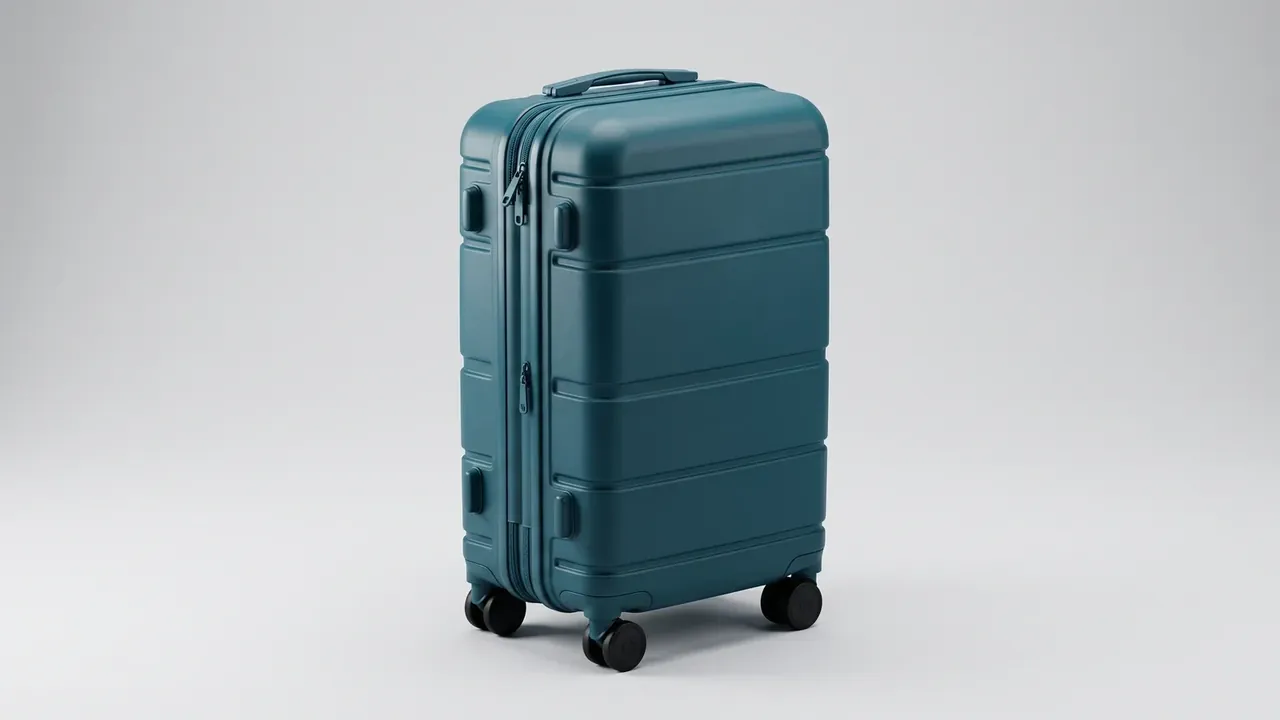
Quick answer: A Hand Carry Hard Case fails in order: gasket rebound, latch preload, hinge clearance. Run six tasks every 90 days and replace rather than patch at three lines: squeeze below 20 percent, latch tip worn past 0.5 mm, bore clearance over 0.3 mm.
Table of contents
- The 90-Day Inspection Grid
- Cleaning and Gasket Care in Three Moves
- Wear Limits for Latches and Hinges
- Three Signals That Mean Replace, Not Repair
- FAQ
1. The 90-Day Inspection Grid
A Hand Carry Hard Case rarely dies at once: gasket, latches, then hinge, over about 18 months.
The 90-day beat comes from rubber: compression set hits seventy percent of its final value in three months.
| Interval | Task | Pass mark | If it fails |
|---|---|---|---|
| 90 days | Wipe shell, blow out rim groove | no grit in groove | clear it |
| 90 days | Apply 5 g silicone grease | gasket looks satin | reapply, not oil |
| 180 days | Measure latch tip | wear 0.5 mm or less | swap the latch |
| 365 days | Check hinge bore | clearance 0.3 mm or less | swap pin or lid |
| 365 days | Retorque handle bolts | 2.8 N·m | replace insert |
Each number maps to one motion. A 0.5 mm flat on the latch tip drops closing force from 320 N to 200 N. The gasket then stops reaching 25 percent squeeze. A 0.3 mm gap between pin and bore lets the lid rock, which shears the gasket instead of compressing it. A summer at 60 °C doubles the set. Below -20 °C the rubber cracks on opening.
2. Cleaning and Gasket Care in Three Moves
Cleaning removes grit, it does not make the shell look new. A Hand Carry Hard Case tolerates neutral detergent, not a pressure washer.
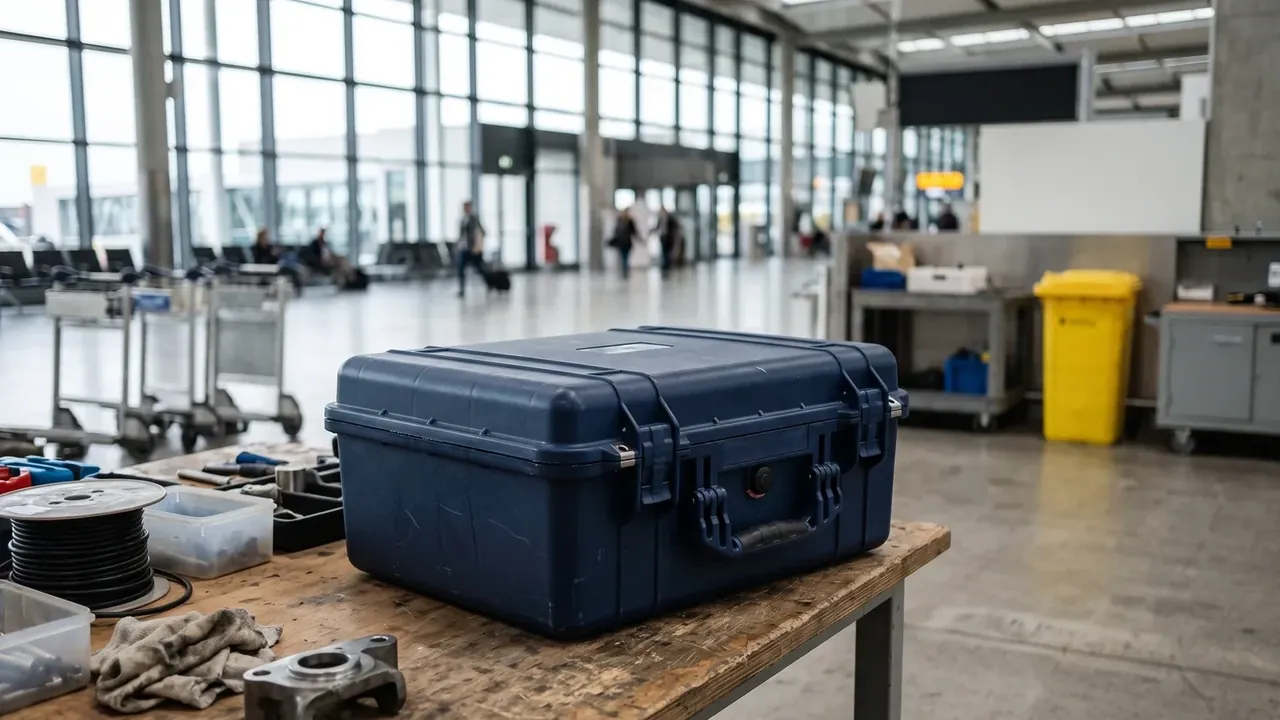
- Wipe: water under 40 °C, one drop of neutral detergent, cloth in one direction.
- Blow: air or a soft brush along the rim groove, pushing grit out rather than in.
- Grease: a thin silicone film, left ten minutes, then buffed dry.
- Avoid: alcohol, thinner and strong alkali, which cloud a PC shell.
The gasket is the only part that ages alone. It works by squeeze: 25 to 30 percent compressed at the rim, rebound doing the sealing.
Do not close the lid right after washing; water in the groove seeds mould within a week.
3. Wear Limits for Latches and Hinges
Metal parts wear rather than snap, and past a threshold they cannot hold the rim.
| Part | How to measure | Limit | Symptom |
|---|---|---|---|
| Latch tip | dial caliper on the arc | 0.5 mm wear | two presses to catch |
| Latch spring | ten open-close cycles | no sticking | no spring back |
| Hinge pin | feeler gauge in the bore | 0.3 mm clearance | lid rocks at 90 degrees |
| Hinge seat | look and press | no white marks | hairline at the root |
| Handle bolt | torque wrench | 2.8 N·m | creak when lifted |
Measure the flat at the crown: a new tip is a point, a worn one carries 0.5 mm where slipping starts. One missed spring return in ten cycles means replacement.
Hinge clearance grows by itself, steel pin against plastic seat; once a 0.3 mm feeler enters, a new pin will not help.
4. Three Signals That Mean Replace, Not Repair
If a part unbolts, replace it; if it is moulded into the shell, do not patch it.
A moulded-in handle that snaps can be glued for two weeks, then fails at the same root.

A bright band wider than 3 mm on the gasket means replacement. Radial crazing at a latch base means a new lid. A white mark 10 mm up the wall at the hinge seat means the case is finished.
Lid and base are moulded as a set, so a new lid needs a new gasket; the old one carries the shape of the old rim. Stock spares by model, not size.
Records outrank spares: tape a card inside each case with the in-service date and three replacement dates.
Conclusion
Hand Carry Hard Case care is a schedule, not a repair skill: clear the rim at 90 days, measure the latch tip at 180, check the bore at 365, and swap parts when a line is crossed. Log every replacement date; that record sets the specification for the next Hand Carry Hard Case.
This article discusses only the container (case body) side of specifications and design intent, and does not cover any handling, loading or use of the contents.
Related Reading
- How handle, hinge and latch share the load
- Sealing and re-commissioning checks for reserve cases
- Wheel and telescopic handle care for hard-shell luggage
Related Products
- 8 Series — Gun Cases; Military Equipment Cases; Camera Equipment Cases; Drone Cases; Watch Cases; Knife Cases; First Aid Cases; Electronics Equipment Cases
- WL8-2812 PP Gun Case — model WL8-2812
- All protective cases and toolboxes: 7 series, 158 models