

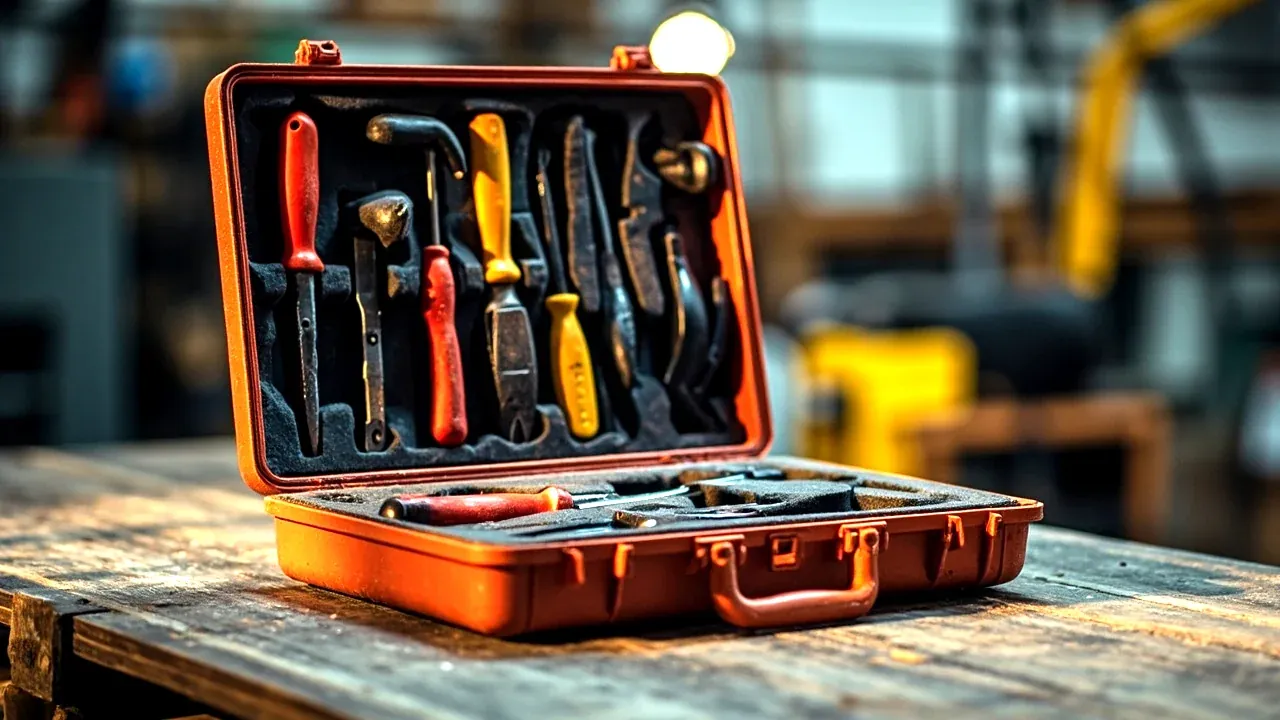
Quick answer: The difference between a hand tools case and a storage bin is not material but position: a case gives every hand tool a fixed slot so a missing item shows at once, while a bin only gives space and lets tools overlap. The case buys counting speed and pick-up order, and pays for it in fixed slots.
Table of contents
- Defining a hand tools case: position beats capacity
- Cut foam: shape, depth and finger room
- Counting: checklists, empty slots and seals
- Structure: hinge, latch and corner protection
- When a storage bin is the better answer
- FAQ
1. Defining a hand tools case: position beats capacity
A hand tools case is a storage unit that reserves a position per item. Its starting point is not capacity but whether each tool has a home: a slot for drivers, one for pliers, holes sized by wrench length. With positions fixed, a missing, misplaced or unreturned tool shows at once.
That makes a case hold less than a bin of the same size — cut foam costs twenty to thirty percent of the volume. What it buys is counting time falling from minutes to seconds.
| Item | Hand tools case | Storage bin |
|---|---|---|
| Space use | 70 to 80 percent | 95 percent plus |
| Counting | seconds, scan the slots | minutes, dig through |
| Re-configuration | new liner needed | none |
| Tolerance for misplacement | low, one slot each | high, anywhere |
2. Cut foam: shape, depth and finger room
Cut foam has three parameters: outline, depth and finger room. The outline runs one to two millimetres larger than the tool — too tight and it cannot be lifted, too loose and it rattles; depth runs seventy to eighty percent of tool thickness. Finger room, the small void beside the slot, is the one most often skipped.
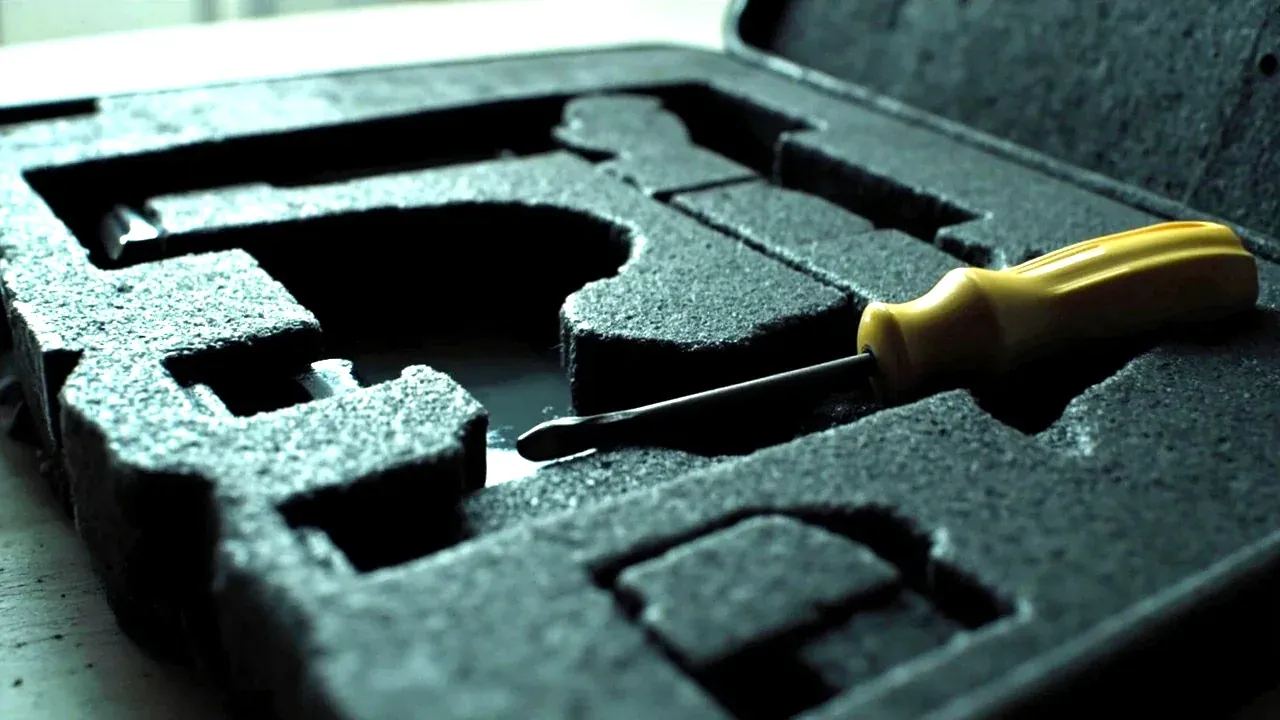
Materials are usually polyethylene or EVA. Polyethylene is hard, abrasion-resistant and holds shape, good for heavy pieces; EVA is soft and conformal, good for instruments. Mixing them in one case is common.
3. Counting: checklists, empty slots and seals
Counting relies on three things: the checklist, the empty slot itself, and the seal. The checklist states what should be there, the empty slot turns a shortage into a visual signal, and the seal proves the case was not opened after a given time.
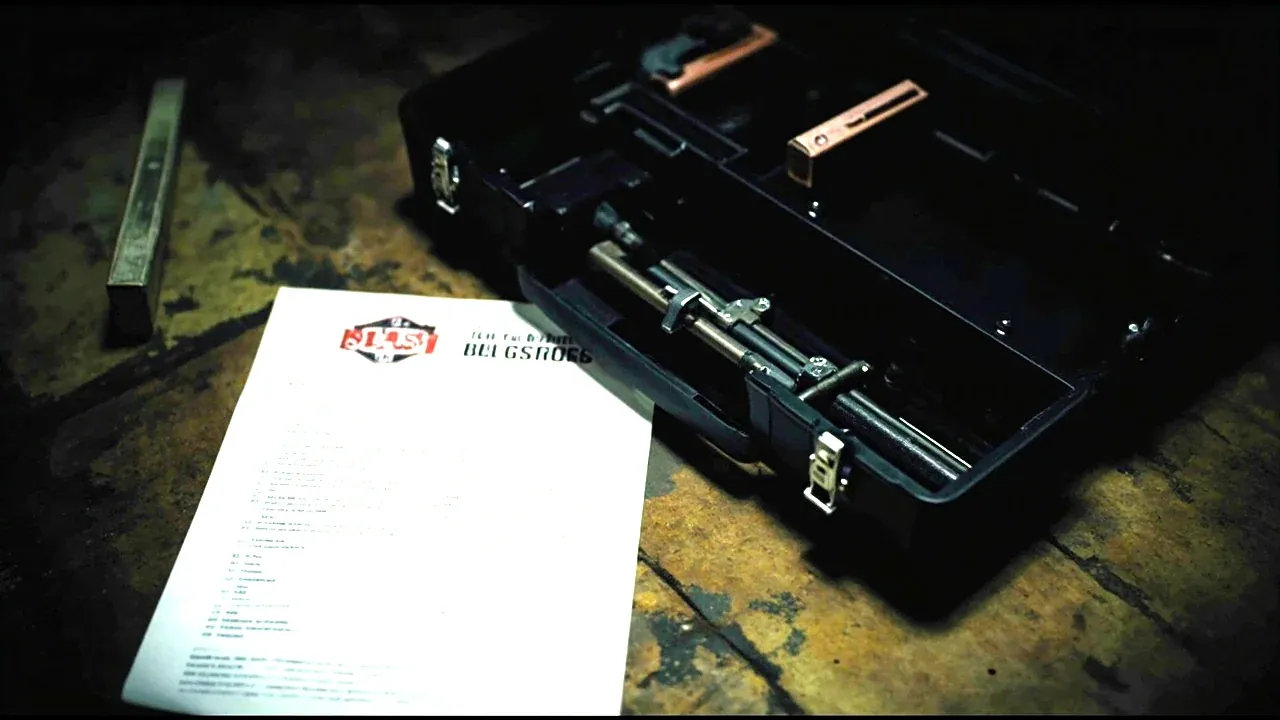
The order is: open and scan for empty slots, check numbers against the list, seal at close. The seal is what makes accountability possible; without it a shortage is answered from memory.
4. Structure: hinge, latch and corner protection
The body must do three things: hold the lid open, clamp it shut, and cushion the corner that lands first. Holding needs a hinge damper or stay, clamping needs latch and rim to meet, cushioning needs corner bumpers or thickened corners.
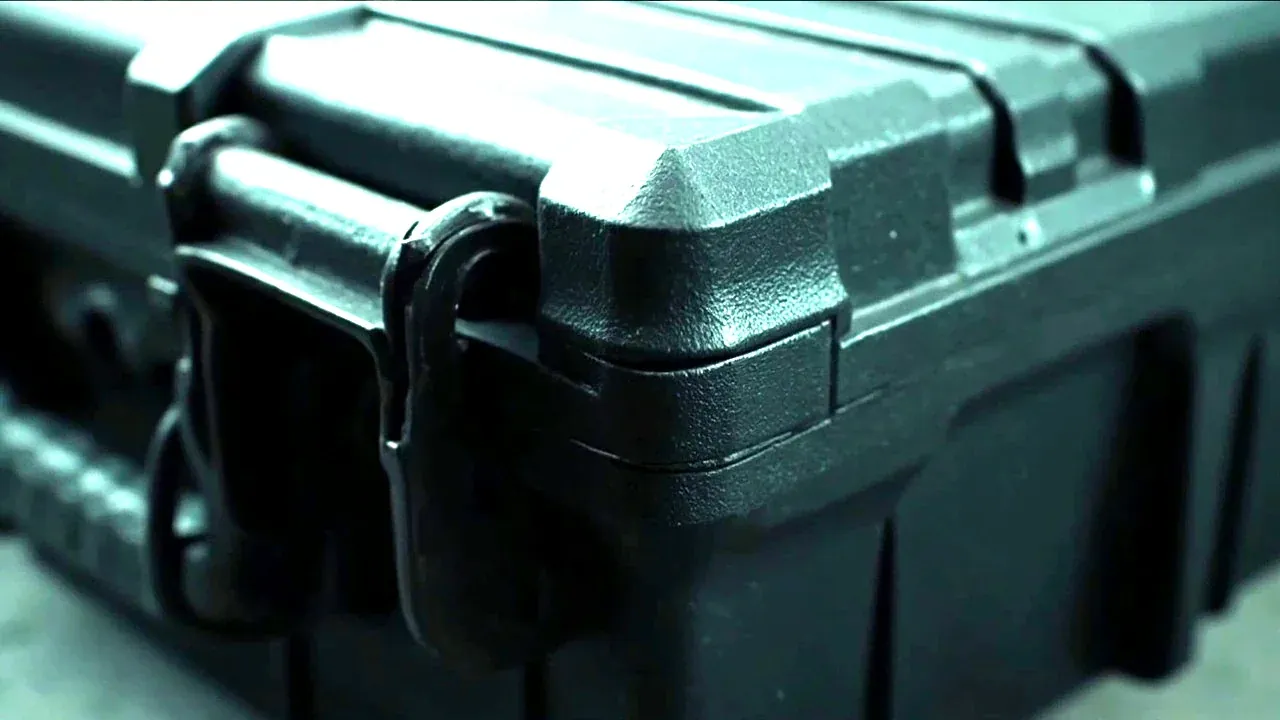
One detail: lid clearance. Tools that stand upright need matching recesses inside the lid, otherwise closing presses their tops. A thin foam layer in the lid exists to absorb exactly that.
5. When a storage bin is the better answer
A hand tools case is not universal. A bin wins in three situations: the count keeps growing, tool sizes change often, or the case is moved as a whole without item counting. In all three, space is worth more than position.
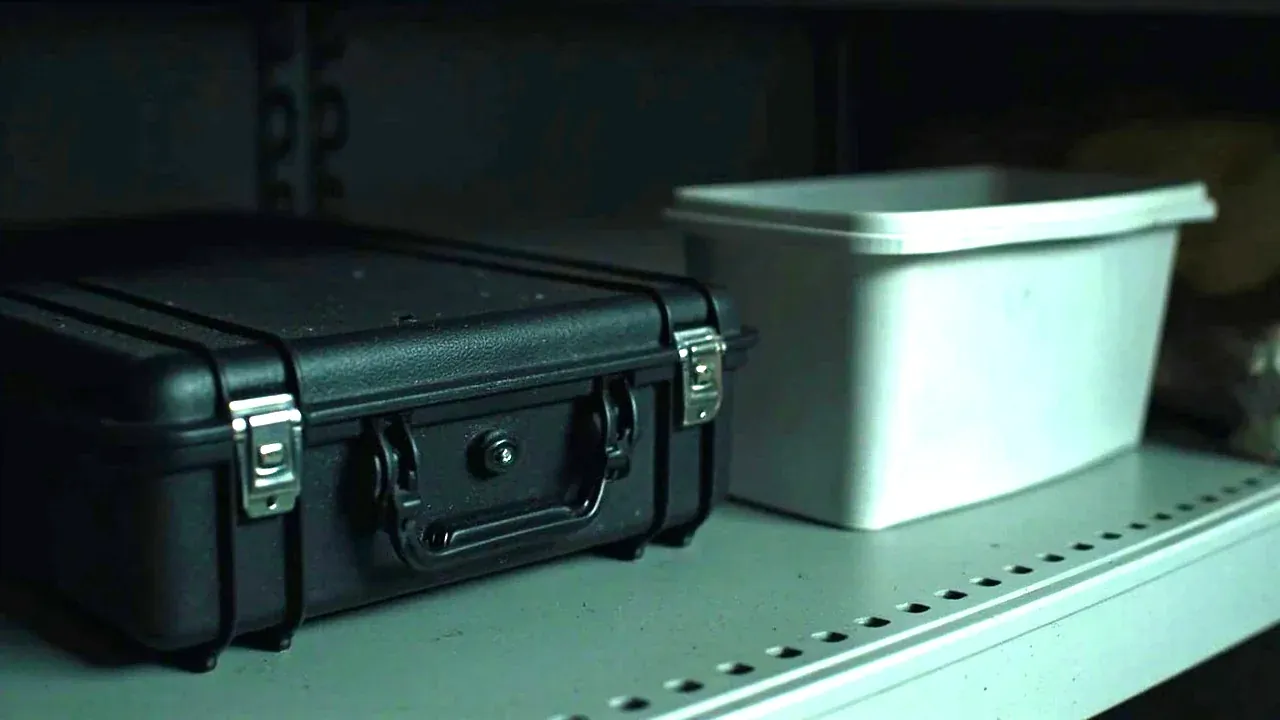
Where tools are issued against a list, or a missing item triggers an investigation, the case earns its keep. A single question settles it: if this tool went missing, would anyone look? If yes, keep the slot; if not, a bin is cheaper.
Conclusion
A hand tools case is one sentence: trade space for position, and position for time. It gives up twenty or thirty percent of volume for second-level counting and a fixed pick-up order, which pays wherever tools are issued against a list. Where counts grow and nobody counts items, a bin is cheaper.
This article covers container-side specifications and design implications only, not the handling, loading or use of the contents.
Related Reading
- Hand tools case versus storage bin
- What a tool box is
- Choosing a portable tool box
- Tool box foam lining selection
Related Products
- 8 Series — Gun Cases; Military Equipment Cases; Camera Equipment Cases; Drone Cases; Watch Cases; Knife Cases; First Aid Cases; Electronics Equipment Cases
- WL8-2812 PP Gun Case — model WL8-2812
- All protective cases and toolboxes: 7 series, 158 models