

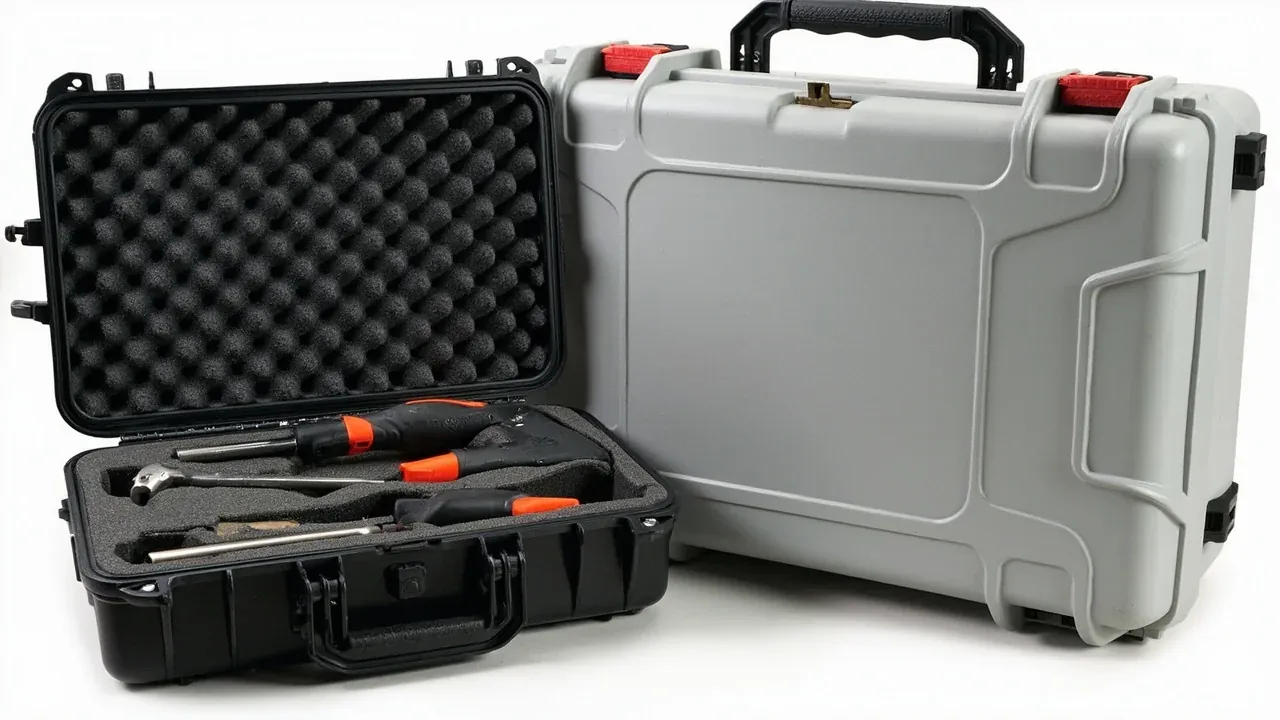
Quick answer: Two sentences settle it: precision costs space, and space costs counting. A hand tools case uses seventy to eighty percent of its volume and counts in seconds; a bin uses ninety-five percent and counts by tipping out. Decide on hours lost to searching, not on price.
Table of contents
- Hand tools case versus bin: three accounts first
- Counting time: what precision actually buys
- Space: what the bin is really saving
- Re-configuration: who pays when sizes change
- Mixing: main case and auxiliary bin
- FAQ
1. Hand tools case versus bin: three accounts first
These are not two grades of one product but two space strategies. A case divides volume with cut foam, one item per slot; a bin leaves volume whole and lets tools settle. One trades capacity for position, the other the reverse.
Three accounts decide: space, time, and re-configuration. Space sets how much fits, time sets daily counting and searching, re-configuration sets the cost when tool sizes change. Time is usually the largest and the least visible, because it never appears on a purchase order.
| Account | Hand tools case | Storage bin |
|---|---|---|
| Space use | 70 to 80 percent | 95 percent plus |
| Counting twenty items | about ten seconds | forty seconds plus |
| Re-configuration | new liner | none |
| When a loss shows | on opening | at next use |
2. Counting time: what precision actually buys
The gap grows with count. At five items both take seconds; at twenty a case scans in ten seconds while a bin takes forty; past fifty the bin count is simply skipped, and that is where losses begin.
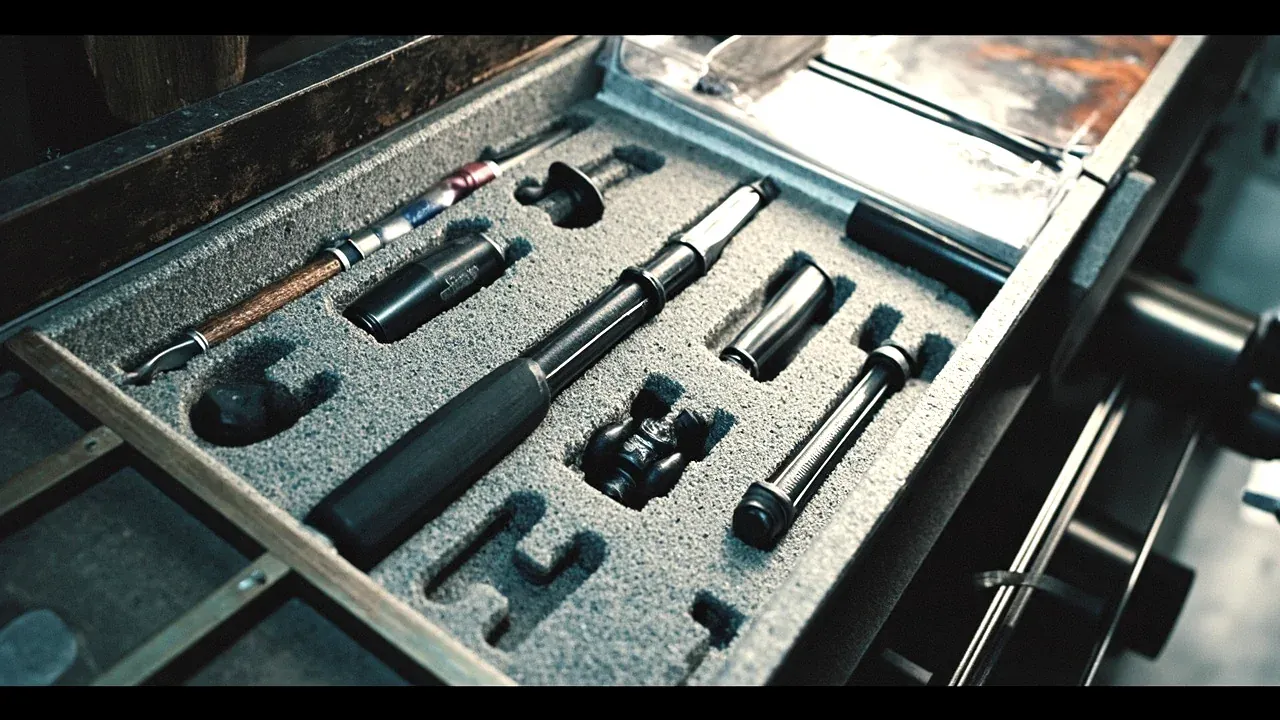
Twice a day at twenty items saves about a minute daily, some two hundred minutes a year. The real gain is earlier detection: a case tells you at the moment of opening, while a bin waits until the next use, which may be shifts later.
3. Space: what the bin is really saving
The extra twenty percent is not free. Loose tools stack, and stacking forces a sequence — the one at the bottom means moving those above. It also abrades: edges and dials suffer first. And without fixed positions the whole load shifts in transit.
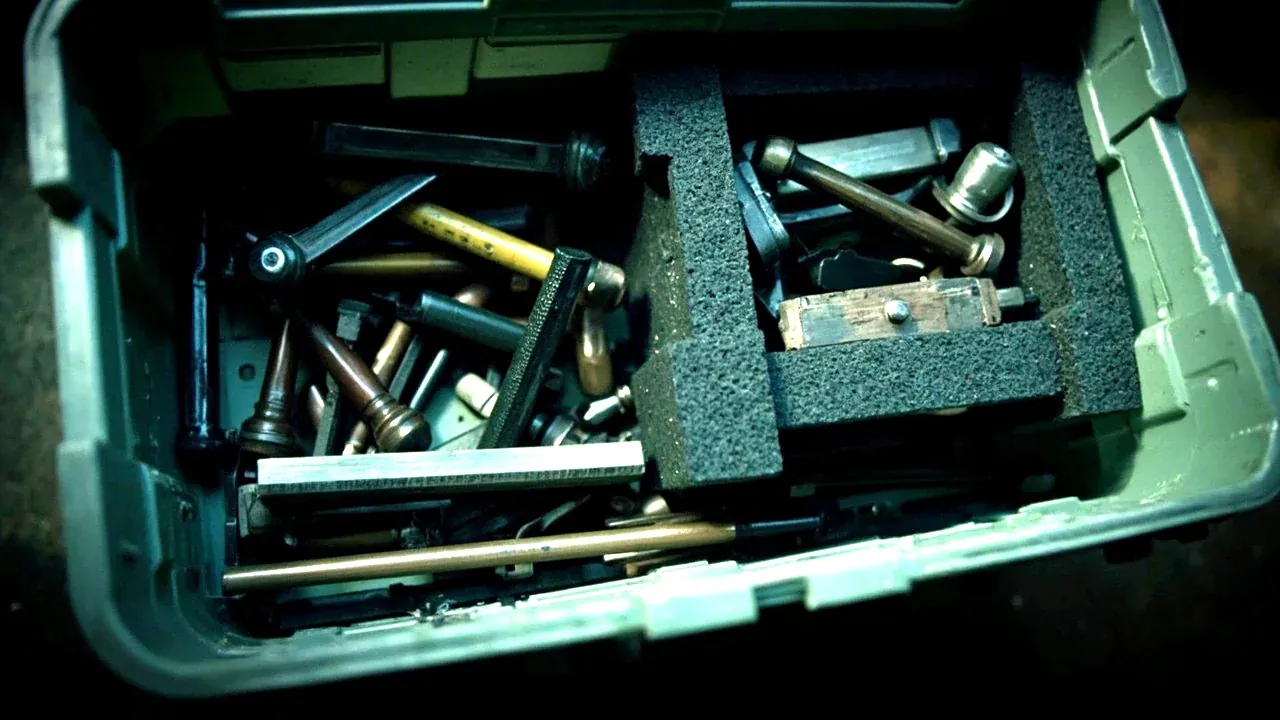
So a bin saves space only if access and protection are ignored. What it actually saves is the liner cost, and that saving is usually spent on the first damaged instrument.
4. Re-configuration: who pays when sizes change
When tool sizes change a bin needs nothing and a case needs a new liner. That is the bin's one clear advantage, and often the reason sites choose it. Frequency decides: once a year the liner amortises, once a month the case never delivers its value.
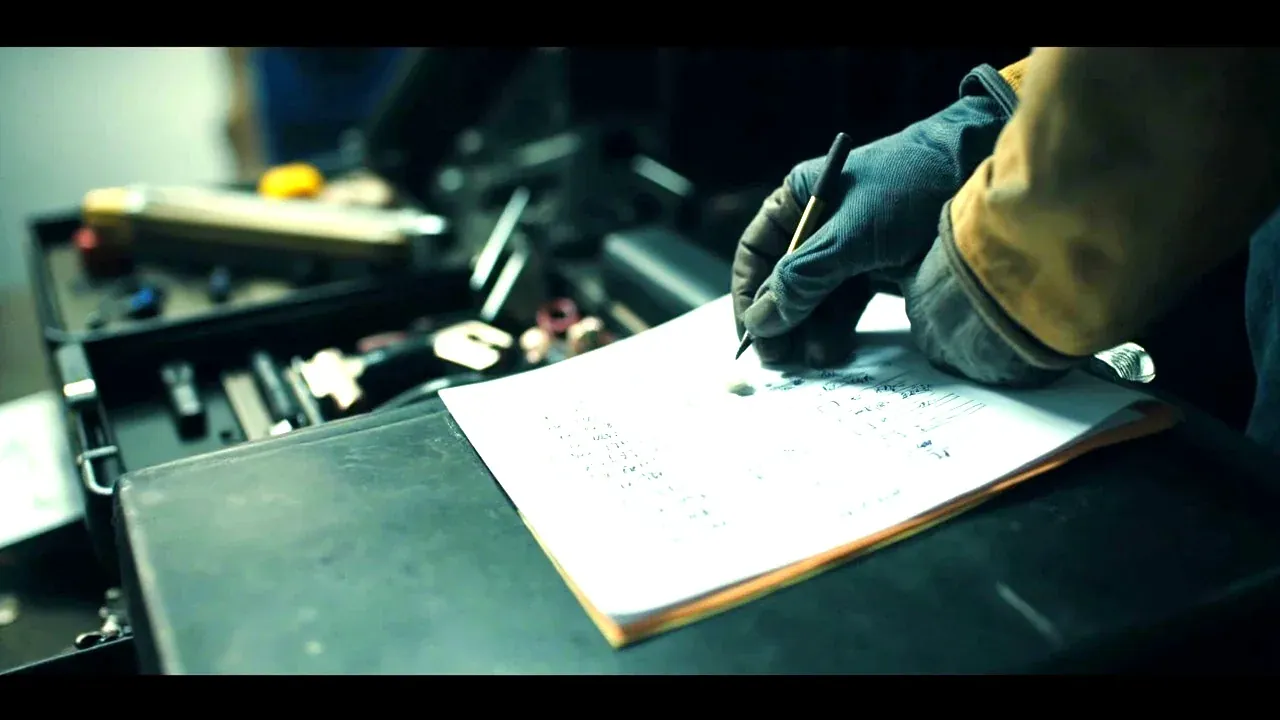
A middle path is sectional re-configuration: make the fastest-changing zone a replaceable insert and keep the rest fixed. Each change then costs one small block while the case keeps its advantage on the stable tools.
5. Mixing: main case and auxiliary bin
Most sites end up mixing: a case for the set issued against a list, a bin for bulk items nobody counts individually. The dividing question is whether a missing tool would be investigated.
Keep labelling consistent across both. One label system and one position code, or every count switches between two logics and slows down; with one system, a mixed layout approaches the speed of all-case.
Conclusion
One line settles it: precision costs twenty percent of volume, and volume costs counting. Decide on whether losses are investigated and how often sizes change — investigate and stable favours a case, no investigation or monthly change favours a bin. Most sites mix them, and mixing only works with one label system.
This article covers container-side specifications and design implications only, not the handling, loading or use of the contents.
Related Reading
- What a hand tools case is
- What a tool box is
- Tool box, bag and chest compared
- Tool box foam lining selection
Related Products
- 8 Series — Gun Cases; Military Equipment Cases; Camera Equipment Cases; Drone Cases; Watch Cases; Knife Cases; First Aid Cases; Electronics Equipment Cases
- WL8-2812 PP Gun Case — model WL8-2812
- All protective cases and toolboxes: 7 series, 158 models