

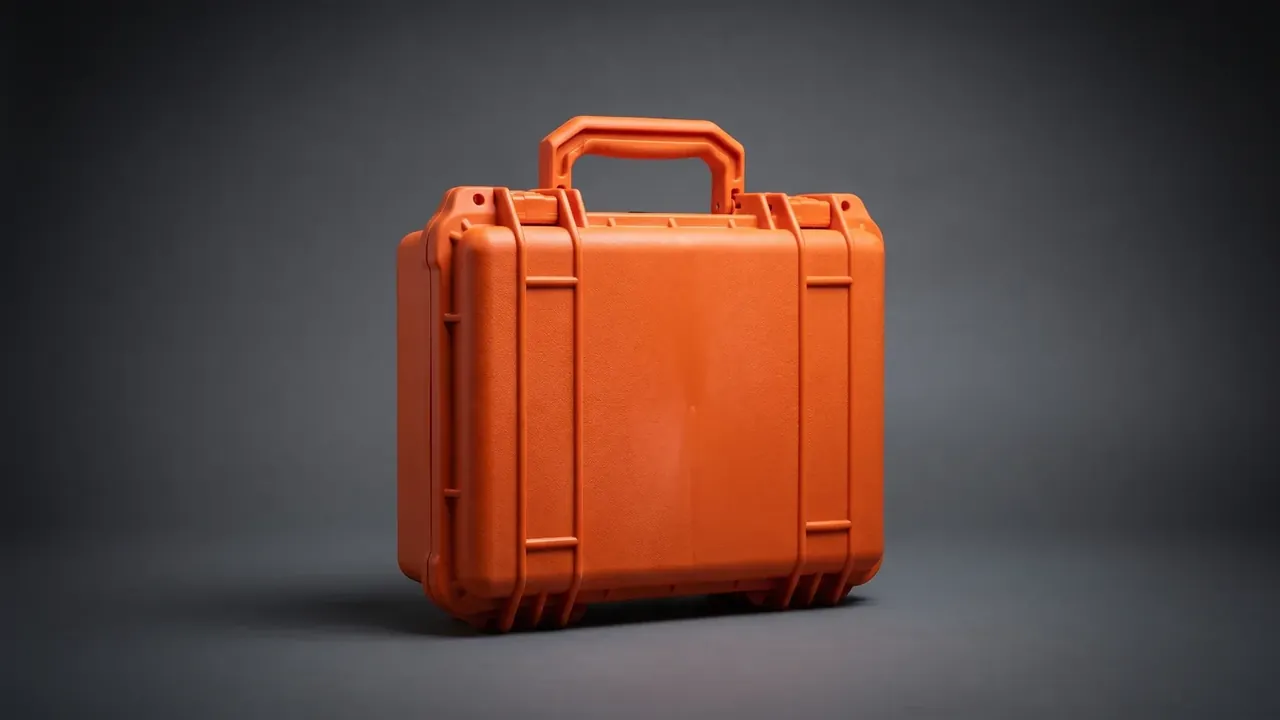
Quick answer: A Hand Tools Case spec is derived, not chosen. Fix the coldest temperature, the load, the stack height and the drop height, then work back from the load list to the cavity and on to wall thickness.
Table of contents
- How a Hand Tools Case Spec Starts From Field Conditions
- Working Back From the Load List to the Cavity
- Three Wall Thicknesses: Body, Base and Lid
- Ribs, Corner Guards and Hinge Bosses
- FAQ
1. How a Hand Tools Case Spec Starts From Field Conditions
A wind-farm crew in Zhangbei works through January at -18 °C, with cold snaps at -20 °C. Each technician draws a loaded Hand Tools Case, drives 120 km, then carries it 800 m to the turbine.
| Field condition | Observed value | Specification item it drives |
|---|---|---|
| Lowest temperature | -20 °C | Shell and latch toughness |
| Loaded weight | 18 kg | Base thickness, handle ribs |
| Stacking | 4 high, 72 kg on the bottom | Lid stiffness, stacking ribs |
| Carrying | 800 m one way, 260 shifts a year | Handle, corner guards, hinges |
| Handling | Dropped from a truck bed, 900 mm | Local thickness at corners |
The common mistake runs backwards: pick an off-the-shelf size, then squeeze the tools in. Start at the harshest cell: temperature sets resin grade, load and stack height set base and lid, drop height sets corners.
These conditions pull against each other. Thickening the shell lifts empty weight from 4.8 kg to 6.2 kg, felt over a year of extra 800 m trips. Thinning it lets one drop split a corner. Temperature shifts the criterion: copolymer polypropylene measures 6.5 kJ/m² notched Charpy at 23 °C and 3.1 kJ/m² at -20 °C, so a 3.2 mm wall keeps half the margin in winter. Stacking adds creep: 72 kg for 30 days sags a flat lid, and past 4 mm it touches the tools. A 900 mm fall drives corner accelerations above 40 g, so that zone needs 5 mm, not the 3.2 mm of the main wall.
2. Working Back From the Load List to the Cavity
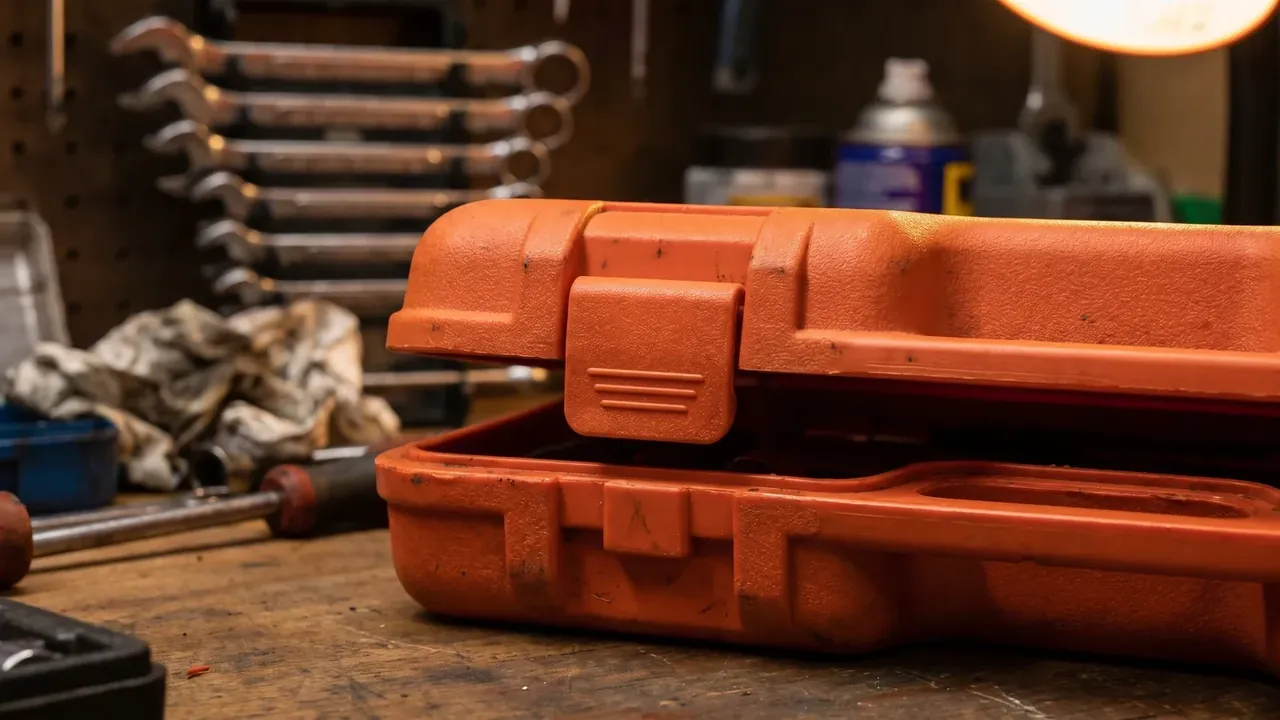
The cavity is the one dimension that can be calculated. Longest item sets length, widest sets width, tallest sets depth.
| Load list item | Measured size | Cavity value | Where the allowance goes |
|---|---|---|---|
| Long hex key, 12 mm | 405 mm long | 455 mm length | 25 mm foam at each end |
| Socket tray, 24 pieces | 280 mm wide | 330 mm width | 25 mm foam on both sides |
| Ratchet, standing upright | 120 mm tall | 160 mm depth | 20 mm base foam plus 20 mm finger clearance |
| All tools together | 18 kg total | — | Sets base thickness and foam density |
Finger clearance is the allowance that gets forgotten. A pocket cut to the exact tool thickness leaves no fingertip room, so removal drags the tool up by its edge and tears the lip. Allow 20 mm beyond pocket depth on the lid side.
Bigger is not better: ten extra millimetres a side lets tools slide.
3. Three Wall Thicknesses: Body, Base and Lid
A Hand Tools Case never has one wall thickness; it has a set. An outer size of 500 × 380 × 200 mm against a 455 × 330 × 160 mm cavity leaves 22.5 mm a side for wall, ribs and flange.
| Location | Thickness | Basis |
|---|---|---|
| Four side walls | 3.2 mm | Lateral squeeze and stack load at 18 kg |
| Base | 4.0 mm | Dent resistance, 900 mm drop at 40 g |
| Lid | 2.8 mm | Stiffness from ribs, thickness only seals |
| Corners and guard zone | 5.0 mm | Local build-up, first contact on impact |
| Hinge bosses and latch seats | 5.5 mm | Opening pull and latch preload |
| Rib roots | R1.5 fillet | Stress distribution against cold cracking |
Below a 3.2 mm body the base runs 25% thicker to absorb impact, while the lid runs 12% thinner because ribs carry stiffness. Fitted this way, it weighs 5.1 kg empty and 23.1 kg loaded.
4. Ribs, Corner Guards and Hinge Bosses
Thickness handles surfaces; structure handles points and lines.
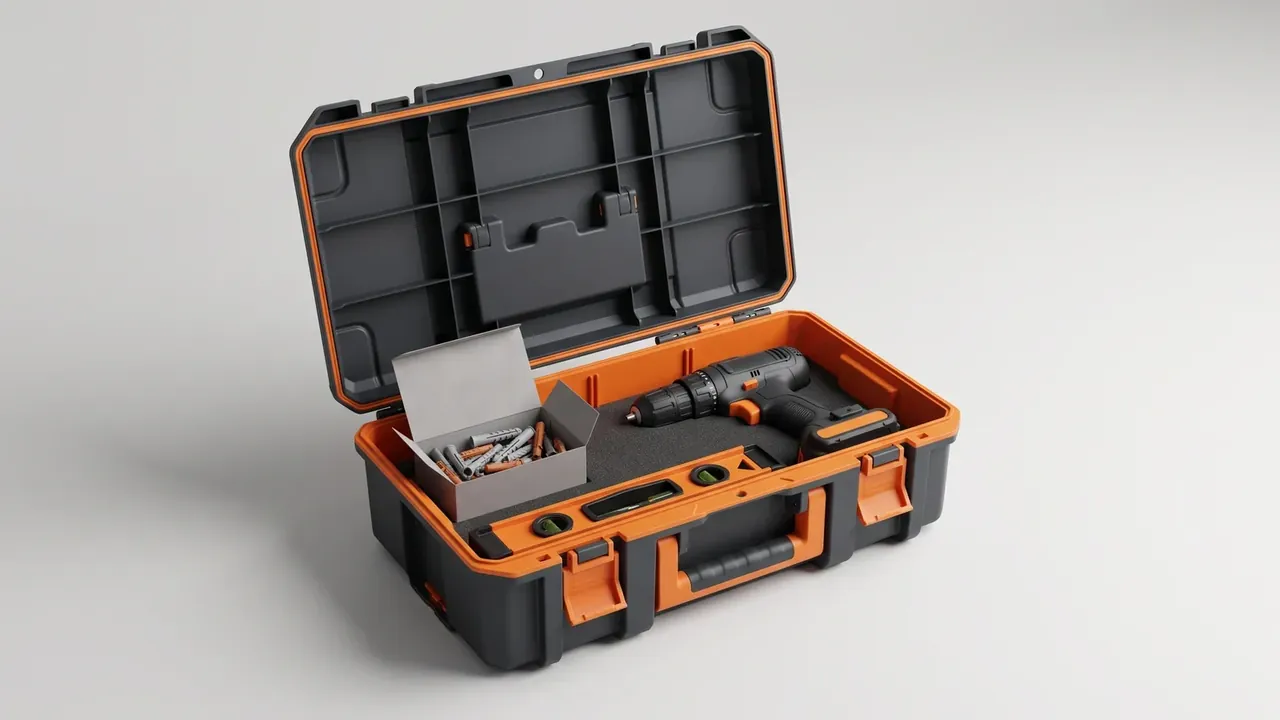
- Vertical ribs 6 mm high on a 90 mm pitch, R1.5 roots, no unsupported span past 110 mm.
- A closing flange at 4.5 mm around the opening, the stiffest band and seal datum.
- Corner guards, 2 mm thick and radiused, so impact lands on the outer edge first.
- Hinges on a 4 mm stainless pin in nylon bushes, axis 12 mm inboard of the wall.
- Latches with 45 N opening force and 8 mm over-centre travel, so closing has a detent.
Each covers a weak point. Ribs turn a 3.2 mm wall into an effective 6 mm bending section, and the 5.5 mm hinge boss keeps the pin hole tight after 260 shifts a year. A Hand Tools Case built this way needs no thicker shell, only better placed material.
Conclusion
One rule: conditions first, dimensions in the middle, thickness last. Temperature, weight, stack height and drop height come before the cavity, and the cavity before any wall section. Jump to "how thick" and the answer is a guess. Once those figures reach the drawing, the spec of a Hand Tools Case is closed.
This article discusses only the container (case body) side of specifications and design intent, and does not cover any handling, loading or use of the contents.
Related Reading
- What a hand tools case is: one tool per slot
- Missile box specs: cavity, wall and support points
- Instrument case specs: cavity, cushioning and cut-outs
Related Products
- 8 Series — Gun Cases; Military Equipment Cases; Camera Equipment Cases; Drone Cases; Watch Cases; Knife Cases; First Aid Cases; Electronics Equipment Cases
- WL8-2812 PP Gun Case — model WL8-2812
- All protective cases and toolboxes: 7 series, 158 models