

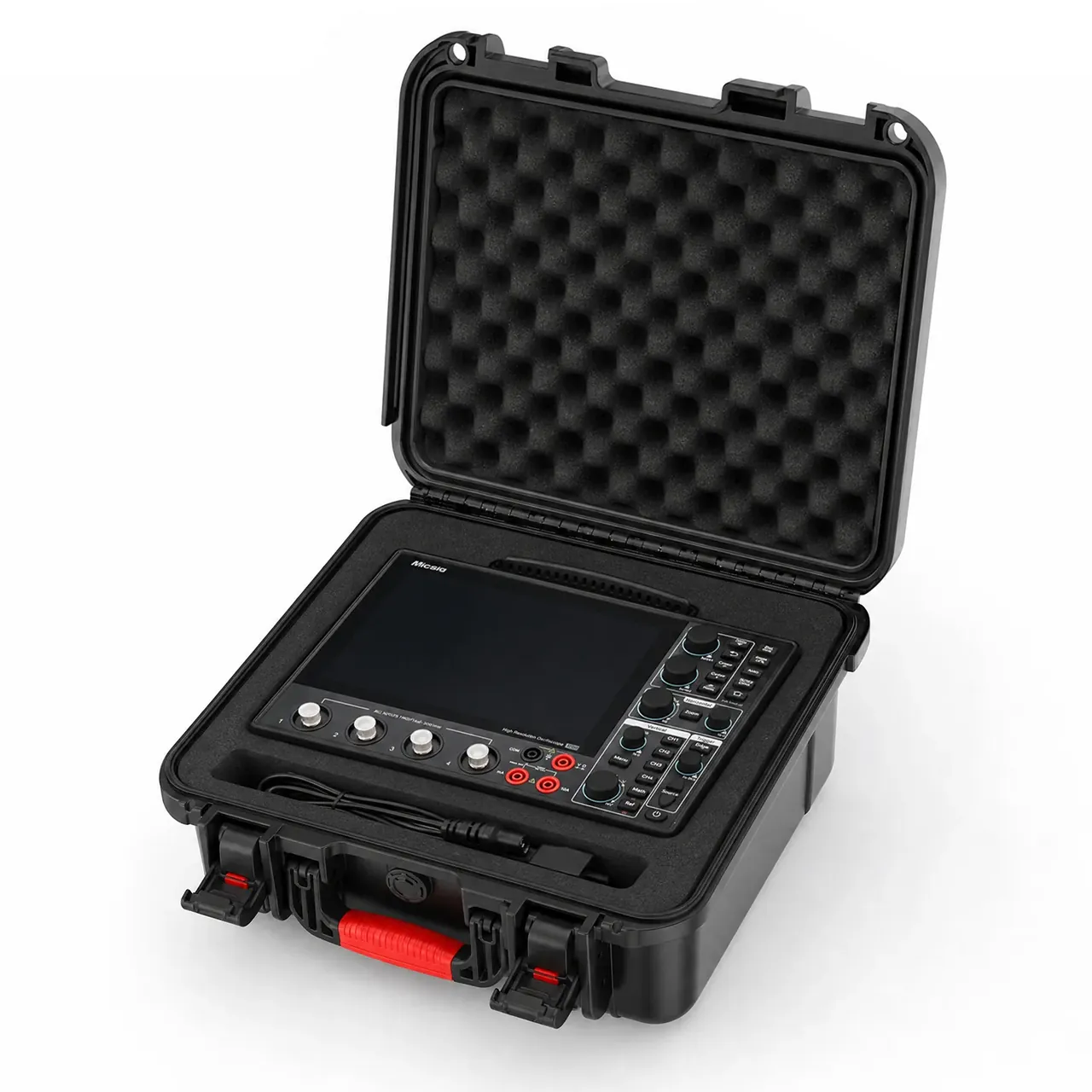
Quick answer: A hardware repair tool safety trolley case meets 35 mm thresholds and 30 mm steps before any flat floor, and at 32 kg its 75 mm wheels take 48 kg peaks.
Table of contents
- Thresholds Decide the Route Before the Load Does
- Six Flights, Four Minutes a Floor
- Which Part Fails First at 32 kg
- The 80 kg Seat and the 1.2 m Drop
- What a Tape Measure Settles on Delivery
- FAQ
1. Thresholds Decide the Route Before the Load Does
A repair crew wheels the case to the stairwell and the first obstruction is rarely mass; it is a threshold strip. A hardware repair tool safety trolley case measures 550 × 400 × 280 mm outside, on 75 mm wheels that are 32 mm wide. Climbing a 35 mm strip lifts the axle through 27.7 degrees, so one person angles it over; a 45 mm drain cover needs 36.9 degrees and stops.
The sheet claims 35 mm; in test, 40 mm needs a second pair of hands, so 5 mm is the whole margin. Wheel width is the other half: 25 mm drain slots, a 32 mm tread keeping 7 mm of overlap, and a 20 mm wheel dropping in.
| Route condition | Size | Passes |
|---|---|---|
| Workshop threshold | 35 mm | Yes, 27.7 degrees |
| Entrance step | 30 mm | Yes, one wheel first |
| Kerb stone | 45 mm | No, needs a ramp |
| Drain slot | 25 mm | Yes, 7 mm overlap |
2. Six Flights, Four Minutes a Floor
Repair rooms in old factory blocks sit on the sixth floor with no freight lift. Six flights at 4 min is 24 min one way, 48 min for two trips, all on a handle and two wheels.
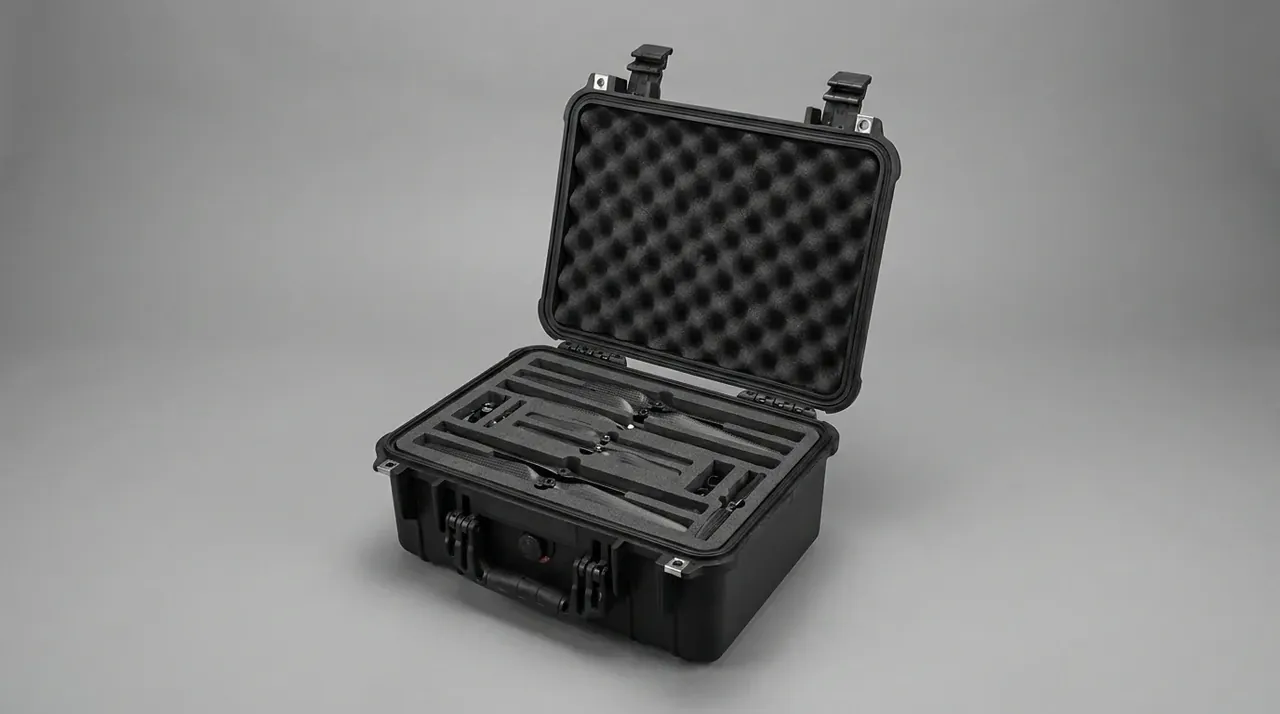
The three-stage handle reaches 1 000 mm and stage three takes the worst of it. At 32 kg tilted 15 degrees the moment arm is 259 mm, 82 N·m at the root, which wears the locking collar rather than snapping the tube.
With 0.4 mm gone from that collar the handle gains 3 mm of side play, and each flight then costs 20 s of straightening, so 4 min a floor becomes 5.
The carry handle is a separate path: 32 kg shared by two people against a 60 kg rating is 16 kg a hand, on M6 bolts torqued to 6 N·m.
On a 1 100 mm landing a hardware repair tool safety trolley case leaves 300 mm of foot room, where a handle at full 1 000 mm becomes a liability.
3. Which Part Fails First at 32 kg
Empty at 7.2 kg and loaded at 32 kg, a hardware repair tool safety trolley case pushes 24.8 kg through the base and two wheels: 16 kg a wheel at rest, 48 kg at a crossing peak.
| Part | Load at 32 kg | Symptom after two years |
|---|---|---|
| Wheel, 75 × 32 mm | 16 kg static, 48 kg peak | Tread flat 1.5 mm |
| Handle, 3 stages | 82 N·m at the root | Collar loose, 3 mm play |
| Latches, 2 off | 300 N holding each | Tongue worn 0.3 mm |
| Lid | 80 kg seated | 0.8 mm permanent set |
On a hardware repair tool safety trolley case the wheel goes before the handle, because a wheel touches the ground all day a handle works hard only at steep angles. Take 1.5 mm off the tread and the case drags, noticed the same shift; 3 mm of play survives six months.
Two 300 N latches do little while rolling, since the case is pulled. The drop loads them, springing the lid 2 mm open at 1.2 m.
4. The 80 kg Seat and the 1.2 m Drop
No chair on the sixth floor, so a technician changing a tube light sits on the lid, 80 kg on the front 200 mm.
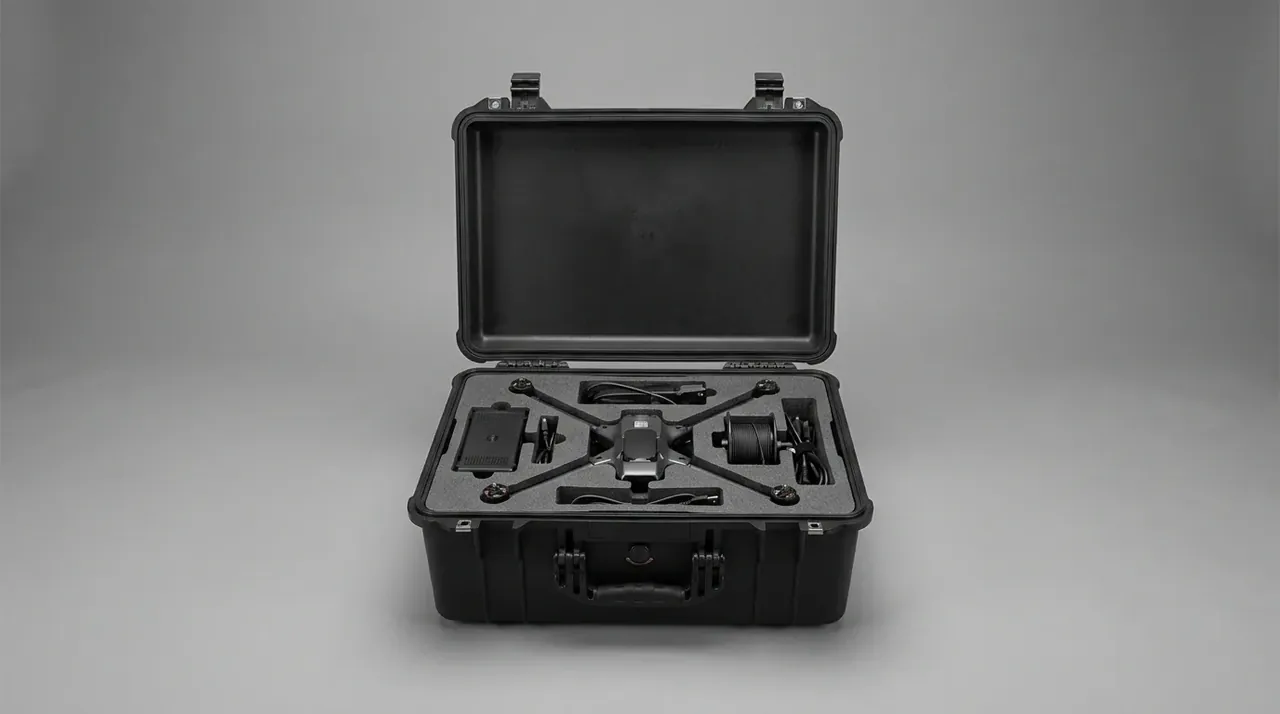
The lid is double-walled over a 400 mm span. At 80 kg on the front edge it sinks under 2 mm and keeps 0.8 mm of set after 24 h, a ratio of 2.5 that says the panel is still elastic.
The 1.2 m drop runs differently: a 32 kg case lands corner-first, the shell absorbs energy, and the corner takes a 1 mm white mark that stays serviceable unless it splits. A 5 mm crack retires a hardware repair tool safety trolley case.
5. What a Tape Measure Settles on Delivery
Incoming inspection needs no rig: a tape, a caliper and four 20 kg sandbags, with a hardware repair tool safety trolley case loaded to 32 kg first.
| Check | Instrument | Acceptance |
|---|---|---|
| Wheel diameter | Caliper | 74.5 to 75.5 mm |
| Wheel width | Caliper | 31.5 to 32.5 mm |
| Obstacle clearance | 35 mm batten | No stall when loaded |
| Handle extension | Tape | 3 stages, 1 000 mm |
| Lid load | 4 sandbags | ≤1 mm set after 24 h |
| Latch holding | Gauge | ≥300 N, no release |
The obstacle check is skipped most often. Nail a 35 mm batten down, push the loaded case across, listen: one thud is the wheel climbing, two mean it climbed and fell back, the second says the base frame twists.
Rock the fully extended handle; 3 mm or less is normal. Pull each latch to 300 N, spin every wheel for a dry rasp, then check the envelope.
Conclusion
The margin in a hardware repair tool safety trolley case goes on thresholds, steps and stairwells rather than a flat workshop floor. A 75 mm wheel at 32 mm wide clears a 35 mm strip and a 25 mm drain slot but not a 45 mm kerb, and at 32 kg one wheel peaks at 48 kg, so tread flattens before a handle gives. Six flights at 4 min is 24 min one way, and 82 N·m at the handle root sets the life of the stage-three collar. Judge the 80 kg seat for stiffness and the 1.2 m drop for toughness.
Related Reading
- Matching wheels and trolley handles
- Where hardware tool cases actually work
- Four parameters for choosing a toolbox
- Two wheels or four: what changes
Related Products
- 8 Series — Gun Cases; Military Equipment Cases; Camera Equipment Cases; Drone Cases; Watch Cases; Knife Cases; First Aid Cases; Electronics Equipment Cases
- WL8-2812 PP Gun Case — model WL8-2812
- All protective cases and toolboxes: 7 series, 158 models