

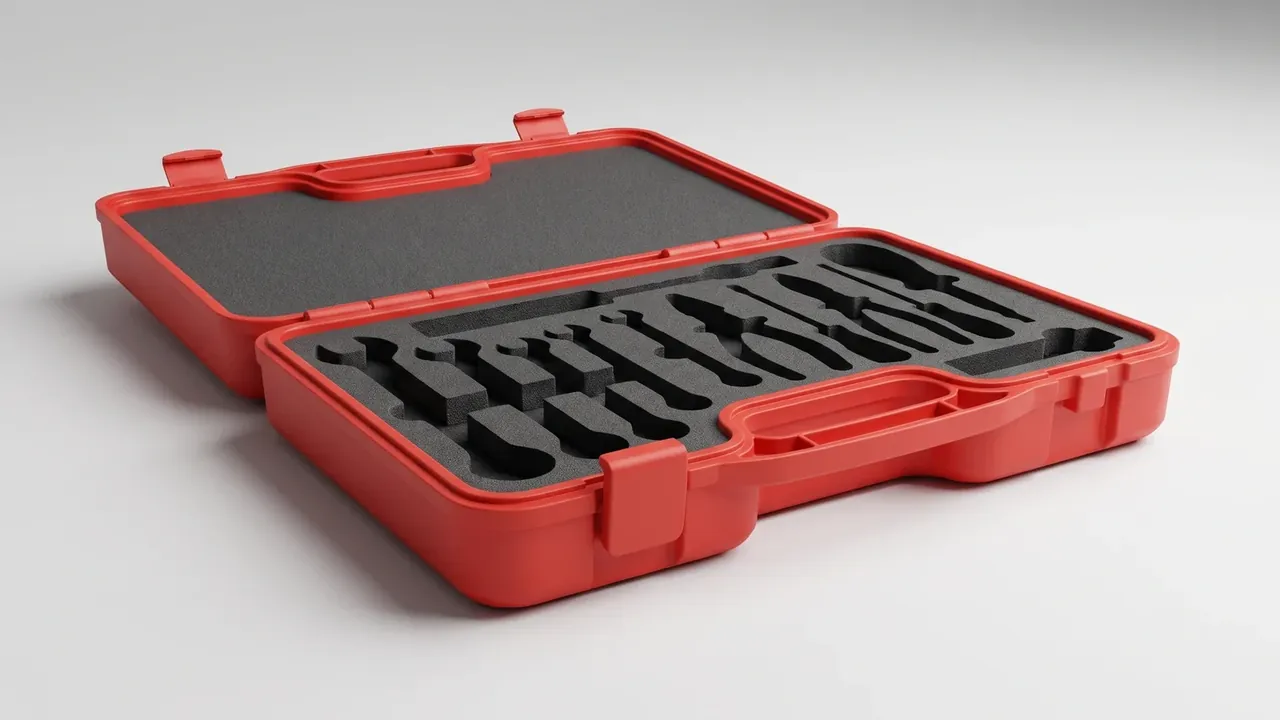
Quick answer: Sixty hardware tool boxes were tagged and re-inspected six times over 18 months. The records collapsed into four numbers: wall thickness, latch pull force, seal compression set and hinge pin clearance. The schedule and replacement lines below are field-tested.
Table of contents
- Where the Inspection Schedule Comes From
- How Clean Counts as Clean
- Judging the Seal Groove and Latches
- Four Measured Replacement Thresholds
- Life Extension and the Log Columns
- FAQ
1. Where the Inspection Schedule Comes From
In March 2025 a cabinet shop numbered 60 in-service hardware tool boxes from 001 to 060, after eleven failures in six months with no clear cause.
| Level | When | Items | Time | Record |
|---|---|---|---|---|
| Daily | Shift handover | Cracks, latch closure, handle play | 40 s | Exceptions only |
| Monthly | Every 500 hours | Wall thickness at 8 points, groove debris, hinge clearance | 6 min | One row per box |
| Biannual | Every 180 days | Latch force, insert torque, salt spray sampling | 25 min | Measured values |
Of the 60 hardware tool boxes, 41 stay at fixed workstations and fail at the bottom corners, dragged daily in and out of a cabinet base. The other 19 travel with technicians and fail at the handle and latches, since the weight hangs from one hand.
2. How Clean Counts as Clean
Shop dirt is oil mist, sanding dust, or the black paste of sweat and grit.
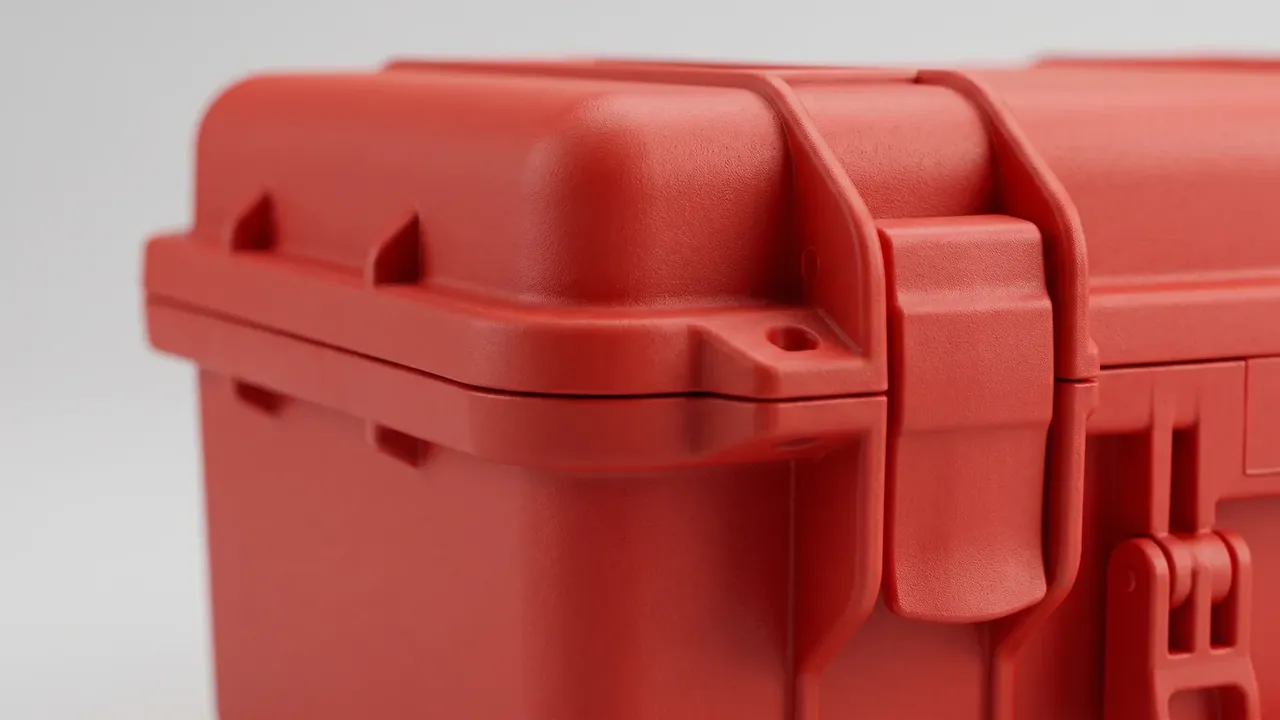
Oil film comes off in 40 °C water with a neutral cleaner at pH 7 to 8, soaked three minutes and brushed soft. Alkaline cleaners strip additives from the ABS skin, so the box whitens by the second wash and cracks by the fifth.
Sanding dust is never wiped dry: a dry wipe presses grit into the latch groove and the next closing grinds it like sandpaper.
The seal groove dries last, and standing water grows mould within 48 hours, gluing the seal into the channel. Bake at 60 °C for 45 minutes; never a heat gun, since 120 °C warps the sealing face.
Metal parts:
- Hinge pins and insert threads are blown dry within 30 minutes
- A rust spot on a spring leaf means replacement, not sanding
- Foam liners are vacuumed, never washed
3. Judging the Seal Groove and Latches
The seal profile on a hardware tool box is 9 mm high and compresses to 6.6 mm, a 27% squeeze inside the 25% to 30% window. Below 20% the rim gap cannot close at -10 °C; above 35% the seal loses rebound within six months.
Measure the long-side midpoint, the short-side midpoint and the four corners, where the injection weld line weakens the squeeze.
Latches are judged by pull force: 95 N new, read on a spring scale at the release peak. Below 65 N the spring leaf is tired and the lid can pop open under vibration. Above 140 N, clear grit and grease the pin first.
Hinge pin clearance starts at 0.6 mm; at 1.0 mm the bushing goes, since a wide gap crushes one side of the seal.
4. Four Measured Replacement Thresholds
Wall thickness, latch force, seal set and insert torque are what a hardware tool box lives by.
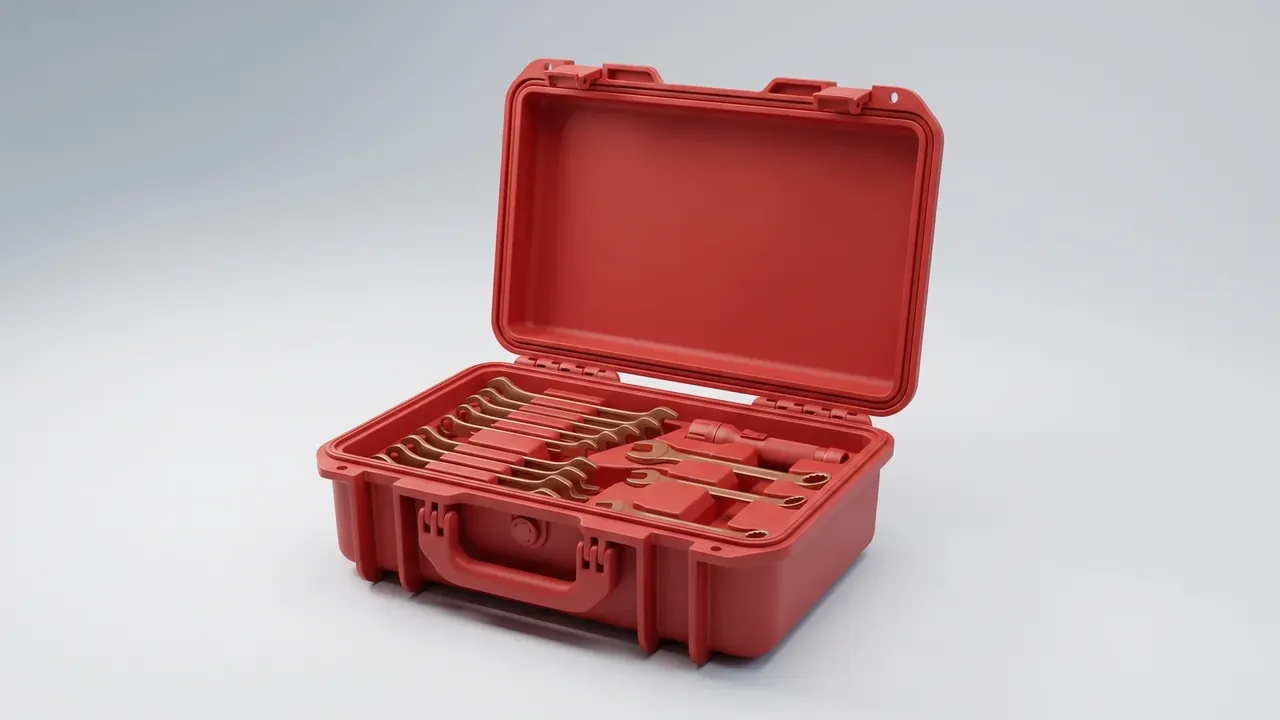
Thickness is read inside with an ultrasonic gauge at eight points, 10 mm from rib roots. Wear under 0.4 mm is normal; 0.4 to 0.6 mm moves the box to a 90-day interval; past 0.6 mm a 2 mm PE patch goes on.
| Part | New baseline | Watch band | Replacement line |
|---|---|---|---|
| Wall thickness | 4.0 mm | 0.4 to 0.6 mm wear | Below 3.4 mm left |
| Latch pull force | 95 N | 65 to 80 N | Below 65 N |
| Seal compression set | Under 8% | 8% to 40% | Above 40% |
| Hinge pin clearance | 0.6 mm | 0.6 to 1.0 mm | Above 1.0 mm |
| M6 insert torque | 7 N·m | 5.2 to 6.3 N·m | Below 5.2 N·m |
Torque failed four times, always at the handle mounts, where side pull creeps the plastic; under 5.2 N·m after one retorque, the insert gets a bushing.
5. Life Extension and the Log Columns
Life extension changes the load path rather than adding strength.
Padding put 3 mm EVA under the four corners and corner splits fell from eleven boxes to two. A 20 mm stop bar ended the daily shove into the cabinet back wall. Load splitting moved the heaviest tools out of the 19 travelling boxes, from 14 kg to 9 kg.
The log needs three columns: running hours, last part replaced with its date, verdict. Together they show whether a hardware tool box falls behind at hour 3,800 or 5,200.
Conclusion
Eighteen months of records answer with numbers: maintain a hardware tool box on the thinnest wall point, the peak latch force, the seal compression set and the insert torque. Scheduling by running hours tracks damage better than a calendar. Thresholds in a table and readings in a log give every hardware tool box a verdict the next shift can audit.
This article discusses only the container (case body) side of specifications and design intent, and does not cover any handling, loading or use of the contents.
Related Reading
- Inspecting and re-parts for metal tool chests
- How hardware tool boxes are configured at workstations
- Comparing similar case bodies
- Sealing and re-inspection of war reserve cases
Related Products
- 8 Series — Gun Cases; Military Equipment Cases; Camera Equipment Cases; Drone Cases; Watch Cases; Knife Cases; First Aid Cases; Electronics Equipment Cases
- WL8-2812 PP Gun Case — model WL8-2812
- All protective cases and toolboxes: 7 series, 158 models