

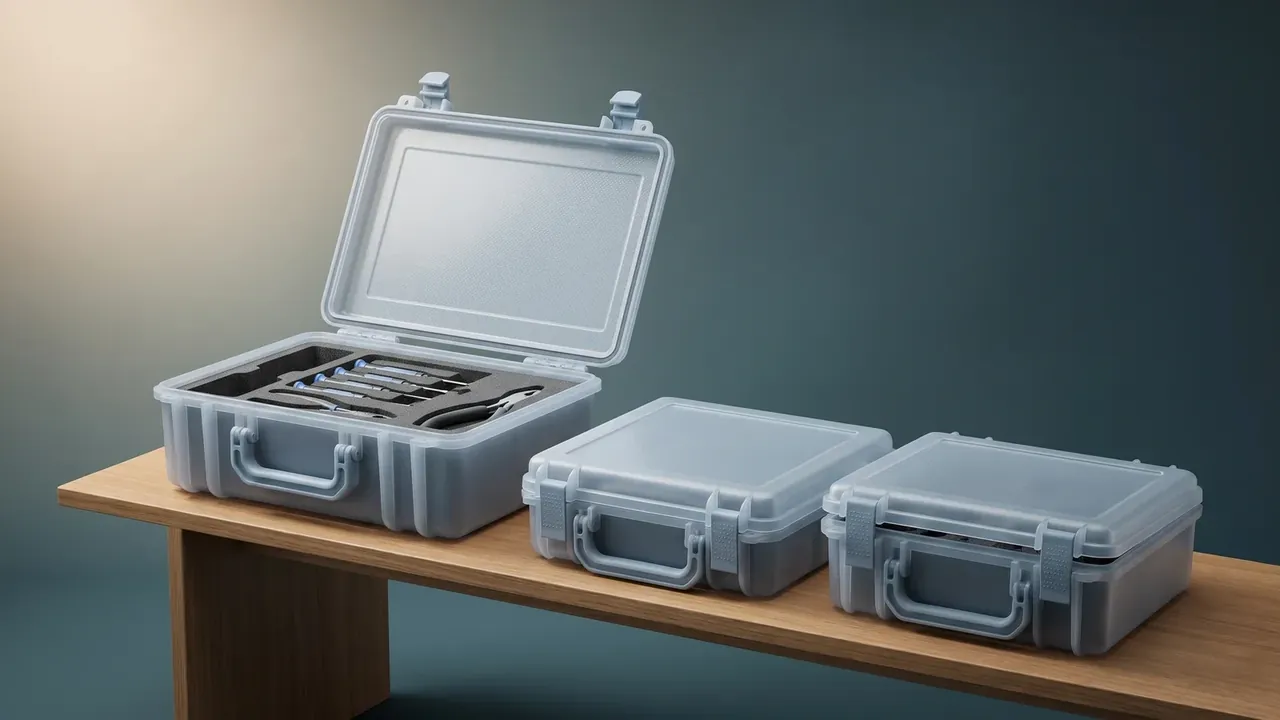
Quick answer: Four numbers settle a heavy duty plastic case on site: base deflection under 2 mm after 24 hours loaded, main wall from 8 mm, under 150 N to push a loaded case 50 m, and two people lifting no more than 50 kg.
Table of contents
- Ordering the Four Numbers for a Heavy Duty Plastic Case
- Load Ratings: Static, Dynamic and Lifted
- Wall Thickness and Rib Pitch: Three Measuring Points
- Wheels, Lifting and Stacking: Human Limits
- FAQ
1. Ordering the Four Numbers for a Heavy Duty Plastic Case
A buyer on site can carry away four numbers: load on top, wall thickness, wheel size, and how many people it takes to lift.
For a heavy duty plastic case they do not substitute for each other. Load sets structure and rib direction, wall sets service life outdoors, wheels set the terrain, and the lifting limit sets the size ceiling.
| Criterion | How to measure on site | Pass line | Fail signal |
|---|---|---|---|
| Load | Load it, wait 24 h, gauge deflection | Under 2 mm | Chalked base ribs, lid not seating |
| Wall | Caliper at mid-wall, rib root, base corner | Main wall from 8 mm | Readings over 2 mm apart |
| Wheels | Push loaded 50 m, read the force | Under 150 N | Flat wheel edges, steering seized |
| Lifting | Weigh empty, then lift it full | Two people under 50 kg | One person dragging it |
Order matters. Start from external dimensions and you buy a heavy duty plastic case too heavy to carry or too weak to stack.
The lifting limit is the number most often skipped.
2. Load Ratings: Static, Dynamic and Lifted
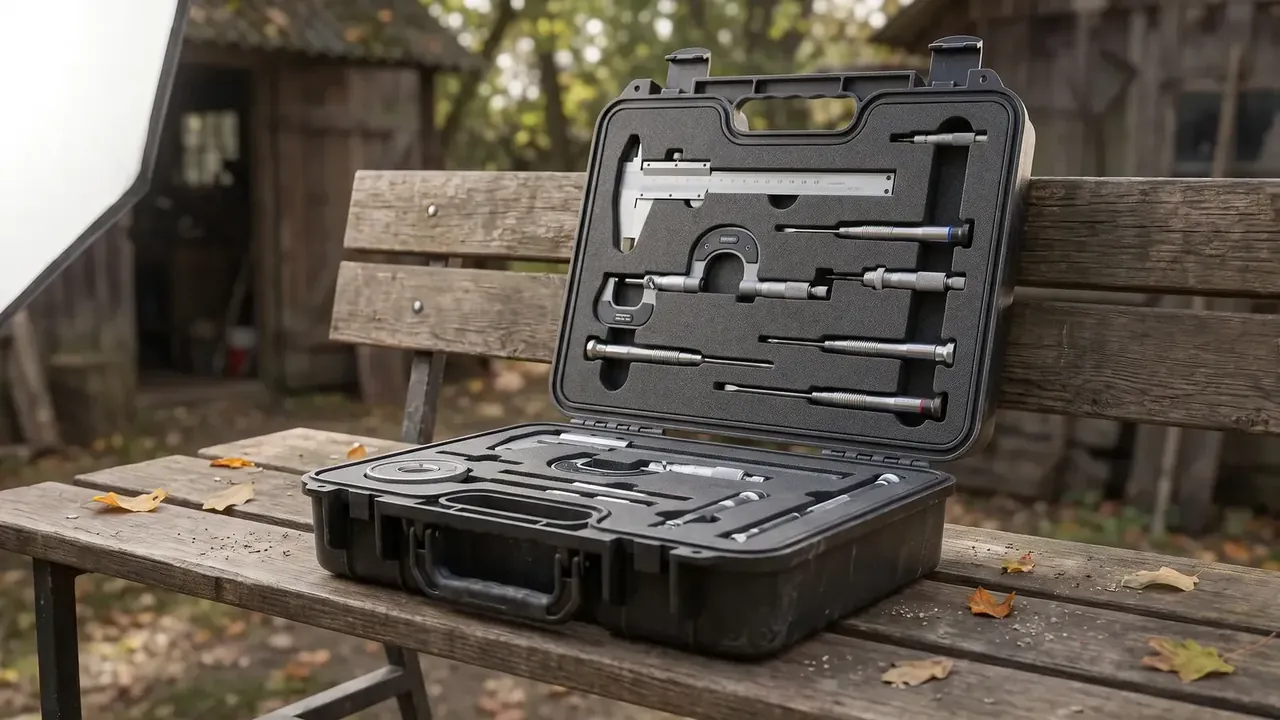
Load rating is never a single figure: static is what sits on the lid, dynamic is the shock of transport, lifted is what the eyes carry. Each uses a different safety factor, and the three can differ twofold.
| Rating | Definition | Typical value, 600x400x220 mm | Factor | Check |
|---|---|---|---|---|
| Static | Weight stacked on top | 800 kg | 3 | Deflection recovers after 24 h |
| Dynamic | Transport shock | 300 kg | 2 | No cracks after 2 h vibration |
| Lifted | Mass carried by eyes and slings | 400 kg | 3 | Eye pulls out at 1.5 kN |
When only one number is offered, ask which rating it belongs to. An 800 kg figure is usually static; lifted, the same case holds 400 kg.
A load figure without a rating label says nothing.
3. Wall Thickness and Rib Pitch: Three Measuring Points
Measure in three places, because one reading misleads. Melt converges at the rib root, so the root is thickest and the open panel thinnest; gauging mid-wall overstates the case.
- Mid-wall: from 8 mm, since panels under 6 mm bulge at 40 C in sun;
- Rib root: 10 mm, rib height to pitch inside 1 to 8;
- Base corner: 12 mm, where drop and drag loads arrive;
- Rib pitch: 100 mm divides good from soft, past 120 mm panels yield;
- Spread: readings over 2 mm apart mean uneven mould temperature;
- Feel: a slow-recovering thumbnail dent suggests regrind.
Thicker is not stronger. Past 10 mm the weight of a heavy duty plastic case climbs, the two-person limit breaks first, and crews drag it, wearing the base faster than a thinner wall would.
Use a caliper, not a knuckle.
4. Wheels, Lifting and Stacking: Human Limits
Wheel diameter follows the floor. A 100 mm wheel is enough on plant concrete, 160 mm is the entry point on gravel, and a 30 mm threshold needs rim width too, since narrow rims wedge in rail grooves.
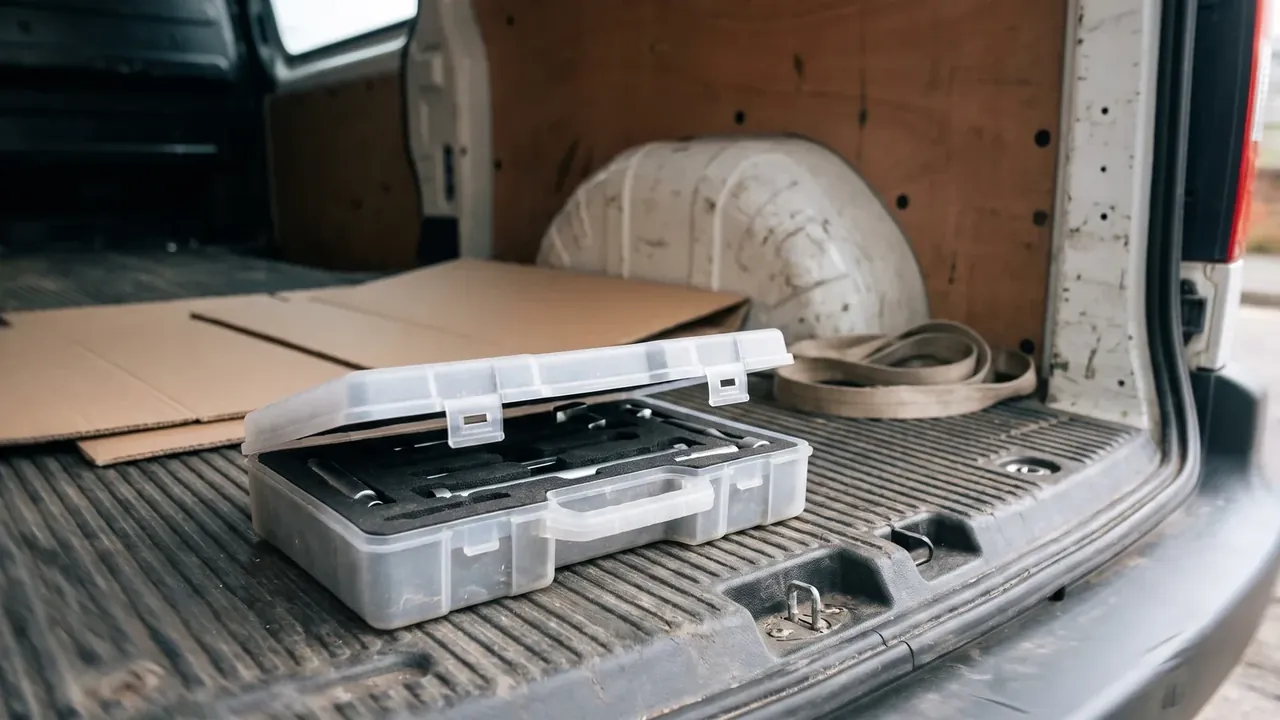
Lifting depends on eye position and sling angle. Four corner eyes at 30 degrees work mostly in tension; past 60 degrees the horizontal component tears at the insert instead.
Stacking needs the full arithmetic. One 38 kg loaded case stacked five high puts 152 kg of steady pressure on the bottom unit, before counting the knocks that come from a 2.2 m shelf height. Where base corners are not reinforced, a pale crush mark shows within three months. A pallet spreads that load into a surface, at the cost of 100 mm of height. That height often costs a shelf level, so the saving on reinforcement is paid back in storage density. Reinforced corners on a moulded-in rib pattern are the cheaper route when shelves are already fixed.
The lifting limit is the hardest line of the four.
One hand takes 25 kg, two hands 40 kg, two people 50 kg, and that is the band crews keep returning to. Above it a heavy duty plastic case gets dragged sooner or later, and base, axles and latches fail in that order.
Conclusion
The four numbers turn impressions into checks anyone can repeat: load by rating, wall by three points, wheels by push force, lifting by a two-person trial. Ask them in that order and a heavy duty plastic case is matched before foam and colour are discussed.
This article discusses only the container (case body) side of specifications and design intent, and does not cover any handling, loading or use of the contents.
Related Reading
- How heavy duty case specifications are derived
- Field configurations for heavy duty protective cases
- What to inspect on a case factory showroom visit
Related Products
- 8 Series — Gun Cases; Military Equipment Cases; Camera Equipment Cases; Drone Cases; Watch Cases; Knife Cases; First Aid Cases; Electronics Equipment Cases
- WL8-2812 PP Gun Case — model WL8-2812
- All protective cases and toolboxes: 7 series, 158 models