

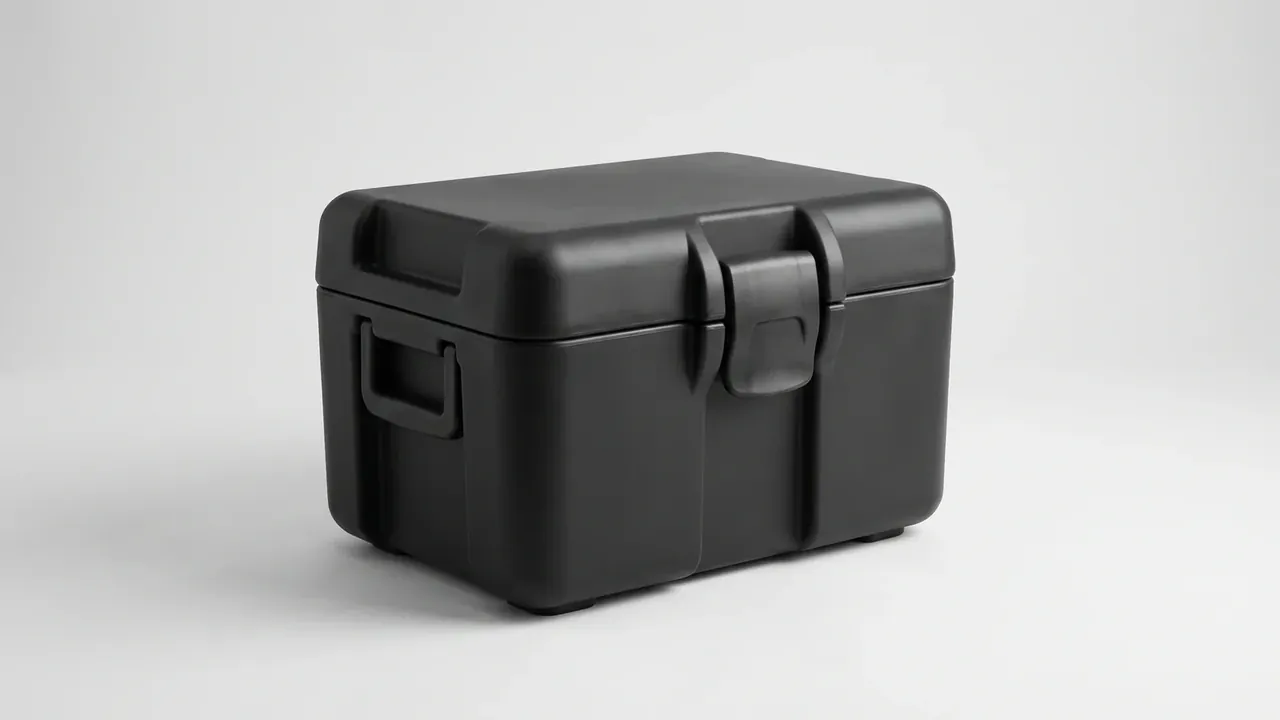
Quick answer: The site picks the configuration, not the other way round. Dust, washdown, drop height, cutting oil and temperature swing each push a heavy duty plastic equipment case toward a different wall, rib pitch, wheel and lifting point. Five sites, mapped to the numbers that change.
Table of contents
- Five Job Sites for a Heavy Duty Plastic Equipment Case
- Mines and Tunnels: Dust and Washdown
- Construction Sites and Energy Maintenance
- Machine Shops and Outdoor Base Stations
- Carrying and Stacking Limits
- FAQ
1. Five Job Sites for a Heavy Duty Plastic Equipment Case
The same outer dimensions serve a mine and a rooftop mast, yet they ask opposite things. Underground work punishes a latch that lets grit past its seat; a mast punishes condensation and wind load. Rib pitch matters: at 10 mm wall, 60 mm pitch deflects half as much as 90 mm at 45°C.
| Site | Wall | Rib pitch | Wheels | Lifting points | Liner |
|---|---|---|---|---|---|
| Mine and tunnel | 10–12 mm | 60 mm | None or 200 mm | Four lugs | EPE 20 mm |
| Construction | 8–10 mm | 75 mm | 160 mm | Two lugs | EPE and pallet |
| Energy maintenance | 8 mm | 90 mm | 125 mm | Single eye | EVA 15 mm |
| Machine shop | 10 mm | 60 mm | 160 mm | None | EVA compartments |
| Base station | 6–8 mm | 90 mm | 100 mm | None | EPE 10 mm |
Wall follows drop height, wheels and lugs follow the floor, liner follows lid cycles; buy castors first and you get a heavy duty plastic equipment case that rolls well and no longer seals.
2. Mines and Tunnels: Dust and Washdown
Underground, dust and washdown arrive together. This grade runs 10–12 mm walls at 60 mm rib pitch with a double lip, so water runs off the rim rather than pooling in the gasket groove. IP6X rules out through-holes in the latch seat.
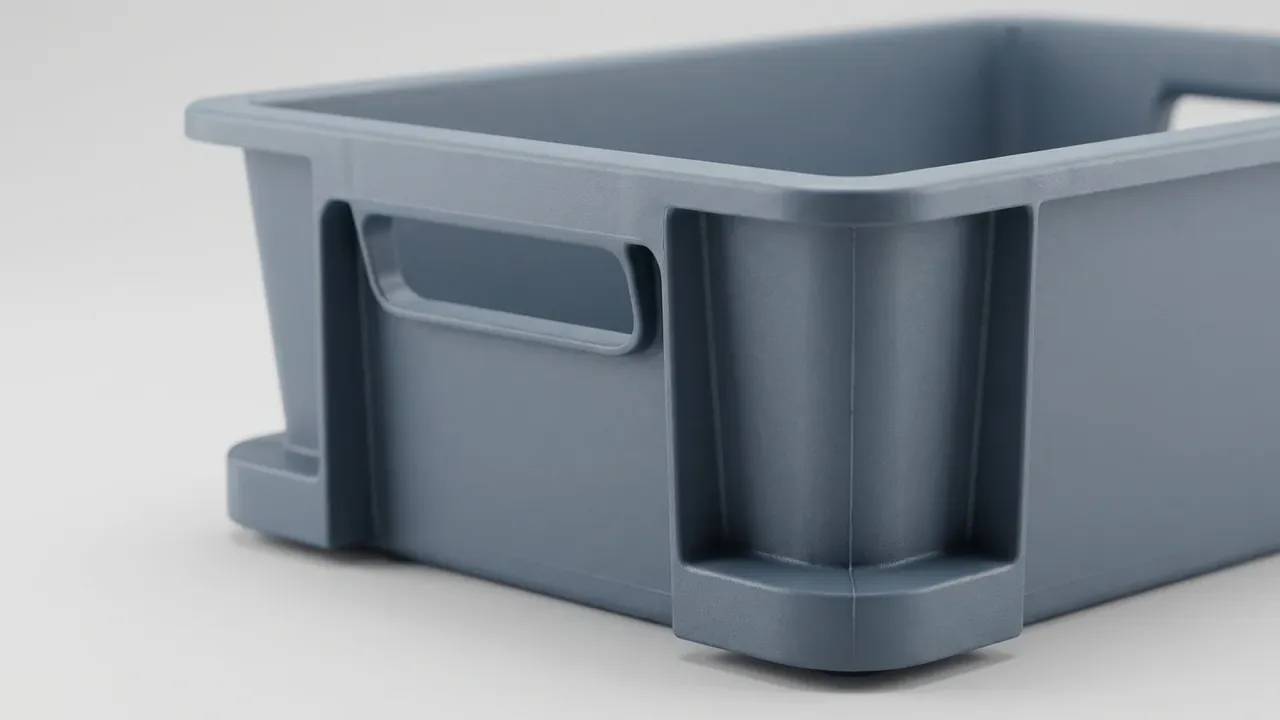
Lifting separates the grades. Corner lugs belong where the column meets the base, with sling angle inside 60 degrees; at a 180 kg load every extra 15 degrees eats the pull-out margin.
3. Construction Sites and Energy Maintenance
On site the first risk is the drop, not the dust. A 1.2 m fall onto broken stone without a crack sets the grade: 8–10 mm walls and thickened corners, which whiten and split first.
Energy maintenance is tidier but opens far more often: six to eight lid cycles a day, where latch feel beats another millimetre of wall. A 15 mm EVA liner cut to the tool outline ends the search.
4. Machine Shops and Outdoor Base Stations
A machine shop runs on cutting oil and swarf. Oil turns ordinary EPE sticky, so this grade uses closed-cell EVA compartments at two thirds of part height, and a 10 mm wall on 60 mm pitch resists sideways shoving.
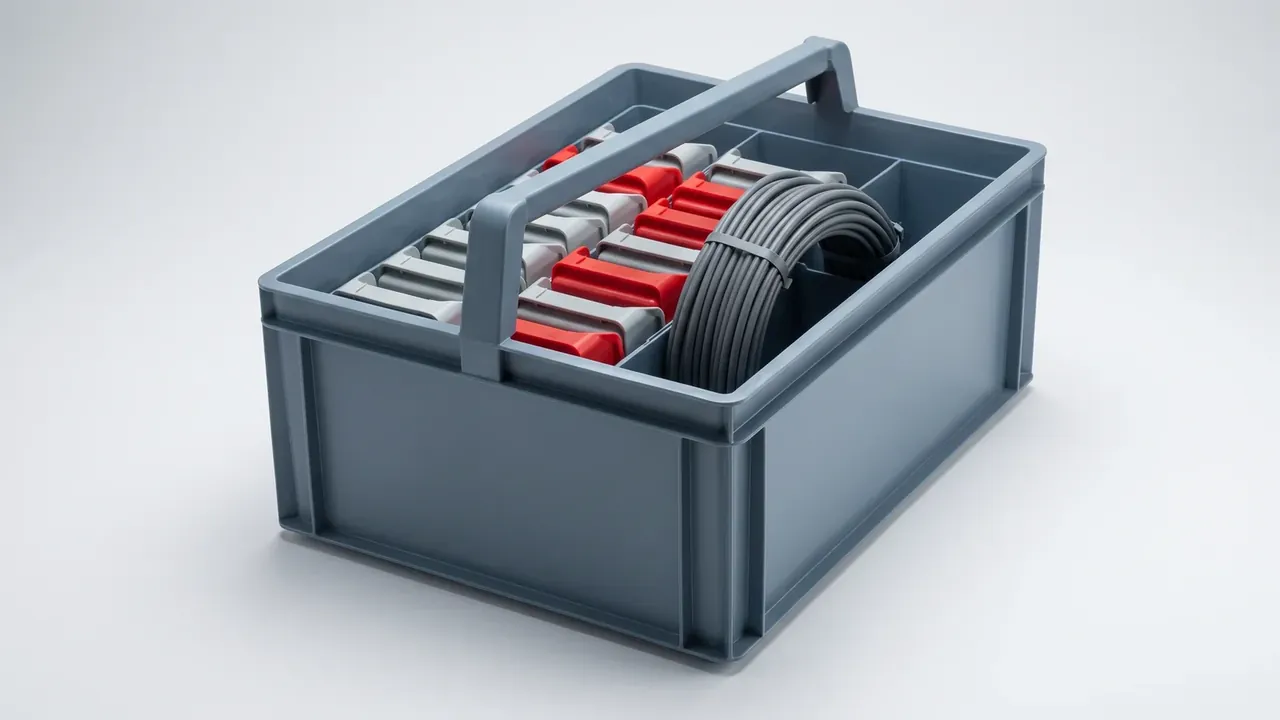
A base station is a temperature problem. A heavy duty plastic equipment case there must stay closed from minus 25°C to 60°C: cold makes PP brittle, heat expands trapped air, so venting matters more than the gasket. Light grey runs about 15°C cooler than black; above 0.35 square metres, clamps close to 300 mm.
5. Carrying and Stacking Limits
Carrying method can cancel every earlier choice: side grips hold 25 kg comfortably, and a 100 mm wheel only works on a flat floor.
| Method | Load limit | Common misuse |
|---|---|---|
| Two-person carry | 25 kg | Grips used as lifting eyes |
| Wheeled | 80 kg | 100 mm wheels on gravel |
| Forklift | 250 kg | Forks bearing on base ribs |
| Crane | 180 kg | Sling angle above 60 degrees |
Stacking is limited by time, not strength. At 80 kg, three high at 25°C for three months, a heavy duty plastic equipment case can creep about 3 mm at the bottom wall and open the lid gap. Above 35°C, plan two high and stay under 1.8 m.
Conclusion
The five sites are five briefs: dust and lugs underground, drop resistance and a pallet on site, latch feel in maintenance, an oil-proof liner in the shop, temperature and clamps at the mast. Rank them by weight, then check wall, rib pitch, wheel and liner. A heavy duty plastic equipment case that lasts matches the ground it stands on.
This article discusses only the container (case body) side of specifications and design intent, and does not cover any handling, loading or use of the contents.
Related Reading
- Heavy duty protective cases in large equipment transport
- Equipment case selection by industry and duty
- Stackable case specifications and stacking design
- How rotational moulding shapes a case body
Related Products
- 8 Series — Gun Cases; Military Equipment Cases; Camera Equipment Cases; Drone Cases; Watch Cases; Knife Cases; First Aid Cases; Electronics Equipment Cases
- WL8-2812 PP Gun Case — model WL8-2812
- All protective cases and toolboxes: 7 series, 158 models