

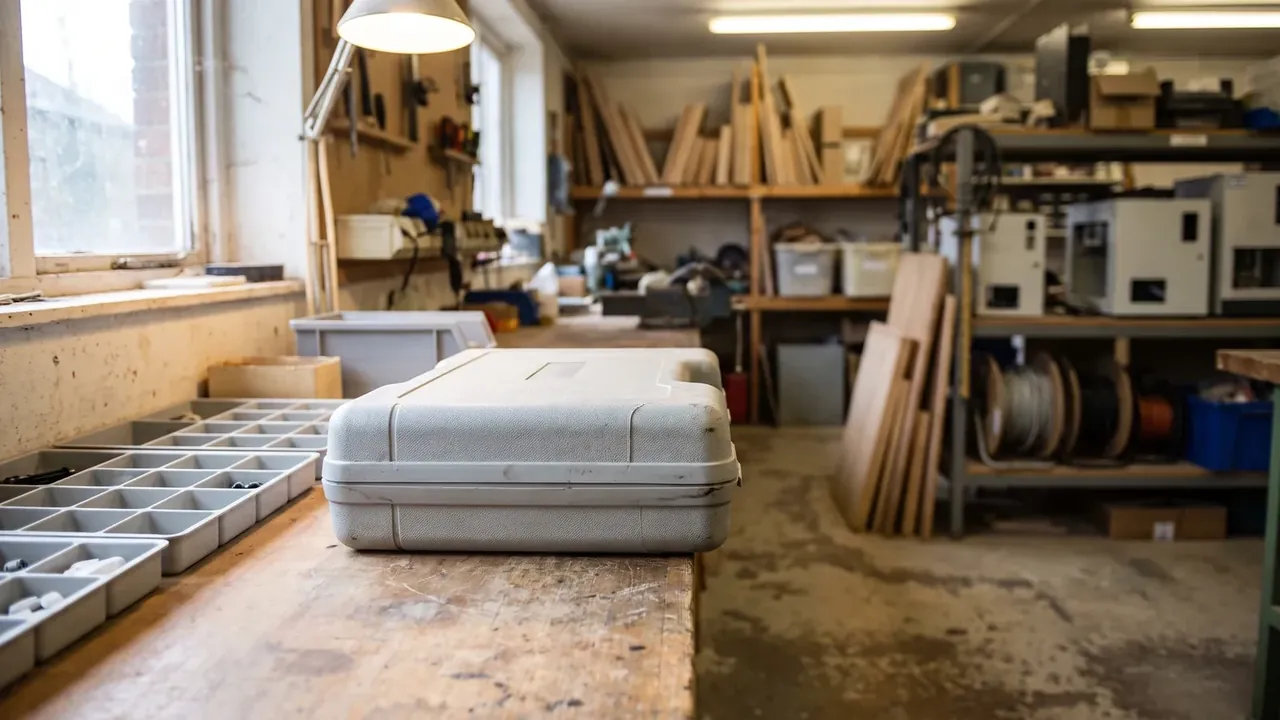
Quick answer: Loaded with the same 800 kg of equipment, an injection-moulded case, a metal box, a timber crate and a utility rotomoulded case differ less in price than in energy paths, dead weight, sealing, repairability and cost per tonne per trip.
Table of contents
- Heavy-Duty Protective Case Against Four Alternatives
- Impact: Where the Energy Goes
- Dead Weight and Handling Cost
- Sealing and Repair: Where Failures Start
- Cost per Tonne per Trip
- FAQ
1. Heavy-Duty Protective Case Against Four Alternatives
Fix the conditions: a 1000 by 600 by 500 mm interior, an 800 kg rating, a life counted in round trips. Otherwise price hides structure.
Each alternative has an edge: a 2.5 mm injection-moulded wall with a single-lip gasket; 1.5 mm cold-rolled sheet on a square-tube frame; 15 mm single-use plywood; a 6 mm rotomoulded wall with no frame. A Heavy-Duty Protective Case is an 8 mm rotomoulded shell with an embedded steel frame, corner blocks and a double-lip gasket.
| Option | Impact | Sealing |
|---|---|---|
| Injection-moulded case | Cracks once overloaded | IP54 to IP65 |
| Metal box | Dents absorb, then crack | IP65, bolted lid |
| Timber crate | Buffer dependent, soft when damp | None |
| Utility rotomoulded case | Rebounds, lid bulges | IP65 |
| Heavy-Duty Protective Case | Frame routes load to corners | IP67 |
2. Impact: Where the Energy Goes
Impact energy goes somewhere. A thin-wall case chalks white past its limit, and a 1.5 mm compartment wall splits on one cell.

A metal box absorbs energy by denting, then cracks from that dent on the second hit. Timber relies on fibre failure and halves once damp. The utility case rebounds, but its lid bulges first. A Heavy-Duty Protective Case routes energy into the frame and down to the feet.
Corner-first from 1.2 m, the framed case passes; the utility case keeps a bulge; the metal box shows a 6 mm diagonal deviation; the thin-wall case splits at 0.8 m; the plywood crate opens by the eighth handling. At minus 25 °C the framed case is rated at 1.0 m.
3. Dead Weight and Handling Cost
At the same interior volume: 11 kg injection-moulded, 19 kg timber, 22 kg aluminium, 24 kg utility, 26 kg framed, 48 kg steel. The gap between 26 and 48 kg decides how it leaves the truck.
At forty lifts a year, every extra 15 kg adds 600 kg of handling, and the steel box passes the 50 kg line to wait for a forklift at each transfer. The framed case spends its weight on the frame, buying corner strength and stack layers; by hand, 26 kg is near the limit.
4. Sealing and Repair: Where Failures Start
The injection-moulded case reaches IP54 to IP65 with a single-lip gasket, and a long lid stays under-compressed at the middle. The metal box uses a gasket and 24 bolts, reliable but slow. Timber has no seal; the utility case reaches IP65. A Heavy-Duty Protective Case pairs a double-lip gasket with a pressure valve and holds IP67.
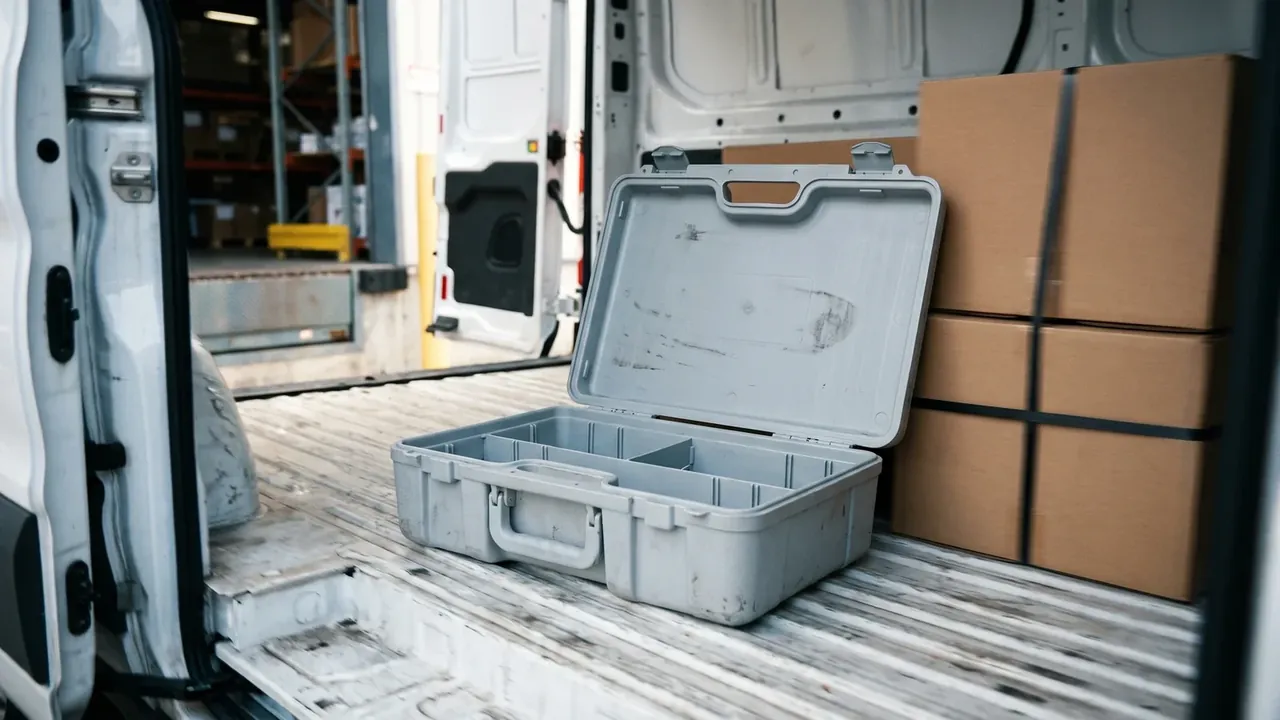
Hinges and latches on the framed case are separate parts: four screws, twenty minutes. Utility cases are riveted, so a swap means drilling. Moulded latches mean a new lid. Metal boxes need paint and rust removal, with pitting after 480 hours of salt spray.
Failures run in order: parting line, pressure valve, hinge bore. Fast repair shortens downtime, which over five years outweighs price.
5. Cost per Tonne per Trip
Divide purchase price plus five-year repair by trips, then by rated tonnes.
| Option | Price | Trips | Cost per tonne per trip |
|---|---|---|---|
| Injection-moulded case | 600 | 12 | 63 |
| Utility rotomoulded case | 1100 | 30 | 54 |
| Heavy-Duty Protective Case | 1800 | 60 | 44 |
| Steel box | 2600 | 40 | 110 |
| Timber crate | 320 | 8 | 69 |
Timber has the lowest price yet is not cheapest per tonne; the framed case costs three times an injection-moulded one and lands lowest at sixty trips.
The rotation plan decides: one-way freight or up to three trips favours timber; a fixed route of ten or more trips a year with humidity control pays back the framed case; steel suits puncture risk that moves rarely.
Conclusion
The gap is not unit price but where energy goes, what weight costs, which seal is reachable and what can be swapped. Fix volume, load and trip count, then compare cost per tonne per trip, and the ranking often inverts the quotation. Timber suits one-way freight and the Heavy-Duty Protective Case earns its price only in frequent rotation.
This article discusses only the container (case body) side of specifications and design intent, and does not cover any handling, loading or use of the contents.
Related Reading
- How load ratings and wall thickness are specified
- Metal chests against the alternatives
- Material comparison for military packing boxes
- Rotomoulded cases against alternatives
Related Products
- 8 Series — Gun Cases; Military Equipment Cases; Camera Equipment Cases; Drone Cases; Watch Cases; Knife Cases; First Aid Cases; Electronics Equipment Cases
- WL8-2812 PP Gun Case — model WL8-2812
- All protective cases and toolboxes: 7 series, 158 models