

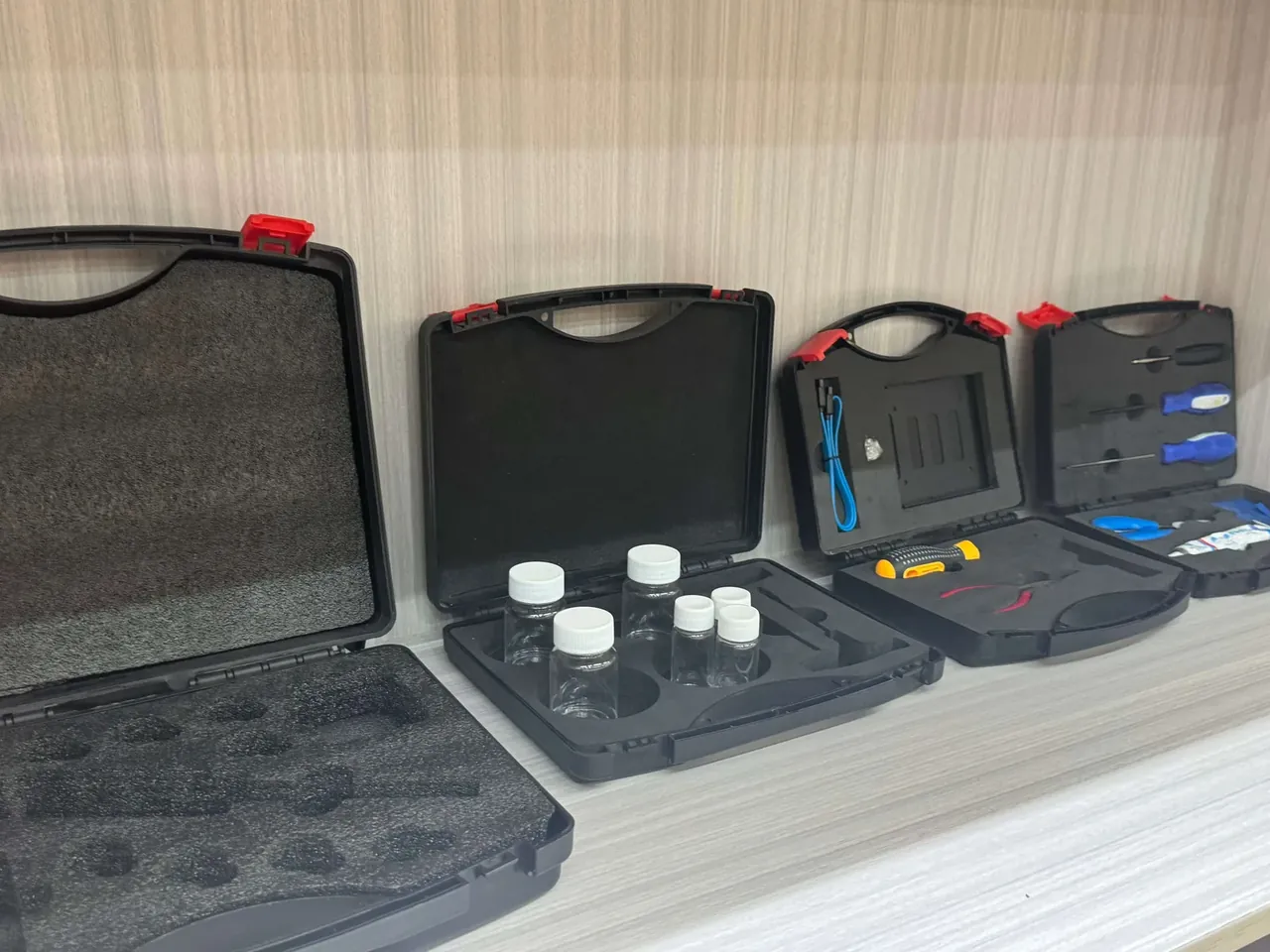
Quick answer: Impact-Resistant Military Hard Case sets corner thickening at 1.1 mm and a sealing edge that holds mouth flatness within 0.7 mm after a 1.5 m drop.
Table of contents
- Corner thickening of the Impact-Resistant Military Hard Case
- Width of the lid sealing edge
- Reading the corners after six-face drops
- Cracking threshold under a cold drop weight
- Corner thickness reject line for impact batches
- FAQ
1. Corner thickening of the Impact-Resistant Military Hard Case
The eight corners of an Impact-Resistant Military Hard Case are not folded from one flat sheet; each carries 1.1 mm of extra thickness on top of a 4.6 mm wall. Impact lands on a corner first and then spreads along the side wall, so a thin corner shows whitening and fine cracks before the broad face dents. Thickening only the corners, not the whole panel, keeps weight from rising with the wall.
Corner gain is split by measuring point. Three readings are taken on each corner, top, middle and bottom, and the spread must stay inside tolerance. Inspectors number the eight corners, and any point short of gain goes back to the mould for rework rather than a patch of adhesive.
Its outer envelope is 630×450×275 mm and the clear cavity 560×390×205 mm; the bare shell weighs 7.0 kg, rated load 15 kg. The 1.1 mm gain eats into the four cavity corners, so the drawing deducts it first before the foam liner can seat at the corner root.
| Corner point | Gain mm | Verdict |
|---|---|---|
| A top | 1.1 | pass |
| A mid | 1.1 | pass |
| B bottom | 1.1 | pass |
| Under | below 1.1 | rework |
JUNZHIJIA logs the mould run, the point and the gain on one line for an Impact-Resistant Military Hard Case, so a recheck goes back by number instead of remapping the whole wall.
2. Width of the lid sealing edge
The sealing edge decides whether the compression band stays continuous after closing, and an Impact-Resistant Military Hard Case makes this edge wide so catch force passes evenly around the rim through the lid lip, instead of pressing on one spot.
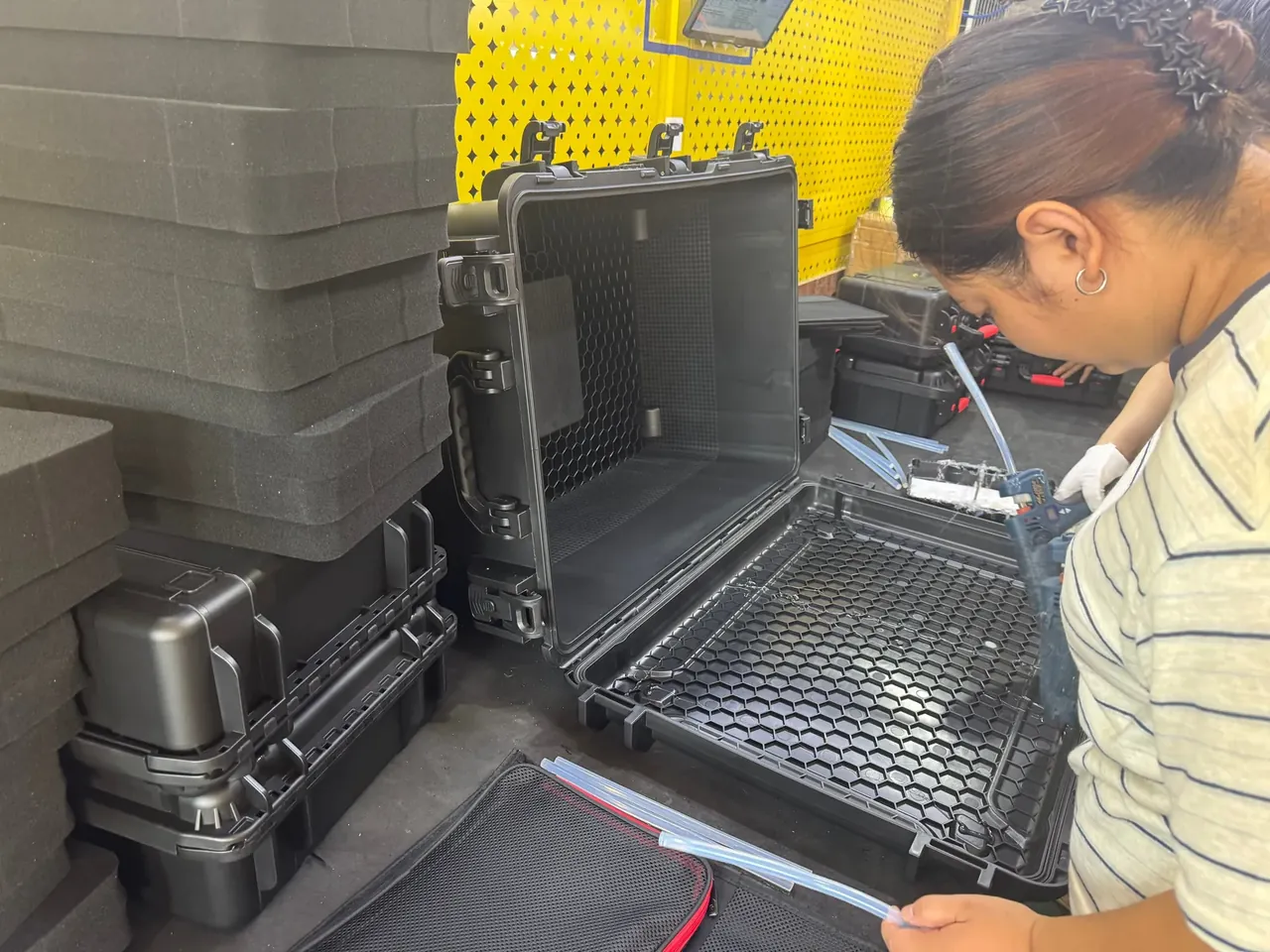
The gasket sits in a groove along the edge, with compression split over the band width. Too narrow an edge lets the mouth leak locally and skews the flatness reading, so width is measured section by section, not only at the two ends.
Four catches line the front, each clamping at 425 N, with seats set back from the edge corners so tightening cannot cock the lip. On an Impact-Resistant Military Hard Case the catch seats and the corner gain sit apart, each force path running on its own.
3. Reading the corners after six-face drops
Drops from 1.5 m cover all six faces in turn, and an Impact-Resistant Military Hard Case ranks an uncracked corner above every other reading. A corner takes the hit before the broad face, so the reading checks for cracks and whitening first, then whether mouth flatness still holds at or below 0.7 mm.
Each face is logged against its own corner, never copied from the previous face. A fine crack fails the shell even when flatness passes, because the crack keeps opening through later cycling.
| Drop face | Height m | Reading |
|---|---|---|
| Corner | 1.5 | corner crack |
| Edge | 1.5 | mouth flatness |
| Face | 1.5 | lid deflection |
| Repeat | 1.5 | flatness ≤0.7 mm |
Reading uses only appearance and gauges, with no reference to the state of anything inside. Corner points and drop faces are paired, and a recheck repeats the same face at the same height.
4. Cracking threshold under a cold drop weight
Plastic turns brittle in the cold, so an Impact-Resistant Military Hard Case uses a 2.5 J drop weight at −25 ℃ to fix the cracking threshold, with the striker landing where a corner meets the mouth. No crack is a hard rule; any through-crack marks that batch short on corner gain.
The working range is −25 ℃ to 60 ℃, and both ends are checked: the cold end for brittle fracture, the warm end for creep under stacking. One corner gain behaves differently at the two ends, and the drop weight only settles one of them.
The 2.5 J figure covers a local corner strike, not whole-shell bearing. Energy, striker shape and landing point are written into the work card together, since changing any one makes the reading incomparable.
5. Corner thickness reject line for impact batches
Units from one mould run of the Impact-Resistant Military Hard Case are checked for a sound corner, mouth flatness within 0.7 mm, then a clean result under the cold drop weight. Any failure sends that shell back; an average never clears the run.
A cycling rig runs 4300 openings, then flatness is remeasured; stacking runs 3 layers for 24 h, with lid deflection held at or below 1.7 mm. Both are done on the same shell, since reporting them apart hides how corner gain and the sealing edge interact.
| Flatness | Condition | Verdict |
|---|---|---|
| 0.4 mm | after drop | large margin |
| 0.6 mm | after drop | target |
| 0.7 mm | reject edge | return |
| 1.7 mm | stacking | lid bound |
JUNZHIJIA ships a single sheet listing envelope, cavity, wall, corner gain, bare and rated mass, followed by the three criteria; the manufacturing side writes only about shell structure and inspection items. That closes what the Impact-Resistant Military Hard Case can state; the rest is a retest to the fixed method.
Conclusion
Corner gain of 1.1 mm, the width of the sealing edge and a 2.5 J striker at −25 ℃ interlock on an Impact-Resistant Military Hard Case: a corner free of cracks and mouth flatness within 0.7 mm after a 1.5 m drop describe the same outcome. Note the drop face, temperature and measuring point before any comparison, for a lone number has no standing. JUNZHIJIA bundles structural size with the three criteria on the sheet that travels with the shell, so a later check need not reconstruct the settings.
Related Reading
Related Products
- 8 Series — Gun Cases; Military Equipment Cases; Camera Equipment Cases; Drone Cases; Watch Cases; Knife Cases; First Aid Cases; Electronics Equipment Cases
- WL8-2812 PP Gun Case — model WL8-2812
- All protective cases and toolboxes: 7 series, 158 models