

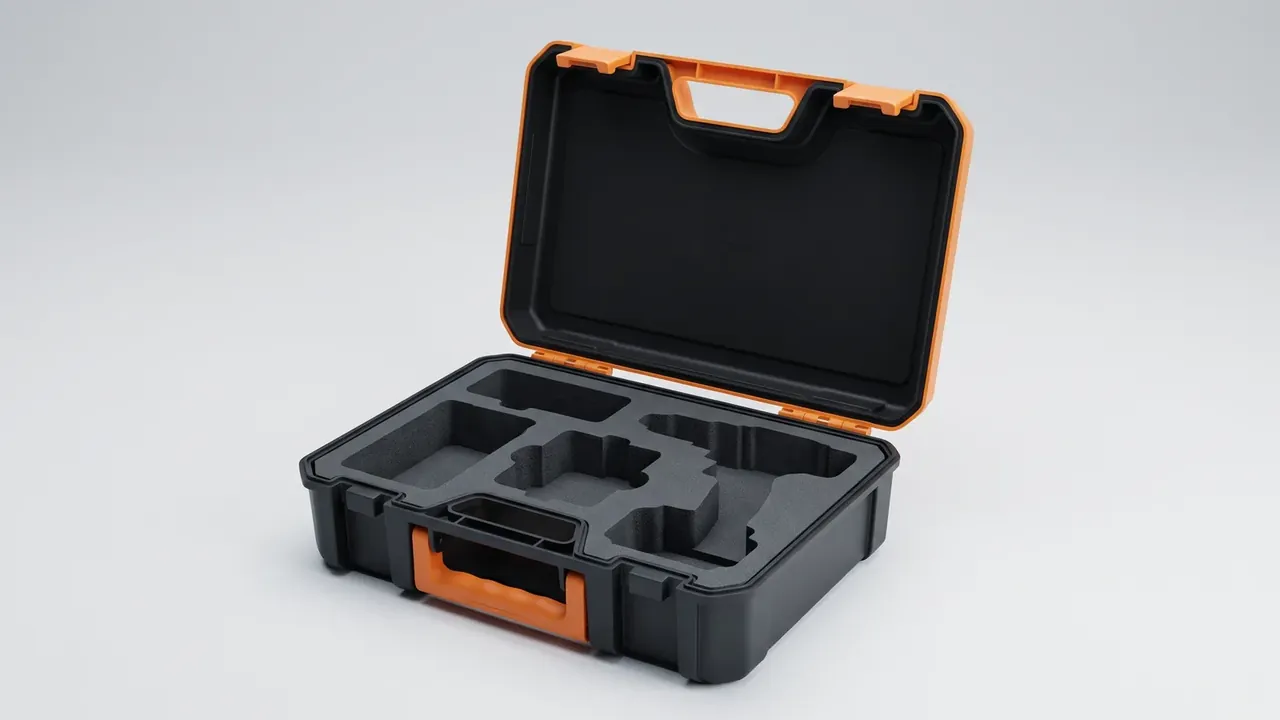
Quick answer: An industrial case OEM manufacturer proves capacity with three numbers: clamp tonnage, cavity count and cycle time, not the lowest line on a quote.
This article discusses only the container (case body) side of specifications and design intent.
Table of contents
- Capacity against order takt
- The four records an audit asks for
- Where sampling and small lots draw the line
- Who owns the mould and the drawing
- Handover risk when changing plants
- FAQ
1. Capacity against order takt
Treating a quotation as proof of capability is the usual mistake. A price says what a part can be made for, not when a press will be free. An industrial case OEM manufacturer shows three figures instead: clamp tonnage, cavity count and cycle time.
A 650 t press at 0.4 t/cm² covers about 1600 cm² of projected area, the 500×320 mm class of body. One cavity at 90 s makes 800 shots in 20 hours, so eight presses yield 6400 cases a day, while a 30,000-a-month order needs 1200 a day. Ask what the monthly figure is divided by.
| Monthly order | Daily need (25 days) | Presses used at 90 s | Presses left |
|---|---|---|---|
| 10,000 | 400 | 0.5 | 7.5 |
| 20,000 | 800 | 1.0 | 7.0 |
| 30,000 | 1,200 | 1.5 | 6.5 |
| 50,000 | 2,000 | 2.5 | 5.5 |
Running all eight presses for 30,000 gives 150 cases each a day, under four hours of moulding, the rest lost to changeovers. A large body takes about 3 hours to change, so two changes eat 6 hours. Two dedicated presses instead give the 25-day lead time a floor.
2. The four records an audit asks for
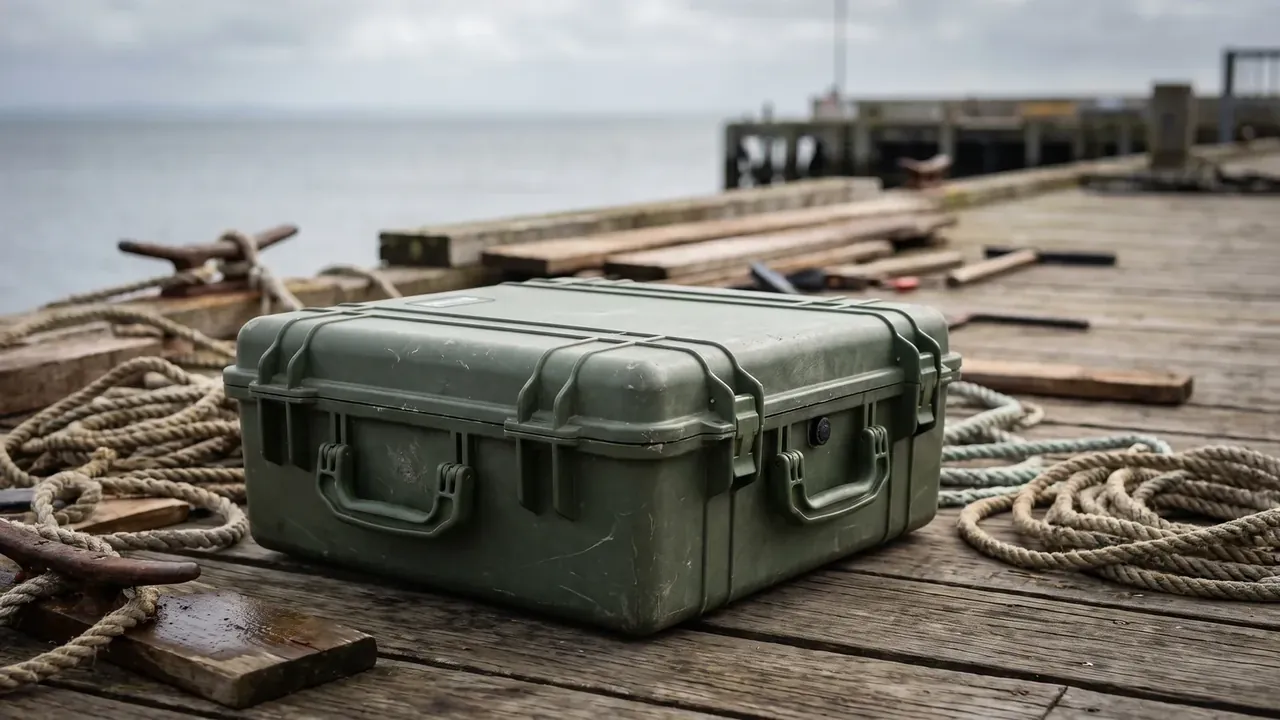
Four records come out before the shop tour: machine register, first article sheets, patrol sheets, outgoing inspection. Continuity matters, not thickness; the discipline of an industrial case OEM manufacturer sits in the date columns.
| Record | Read | Pass mark | Usual break |
|---|---|---|---|
| Machine register | Number, tonnage, service date | Plate on the machine matches | Eight listed, five on the floor |
| First article | 3 to 5 parts per shift or change | Measured values plus a signature | The word OK, nothing else |
| Patrol sheet | Mould temperature and weight every 2 hours | Values that move | One handwriting for a month |
| Outgoing check | Sample size, acceptance number | Chain matching AQL 2.5 | A verdict with no sample record |
The register gives itself away: pick a line, walk to the bay, look for the number. Read the first article sheet taken after a mould change; three months reading OK means no process control.
Patrol sheets earn their keep through variation: 45 ℃ held flat for a month was copied, part weight drifting ±5 g was weighed. Outgoing records should chain the sampling logic an industrial case OEM manufacturer uses: a 1200 piece lot at level II takes 80 pieces, majors at AQL 2.5 accept 5 and reject 6.
The four must cross reference: a press number on a first article sheet exists in the register, and an outgoing lot traces back to that day's patrol sheet.
3. Where sampling and small lots draw the line
Seven days for a sample is the divide. A plant accepting 7 days has a stock frame or in-house tool modification; one promising 3 days is often swapping colour and foam in an existing body. The first article from an industrial case OEM manufacturer carries a dimensional report, five wall readings and an assembly demonstration.
Three to five parts, not one: three show consistency, five show spread. On a nominal 3.0 mm wall, readings between 2.7 and 3.3 mm are stable; a spread above 0.3 mm means mould temperature or packing pressure is still moving. PP shrinks 1.0% to 2.5%, so a 1.5% error on a 600 mm body is 9 mm.
A 300 piece run tests takt, not appearance: one shift, enough to see where the yield climbs. The 96% is in-house first pass yield, and incoming defects must sit under 2%; the gap is the capacity rework eats.
A softer gate: will the plant freeze a parameter card? An industrial case OEM manufacturer whose parameters live in one technician's memory drifts on the first production lot.
4. Who owns the mould and the drawing
A mould is an asset, not a gift. Three clauses belong in the contract with an industrial case OEM manufacturer: who owns it, where it is kept, on what condition it moves. Leave one out and changing plants costs a new tool.
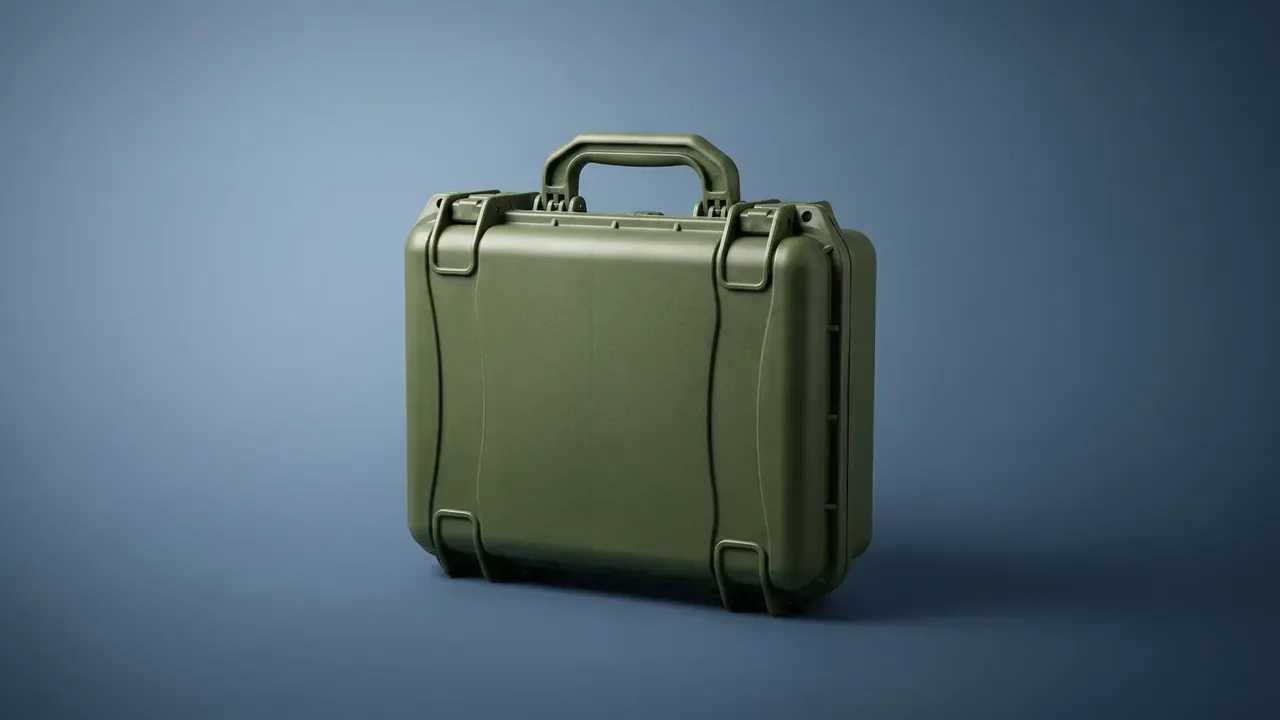
Ownership is the clause an industrial case OEM manufacturer tends to soften. Tying the mould to the goods means the tool follows the order; title with the buyer and custody with the supplier is the only version you can move. The two differ by a tool and 40 days.
Drawings need revision control: from revision A to C, the annex must state which revision the mould was cut to. The handover pack carries mould number, drawing revision, water circuit diagram and insert list; four items, or the transfer is not closed.
Spare inserts and assembly fixtures get missed: ownership and price are settled by contract, and fixtures do not travel with the mould, so the new plant rebuilds them. JUNZHIJIA logs a mould service record every 12 months.
5. Handover risk when changing plants
Plants change for lead time, defects or price. Finding a new one is easy; getting everything back is not. The handover list of an industrial case OEM manufacturer starts with mould condition.
Measure before the pull: parting line gap, ejector pin depth, water flow. A parting line worn past 0.2 mm flashes on the first shot, and a half scaled circuit pushes cooling from 90 s to 110 s.
The parameter card comes second: without it the new plant loses 3 days to the first article. Gauges come third; a dedicated assembly jig cannot be rebought and costs 15 days to rebuild.
Plan a 30-day overlap, old line running while the new one makes a small lot, both first articles compared for colour and gap. An industrial case OEM manufacturer that accepts an overlap trusts its stability; one that refuses is often booked solid.
The rule: three consecutive lots above 2% incoming defects, or cumulative delay past 15 days, downgrades the supplier. Downgrading moves half the new orders and leaves an observation window.
Conclusion
An industrial case OEM manufacturer is chosen for repeatable output, not the lowest line on a quote. Eight presses and 650 t are the entry ticket; fitting 30,000 a month into 25 days depends on changeover and downstream takt. Records that cross reference, a 7-day sample with measured values, a 300 piece lot that holds its yield and clean title on moulds predict lead time better than a price.
This article discusses only the container (case body) side of specifications and design intent, and does not cover any handling, loading or use of the contents.
Related Reading
- Choosing a case OEM factory
- OEM custom cases
- Auditing a case supplier
- Sourcing a custom equipment case maker
Related Products
- 8 Series — Gun Cases; Military Equipment Cases; Camera Equipment Cases; Drone Cases; Watch Cases; Knife Cases; First Aid Cases; Electronics Equipment Cases
- WL8-2812 PP Gun Case — model WL8-2812
- All protective cases and toolboxes: 7 series, 158 models