

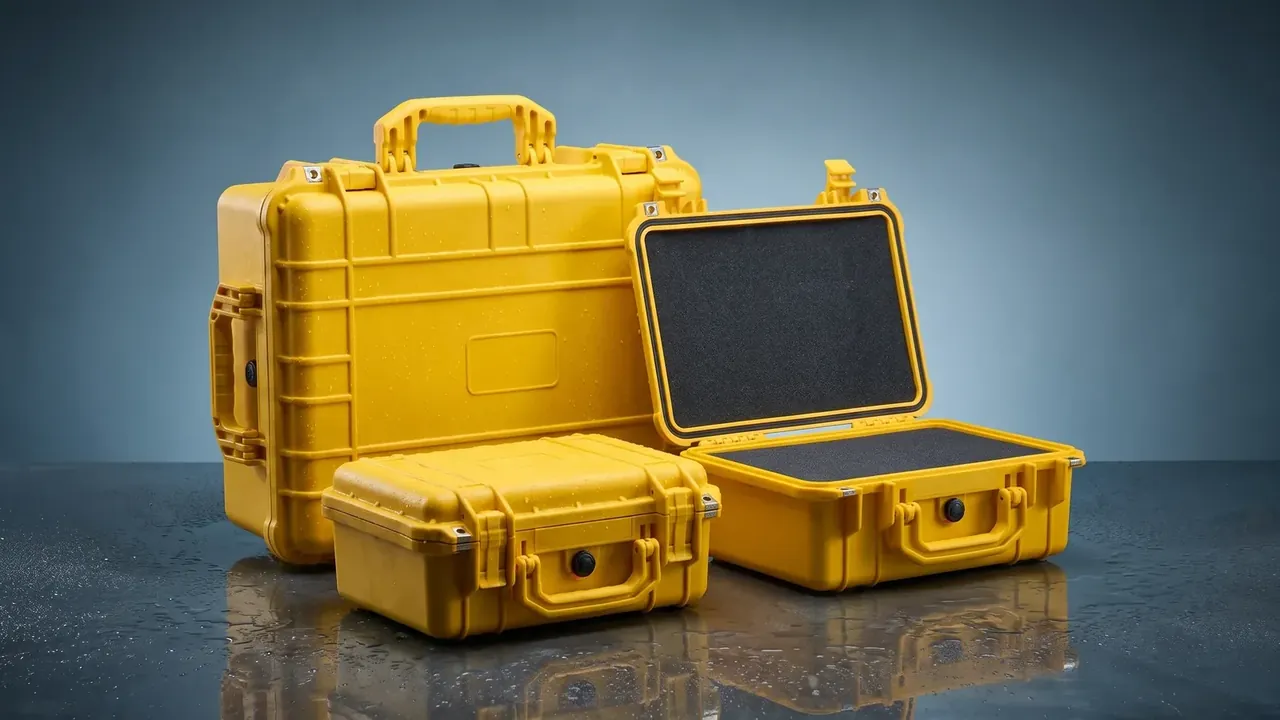
Quick answer: The Industrial Electrical Equipment Case is judged by four figures, not by shell colour: 8 mm creepage, ground continuity under 0.1 Ω, a rise within 15 °C.
Table of contents
- Creepage Distance and Room for Wiring
- How Ground Continuity Gets Built
- The Heat Budget of a Sealed Shell
- Service Access and Lid Angle
- IP Rating and Condensation
- FAQ
1. Creepage Distance and Room for Wiring
Fit an Industrial Electrical Equipment Case around live gear and the first figure to settle is not outside size but the creepage that survives the fit. A 2.0–3.5 mm wall buys impact strength and stiffness and adds almost nothing to insulation, because plastic that thin is structure, not barrier.
Creepage runs along a surface, clearance jumps through air, and the two answer different failures: at least 8 mm along the surface, at least 5.5 mm through air. Tracking starts where dust and moisture bridge a path; flashover starts where a transient finds the gap too short. Merge the pair into one figure on a drawing and the dirty side fails first.
Wiring room in an Industrial Electrical Equipment Case is allocated, not left over. Power and signal take separate ducts and cross at right angles, the sheath keeps one wire diameter clear of the wall, and no loom runs under a foam pad that compresses at each close.
| Check | Measured | Figure here | Typical failure |
|---|---|---|---|
| Creepage | shortest surface path | 8 mm or more | busbar flat on the wall, tracking after a damp week |
| Clearance | shortest path through air | 5.5 mm or more | upright terminal pressed into a lid rib |
| Harness gap | sheath to wall | one wire diameter | foam squeezing the loom at every close |
| Segregation | power against signal | separate runs | one tie around both, interference follows |
2. How Ground Continuity Gets Built
A moulded shell does not conduct, so metal carries the bond from the grounding stud to every part that needs it. An Industrial Electrical Equipment Case passes on a single figure: no more than 0.1 Ω from the stud root to the furthest metal part, read on a four-wire meter with probes on bare metal rather than paint.
Three routes exist, and each charges for itself. A moulded insert puts a nut into the wall at injection and takes a busbar inside; nothing shows outside, but the tool needs insert pockets and scrap rises. An internal busbar is a tinned strip screwed to the base, easy to change later, at the cost of wiring space. A through-stud crosses the wall with a seal at each face: lowest reading, one more sealing face to test.
Failures in an Industrial Electrical Equipment Case rarely sit in the stud. Paint left under a lug, a jumper left out at assembly, a metal hinge never bridged to the lid: those three account for most rejects. Vibration drains the margin under 0.1 Ω the same way, so the reading is logged at dispatch and again after a year.
3. The Heat Budget of a Sealed Shell
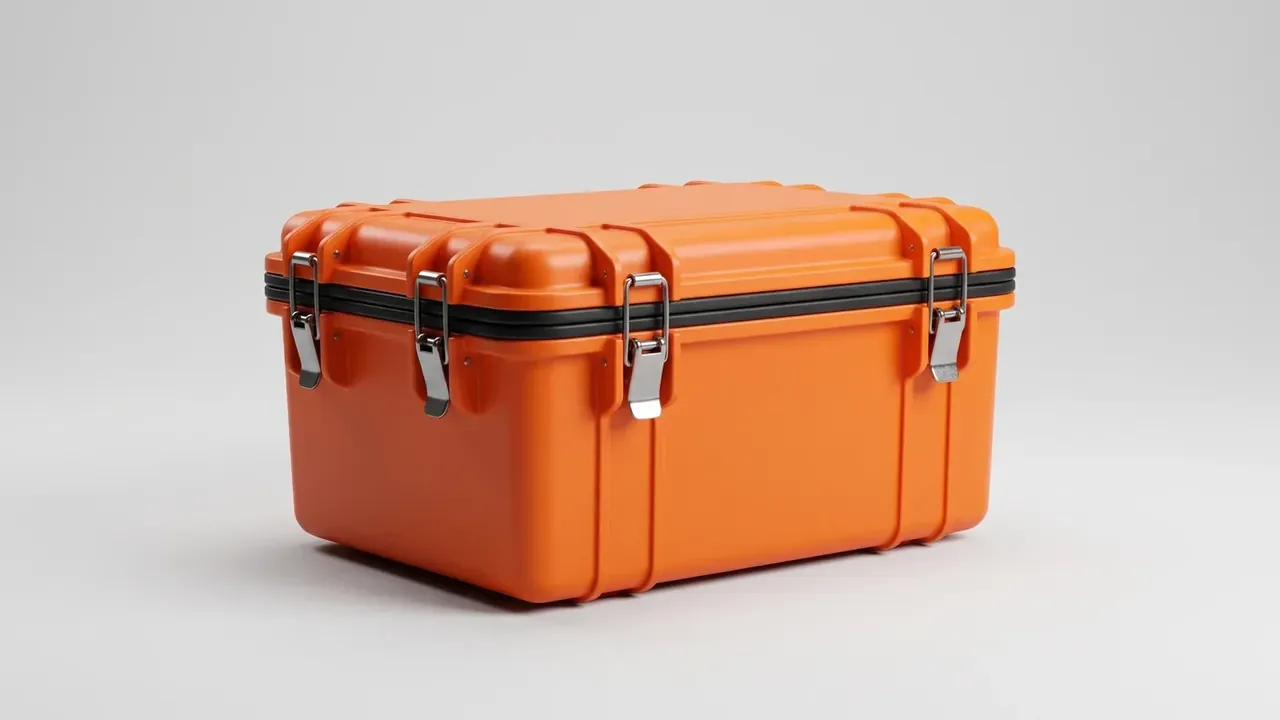
Seal the lid and the air inside stops moving. Device losses can leave only through the shell, and what cannot leave shows up as temperature rise; an Industrial Electrical Equipment Case of this class is normally held to 15 °C.
Loss first, area second, path last. Loss comes off the datasheet; area is the outer surface of six faces less the one bolted to a wall; path runs from device to shell, and a converter mounted flat with a thermal pad behind it moves heat an order of magnitude faster than one hanging mid-cavity.
Three levers by cost. A metal panel used as a heat bridge is the dearest and the most effective. Mounting devices straight onto the wall is cheap but leaves no room for a bracket outside. Vent slots above a warm component cost nothing and fix only a local hot spot. A breather valve shifts moisture, not heat.
Electrical rejection: a measured ground continuity above 0.1 Ω, or an internal rise above 15 °C, fails the case configuration. The two share one rule because they feed each other — a poor bond turns a shield into a heater, and a hot cavity lifts contact resistance again.
4. Service Access and Lid Angle
The Industrial Electrical Equipment Case lid opens at least 100°. Past that angle the centre of gravity crosses the hinge axis and the lid stays put; at 90° the mass still hangs inside the axis, so a technician holds the lid with one hand and works terminals with the other, at double the time per connection.
Hinges run 20,000 cycles and latches hold 200–400 N. Below that band a lid opens in transit; above it a gloved hand cannot work the latch, and the lid is left unfastened. Terminals, fuses and indicator lamps belong where the lifted lid reveals them; a block hidden behind a loom may as well be missing.
Nothing heavy rides in the lid, a cantilever that passes every gram on to hinge and rim. Labels sit on a face that is never cut, and the harness keeps a service loop on the hinge side so the lid swings without tugging a terminal. Ceilings eat the swing on wall-mounted units, and the answer there is a side-opening lid.
5. IP Rating and Condensation
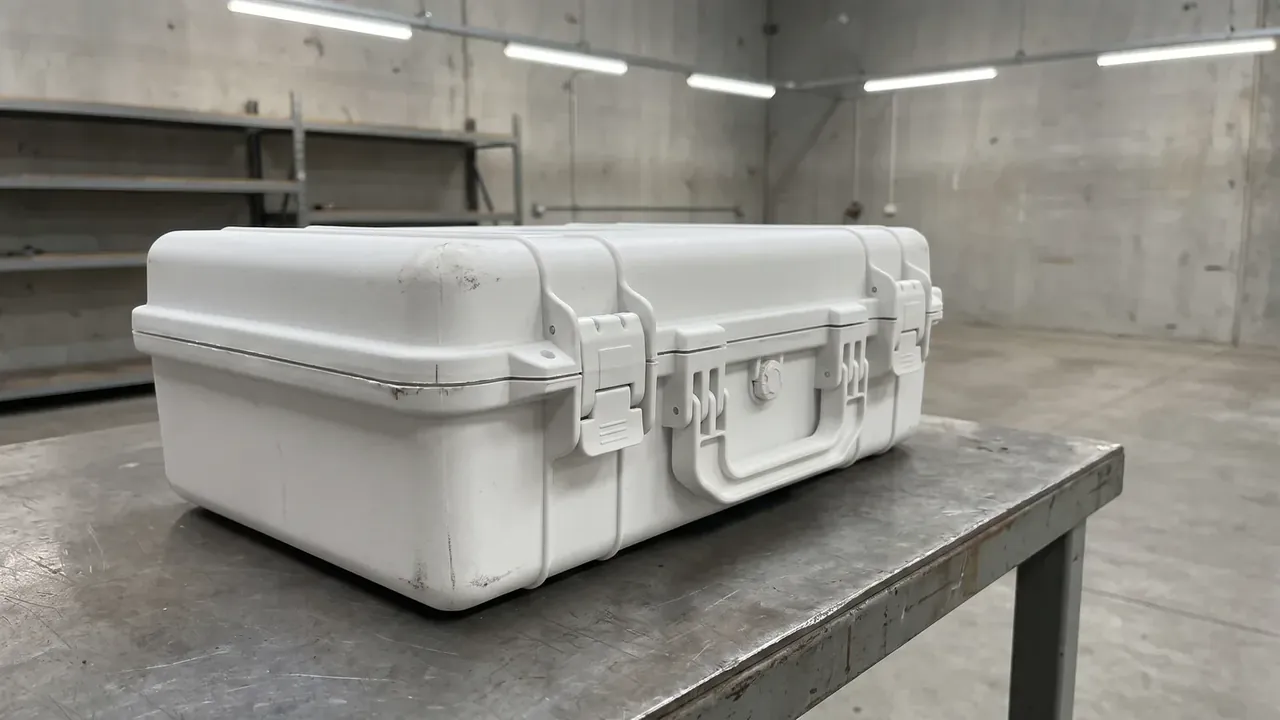
IP67 covers 1 m of still water for 30 min to IEC 60529 clause 14.2.7, mirrored in GB/T 4208-2017. It says nothing about a pressure jet, and IP68 leaves depth and time to the maker provided both exceed IP67 — a line on a specification, not a claim on a brochure. For an Industrial Electrical Equipment Case headed for a washdown bay, the jet question decides more than the digit.
Condensation is what sealing an Industrial Electrical Equipment Case costs. The tighter the shell, the less vapour leaves; ABS takes up 0.2%–0.45% in 24 h and expands at 70–90 × 10⁻⁶/K, so a day-night swing moves wall and gasket compression together.
Four remedies, chosen by duty: a one-way breather high on a side wall; desiccant sized to free volume, swapped quarterly; capping moved into a dry room; a channel at the low point so water gathers in one place instead of across terminals.
Related Reading
- Where electrical equipment enclosures are used
- Mounting and fixing an electrical enclosure
- When a case needs a drain valve
- Plastic case against wooden crate
Related Products
- 8 Series — Gun Cases; Military Equipment Cases; Camera Equipment Cases; Drone Cases; Watch Cases; Knife Cases; First Aid Cases; Electronics Equipment Cases
- WL8-2812 PP Gun Case — model WL8-2812
- All protective cases and toolboxes: 7 series, 158 models