

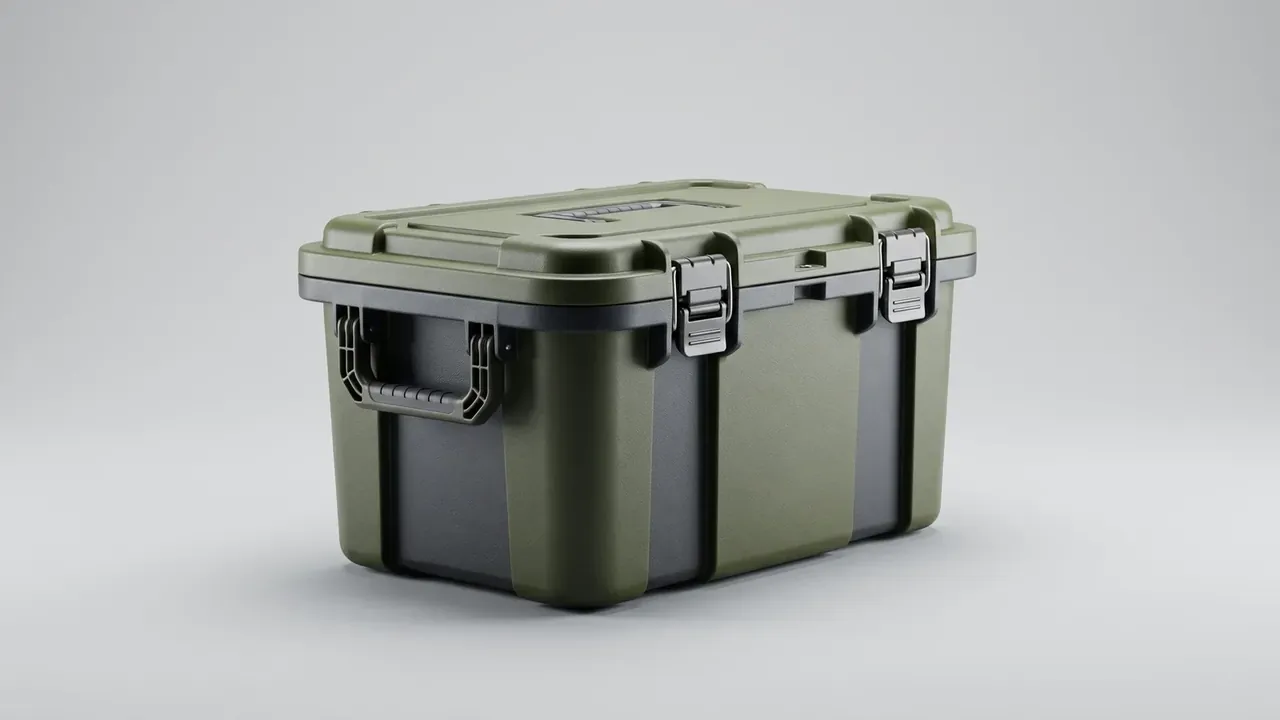
Quick answer: An industrial parts storage box works in four places: line stock, tooling holding, subcontract transit and inspection. Five settings decide the build: load and stacking, dividers and location, labels and batch trace, cleaning, and handling. Weigh one loaded box first.
Table of contents
- Where an industrial parts storage box works
- Line-side stock: load per box and stacking
- Tooling and fixture holding: dividers and location
- Subcontract parts and inspection: labels and batch trace
- Cleaning, residue and turnover life
- FAQ
1. Where an industrial parts storage box works
An industrial parts storage box turns up in four spots, and loaded weight differs sharply: 30 to 50 kg at line stock, under 20 kg on a tooling shelf, 60 kg and up for subcontract parts, 20 to 40 kg in inspection. Weight sets wall thickness, and the way the box moves limits stacking height.
| Site | Loaded weight | Key setting |
|---|---|---|
| Line-side stock | 30 to 50 kg | ribs, fork pockets |
| Tooling shelf | 15 to 20 kg | grooves, dividers |
| Subcontract parts | 60 to 80 kg | thick base, four-way pockets |
| Inspection area | 20 to 40 kg | label pad, window |
2. Line-side stock: load per box and stacking
Line-side boxes are designed for static load. Fifty kilograms a box at three tiers puts 100 kg on the bottom unit, so base ribs tighten to a 120 mm pitch and the base plate stays at 4 mm.
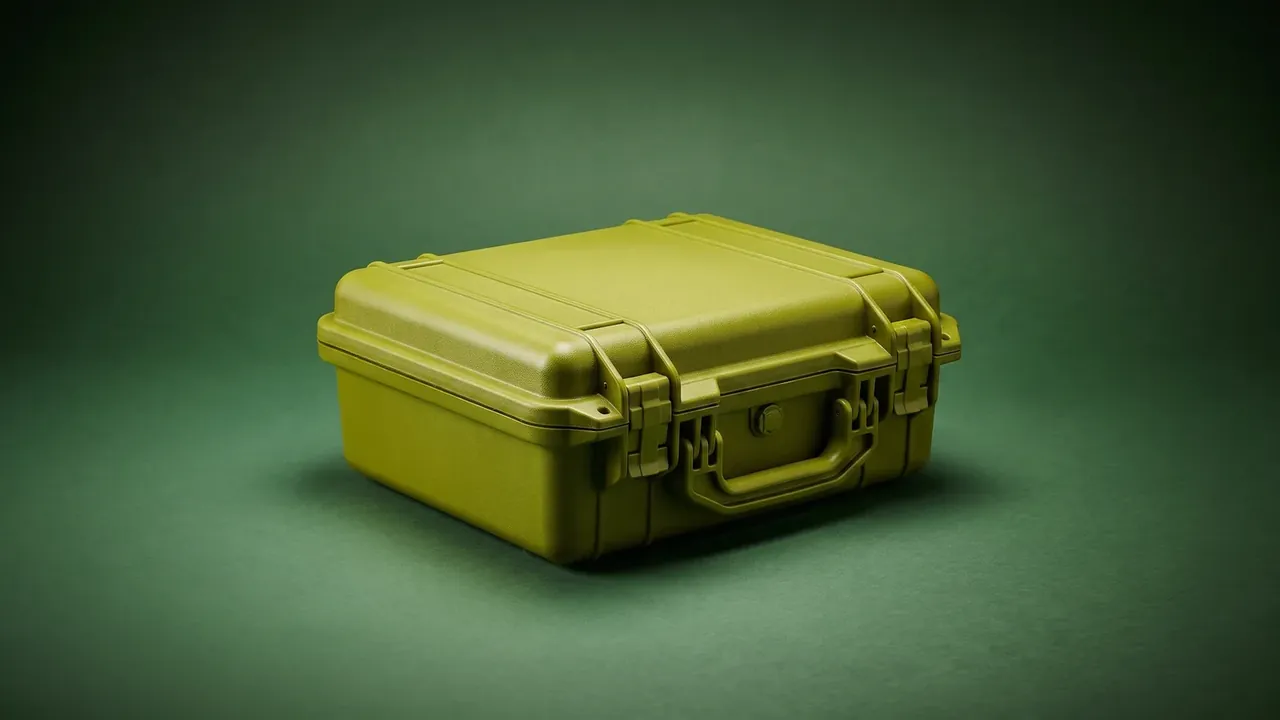
Dynamic load is another number. A forklift lift carries an impact factor of 1.3, so 50 kg becomes 65 kg, and a corner radius under 8 mm cracks within 200 turns.
The floor counts too: a three-metre straightedge should show no gap over 5 mm, or the stack lands on two points.
| Item | Value | Beyond it |
|---|---|---|
| Base plate | 4 mm | base sags |
| Rib pitch | 120 mm | base bulges |
| Corner radius | 8 mm or more | corners crack |
3. Tooling and fixture holding: dividers and location
Tooling held in an industrial parts storage box is about location, not load. A 32 mm milling cutter at 1.2 kg rests in its groove under its own weight, with grooves at a 50 mm pitch and 12 mm depth keeping cutting edges apart in transit.
Dividers are 5 mm PP hollow sheet dropped into sidewall posts on the same pitch, so a change of part mix swaps the divider and keeps the box.
4. Subcontract parts and inspection: labels and batch trace
Subcontract boxes survive forklift handling with four-way pockets: 200 mm by 60 mm, 90 mm off the floor, 150 mm minimum fork engagement.
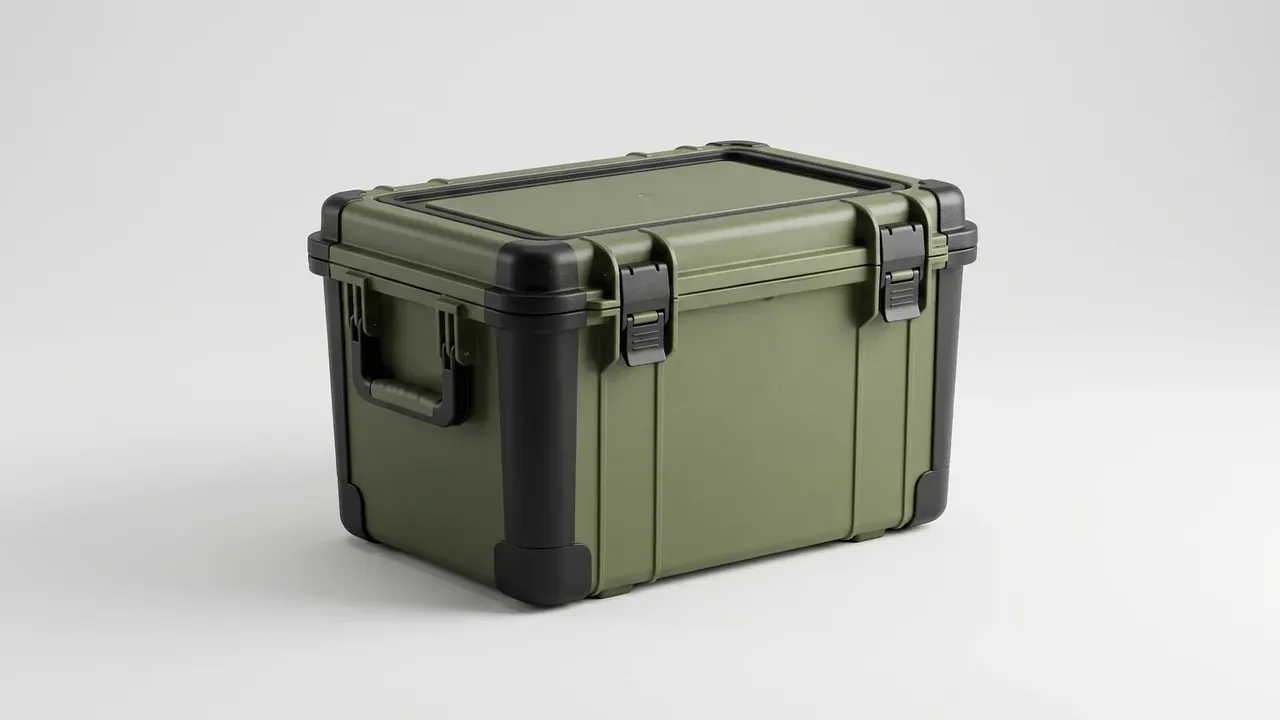
The label pad is 100 mm by 80 mm on the long face, one code per box, and a batch card slides into a sidewall slot so a batch change swaps the card rather than the label.
An inspection box is readable from outside: the lid locks at 90 degrees, and a 60 mm window shows fill level.
| Trace item | Carrier | Renewal |
|---|---|---|
| Box number | laser mark | never |
| Batch | paper card | every batch |
| Part number | label | quarterly |
5. Cleaning, residue and turnover life
Machined parts carry oil, and residue builds up. Wash water at 40 °C with 2 percent neutral cleaner should leave under 0.5 g of residue, since 0.2 g per square metre of oil film dirties the next batch.
Dry parts are washed weekly, wet parts every batch, and a 3 degree slope with a drain lets the water leave. Life runs on turns, not years: at four turns a day, 800 turns is the hinge point while the body lasts to 1,500.
| Item | Interval | Limit |
|---|---|---|
| Interior wash | weekly or per batch | 0.5 g residue |
| Hinge | 800 turns | lid crooked |
| Base wear | quarterly | 1 mm through |
| Fork pockets | monthly | 10 mm crack |
Conclusion
An industrial parts storage box is matched to its site through five settings: load and stacking at line stock, dividers and location on the tooling shelf, fork pockets and batch labels for subcontract parts, a window and status card in inspection. Weigh the load, fix the tiers, and let the handling method settle the pocket size, because those three numbers describe every industrial parts storage box.
This article discusses only the container (case body) side of specifications and design intent, and does not cover any handling, loading or use of the contents.
Related Reading
- Heavy duty protective case applications
- Stackable case specifications
- Reusable transit box maintenance
- Logistics support box applications
Related Products
- 8 Series — Gun Cases; Military Equipment Cases; Camera Equipment Cases; Drone Cases; Watch Cases; Knife Cases; First Aid Cases; Electronics Equipment Cases
- WL8-2812 PP Gun Case — model WL8-2812
- All protective cases and toolboxes: 7 series, 158 models