

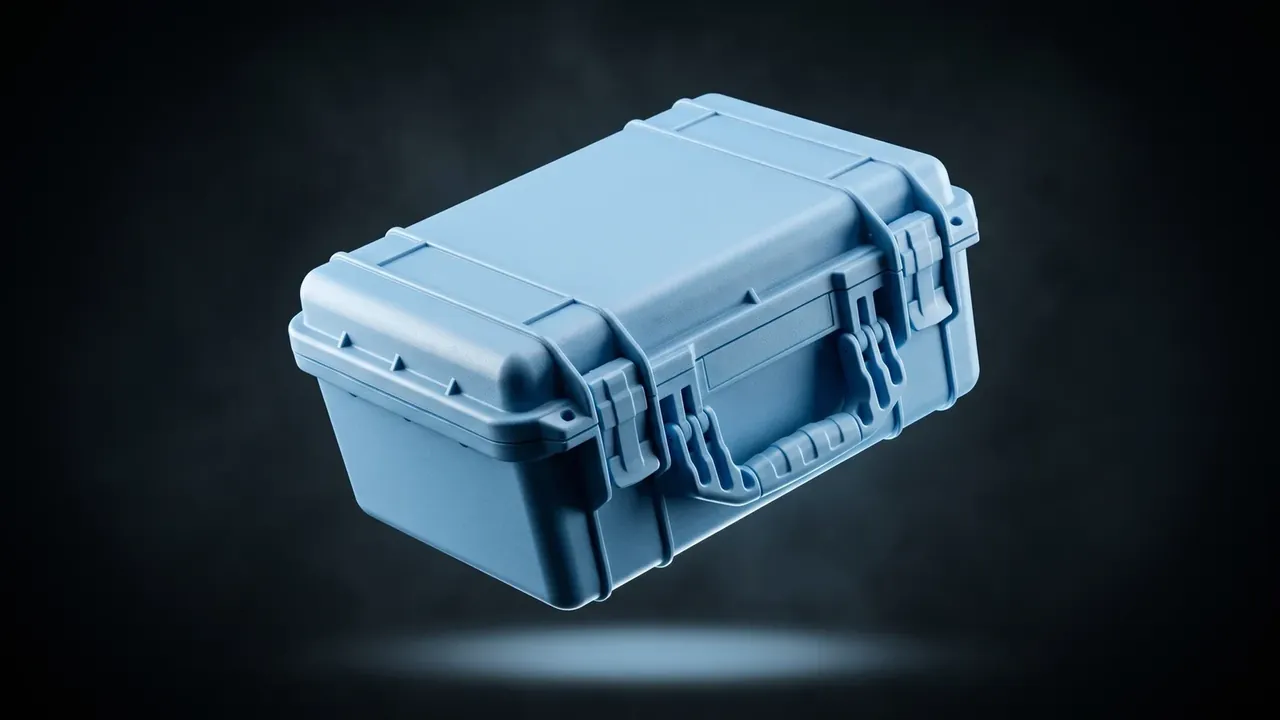
Quick answer: An industrial plastic tote box is specified by where it travels, not by how it looks. Line-side handling, stacking, logistics loops and wash-and-return each push a different parameter forward: footprint, load rating, tier count and drainage.
Table of contents
- Where an Industrial Plastic Tote Box Fits Across Four Duties
- Line-Side Handling: Footprint Ladder and Pick Height
- Warehouse Stacking: Dynamic Load, Static Load and Tier Count
- Logistics Loops: Barcode Pads and RFID Pockets
- Floor Load and Handling Interfaces
- FAQ
1. Where an Industrial Plastic Tote Box Fits Across Four Duties
Move the same industrial plastic tote box to another corner of the plant and a weakness appears: the pick window that suits a line-side station cuts away the rim stacking depends on.
| Duty | Binding constraint | Configuration | Typical size |
|---|---|---|---|
| Line-side handling | Pick rate, station pitch | Side window, dividers | 600×400×280 mm |
| Warehouse stacking | Stack stability, base load | Lid spigot, base ribs | 600×400×340 mm |
| Logistics loop | Cross-plant ID, return volume | Barcode pad, RFID pocket | 400×300×230 mm |
| Wash and return | Drain speed, drying | Large radii, drain hole | 800×600×340 mm |
Cost follows the same order: dividers and a pick window, spigot and ribs, label space and nesting, radii and drain holes.
2. Line-Side Handling: Footprint Ladder and Pick Height
A line-side industrial plastic tote box is sized from the workstation: 600 mm by 400 mm and 400 mm by 300 mm footprints, the rim held 900 mm to 1100 mm above the floor.
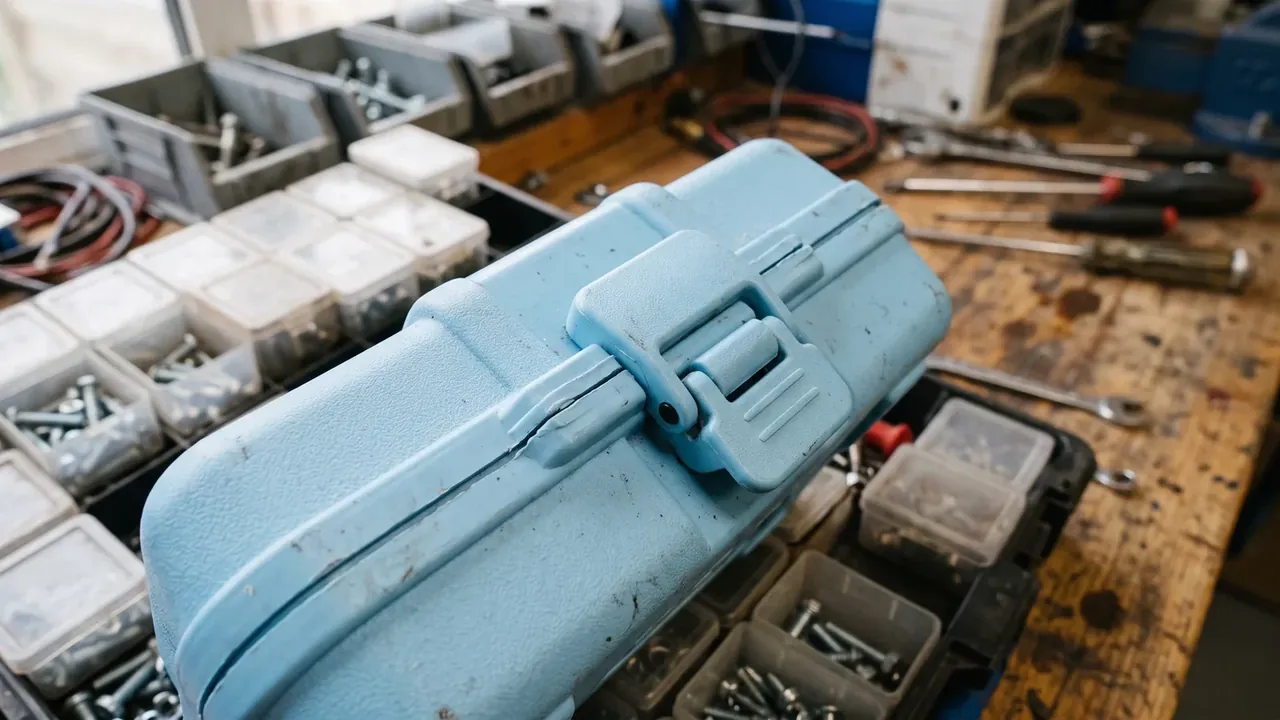
The pick face wears fastest, so a 120 mm window is cut into the long side and the rim thickened to 4 mm. Dividers run three rows by four columns with 2 mm clearance.
Empty boxes stay under 1.6 kg so one carries 15 kg inside; past 20 kg the stations switch to roller conveyor.
3. Warehouse Stacking: Dynamic Load, Static Load and Tier Count
A 600 mm by 400 mm industrial plastic tote box is rated 25 kg dynamic and 500 kg static: dynamic covers the shock of a lift, static the mass above a box standing still.
A 280 mm box stacks five high for a 1400 mm pile; a 340 mm box stops at four. The 8 mm lid spigot drops into a 3 mm recess, holding shift under 5 mm.
| Parameter | Light duty | Standard duty | Heavy duty |
|---|---|---|---|
| Outside size | 400×300×230 mm | 600×400×280 mm | 600×400×340 mm |
| Dynamic load | 15 kg | 25 kg | 30 kg |
| Static load | 300 kg | 500 kg | 600 kg |
4. Logistics Loops: Barcode Pads and RFID Pockets
A box leaving the plant must be identified and must return compact. The barcode pad is a 120 mm by 80 mm recess, 0.8 mm deep, so the label survives the brush strip; the RFID pocket is a 40 mm by 25 mm slot moulded inside the wall.
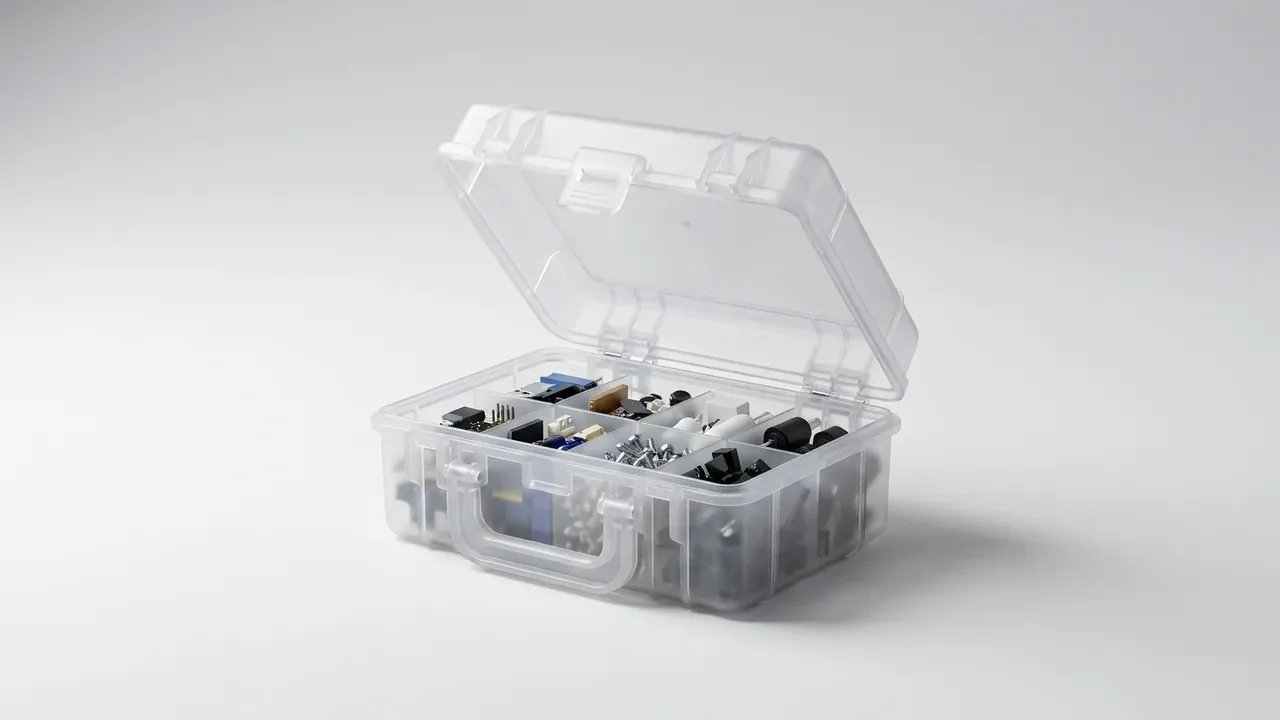
Empty boxes nest to about fifteen percent of one box height, so twelve take the space of one and a half. Nesting fights draft angle: 2 degrees releases easily, 1 degree jams, most products settle at 1.5.
A typical wash runs 60 °C for 90 seconds and must drain within 30 seconds, hence R8 base corners and a 6 mm hole set towards a corner.
5. Floor Load and Handling Interfaces
A 10 mm shift in fork opening keeps a box off a pallet conveyor, and one extra base rib stops an AGV plate from sitting flat.
| Interface | Requirement | Typical duty |
|---|---|---|
| Fork entry | 100 mm opening, 900 mm deep | Full-pallet transfer |
| Roller conveyor | 400 mm flat base run | Assembly transport |
| AGV lift | Base flatness within 2 mm | Unmanned replenishment |
Floor load is calculated per pallet: a 1.2 m by 1.0 m pallet takes twelve boxes, about 900 kg at five tiers, roughly 225 kg per foot, which fits a 3 tonne per square metre slab.
Walls run 2.5 mm to 3.5 mm over minus 20 °C to 60 °C; thin walls belly under load, thick walls need two hands, so most lines settle on 3 mm.
Conclusion
The four duties separate on four parameters: footprint governs picking, ratings and tier count govern stacking, label space and nesting govern the loop, and handling interfaces govern access to automated lines. Ranking those by the dominant duty costs less than one universal box, and it is how an industrial plastic tote box earns a long service life.
This article discusses only the container (case body) side of specifications and design intent, and does not cover any handling, loading or use of the contents.
Related Reading
- Warehouse storage practice for stackable boxes
- Preventing damage during box storage
- Pallet and marking standards for boxes
- Logistics support box applications
Related Products
- 8 Series — Gun Cases; Military Equipment Cases; Camera Equipment Cases; Drone Cases; Watch Cases; Knife Cases; First Aid Cases; Electronics Equipment Cases
- WL8-2812 PP Gun Case — model WL8-2812
- All protective cases and toolboxes: 7 series, 158 models