

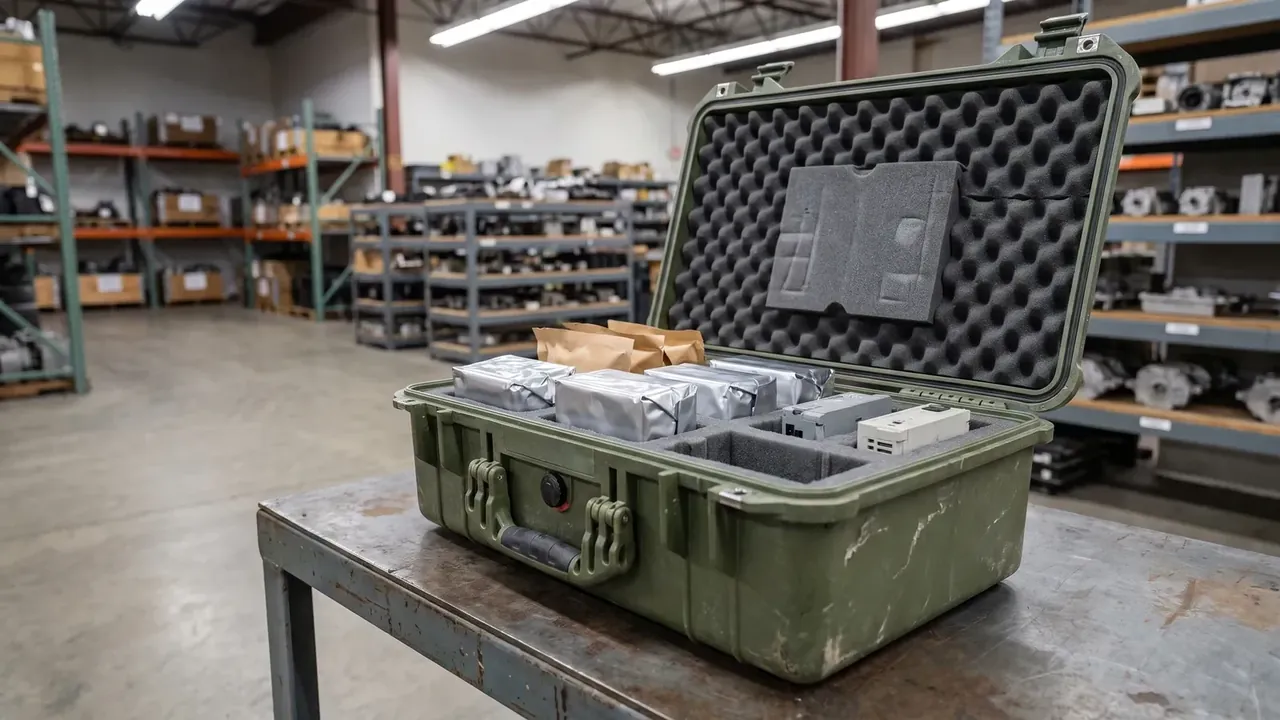
Quick answer: An Industrial Protective Case earns its cost in four places: transfer inside the plant, shipping with equipment, maintenance bays and outdoor stations. Each sets different demands on size, insert and handling, so choose the scene first.
Table of contents
- Four places an Industrial Protective Case is used
- Transfer: size and handling
- Shipping with equipment: inserts and documents
- Maintenance sites: lid angle and reach
- Outdoor stations: rating and mounting
- FAQ
1. Four places an Industrial Protective Case is used
Sorting an Industrial Protective Case by scene beats sorting by volume: the same 520 by 340 opening is a transfer unit in a shop, an accessory box at a builder, a bench for a crew.
| Scene | Internal size, mm | Load and handling | Key feature |
|---|---|---|---|
| Transfer | 520 x 340 x 180 | 20 kg, cart | stacking grooves, ribs |
| Equipment | 400 x 300 x 150 | 8 kg, in crate | EVA insert, doc pocket |
| Maintenance | 600 x 400 x 220 | 25 kg, two-person lift | lid stop, layered insert |
| Outdoor | 700 x 450 x 300 | 30 kg, vehicle or hoist | IP67, moulded-in nuts |
Transfer takes about half of demand, equipment and maintenance a fifth each, outdoor the rest.
2. Transfer: size and handling
Stacking, not volume, is the first constraint. The lid of an Industrial Protective Case carries four grooves eight millimetres deep that seat on bosses in the base, so three high will not slide. Above three, the lower walls carry over a hundred kilograms; a wall under three millimetres will bulge.
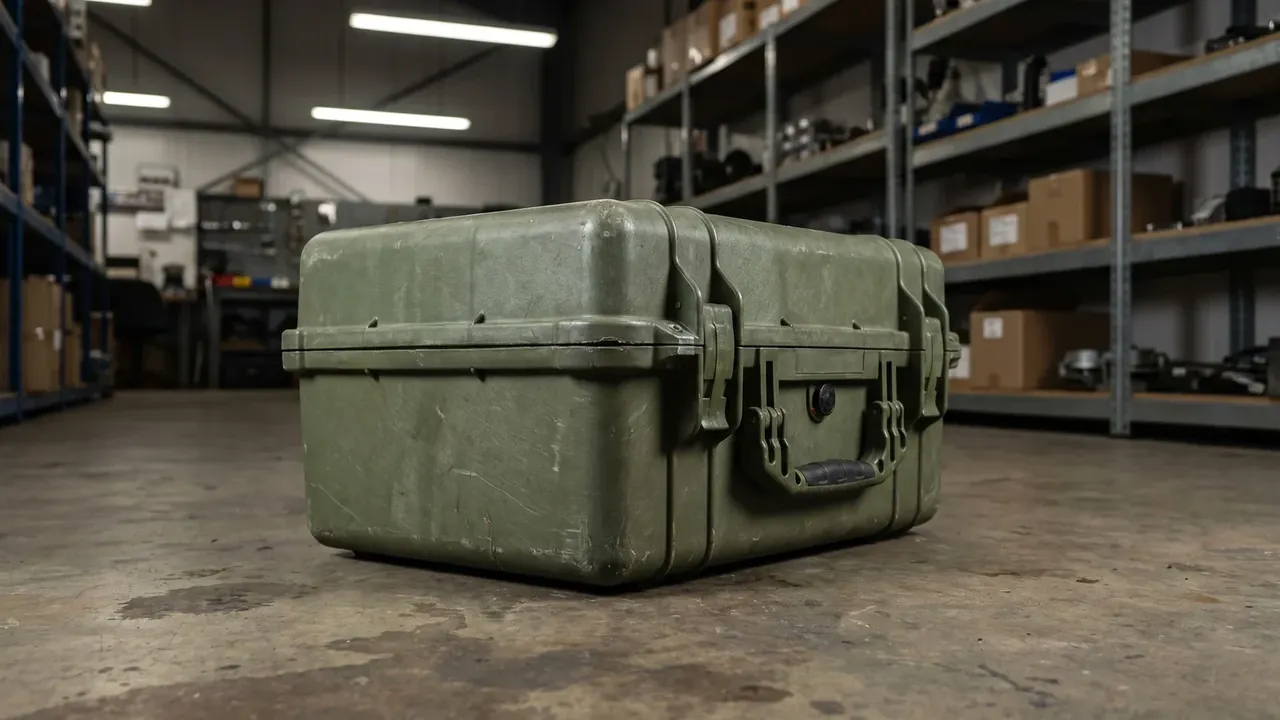
Twelve pieces at 1.6 kilograms make 19.2 kilograms, near the limit for repeated one-person lifting; heavier needs a cart. Cut the interior to piece count with two millimetres of clearance: enough to lift out in gloves, not enough to rattle.
3. Shipping with equipment: inserts and documents
Here the case is part of the machine, not its packaging; insert tolerance matters more than wall strength. An EVA cavity is cut two millimetres over the outline, with thirty millimetres of base foam and twenty-five of egg-crate in the lid.
| Item | Practice | Dimension | If skipped |
|---|---|---|---|
| Cavity | EVA routed | outline plus 2 mm | unit shifts |
| Base foam | thicker under pockets | 30 mm | bottom impact |
| Lid foam | egg-crate | 25 mm | lid does not seat |
| Documents | pocket in lid | A5 | paperwork lost |
Documents need a fixed home: an A5 pocket in the lid for manual, certificate and spares list, plus a 90 by 60 millimetre label area. Three insert revisions a year on two hundred units keeps the cutting file moving.
4. Maintenance sites: lid angle and reach
A maintenance bay judges the case after the lid opens. The lid of an Industrial Protective Case stops at 105 degrees and holds without a hand; past that it blocks the walkway. The open footprint is 1.2 times the closed one, so a bay under 1.2 metres wants a side-opening insert.
Reach is arranged in layers: spares at the bottom, tools in the middle, small parts on top, each with a two-finger gap. Laying the case flat and bending for every part halves throughput, and a three millimetre ABS sheet in the lid turns the closed case into a bench.
5. Outdoor stations: rating and mounting
IP67 means thirty minutes at half a metre of water without ingress; the compound is rated for minus twenty to sixty degrees, and below minus fifteen the wall goes brittle, so drop height falls from 1.5 metres to one.
Four M8 nuts in the base take bolts through a truck bed or scaffold and hold the case in wind; straps lose forty percent of their strength in half a year of sun. A UV stabiliser keeps colour shift within three units after 500 hours of xenon testing.
| Feature | Transfer | Maintenance | Outdoor |
|---|---|---|---|
| Base | ribbed, flat | rubber pads | M8 nuts moulded in |
| Insert | divider or none | three layers | moisture barrier foam |
| Handle | side handles | side handles plus rest | lifting eyes |
| Sealing | standard | standard | IP67 with valve |
Conclusion
An Industrial Protective Case is worth what its configuration matches, not what its wall thickness suggests. Transfer lives on stacking and base structure, equipment shipping on insert tolerance and document pockets, maintenance on lid angle, outdoor work on rating and moulded-in mounting. Put the scene first and the specification has a reason. An Industrial Protective Case picked by size alone is rarely worn out early; it is awkward every day.
This article discusses only the container (case body) side of specifications and design intent, and does not cover any handling, loading or use of the contents.
Related Reading
- Where equipment cases are actually used
- Transit cases on a production line
- Heavy duty cases and the work they face
- Choosing a case by industry
Related Products
- 8 Series — Gun Cases; Military Equipment Cases; Camera Equipment Cases; Drone Cases; Watch Cases; Knife Cases; First Aid Cases; Electronics Equipment Cases
- WL8-2812 PP Gun Case — model WL8-2812
- All protective cases and toolboxes: 7 series, 158 models