

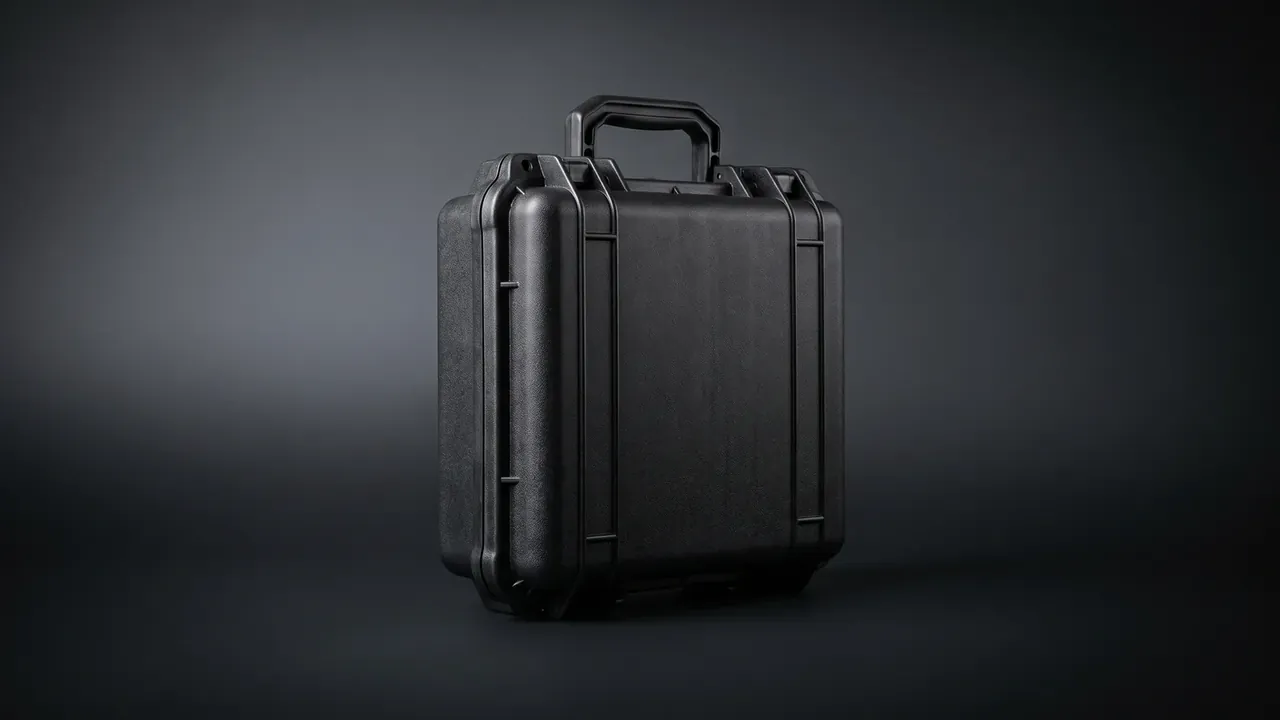
Quick answer: The cost of carrying instruments to site sits in trips, repair rate and calibration loss, not in the purchase price. At three visits a week, a 220 CNY instrument carrying case works out under half a yuan per trip; one repair caused by a packaging failure usually equals fifty cases.
Table of contents
- Folding 432 trips into a unit cost
- Five to eighteen kilos: handle and strap loads
- Vibration and repair rate: where packaging cost hides
- Failure after calibration
- FAQ
1. Folding 432 trips into a unit cost
A calibration contractor runs six engineers, each out three days a week. One instrument makes 144 trips a year, 432 over three years, and each trip opens the lid twice: close to nine hundred cycles. That number decides whether the handle survives and when the foam pocket starts to slump.
Divide the purchase price by trips and you get a very small figure, and a wrong conclusion. The real cost of an instrument carrying case splits into five lines, three of which never appear on a quotation.
| Cost line | Per trip | Basis |
|---|---|---|
| Shell depreciation | 0.51 CNY | 220 CNY over 432 trips |
| Liner replacement | 0.28 CNY | One insert every two years, 120 CNY |
| Handle and strap | 0.19 CNY | Webbing and rivets once in three years |
| Consumables | 0.35 CNY | Desiccant, labels, seals |
| Repair and recalibration risk | 2.60 CNY | See section 3 |
The first four add up to about 1.3 CNY. The fifth floats: at a 1.2 percent repair rate it doubles the unit cost, at 0.4 percent it almost disappears.
2. Five to eighteen kilos: handle and strap loads
Portable instruments cluster between 5 kg and 18 kg. Add 2 kg to 4 kg of shell and the hands take 7 kg to 22 kg. That load decides the handle form of the instrument carrying case, not the reverse.
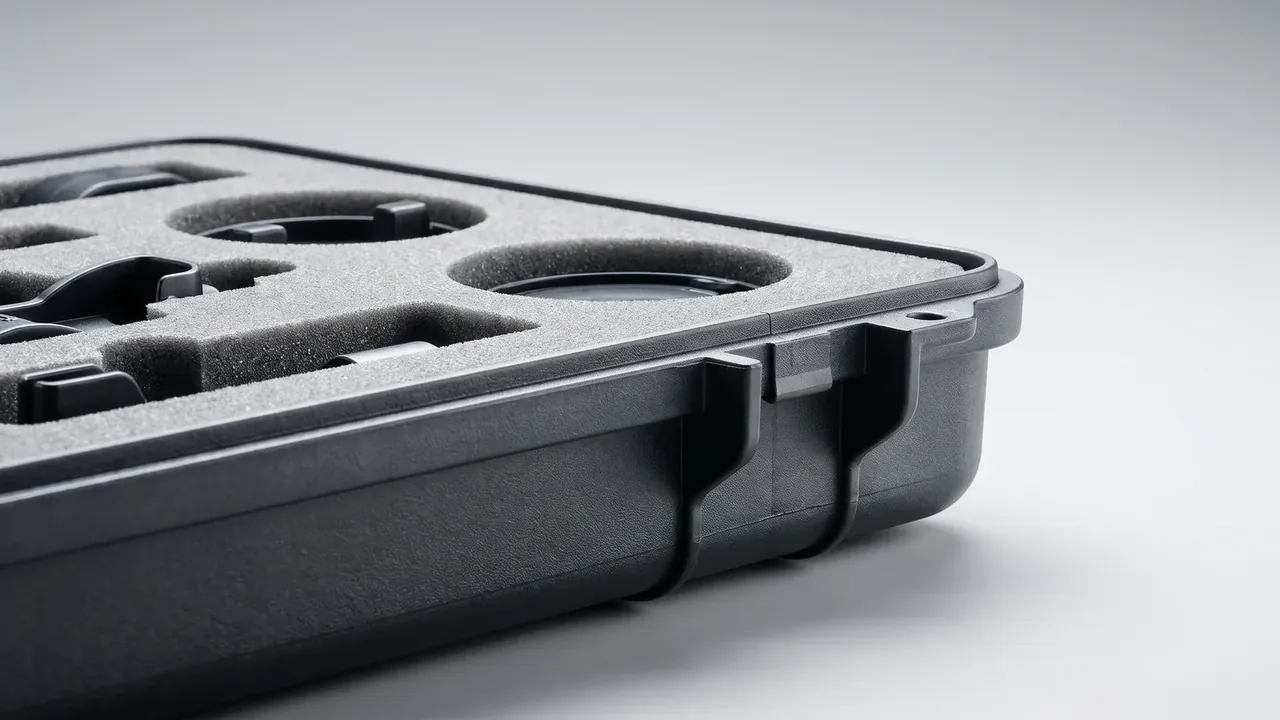
Handle static load is taken at three times the working weight. An 18 kg case needs joints that hold 54 kg without distortion; 30 kg is the practical floor. Straps want 25 mm webbing, five stitching rows, and metal buckles rather than plastic clips, which go brittle in the cold.
| Loaded weight | Carry method | Handle and strap | Sensible one-way distance |
|---|---|---|---|
| 5–8 kg | One hand | Moulded handle, 25 mm grip | Under 300 m |
| 8–12 kg | One shoulder | Handle plus detachable strap | Under 500 m |
| 12–18 kg | Two hands or two people | A handle each side, 30 kg rated | Under 200 m |
The difference in the hand is the root of the handle: an R3 fillet with two ribs spreads force into the wall, a square corner puts it into two screw holes.
3. Vibration and repair rate: where packaging cost hides
The worst vibration sits at the back of a vehicle. Over 40 km of secondary road the rear floor shows 1.5 g rms random vibration between 5 Hz and 40 Hz, with a 1.2 m loading drop on top of it.
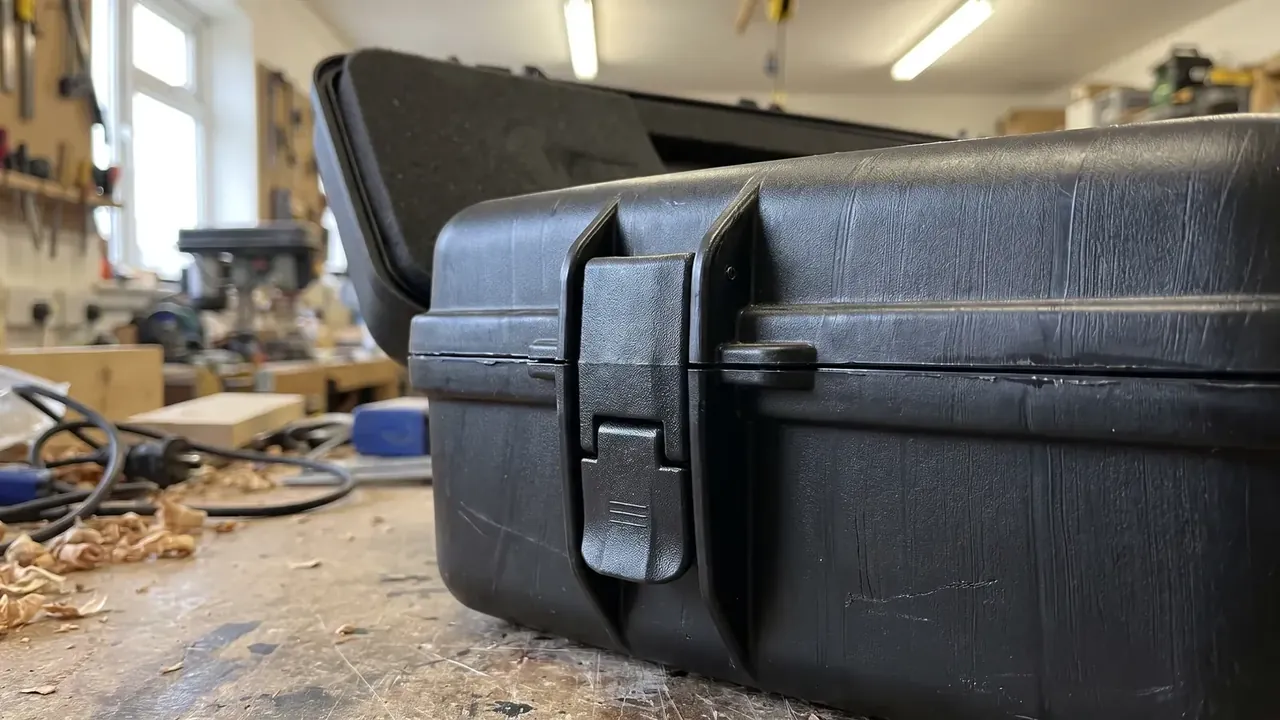
Use closed-cell polyethylene at 38 kg/m³ with 1.5 mm interference at the pocket walls. Too little and the instrument shifts; too much and people push it in at an angle, wearing the panel. Done right, the repair rate falls from 4 percent to 1.2 percent.
| Packing scheme | Cost per case | Annual repair rate | Annual repair cost |
|---|---|---|---|
| Egg-crate foam in a carton | 60 CNY | 4.0% | 10,368 CNY |
| Hard case with flat foam | 220 CNY | 1.8% | 4,666 CNY |
| Hard case with moulded insert | 340 CNY | 1.2% | 3,110 CNY |
Repair is costed at 1,800 CNY each, freight and labour included. Across six instruments and 144 trips a year the schemes differ by more than 7,000 CNY annually, while the cases differ by about 10,000 CNY once, or 3,000 a year over three years. The instrument carrying case is not a consumable; it is a line item with a payback.
4. Failure after calibration
The expensive failure is not breakage. It is a knock that does no visible damage. An instrument takes an impact, drifts 0.3 percent at zero, looks perfect, and still issues a report on site. Three months later a customer check finds the offset and the whole batch of data is void.
The bill:
- Recalibration of a 0.5 class pressure calibrator: 900 CNY, five to seven days out of service.
- A second site visit by two engineers, travel included: about 2,400 CNY.
- If witnessed, a re-planned witness schedule.
Together that approaches 4,000 CNY, ten cases. Worse, it is unpredictable: the shell shows nothing and the liner shows no crush mark. The practical answer is a movement card in each case, logging transport mode, drop count and inspection date.
Conclusion
Work backwards from trips and the arithmetic of an instrument carrying case becomes clear: a few hundred yuan of shell a year, a handle and strap that decide whether one person can lift it, foam that decides how often it comes back for repair, and a calibration failure that erases those savings in one visit. The instrument carrying case becomes a field cost you can manage.
This article discusses only the container (case body) side of specifications and design intent, and does not cover any handling, loading or use of the contents.
Related Reading
Related Products
- 8 Series — Gun Cases; Military Equipment Cases; Camera Equipment Cases; Drone Cases; Watch Cases; Knife Cases; First Aid Cases; Electronics Equipment Cases
- WL8-2812 PP Gun Case — model WL8-2812
- All protective cases and toolboxes: 7 series, 158 models