

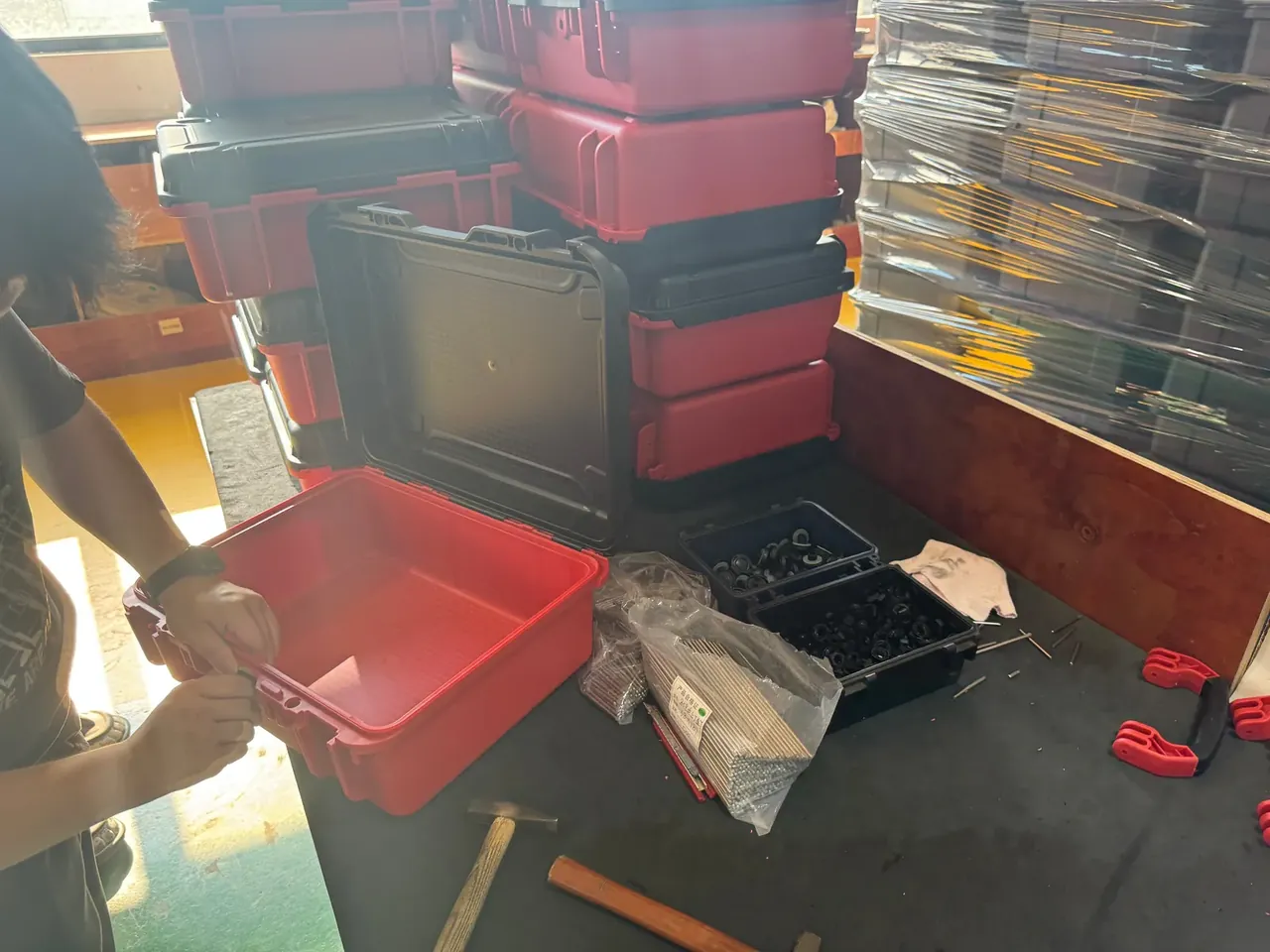
Quick answer: Three questions sort a real plant from a printer: where the mould drawings live, whether the first-article sheet carries measurements, and whether price is quoted in volume steps. A logo on the lid proves a pad-printing station exists, nothing more. What follows: the three tests, the contract lines, the fourteen-day run to first article, the price curve, and the ledgers an audit should open.
Table of contents
- Three Tests That Separate OEM From Badge Slapping
- Who Owns Drawings, Tools and Programs
- Fourteen Days From DFM to First Article
- The Unit Price Curve at 500 and 5000
- Three Tables an Audit Should Open
- FAQ
1. Three Tests That Separate OEM From Badge Slapping
Whether a plant is a real OEM partner shows in who holds the tool drawings, not in whether it can print your logo. Two tests sit underneath: who may change the structure, and whether the first-article sheet carries measurements rather than adjectives. Pass all three and you are talking to a manufacturer; pass half and you are talking to a printer.
Structural change comes first. An Instrument Case OEM Manufacturer worth the name will shift a rib, raise a latch seat or reshape a gasket groove to fit your cavity, then reissue a 2D drawing for signature. The other kind answers that the size happens to be in stock.
Next is the first article: not a photo of a unit pulled off the line, but a sheet where wall thickness, flatness, latch clamp force and pocket position each carry a reading. That sheet separates an Instrument Case OEM Manufacturer from a sample maker.
| Test | Genuine partner hands over | Badge slapper replies |
|---|---|---|
| Structural change | Revised drawing plus change log | Size is fixed, we stock it |
| First article | Measured value and verdict per feature | Three product photos |
| Process data | Melt 200–250℃, mould temp, packing | Price only |
| Tool title | Clause on ownership and removal | "Managed centrally" |
2. Who Owns Drawings, Tools and Programs
Three contract lines, not one sentence about joint ownership. Joint feels generous and fails at the first dispute, because shared title means nobody may use, modify or move the tool. This is where an Instrument Case OEM Manufacturer and its customer most often fall out.
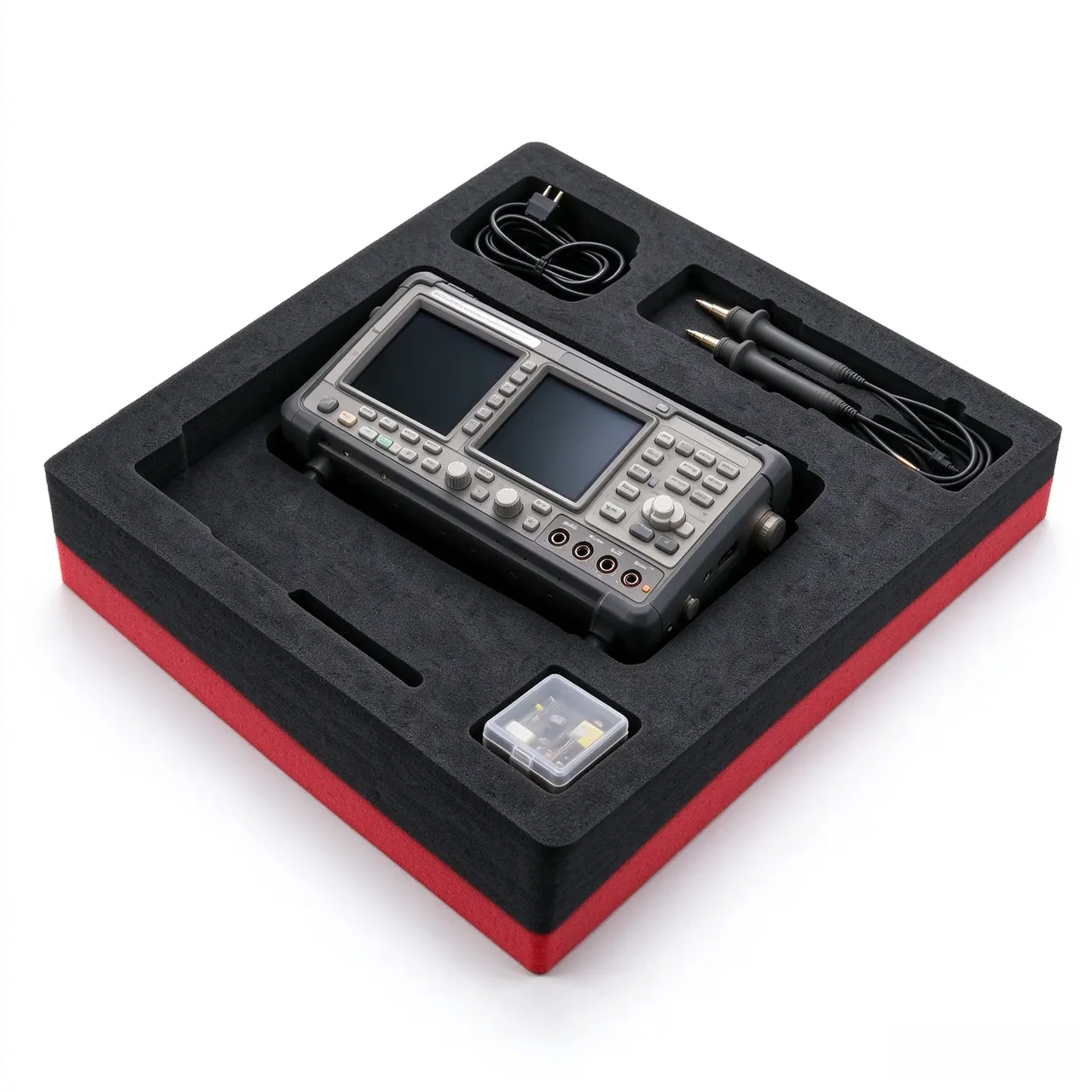
Drawings cover outline, cavity and insert layout, each with a revision number. Copyright may stay with the plant; the right to use must be exclusive. The revision number doubles as the billing unit, one change being one engineering change.
Tools need five elements: who pays, how much, who holds title, which press it sits on, when it may be removed. Where the buyer holds title, the usual clause permits removal after twelve months without production. Without it, the price of recovery is set by the other side.
Programs are forgotten most often. Parameter sheets, robot routines and CNC toolpaths never reach a drawing, yet they decide whether batch two matches batch one. An Instrument Case OEM Manufacturer that will not name the press holding your tool is not holding the tool.
3. Fourteen Days From DFM to First Article
Fourteen days counts backwards from delivery: three days of DFM, five of tool work, two of trials, three of measurement, one of buffer. An Instrument Case OEM Manufacturer that will attach that table to a contract usually keeps the dates.
Read the DFM for three numbers. Draft on a deep side wall runs 1–2 degrees. Wall thickness of 1.5–3 mm covers most instrument shells. Shrinkage follows the resin: ABS at 0.4%–0.7%, PP at 1.0%–2.5%, so the same pocket needs more than double the compensation in PP.
First article is about fit, not looks. Closed, the gasket groove compresses around 25%; latches snap and release without binding; the handle root shows no stress whitening. A failed unit goes back to the tool, costing 5–7 more days each loop.
4. The Unit Price Curve at 500 and 5000
The curve bends at two points because three cost blocks amortise differently: tooling, set-up, and labour with inserts. Split them and any quote from an Instrument Case OEM Manufacturer becomes readable.
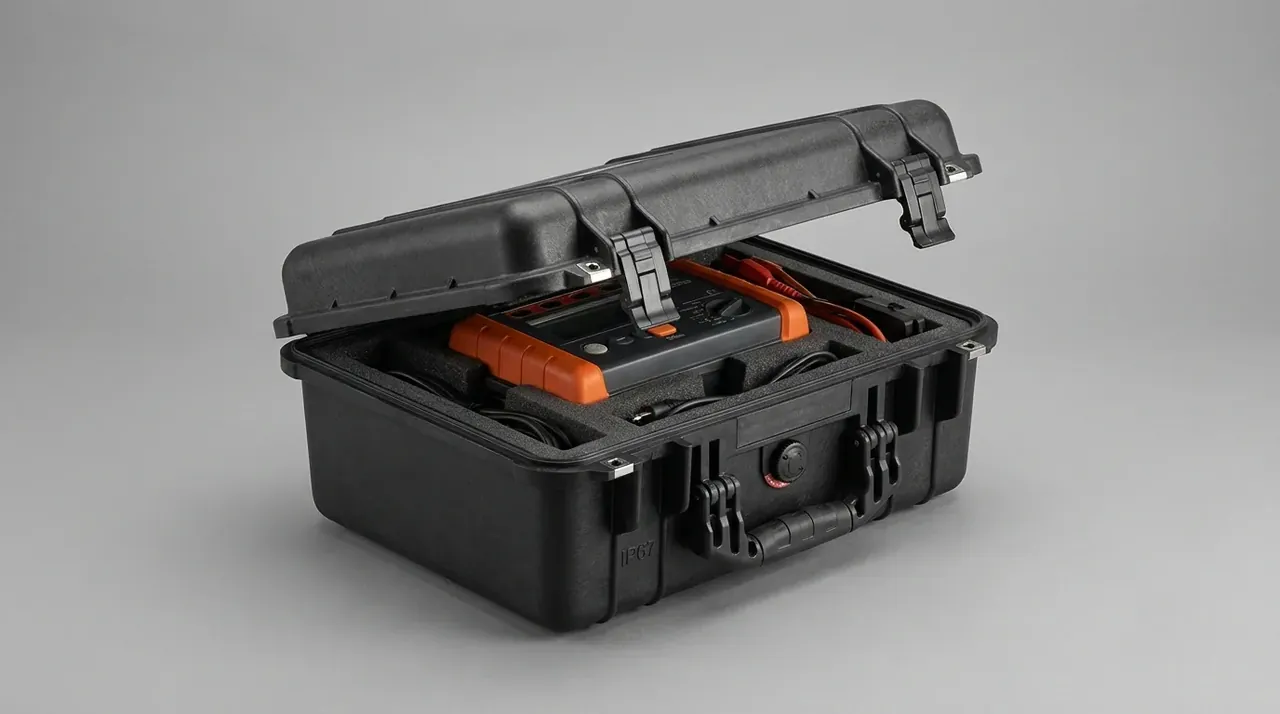
A mid-size shell tool costs RMB 80,000–150,000, which is RMB 160–300 per unit at 500 and RMB 16–30 at 5000. That is the steep section, and the one an Instrument Case OEM Manufacturer would rather not itemise.
Set-up is a fixed block too: four to eight press hours for mould change, trial and sign-off, plus scrap, worth RMB 800–2000. Both volumes carry it whole. Labour and inserts barely move, since routing and hardware fitting stay manual, so volume buys 5%–10% at best. Ten times the quantity lands at 25%–40% lower price, never half.
| Batch | Tooling per unit (RMB) | Set-up per unit (RMB) | Insert and assembly | Price index |
|---|---|---|---|---|
| 500 | 160–300 | 1.6–4.0 | Full | 100 |
| 2000 | 40–75 | 0.4–1.0 | −5% | 68–78 |
| 5000 | 16–30 | 0.16–0.4 | −8% to −10% | 52–62 |
One question settles most arguments: amortised or billed once? Amortised is easier on cash but refunds nothing when a programme stops. Resin compares the same way — PP near RMB 8–12/kg, ABS near RMB 14–22/kg, tens of yuan apart on a 3 kg case.
5. Three Tables an Audit Should Open
Ask the Instrument Case OEM Manufacturer for three ledgers before the floor tour: press register, tool register, inspection record. When they agree, capacity and quality rest on something.
The press register gives clamp force, screw diameter and current load; a mid-size shell generally needs 1000 tonnes or more, and below that the wall drifts. The tool register gives cavitation, cumulative shots and repair history. The inspection record gives leak pressure, hold time, drop height, thermal cycle points, each with a date and a signature.
| Ledger | Fields to read | What it reveals |
|---|---|---|
| Press register | Clamp force, screw, load | Whether the wall is achievable |
| Tool register | Cavitation, shots, repairs | Tool life and stability |
| Inspection record | Pressure, hold time, cycles | Managed quality or sampled luck |
Cross-read them and a fourth fact appears: a loaded floor with two or three active tools means a narrow catalogue; many tools on few presses suggests outside processing. Numbers of that shape are how an Instrument Case OEM Manufacturer shows real capacity. Glance at the dryer too, since ABS needs 80℃ for 2–4 hours.
Related Reading
- OEM protective case procurement
- Shared mold bases and OEM boundaries
- Instrument case specifications
- Cartons and cases in packing
JUNZHIJIA
Related Products
- 8 Series — Gun Cases; Military Equipment Cases; Camera Equipment Cases; Drone Cases; Watch Cases; Knife Cases; First Aid Cases; Electronics Equipment Cases
- WL8-2812 PP Gun Case — model WL8-2812
- All protective cases and toolboxes: 7 series, 158 models