

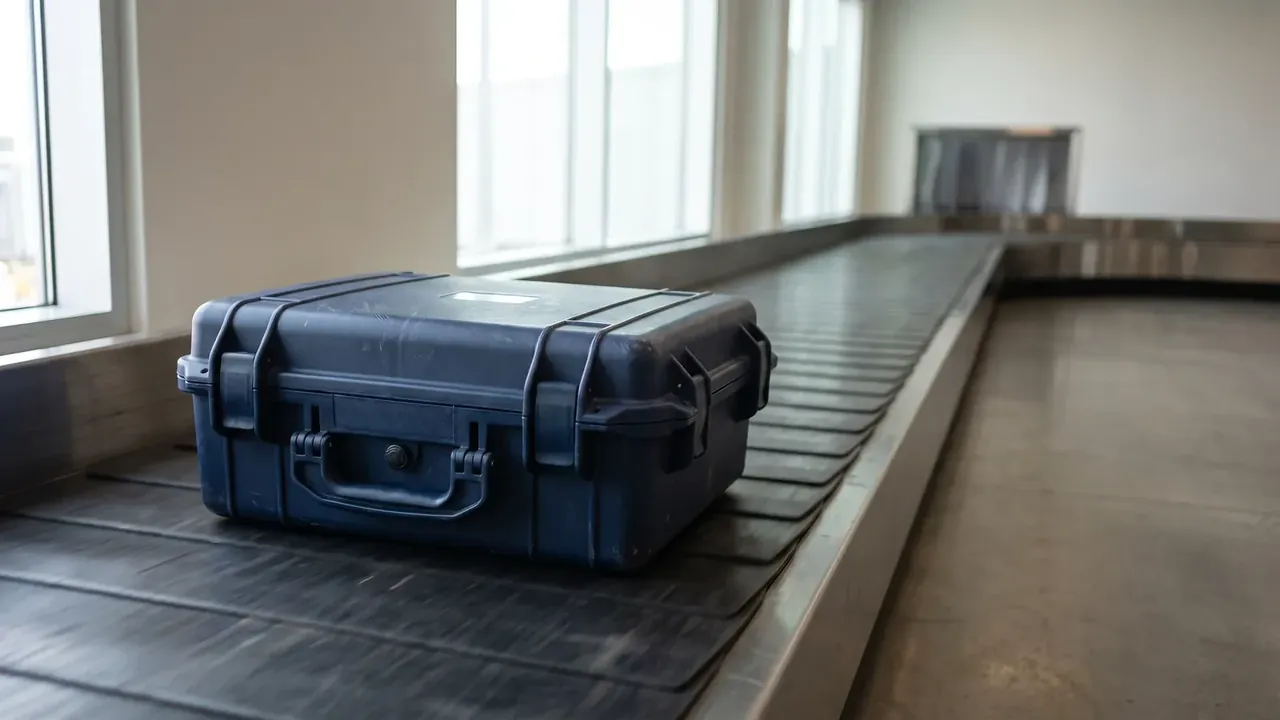
Quick answer: An Instrument Protective Case Manufacturer is judged by four stages under one roof: moulding, assembly, foam and testing. A 3800 tonne press covers a 0.6 m² projected area at a 3.0 mm wall, and two cavities on a 95 second cycle at 96% yield put 1,600 cases a day on the floor. Leak, drop and thermal logs turn a batch into something traceable, so ask for all three before the price.
Table of contents
- Four Stages on a Manufacturer Floor
- What 3800 Tonnes of Clamp Force Buys in Wall
- Daily Output From Cycle, Cavities and Yield
- Leak, Drop and Thermal Stations
- Splitting Capacity Between OEM and Own Brand
- FAQ
1. Four Stages on a Manufacturer Floor
An instrument case crosses four process stages and a dozen operations, and any weak link surfaces at the test station.
Moulding sets the skeleton. ABS needs 2 to 4 hours at 80 °C first, since moisture above 0.1% leaves silver streaks where the 3.0 mm wall is thinnest; PP skips the dryer.
Shrinkage decides whether the foam drawing survives. PP moves 1.0% to 2.5% against 0.4% to 0.7% for ABS, so on a 1,200 mm tool a material change shifts a pocket by 3 to 5 mm, past the ±0.5 mm a die-cut cavity absorbs.
Assembly decides hand feel: 0.3 mm of extra press depth makes one latch bite harder than its twin. An Instrument Protective Case Manufacturer that quotes press force and rivet pull runs the stage in house.
Foam is where an Instrument Protective Case Manufacturer is most exposed: EVA spans 60 to 90 kg/m³, die clearance runs 0.5 mm a side, and a pocket past 45 mm takes two passes.
| Stage | Core operations | What it fixes | Batch time (typical) |
|---|---|---|---|
| Moulding | Drying, filling, packing, cooling | Wall, pocket size, weld lines | 8 to 12 hours |
| Assembly | Pressing latches, riveting handle, valve | Latch feel, gasket compression | 1.5 hours per 100 |
| Foam | Die cutting, laminating, trial fit | Location accuracy, cushion travel | 3 hours per 100 sets |
| Testing | Leak, drop, thermal cycling | Release basis per batch | 4 hours per lot |
2. What 3800 Tonnes of Clamp Force Buys in Wall
Clamp force must answer to projected area; spare tonnage only folds electricity into the price. A shell 1,200 × 500 mm gives 0.6 m² at 44 MPa, or 26,400 kN, which is 2,640 tonnes, and a 1.3 process margin lands the requirement at 3,430 tonnes. The spare 370 tonnes are the tuning window.
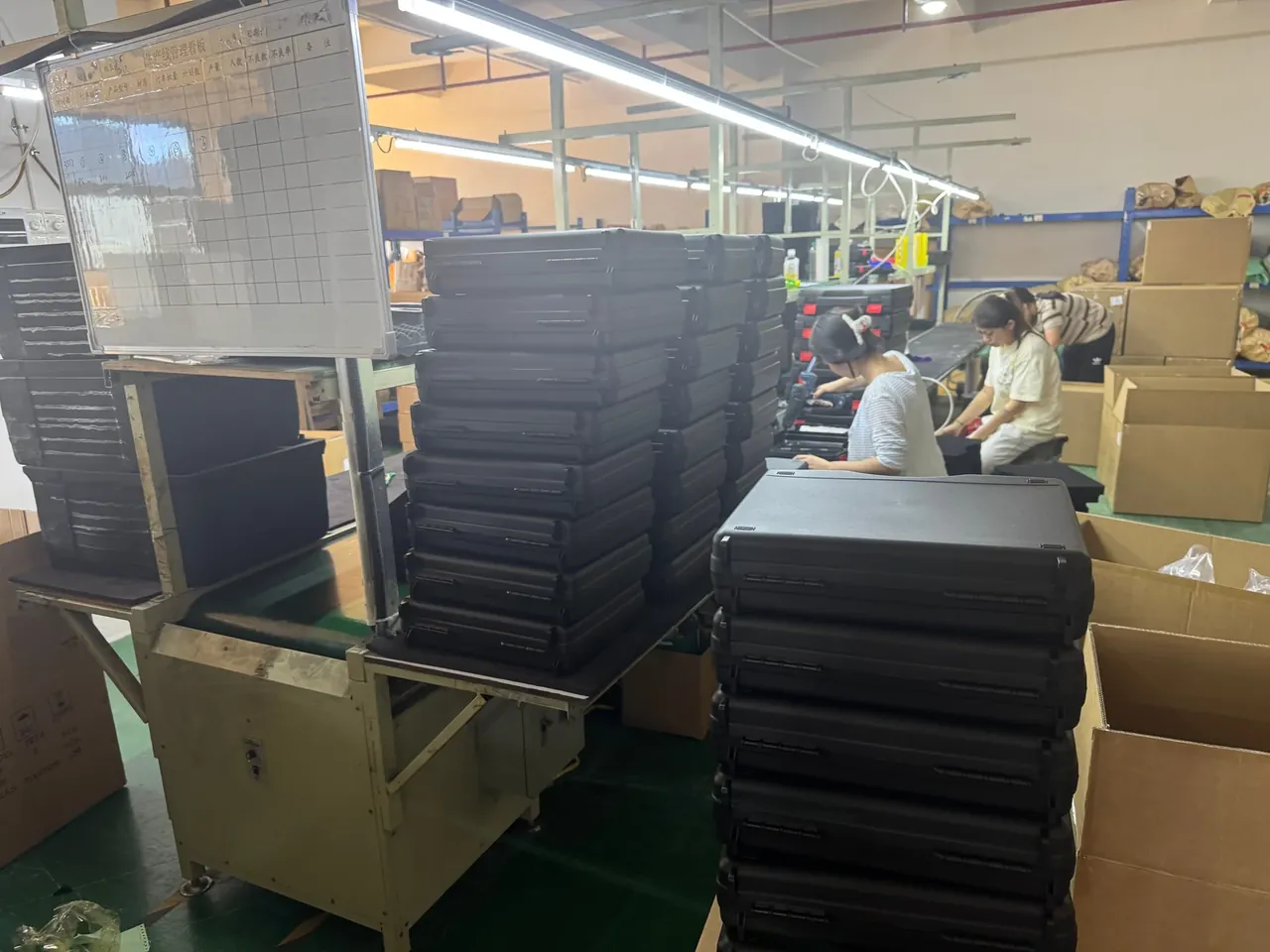
Going from a 2.5 mm wall to 3.0 mm raises packing pressure, so cavity pressure climbs from 40 to 45 MPa and the clamp requirement steps up with it.
An Instrument Protective Case Manufacturer works between 1.5 and 3.0 mm of wall, with stiffness from ribs, not thickness. Rib height at 1.5 times the wall and a 0.5 mm root radius keep the base from flexing while the unit stays under 6.5 kg.
| Shell outline (mm) | Projected area (m²) | Cavity pressure (MPa) | Clamp force needed (tonnes) |
|---|---|---|---|
| 600 × 400 | 0.24 | 40 | 1,250 |
| 900 × 450 | 0.41 | 42 | 2,180 |
| 1,200 × 500 | 0.60 | 44 | 3,430 |
| 1,340 × 560 | 0.75 | 45 | 4,390 |
3. Daily Output From Cycle, Cavities and Yield
Daily output is not the plate figure; it is three numbers multiplied. Divide 3,600 by the cycle, then scale by cavities, productive hours and yield: 95 seconds, 2 cavities, 22 hours and 96% yield give 1,600 units a day.
Cycle time belongs to wall and cooling. At a 3.0 mm wall and 40 °C mould temperature, cooling eats 60% of the cycle; trimming it from 55 to 45 seconds pulls the cycle to 85 seconds, but the shell is still soft at ejection and deformation climbs from 1% to 4%.
Doubling cavities does not double output. One cavity at 65 seconds yields 1,170 units; two at 95 seconds yield 1,600, a 37% gain for twice the clamp force and twice the tooling bill, which is why an Instrument Protective Case Manufacturer asks for annual volume first.
Yield is often overstated: 96% holds only while wall and pressure sit in their window; one material change scraps the first 20 shots and drops the day to 92%.
| Cycle (s) | Cavities | Yield | Daily output (units) |
|---|---|---|---|
| 65 | 1 | 96% | 1,170 |
| 95 | 2 | 96% | 1,600 |
| 80 | 2 | 96% | 1,900 |
| 95 | 2 | 92% | 1,533 |
4. Leak, Drop and Thermal Stations
An Instrument Protective Case Manufacturer puts three stations downstream of assembly; running every unit or a sample is a commercial call. The leak bench charges a shell to 3.0 kPa, stabilises for 60 seconds and holds for 120, failing anything past 0.3 kPa on a 30 litre cavity.
The drop rig works from 1.2 m, once on each of six faces, three edges and one corner. Cracking is the ticket; the verdict is a repeat leak test inside 0.3 kPa.
The chamber runs from −20 °C to 60 °C, holding 4 hours at each end for 3 cycles. ABS keeps its dimensions with a heat deflection temperature of 85 to 95 °C; PP falls to 2 to 4 kJ/m² notched impact at −20 °C. Shipping north means that grade goes through the chamber.
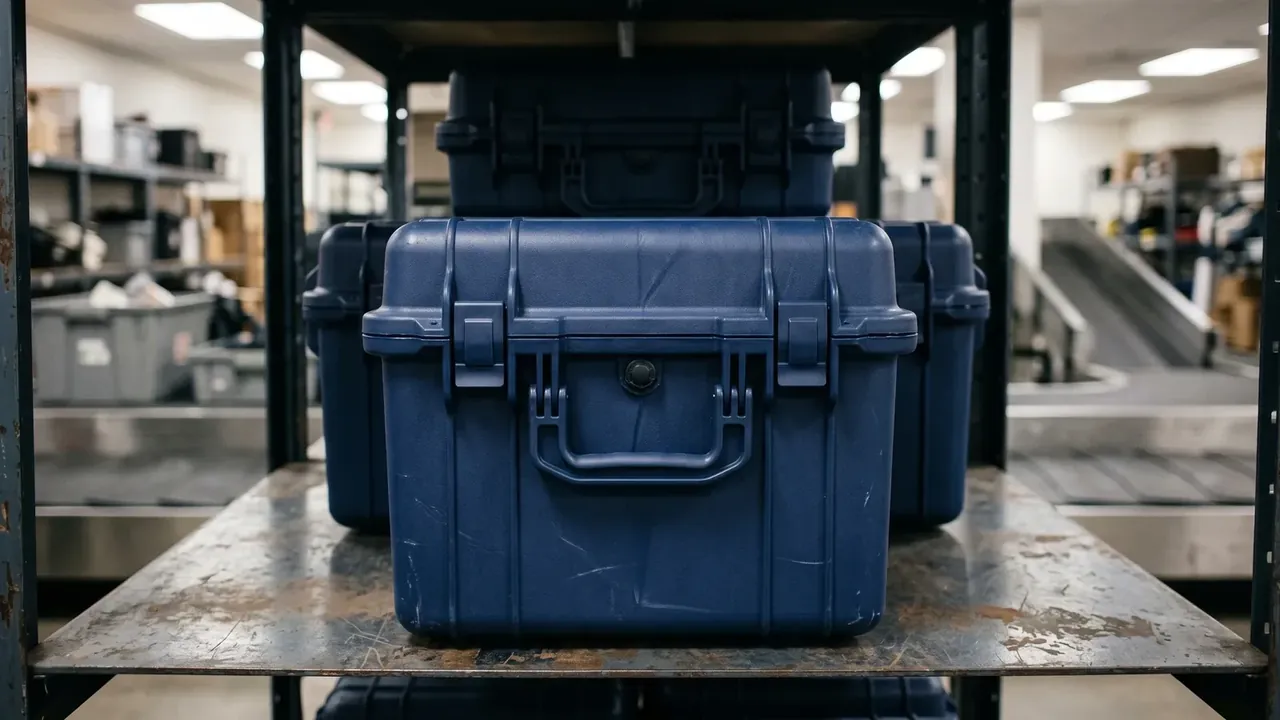
Warehouse zoning says as much as equipment: released, pending and rework stock apart.
5. Splitting Capacity Between OEM and Own Brand
At 1,600 units a day the line splits between contract work and the house brand. A 70/30 pattern is common: seven tenths to contract orders, three to own brand. Contract dates cost a penalty to break, while own-brand stock can be built ahead. Push the house share to 10% and a busy season finds every tool committed to contract work.
Switching between PP and ABS means purging, 90 minutes and about 8 kg of scrap; grouping one polymer buys roughly 200 extra units a day, none of which shows on a capacity sheet.
Slack has to stay in the plan: a 30 day promise fits a line loaded to 85%, and an Instrument Protective Case Manufacturer at 100% loses a month to one breakdown.
Related Reading
- Instrument protective case structure
- IP67 waterproof case sourcing
- Custom case specification elements
- Usable cavity ratio and corner loss
JUNZHIJIA
Related Products
- 8 Series — Gun Cases; Military Equipment Cases; Camera Equipment Cases; Drone Cases; Watch Cases; Knife Cases; First Aid Cases; Electronics Equipment Cases
- WL8-2812 PP Gun Case — model WL8-2812
- All protective cases and toolboxes: 7 series, 158 models