

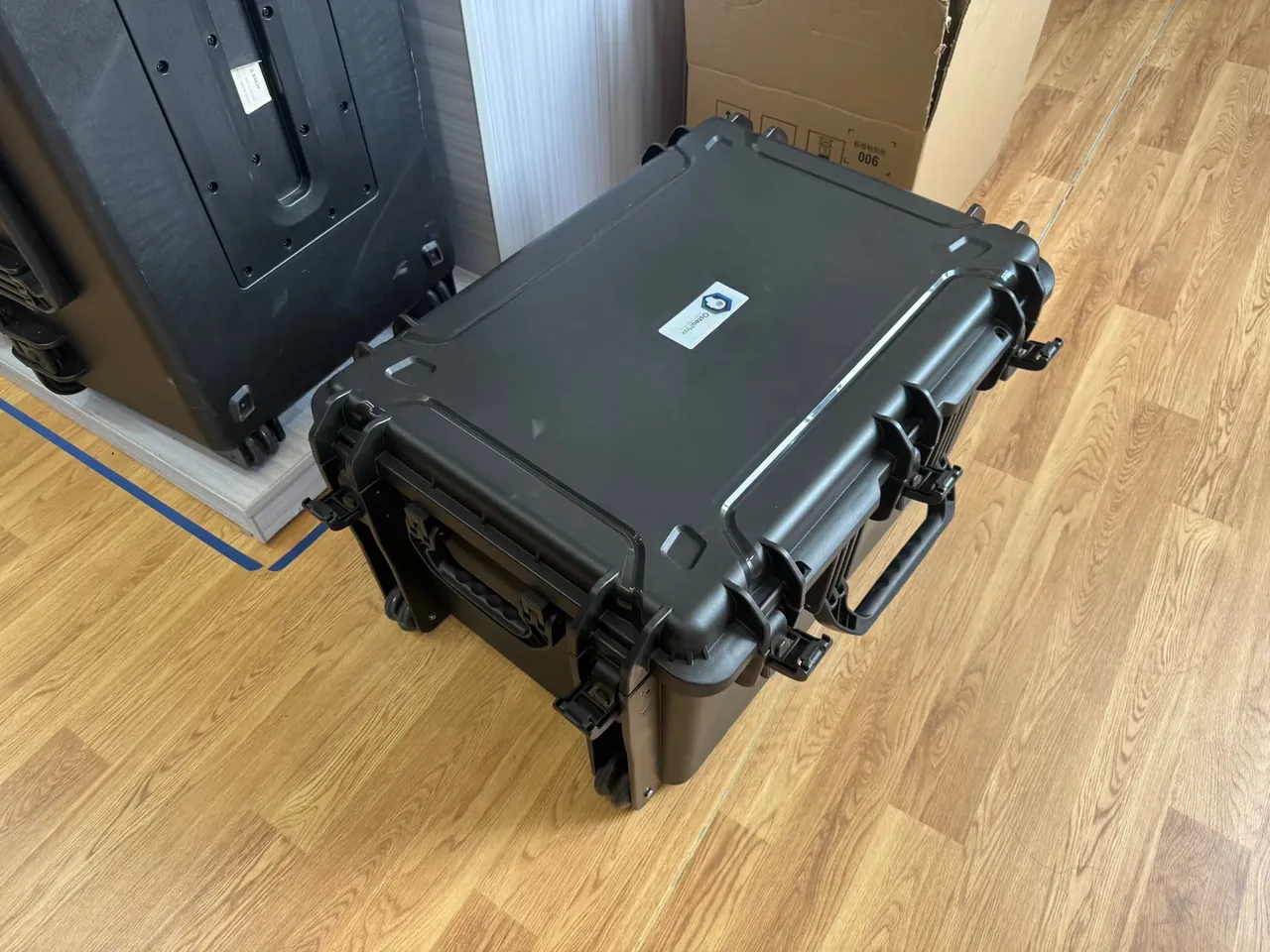
Quick answer: An Instrument Protective Case works as a platform: four liner interfaces let one 560 x 400 x 230 mm shell carry three sizes with gaps inside 1.5 mm.
Table of contents
- Platform Thinking in an Instrument Protective Case
- Liner Interfaces on One Shell
- Series Sizes and Stacking
- Changeover Time and Liner Stock
- Fixed Values for an Instrument Batch
- FAQ
1. Platform Thinking in an Instrument Protective Case
One shell with six liners is how a series gets spread out. The mould is cut once, the outer size never moves, and every difference between sizes shifts into the liner, so three instruments share a 560 x 400 x 230 mm body.
An Instrument Protective Case measures 510 x 350 x 190 mm inside with a 4.6 mm wall. Rotational moulding holds the wall within about 10 percent and tolerance at 1 to 2 percent, on a tool costing a fifth to a tenth of an injection mould, at a 15 to 40 min cycle. Injection takes over only for thin walls and long runs, so a platform shell normally starts on a rotomoulded tool.
The price sits in the interfaces. More points make liners universal and the gap harder to hold, fewer make each liner special and the stock deeper. Three sizes on four interfaces is the compromise this Instrument Protective Case was built around.
2. Liner Interfaces on One Shell
Four interfaces sit in the cavity corners as through T-slots 8 mm deep, and the liner presses tabs into them. Four rather than six, because four corners set liner flatness and a mid-point only bows the liner upward.
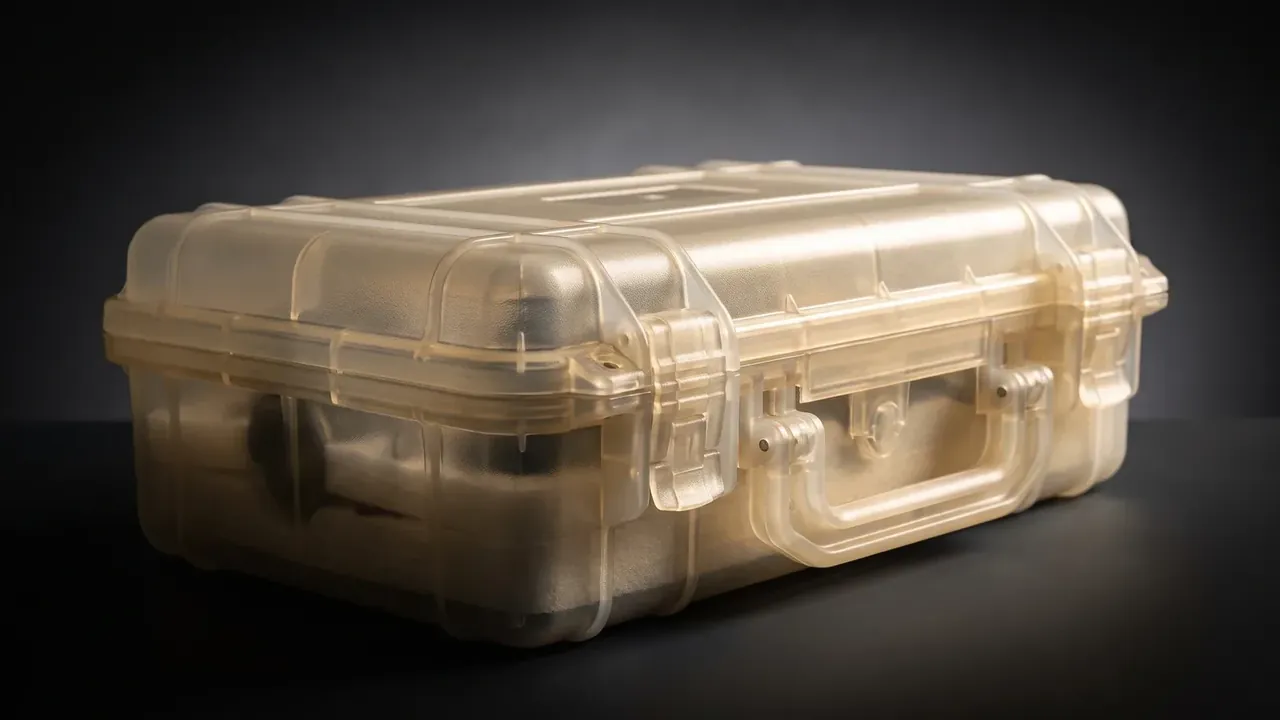
The gap at the joint is the number that matters. A wide gap lets the liner walk, a tight one stops it going in, and 1.5 mm is the line between the two.
Tabs are moulded in modified PP with a designed pull-out of 400 N each, and clearance of 0.3 mm lets the liner press in easily and lever out without damage. Freeze the four slots and a later variant can only change cavity layout.
The liner is 45 kg/m³ EVA: 24 h after release it holds only 4 percent permanent set, and it stays stable to 65 degrees. Pockets stay open along all four cavity edges, so the liner has somewhere to give when the shell takes a hit.
| Platform tier | Interface count | Use and limit |
|---|---|---|
| General tier | 4 points | Three sizes share one shell, gap at 1.5 mm |
| Extended tier | 6 points | Five sizes, changeover stretches |
| Dedicated tier | 3 points or fewer | One size, back to a special liner |
3. Series Sizes and Stacking
Three sizes share the Instrument Protective Case shell and differ only in the height register: a groove in the lid, a spigot on the base, and a stack that misaligns past 3 mm will not seat.
Stacking is counted at 5 layers. At 4.1 kg per case the bottom unit carries four above it, roughly 16.4 kg, light until the load moves to the middle of the lid, where deflection doubles. Ribs go denser inside the groove line so that load reaches the side walls.
The bottom case must sit flat on a pallet; once the base overhangs, the four cases above become a bending moment and the register opens first. Twelve cases go two rows by six with 20 mm between them, wrapped at 5 layers.
Pallet layout is where mixed sizes fail: a tall case under a short one leaves the spigot hanging, so one pallet carries one size.
4. Changeover Time and Liner Stock
Changeover on an Instrument Protective Case runs four steps: liner out, four latches released, liner in, four gaps checked. In that order 12 min covers it, and the third step takes longest because four tabs must enter together.
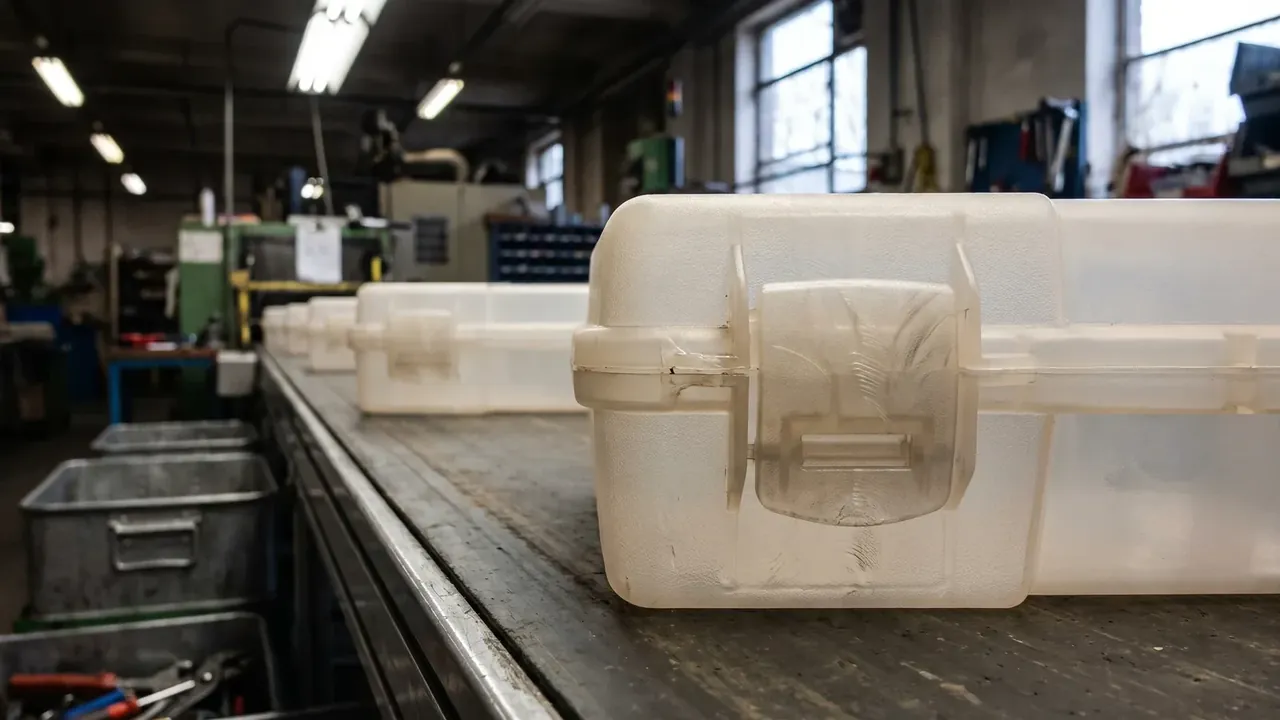
Six liners are stocked by weekly use, all sharing one outline, so the store shelves them by cavity number and picking needs no trial fit. Three common cavities hold two weeks of use each, the other three are ordered against demand.
Changeover time includes the re-check: assembly fits in 12 min, but with four feeler-gauge checks a shift changing three times needs 40 min.
| Changeover count | Time per change | Note |
|---|---|---|
| First in a shift | 12 min | Four gap checks included |
| Third in a shift | 12 min | Latch positions known |
| Ten a week | 15 min | Liner return logged |
5. Fixed Values for an Instrument Batch
For an Instrument Protective Case the platform tier is the smallest interface count that still holds gaps under 1.5 mm within a 12 min changeover; anything fewer falls back to a dedicated liner.
Gaps are read with feeler gauges from 0.5 mm upward, taking the largest of four points. On an Instrument Protective Case the first suspect is tab wear, the second a liner fitted reversed, and a tab is a wear part replaced singly rather than as a whole liner.
Two figures sit alongside: 4,300 closures and four latches at 370 N each. Latch force lands on both sides of the lid groove, and once that groove distorts the stack register stops holding. IP67 means 1 m of water for 30 min, the gasket compression is set against that, and weak latch force shows up there first.
Three cases are pulled before dispatch, for gaps, cycling and stacking: cycling runs a tenth of the 4,300 figure, and 5 layers press for 24 h.
| Gap reading | Cause | Action |
|---|---|---|
| Under 1.5 mm | Changeover re-check | Release, log the liner number |
| 1.5 to 3 mm | Tab wear | Replace tabs, re-check four points |
| Over 3 mm | Liner reversed or wrong number | Return, refit by cavity |
Conclusion
Platform work on an Instrument Protective Case comes down to an interface account: four points, three sizes, six liners, 12 min per changeover. The more universal the shell, the more disciplined the liner must be, and the 1.5 mm gap is the scale that discipline is read on. Stacking at 5 layers and 4,300 closures look like separate sums until they are settled on the same body.
Related Reading
- Instrument Case Selection Order
- Instrument Case Specification Sheet
- Packaging Layers for Instrument Shipments
Related Products
- 8 Series — Gun Cases; Military Equipment Cases; Camera Equipment Cases; Drone Cases; Watch Cases; Knife Cases; First Aid Cases; Electronics Equipment Cases
- WL8-2812 PP Gun Case — model WL8-2812
- All protective cases and toolboxes: 7 series, 158 models