

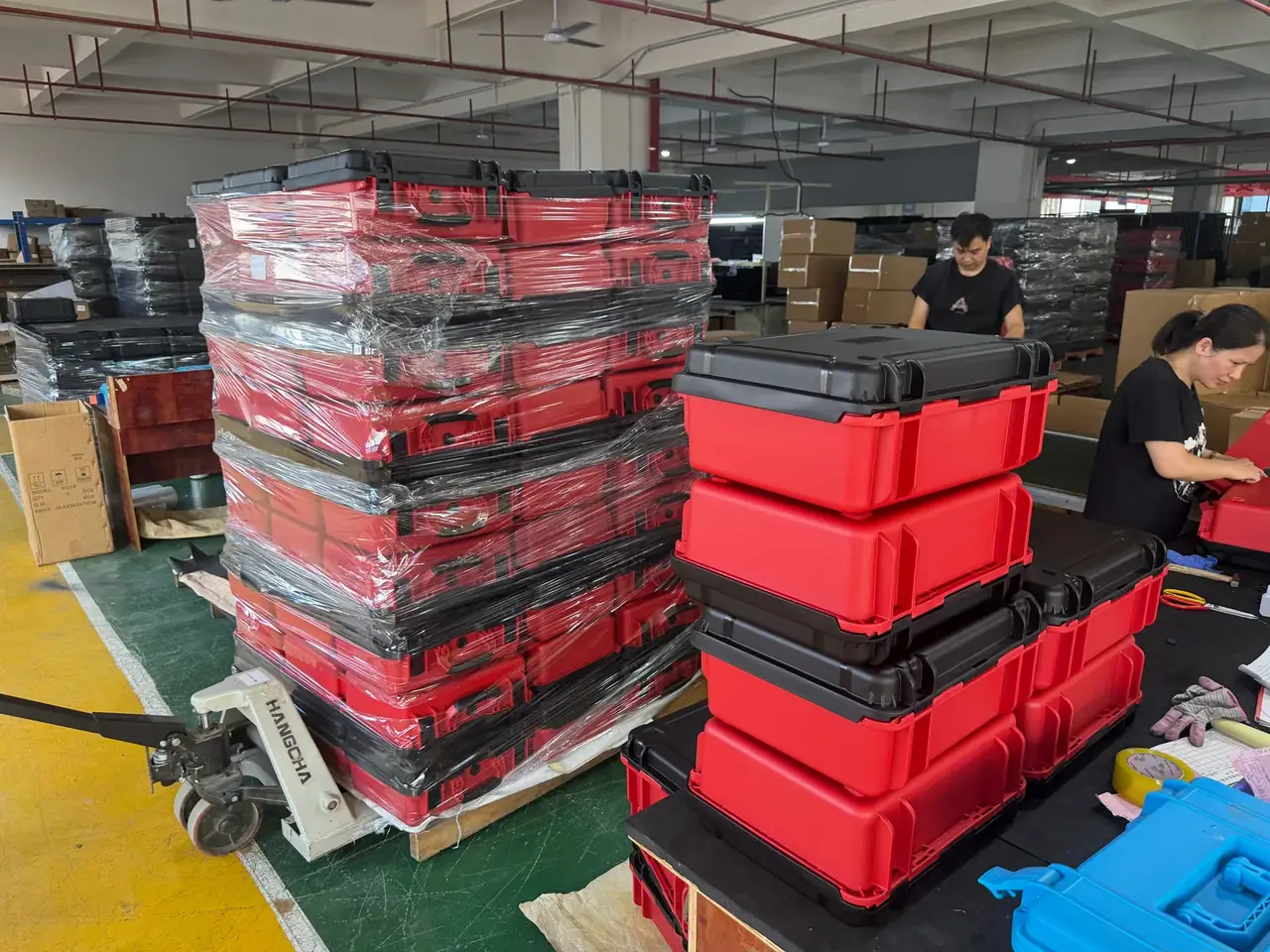
Quick answer: An inverter spares case is judged at 40% RH inside, not by outside weather; 200 g of gel, a three-dot card and a 30-day reseal rule do most of the work.
Table of contents
- Why 40% RH Is the Line, Not a Guess
- A 200 g Desiccant Budget for 120 L
- What IP65 Dust Sealing Actually Stops
- Salt Spray for 480 Hours on Coastal Sites
- The 30-Day Reseal Window
- FAQ
1. Why 40% RH Is the Line, Not a Guess
A 30 MW rooftop plant stores spares in a room that reads 38 °C at two in the afternoon and 24 °C before dawn. The case without desiccant had water on the inside of its lid.
The 40% figure comes from board behaviour: terminal plating dulls after about 30 days above 55% RH, so the spec keeps 15 points of margin. Dew point says the same: at 25 °C and 40% RH it sits near 10 °C, and nothing condenses on a warmer lid.
Humidity moves with temperature even when moisture does not. The same load reads 8 to 10 points lower at 30 °C than at 20 °C, so 32% RH in the afternoon can reach 46% overnight. Read the card within 10 minutes of opening.
| Humidity band | Reading | Board storage life | Action |
|---|---|---|---|
| Dry | ≤35% RH | 12 months | Gel change every 90 days |
| Watch | 35%–40% RH | 6 months | Log, recheck at 60 days |
| Alert | 40%–50% RH | 30 days | Swap gel, retest in 24 h |
| Over-limit | >50% RH | Do not shelve | Reseal, inspect boards |
A 120 L case holding 40 kg of spares leaves under 60 L of air. Three minutes open admits 4 to 6 g of vapour, most of what 30 g of working gel can take.
2. A 200 g Desiccant Budget for 120 L
Each case carries two 100 g bags in φ80 mm mesh cups clipped to the lid. The mass is back-calculated from 120 L of free volume and a 90-day cycle: at 40% RH the gel holds 20% of its own mass, so 200 g takes up 40 g of water.
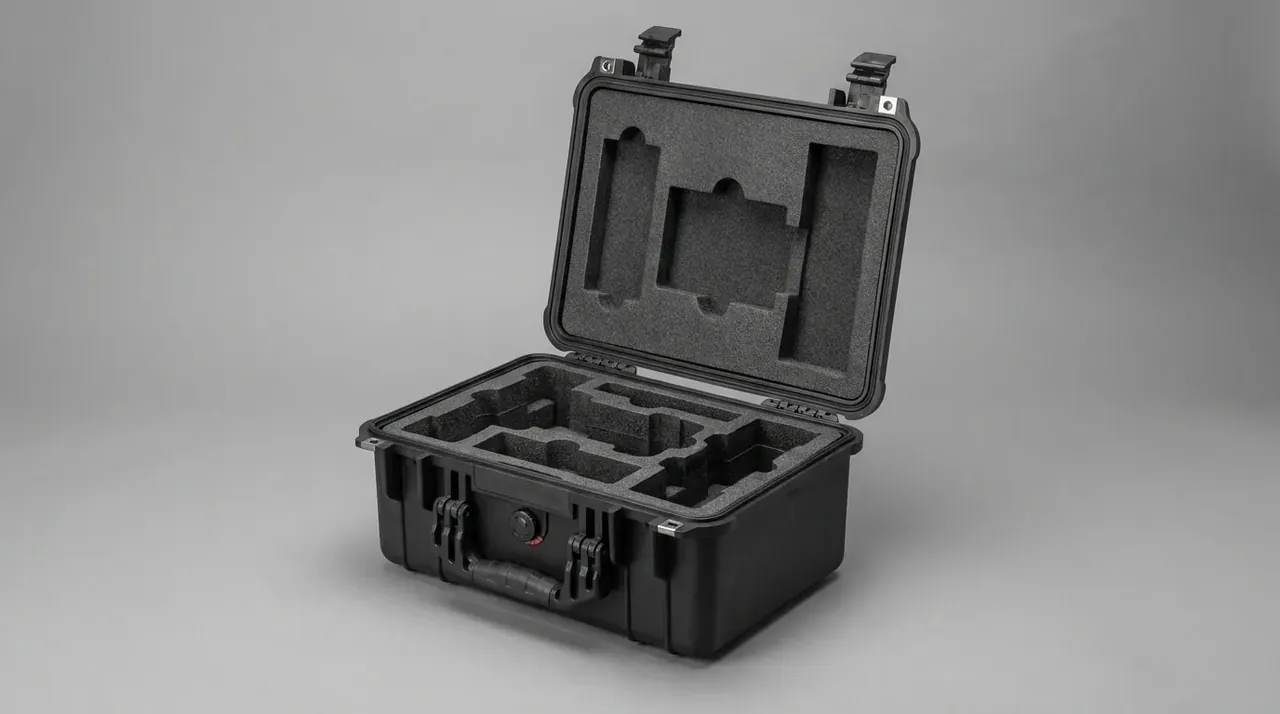
Moisture comes from three directions: 2 g in residual air at 30 °C and 80% RH, 8 to 12 g from cardboard, and 20 g from breathing over 90 days at 3% of volume per day, summing near 30 g.
More gel is not better. At 400 g the interior falls below 20% RH and label stock cracks off when peeled. Cap at 300 g and fix the seal.
| Spare category | Units | Gel charge | Reseal interval |
|---|---|---|---|
| Control boards | 4 | 200 g | 90 days |
| Fans and filter mats | 6 | 100 g | 180 days |
| Terminals and busbars | 12 | 150 g | 120 days |
| Sensors and harnesses | 8 | 100 g | 180 days |
Filter mats get their own line: a 100 kW unit takes six 120×120 mm mats on a 6-month change, each bagged separately, because mats stacked six deep crease and the 8 mm mat thins to 5 mm.
3. What IP65 Dust Sealing Actually Stops
Spares sit in container shells on gravel floors, and every forklift pass lifts dust. The fraction below 75 μm settles slowly and still works into a lap joint.
The rating covers dust tightness and water jets separately. Dust testing uses talc, judged by whether ingress interferes with running. The answer is a double-lip gasket squeezed to 30% and held by four latches at 180 N each: just over 700 N across a 4.2 m perimeter, about 170 N per metre.
| Dust path | Construction | Pass criterion | Typical failure |
|---|---|---|---|
| Case rim | Double-lip gasket, 30% squeeze | 8 h talc, no deposit | Grit in the groove |
| Latch points | Four, evenly spaced | 180 N each | One side closed first |
| Pressure vent | φ20 mm membrane | 200 mL/min | Membrane clogged |
| Cable port | Stepped bore and plug | Plug seated, no gap | Plug lost |
A gasket works only while it rebounds. Over-tighten one latch to 38% squeeze and the elastomer takes a set within a season, opening a dust path where it looked tightest.
4. Salt Spray for 480 Hours on Coastal Sites
Floating solar and tidal-flat plants store spares within 200 m of water, where chloride runs 6 to 8 times the inland level, so salt spray runs to 480 h instead of 96 h.
Salt spray is not water ingress. IP65 stops liquid; salt governs corrosion, and a sealed case still seizes its latches. After 480 h the checks are: latch force up no more than 30%, no red rust on pins, no blistering on the shell. That means 304 pins and shafts, nickel-plated springs, and no exposed carbon steel.
Cost is 1.8 kg and about 12% of unit price, so inland projects stay zinc-plated at 96 h. Bands beat one global spec: 480 h inside 500 m, 240 h out to 2 km, 96 h beyond.
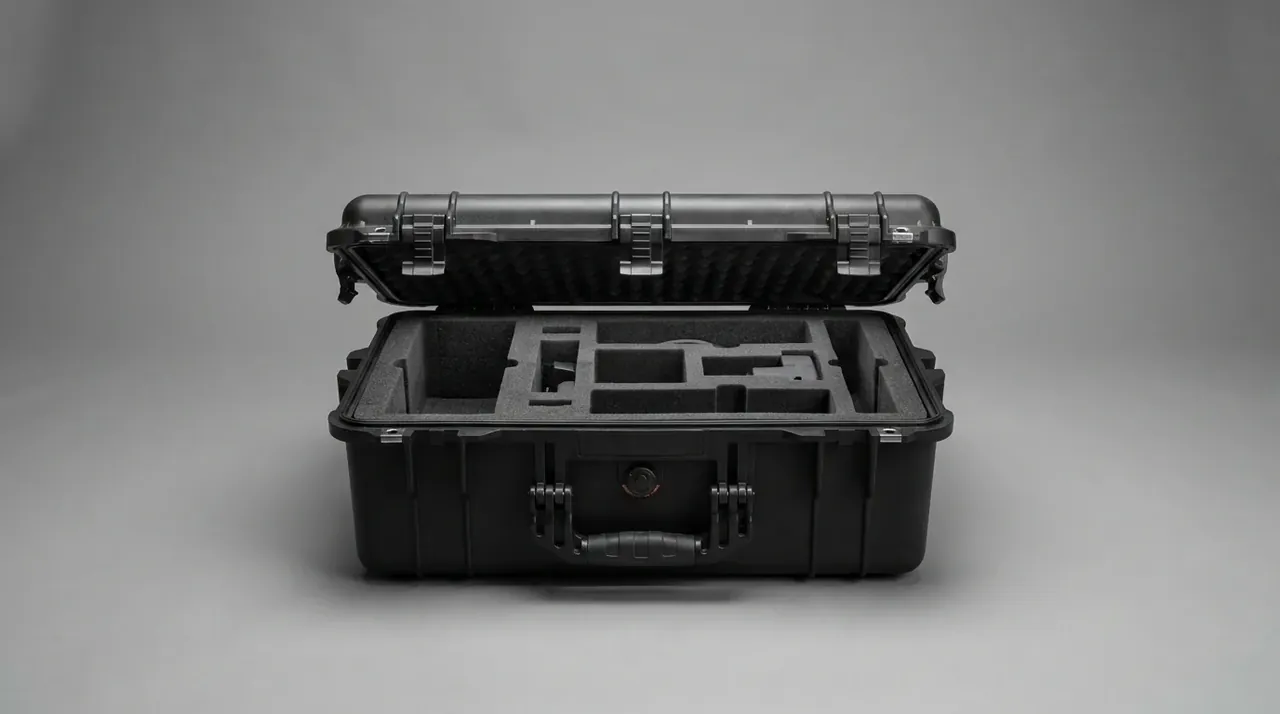
Above 2000 m air density falls to 0.9 kg/m³, exchange is 15% stronger for the same swing, and gel is spent faster. Reseal at 60 days instead of 90 and enlarge the vent from φ16 mm to φ20 mm.
5. The 30-Day Reseal Window
Pulling a spare takes 3 minutes; the interior needs 3 to 5 days to settle under 40% RH again. That gap is where the 30-day rule sits.
Swap the gel regardless of colour, read the card after 24 h, accept only under 40% RH, then tape the rim with 50 mm tape on the flat outside the gasket, never across the lip.
An A6 card in the lid with date, operator, bags changed and retest value answers two questions a year on: how often the case opened, and which batch sat longest.
Stacked four high, the bottom case carries about 96 kg. The gasket takes a set, squeeze drifts from 30% to 38%, and dust walks in. Heavy parts low, filter mats and harnesses on top.
Conclusion
Moisture and dust in an inverter spares case come down to three numbers: 40% RH inside, 480 h of salt spray where it applies, and a 30-day reseal window. Two 100 g gel bags and 50 mm tape stretch board storage from 30 days to 12 months. A double-lip gasket at 30% squeeze with four latches at 180 N keeps 75 μm powder outside. Pick the coastal and altitude options by distance rather than by default, and the cost stays where it belongs.
This article deals only with case-side specifications and design implications, never with handling, loading or use of the items inside.
Related Reading
- Outdoor weathering and shock protection for whole units
- Totes for a module production line
- Carrying inspection gear to the array
- General selection rules for industrial cases
Related Products
- 8 Series — Gun Cases; Military Equipment Cases; Camera Equipment Cases; Drone Cases; Watch Cases; Knife Cases; First Aid Cases; Electronics Equipment Cases
- WL8-2812 PP Gun Case — model WL8-2812
- All protective cases and toolboxes: 7 series, 158 models