

Quick answer: IP67 is two separate tests. Grade 6 follows eight hours of talcum dust under vacuum, grade 7 follows thirty minutes at one metre of water. Acceptance needs conditions, specimen IDs and a verdict, not a grade marking.
Table of contents
- What the Two Digits of an IP67 Protective Case Cover
- Dust Test Conditions and Verdict
- Immersion Test Conditions and Verdict
- Routine Checks and Seal Geometry
- Marking, Reports and Common Disputes
- FAQ
1. What the Two Digits of an IP67 Protective Case Cover
The rating on an IP67 protective case comes from IEC 60529, with GB/T 4208 as its national equivalent. Digit one covers solids, digit two covers water, and each is a separate test with its own verdict. No arithmetic turns a 6 into a 7.
Two misreadings are common: treating IP67 as blanket approval covering drops and salt fog, and treating grade 7 as continuous immersion, which is grade 8.
| Grade | Meaning | Condition | Verdict |
|---|---|---|---|
| IP6X | Dust tight | Talcum 2 kg per cubic metre, 2 kPa vacuum, 8 hours | No deposit inside |
| IPX7 | Temporary immersion | Bottom at 1 m, lid 150 mm under, 30 minutes | No harmful ingress |
| IPX8 | Continuous immersion | Depth and duration by agreement | Agreed terms |
| IPX5 | Water jets | 6.3 mm nozzle, 12.5 litres per minute | No harmful effect |
2. Dust Test Conditions and Verdict
Dust testing runs in a chamber with talcum held at 2 kg per cubic metre. The specimen sits in its working attitude with entries closed, air is drawn out to hold 2 kPa at forty times the case volume per hour for eight hours. The vacuum is what drives dust into every seam.
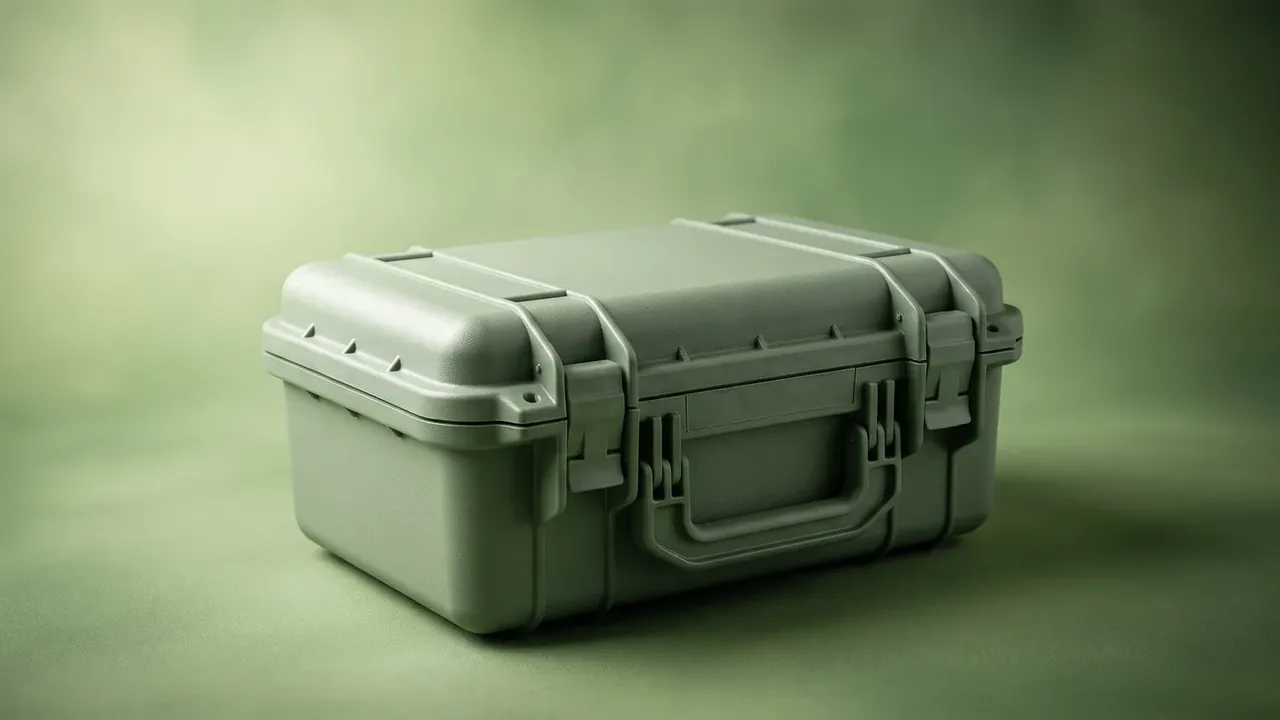
The verdict comes from opening the case, not from looking at it. Wipe the outside, lift the lid, and check inner walls, seal faces and latch grooves. The hinge side and the valve boss collect dust first, and one patch fails that specimen.
The standard test has no ageing pre-treatment. If a thermal cycle comes first, the order belongs in the report: a frozen and baked seal takes a permanent set.
3. Immersion Test Conditions and Verdict
Immersion uses a still tank: bottom one metre below the surface, 150 mm of water above the lid, thirty minutes, water within 5 kelvin of the case. A wider gap contracts trapped air and pulls water inward for a false failure.
The verdict is ingress found after opening. No droplets, no pooling, no continuous film across a seal face. Condensation is the usual argument, so record it separately and fail the case once water reaches a latch groove or a valve seat.
Release pressure first: one metre equals about 10 kPa of head, and residual charge holds the seal shut for a false pass.
4. Routine Checks and Seal Geometry
The per-unit check on an IP67 protective case is a charge test: 20 kPa, sixty seconds, reject anything above 0.3 kPa of drop. It screens out a misplaced seal quickly, but it never replaces immersion.
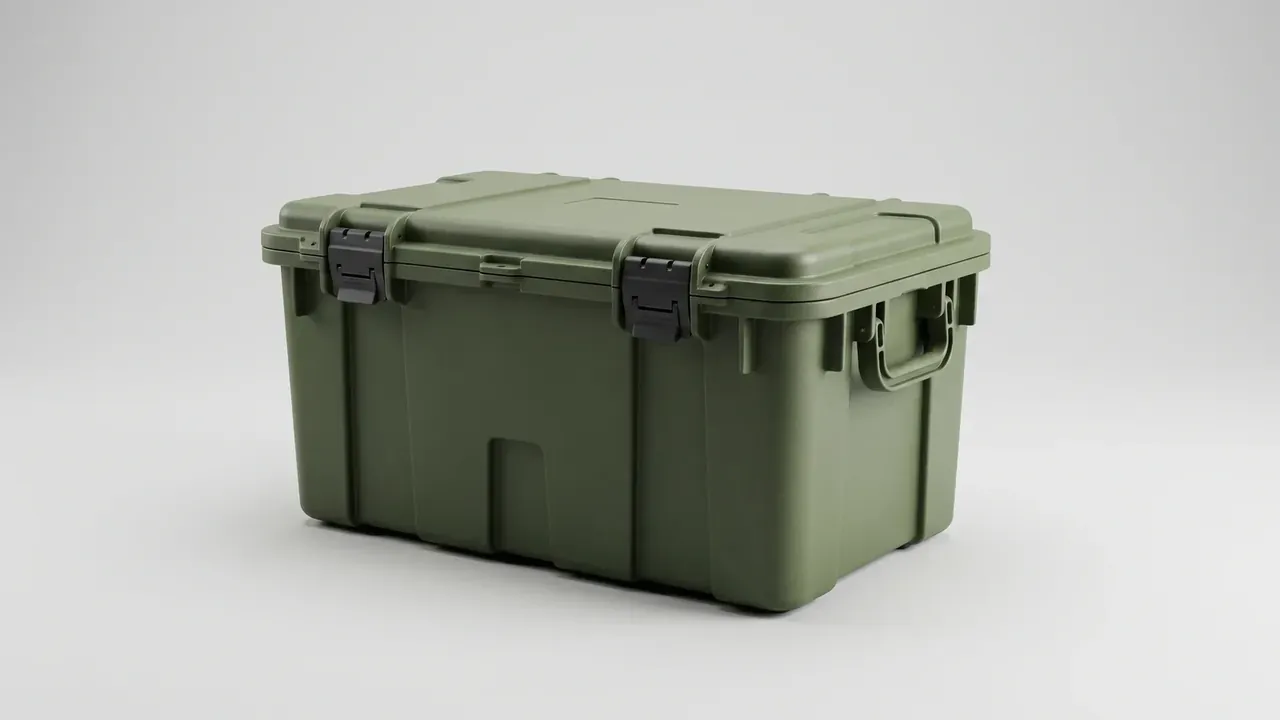
Geometry decides the result. Groove depth against cord diameter sets compression at 25% to 30%, latches at 300 mm intervals avoid a gap between them, the hinge needs its own transition, and a parting line on a seal face cannot be rescued by a better cord.
Batch judgement runs in three steps: three specimens for the type test, three immersed per batch, one failure doubling the sample, a second failure rejecting the batch.
5. Marking, Reports and Common Disputes
A report proves itself with standard number and year, specimen IDs, dust concentration and vacuum, depth, duration, verdict, and before and after photographs. A catalogue page is not evidence.
| Dispute | Common practice | Ruling |
|---|---|---|
| Grade, no report | Screenshot of a catalogue | Not accepted |
| Test order changed | Immersion first, pre-treatment skipped | Order must match report |
| Sample too small | One case immersed | Three per batch |
| Valve swapped | Old report reused | Retest required |
Marking states IP67 with the standard and year, never waterproof to one metre, which turns a test condition into a promise. A new relief valve, vent membrane or cable entry means both tests are repeated before that IP67 protective case carries the grade again.
Conclusion
Accepting an IP67 protective case means turning two digits back into two sets of conditions and locking the result with a verdict. Grade 6 is eight hours of dust under vacuum, grade 7 is thirty minutes at one metre, and no marking replaces either. Order, sample size and location records say more than the verdict line, and only then does the grade on an IP67 protective case survive a re-check.
This article discusses only the container (case body) side of specifications and design intent, and does not cover any handling, loading or use of the contents.
Related Reading
- Seals and moisture control in cases
- Seal structure and case material
- Impact test criteria and verdicts
- Dust sealing design points
Related Products
- 8 Series — Gun Cases; Military Equipment Cases; Camera Equipment Cases; Drone Cases; Watch Cases; Knife Cases; First Aid Cases; Electronics Equipment Cases
- WL8-2812 PP Gun Case — model WL8-2812
- All protective cases and toolboxes: 7 series, 158 models