

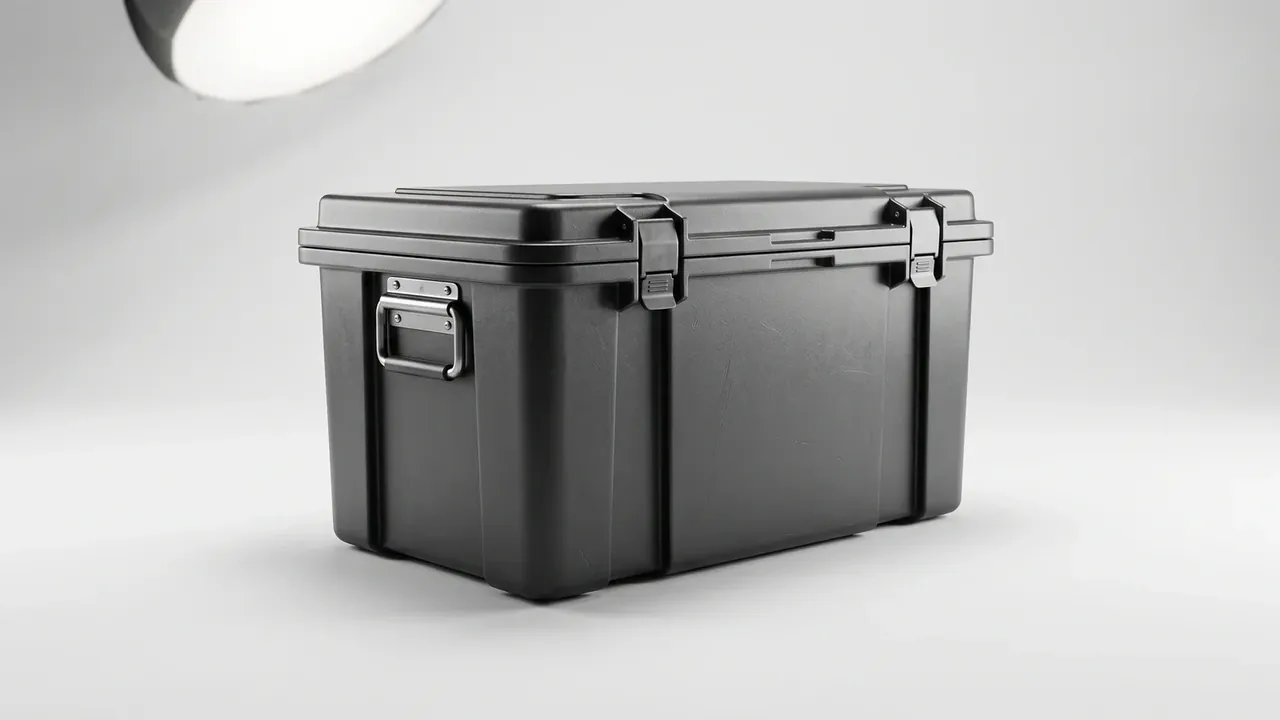
Quick answer: IP68 carries no default depth. An IP68 protective case is accepted against numbers in the order — depth, duration, water temperature — then verified by one immersion run and a positional check after opening.
Table of contents
- Where the IP68 Protective Case Rating Ends
- Writing the Continuous Immersion Conditions
- How a Long Soak Breaks the Seal
- What to Inspect After Opening
- Lot Decisions and Report Contents
- FAQ
1. Where the IP68 Protective Case Rating Ends
Digit 8 in IEC 60529 means continuous immersion, and the standard leaves depth and time to the buyer and the maker. No default exists, so one code can cover 1.5 m for 30 minutes and 3 m for 2 hours.
The IPX7 boundary comes first. IPX7 is closed: 1 m to the base, 150 mm over the top, 30 minutes. IPX8 is open, usually from 1.5 m upward. An IP68 protective case printed without numbers measures nothing.
| Item | IPX7 | IPX8 |
|---|---|---|
| Depth | 1 m at base, 150 mm over top | Agreed, commonly from 1.5 m |
| Duration | Fixed 30 minutes | Agreed, 30 minutes to 24 hours |
| Static head | About 10 kPa | About 15 kPa at 1.5 m |
| Verdict | No harmful ingress | Clause by clause |
2. Writing the Continuous Immersion Conditions
Five numbers make the run repeatable: 1.5 m to the base, 150 mm of water over the top, 30 minutes plus or minus one, water at 20 degrees Celsius plus or minus five, and no more than 3 K between water and specimen.
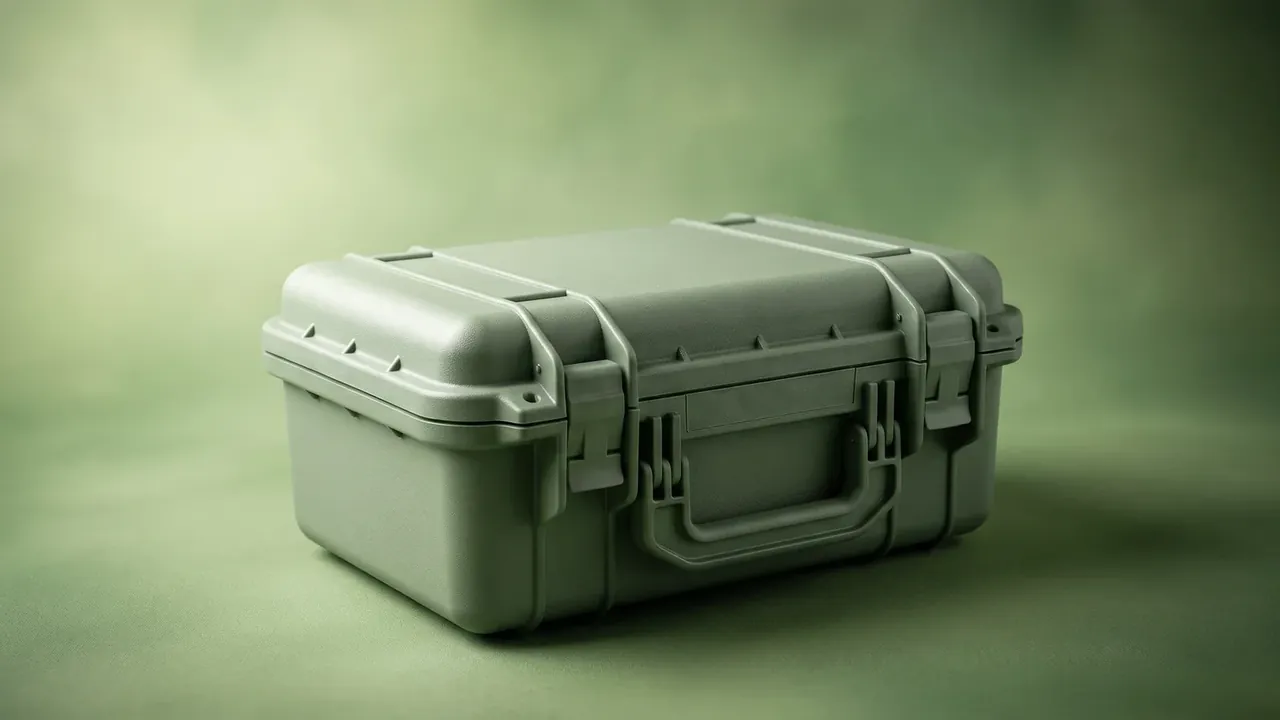
A 1.5 m column is about 15 kPa, which over a 600 by 400 mm lid comes to roughly 3600 N. Agree a centre deflection limit of 0.3 mm, or the gasket is pulled open.
Vent first, with the equalising valve cracking at 3 kPa. Trapped pressure cancels the opening minutes of load, and a vacuum pulls water in at touchdown.
3. How a Long Soak Breaks the Seal
Thirty minutes can pass where eight hours fail. Four mechanisms work while the pressure sits.
Compression set comes first. An 8 mm cord in a 6.2 mm groove gives 1.8 mm of squeeze. Held at 70 degrees Celsius for 24 hours, a compound setting more than 20 percent is not built for long soaks; eight hours costs about 0.2 mm.
Lid creep comes second: at 15 kPa a flat lid keeps moving, and the centre travels from 0.3 mm to 0.5 mm in a day. Thermal breathing between 50 and 15 degrees pumps the shell like a bellows. A 0.2 mm grain of sand holds a gap open at 15 kPa.
4. What to Inspect After Opening
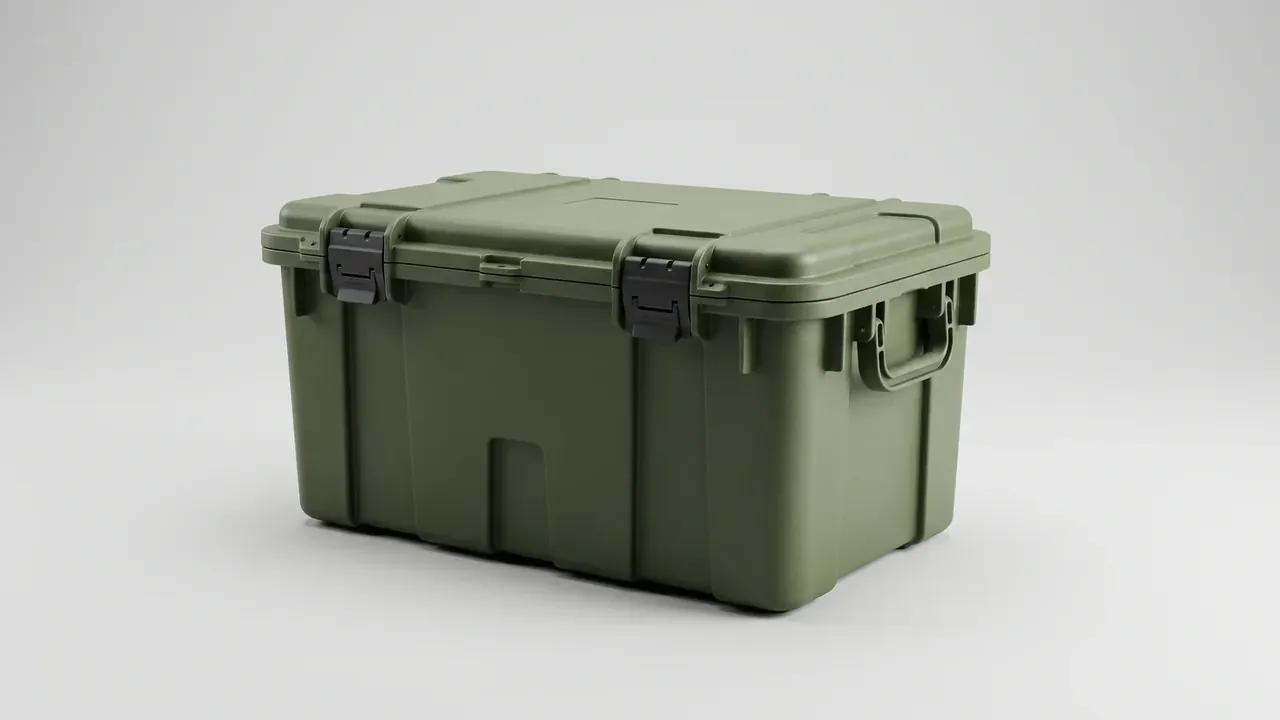
The inspection needs an order and a number, or two people will reach two verdicts on one IP68 protective case. Dry it, open the lid, read the walls, the seal face, then the valve seat.
| Location | Finding | Verdict |
|---|---|---|
| Inner walls and corners | Droplets, pooled water | Any droplet fails |
| Seal face | Continuous film | Film joining two areas fails |
| Latch pockets and hinge pin | Seep marks, white stress lines | Fail |
| Lid centre | Permanent set over 0.3 mm | Fail as structural |
| Whole case | Weight gain over 2 g | Retest |
Weighing is worth its own line: a 2 g gain is about 2 ml of water.
A lid centre that stays 0.3 mm low has yielded. White stress lines in a latch pocket mean the gasket there has lost its squeeze.
5. Lot Decisions and Report Contents
Type testing runs three units through the full scope. Routine sampling runs five per lot through immersion; one failure doubles the sample to ten, and a second returns the lot.
| Dispute | Usual claim | Ruling |
|---|---|---|
| Code printed, no report | The rating is enough | Depth, duration and report number required |
| IPX7 report offered | It is all water | Rejected; digit 8 is tested separately |
| Case went in unvented | Habit | Condition not met, rerun |
| New gasket supplier | Old report reused | Structural change, retest |
An IP68 protective case report carries the standard and its year, agreed depth and duration, specimen numbers, temperatures and photographs. No averaging: one leak in three fails the batch.
Conclusion
Acceptance turns an open-ended code into measurable limits: depth, duration, temperature, lid deflection and a checklist read after opening. Fix the items and the verdicts, and one IP68 protective case reads the same across shifts, labs and lots.
This article discusses only the container (case body) side of specifications and design intent, and does not cover any handling, loading or use of the contents.
Related Reading
- Waterproof hard case grades and structure
- Recording incoming military supply case inspections
- Seal quality control on the assembly line
- Choosing a dustproof case grade
Related Products
- 8 Series — Gun Cases; Military Equipment Cases; Camera Equipment Cases; Drone Cases; Watch Cases; Knife Cases; First Aid Cases; Electronics Equipment Cases
- WL8-2812 PP Gun Case — model WL8-2812
- All protective cases and toolboxes: 7 series, 158 models