

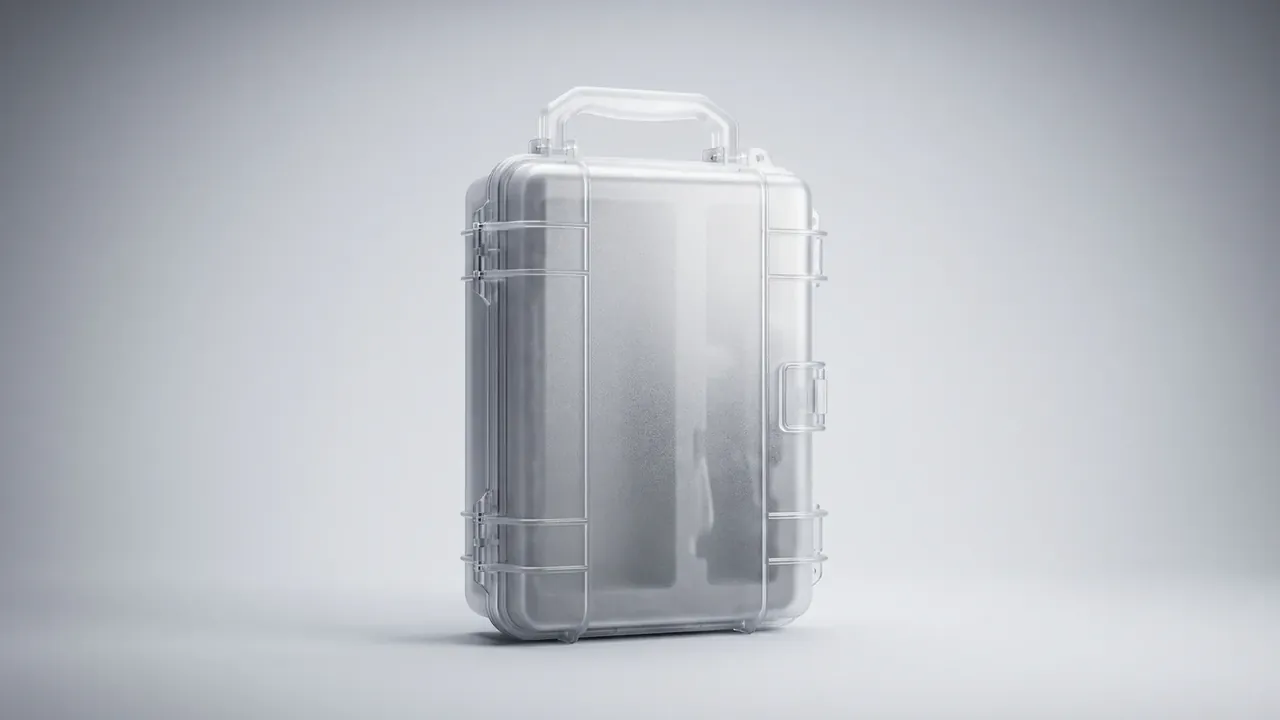
Quick answer: The 8 in a rating only says continuous immersion was run; depth and duration are agreed between buyer and maker. Before accepting an IP68 waterproof plastic case, check that the claim names depth, duration, water temperature and attitude, plus a verdict threshold and a re-test rule.
Table of contents
- A Night in the Tank
- Depth, Duration and Attitude
- Three Verdicts, No Averaging
- Failures, Quarantine and Re-test
- Six Lines the File Needs
- FAQ
1. A Night in the Tank
The usual field test: lid open, a weight on top, eight hours in 0.4 m of water, lifted out, no water inside, signed off. It proves nothing.
An open lid takes the gasket out of the load path. At 0.4 m the head is about 4 kPa against a claimed 2 m near 0.2 bar — five times short. No attitude is fixed, no threshold is defined, nothing waits for water to drain back.
| Field practice | Why it fails | Condition to write |
|---|---|---|
| Lid open | Gasket never loaded | Closed as delivered, all latches engaged |
| 0.4 m pool | 4 kPa, a fifth of claim | Bottom at 2 m, about 0.2 bar |
| Eight hours | Right time, wrong pressure | 60 minutes, never lifted out |
| One face down | Single load direction | Six faces, 15 minutes each |
| Eyeball check | No threshold | Blotting paper gain under 0.5 g |
| Opened at once | Water still moving | Wipe, rest 2 hours, then open |
The grade on an IP68 waterproof plastic case is a sentence with blanks. Whoever fills the blanks owns the claim.
2. Depth, Duration and Attitude
The common pairing, 2 m for 60 minutes, puts roughly 0.2 bar on the bottom face, about 20 kPa. Every extra metre adds 10 kPa, so depth is a physical commitment.
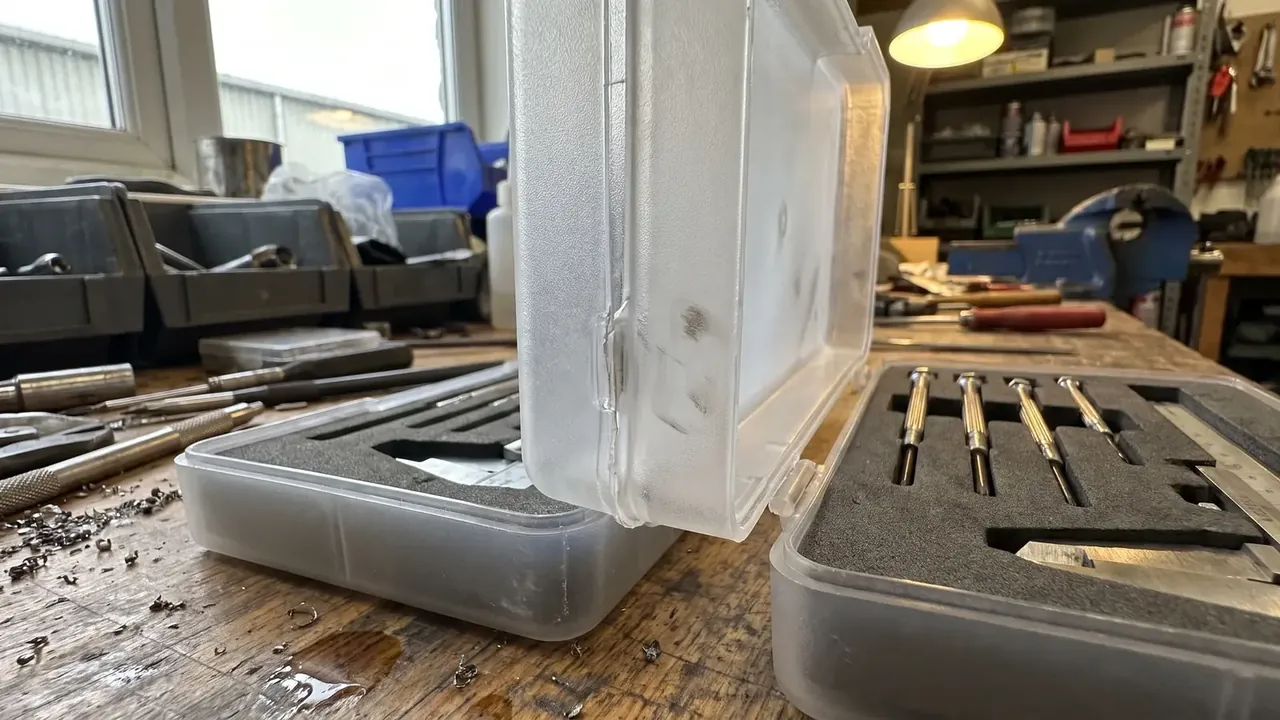
Attitude gets skipped more than depth. At the same 2 m and 60 minutes, latches down and latches up can give opposite results: pressure either seats the lid on the gasket or lifts it away. Write it one of two ways — six faces at 15 minutes each, or the worst case held a full hour with latches and hinge down.
Temperature belongs in the condition too. Water at 20 °C plus or minus 5 °C, specimen within 3 K, is the usual wording. A wide gap lets trapped air expand then contract, pulling water through the seam and producing a false failure; pre-warming produces a false pass.
Two assembly numbers decide whether the promise survives. Twelve lid screws at 6 N·m with more than 2 N·m of spread compress the gasket unevenly, and at 2 m the leak starts beside the loosest one. Flash above 0.15 mm on the parting line is a hard ridge, and no torque closes it.
3. Three Verdicts, No Averaging
Ingress, function and structure must pass together, and an IP68 waterproof plastic case cannot borrow a pass from the batch around it.
| Item | Method | Limit |
|---|---|---|
| Ingress | Weigh blotting paper before and after | 0.5 g or less |
| Gasket face | Visual plus white paper press | No film joining two points |
| Function | Three cycles, each latch | No binding, no whitening |
| Structure | Permanent set at lid centre | 0.4 mm or less |
| Records | Pressure and time curve | Matches the claim |
Averages are the easiest number to fake.
Two of three passing with one wet is not 67 percent; it is process drift. The rule reads better as one line: one failure rejects the batch, and good units cannot offset it.
4. Failures, Quarantine and Re-test
Three steps, in order: quarantine, re-test, then argue about liability.
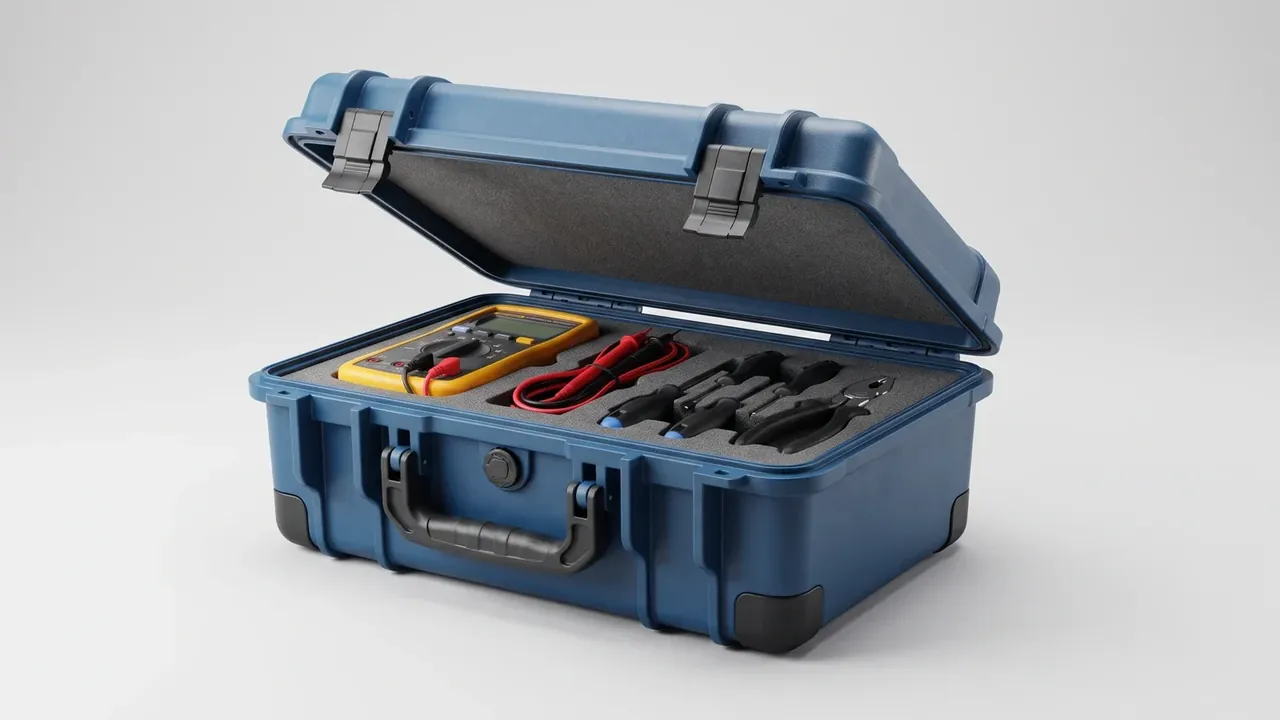
Re-testing stays inside the batch. Five units first; one failure doubles the sample to ten; a failure among the ten rejects the lot, with no topping up from good stock. Conditions must match the first run exactly, or the results cannot be compared. Records carry sample numbers, times, operator and judge, kept 24 months. Failure analysis starts at three places: gasket joint vulcanising, lid screw torque, parting-line flash above 0.15 mm.
Quarantine is the step people skip. Rejected and untested batches share a shelf, labels get swapped, and nobody can say which lot went back.
5. Six Lines the File Needs
An IP68 waterproof plastic case file needs six lines, not pages.
- Standard and edition: IEC 60529 or GB/T 4208, with the year.
- Claimed condition: 2 m, 60 minutes, 20 °C plus or minus 5 °C, within 3 K.
- Attitude and state: six faces or worst case, latches engaged, valves sealed.
- Thresholds: paper gain 0.5 g, permanent set 0.4 mm, no connected film.
- Sampling ladder: five units, doubling to ten, then batch rejection.
- Report and retention: curve and photos attached, two units kept 24 months.
One field sits outside the six and gets missed: the test house and equipment number.
Conclusion
Accepting an IP68 waterproof plastic case means turning a grade with blanks into a condition someone can repeat: 2 m, 60 minutes, 20 °C, six faces rotated, with 0.5 g and 0.4 mm as the deciding numbers. Fill the blanks and a night in the tank means nothing while one hour under the right head means everything. Fix the verdict and re-test rules, and two laboratories reach the same answer on the same IP68 waterproof plastic case.
This article discusses only the container (case body) side of specifications and design intent, and does not cover any handling, loading or use of the contents.
Related Reading
- How a waterproof hard case maps grade to structure
- Airdrop case test conditions and verdicts
- Inspection gates inside a production SOP
- Pallet marking and batch traceability
Related Products
- 8 Series — Gun Cases; Military Equipment Cases; Camera Equipment Cases; Drone Cases; Watch Cases; Knife Cases; First Aid Cases; Electronics Equipment Cases
- WL8-2812 PP Gun Case — model WL8-2812
- All protective cases and toolboxes: 7 series, 158 models