

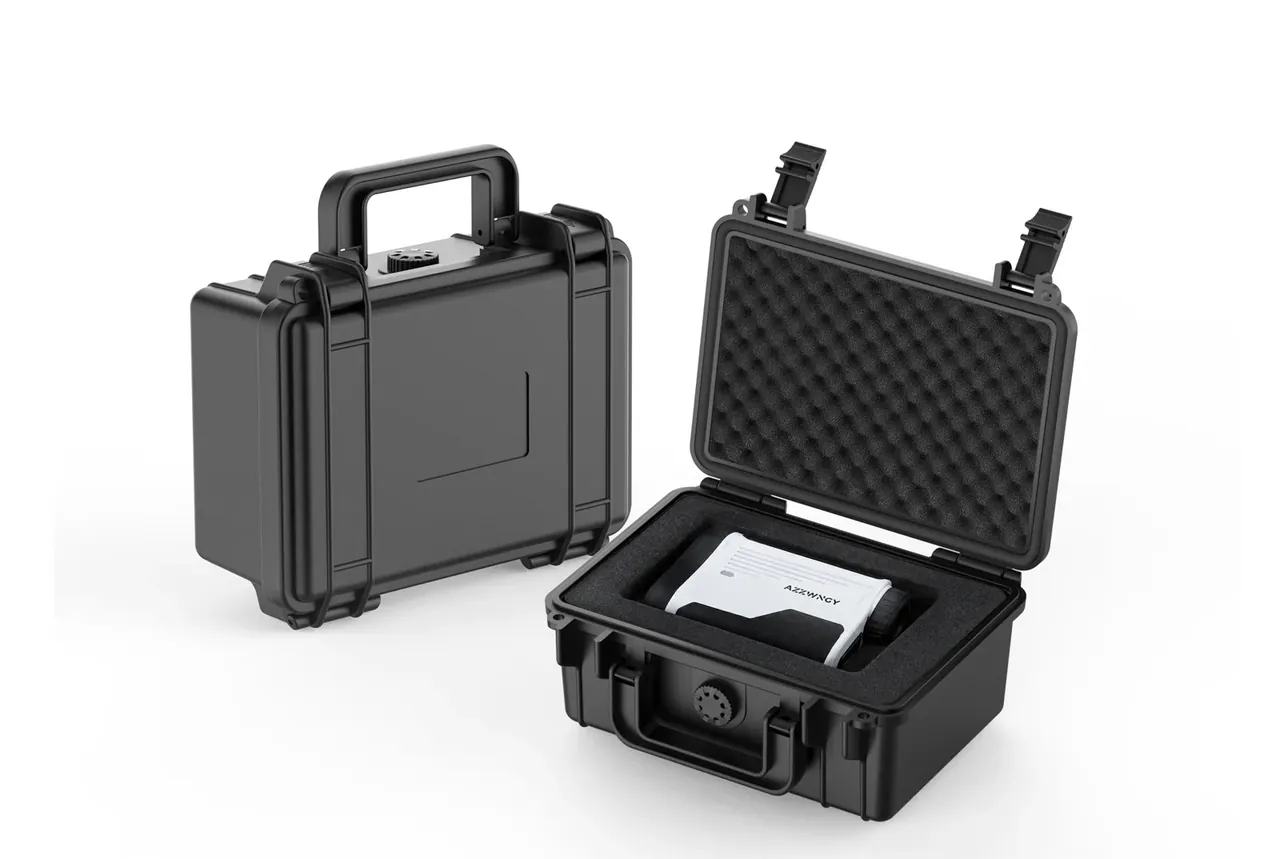
Quick answer: An ista 3e case run qualifies one whole palletized load above 68 kg: six steps, a 200 mm edge drop, 0.5 Grms of vibration and 4.5 kN of stacking.
Table of contents
- What the 68 kg Threshold Decides
- Six Steps on a 1200 × 1000 mm Pallet
- Where the Pallet Takes the Hit
- Thirty Minutes at 0.5 Grms
- Turning Three Tiers into 4.5 kN
- FAQ
1. What the 68 kg Threshold Decides
Eighteen cases at 12 kg each, stacked three high on a 14 kg timber pallet, make a 230 kg unit load. That load is the subject of ISTA 3E. A single case cannot answer for how a stack behaves on forks or at a dock plate.
The 68 kg line marks where handling turns mechanical. Below it a parcel is tipped down a chute and pressed against cartons, so energy lands on corners; above it a forklift and pallet carry the freight, so energy lands on the pallet edge and the bottom tier.
A pallet-level run reports whether the stack survives the chain, not how far one case can fall. That changes how a report is read: a bottom corner may crack 3 mm without breaching the wall and the load still passes, while an unmarked case rides on a snapped deckboard and the load fails.
| Unit load build | Specification | Note |
|---|---|---|
| Case footprint | 500 × 400 × 300 mm | 12 kg each, 4 mm wall |
| Cases per tier | 6 | 400 mm edge along 1200 mm |
| Tiers | 3 | 18 cases |
| Pallet | 1200 × 1000 mm, 14 kg | 22 mm deckboards, 3 stringers |
| Gross mass | 230 kg | Cases, pallet and straps |
| Strapping | 16 mm PP, 1.1 kN | 2 vertical, 2 horizontal |
2. Six Steps on a 1200 × 1000 mm Pallet
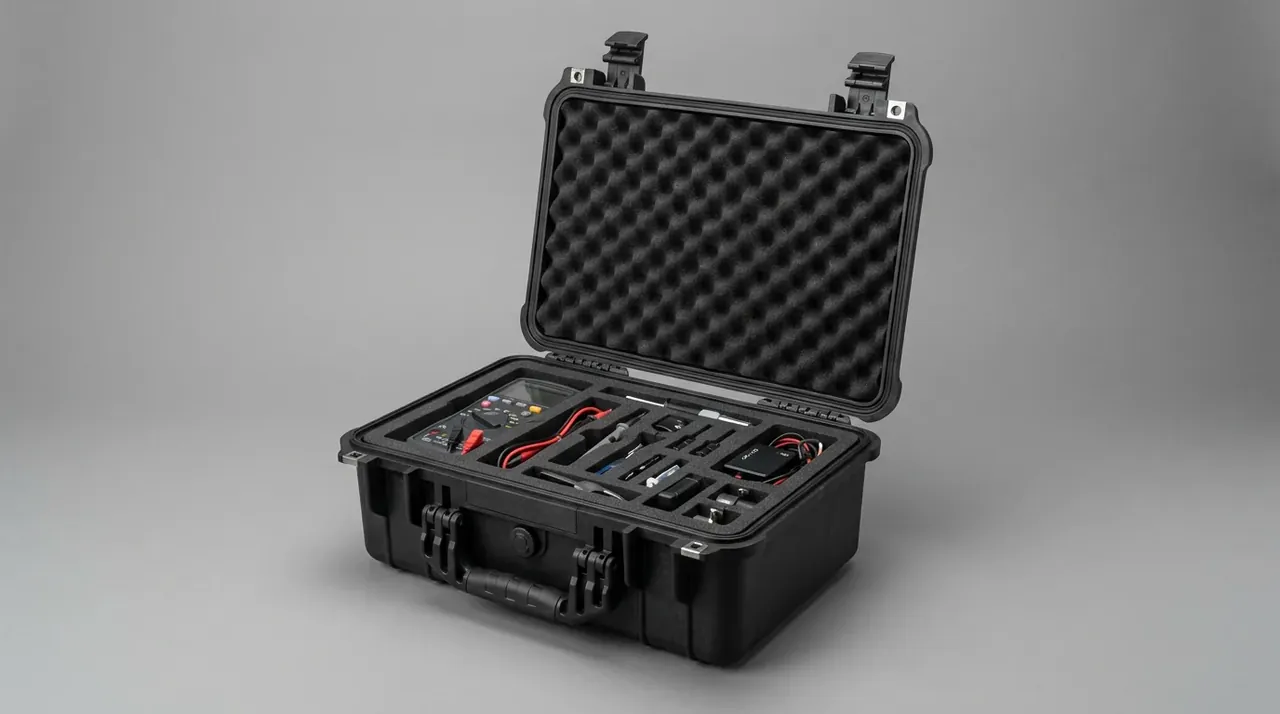
Each step enlarges a defect left by the one before; the values below are typical for 3E and the current edition governs. S1 conditions the load to an ISO 2233 atmosphere and measures the outline, where anything beyond 0.3% sends the batch back to its material record. S2 drives the 230 kg stack into a barrier at 1.8 m/s. S3 lifts one bottom edge 200 mm and releases it. S4 runs 0.5 Grms vertically for 30 min. S5 repeats the edge drop. S6 loads the top with 4.5 kN for 24 h.
| Step | Typical parameter | Pass line |
|---|---|---|
| S1 Conditioning | ISO 2233 atmosphere | Outline change ≤ 0.3% |
| S2 Incline impact | 1.8 m/s into barrier | Corner intact, strap slip ≤ 10 mm |
| S3 Edge drop, first | Lift 200 mm | No through-crack at corners |
| S4 Random vibration | 0.5 Grms, 30 min | Case shift ≤ 8 mm, film intact |
| S5 Edge drop, second | Lift 200 mm | Edge crush ≤ 3 mm |
| S6 Stacking | 4.5 kN, 24 h | Height change ≤ 2% |
Half the steps load the pallet directly; once it gives way, the stack loses its load path and no wall thickness recovers it.
The vibration segment sits between the two drops on purpose. A strap that has slipped 10 mm has already moved the upper tiers off their support, so the second landing turns an 8 mm shift into visible corner crush.
3. Where the Pallet Takes the Hit
In this example the impact segment has two numbers: 1.8 m/s and 0.12 s. A 230 kg load that stops from 1.8 m/s in 0.12 s averages 15 m/s², with a peak more than double that. The force runs through the stringer, the six bottom cases, then the straps. A 16 mm strap at 1.1 kN holds the stack; halve the width and slip grows from 10 mm to 25 mm while the pallet corner splits.
The edge drop loads the stack differently. Lifting one bottom edge 200 mm pivots the load about the far edge, so 230 kg lands on a single line, roughly 2.3 kN/m over a 1.0 m pallet length, exactly where the case rim meets the deckboard.
4. Thirty Minutes at 0.5 Grms
Vibration uses one typical level and direction: 0.5 Grms vertical for 30 min. That is about 4.9 m/s² RMS, above what a highway leg produces, so 800 km of road is compressed into half an hour. The table measures 3 m × 2 m and a 100 mm rail stops lateral walk.
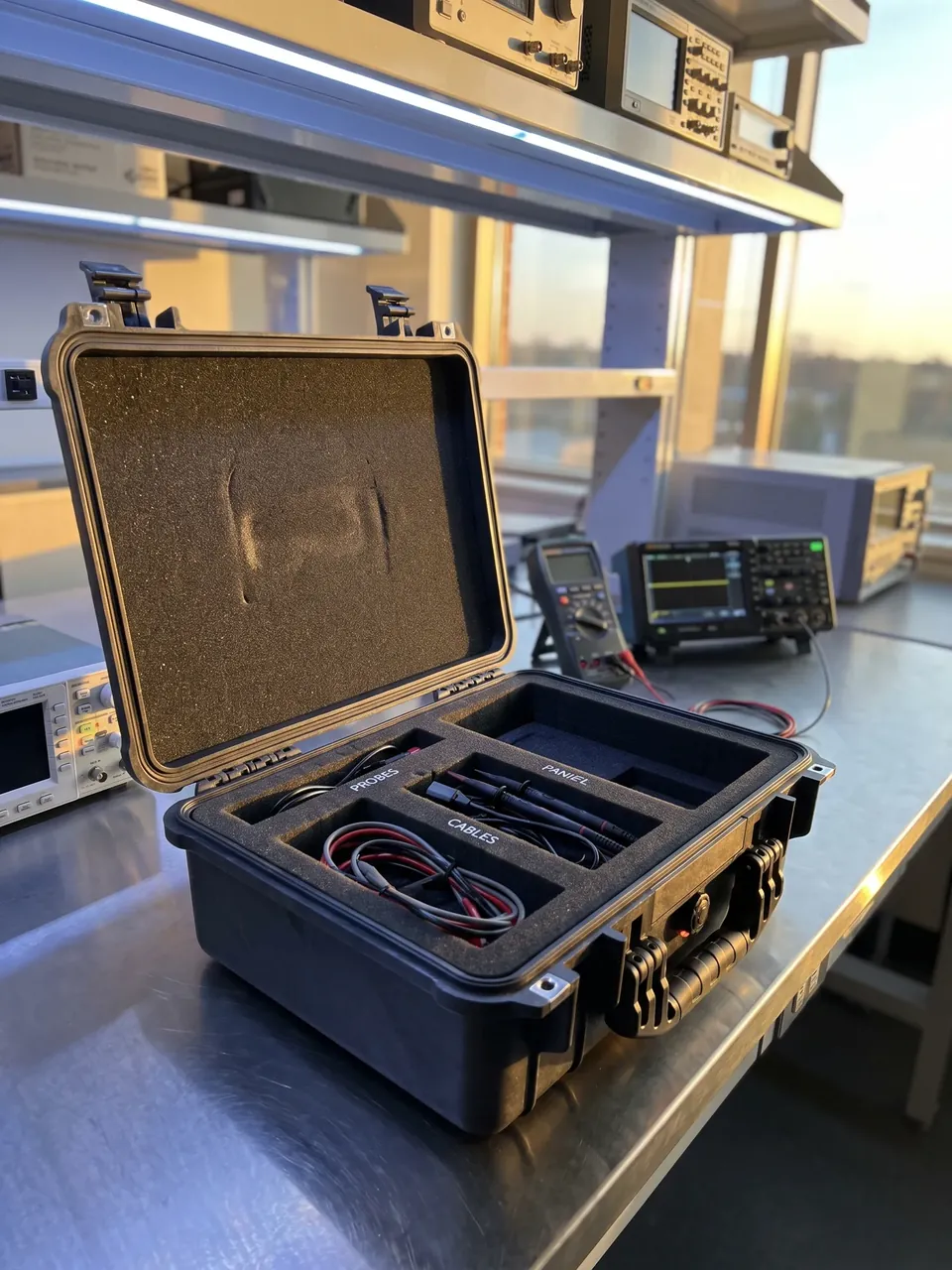
Three things get checked afterwards: whether the stretch film loosened, whether upper cases shifted past 8 mm, and whether deckboard nails backed out.
The duration has a floor and a ceiling: under 20 min the upper tier has not settled; past 60 min, creep in a PP case swallows real displacement.
5. Turning Three Tiers into 4.5 kN
Stacking is arithmetic. The bottom load carries the two tiers above it: 2 × 230 kg × 9.81 gives 4.5 kN. Spread over 1200 × 1000 mm that is 3.75 kPa, yet a bottom wall sees it as local load at mid-height, and that is what buckles.
Hold 24 h, then measure height. A 1050 mm stack that loses 21 mm has dropped 2%, the usual limit; past it the lid gap opens in the next handling step.
| Unpacking check | Pass line | Usual location |
|---|---|---|
| Corner crack | ≤ 3 mm, not through | Four bottom corners |
| Edge crush | ≤ 3 mm deep | The dropped long edge |
| Lid gap | ≤ 1 mm, even along length | Front lid centre |
| Latch return | All seated within 5 s | Two front draw latches |
| Liner shift | ≤ 2 mm, still seated | Foam against wall |
Finish the checks within 1 h, because a case relaxes and a crack closes as it does. Photograph four sides of the load, one with the lid open and one per case, at least 24 frames for 18 cases.
Conclusion
An ista 3e case programme is a pallet-level argument: 230 kg on a 1200 × 1000 mm pallet, six steps, a 200 mm edge drop, 0.5 Grms for 30 min and 4.5 kN held for 24 h. Confirm the outbound form first, and every figure will match the dock.
This article covers case-side specifications only and does not address any handling, loading or use of the contents.
Related Reading
- How ISTA 3A and 3E split the shipment
- Where to start with the ISTA family
- Stacking load tests: load, hold and read
- The ASTM D4169 distribution cycle
Related Products
- 8 Series — Gun Cases; Military Equipment Cases; Camera Equipment Cases; Drone Cases; Watch Cases; Knife Cases; First Aid Cases; Electronics Equipment Cases
- WL8-2812 PP Gun Case — model WL8-2812
- All protective cases and toolboxes: 7 series, 158 models