

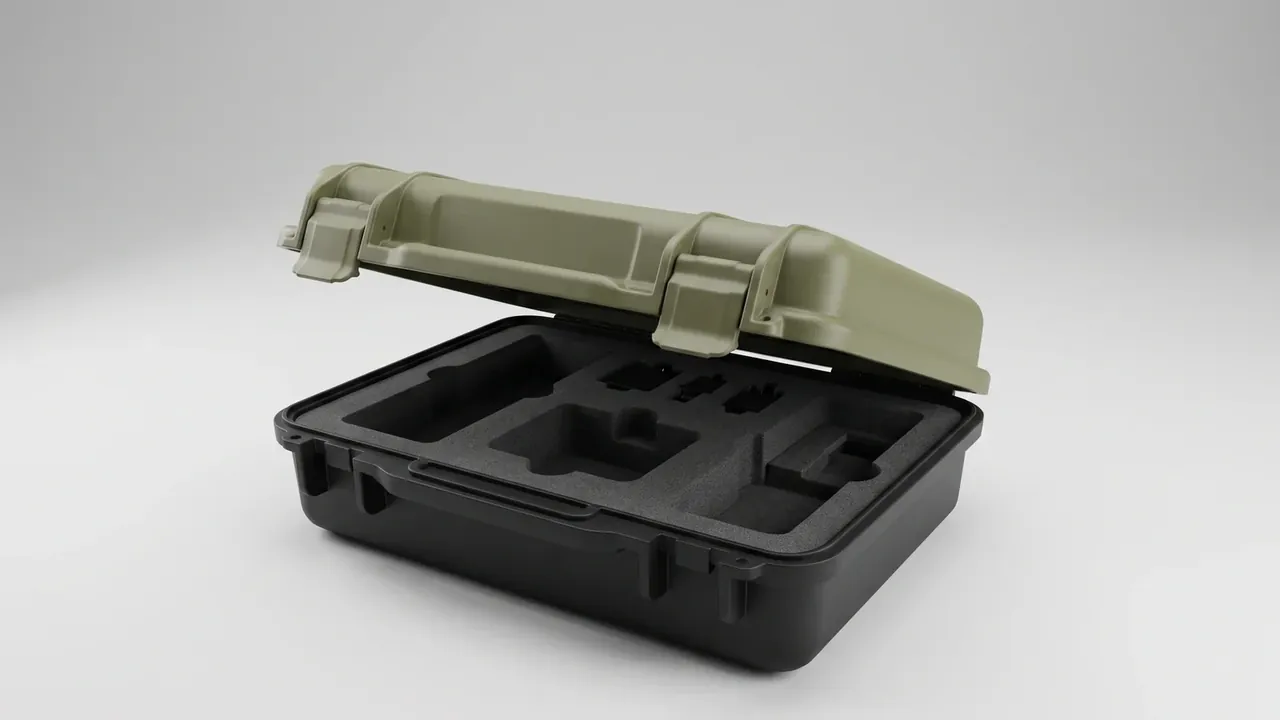
Quick answer: Choose a PP grade for plastic boxes with five tests: melt flow, food contact papers, heat resistance, additive package and batch consistency.
Table of contents
- Start a PP grade for plastic boxes with melt flow
- Where food grade and industrial grade split
- Heat resistance and cold brittleness
- Additives, odour and migration
- Five checks in order
- FAQ
1. Start a PP grade for plastic boxes with melt flow
Melt flow rate is the first filter for a PP grade for plastic boxes. Two pellets sold as PP run from 2 to 25 g/10 min: the low number means longer chains, better impact and worse flow.
| Tier | MFR (g/10 min) | Process | Notched impact (kJ/m2) |
|---|---|---|---|
| High viscosity | 2.0 to 4.0 | Extrusion, thick wall | 8 to 12 |
| Medium | 6 to 8 | Standard moulding | 5 to 7 |
| Low viscosity | 20 to 25 | Thin wall, fast cycle | 3 to 4 |
High flow fills a thin grid but leaves weld lines in a thick wall; low flow starves a 2 mm rib. At 2 mm wall and 300 mm of travel the ratio is 150, filled at 230 C; a low viscosity tier runs 200 C but takes base impact from 6 to 3.5 kJ/m2. Test MFR to GB/T 3682.1 at 230 C and 2.16 kg, since a 190 C PE condition reports higher.
2. Where food grade and industrial grade split
Food grade is a set of papers, not a resin name. A body that touches food is tested to GB 4806.7 with hexane extraction at 60 C for 6 hours, total migration under 10 mg/dm2, and a three-person sensory panel; industrial grade carries mechanical data and RoHS only.
| Item | Food grade | Industrial grade |
|---|---|---|
| Resin | Virgin, lot traceable | Virgin or up to 30 percent regrind |
| Migration | Hexane, 60 C, 6 h | Not tested |
| Documents | Full GB 4806.7 | Mechanical data, RoHS |
Resin source splits: food grade wants virgin pellets with a traceable lot, industrial grade can carry 20 to 30 percent regrind, cutting cost 8 to 12 percent but taking 15 percent off impact. An industrial report filed as food is the usual mistake; only migration and sensory pages count.
3. Heat resistance and cold brittleness
A cold-store PP grade for plastic boxes should be copolymer. Homopolymer melts at 160 to 165 C and deflects at 100 C under 0.45 MPa, so service stays at 90 to 100 C; copolymer holds 6 kJ/m2 at minus 20 C where homopolymer is down to 3.
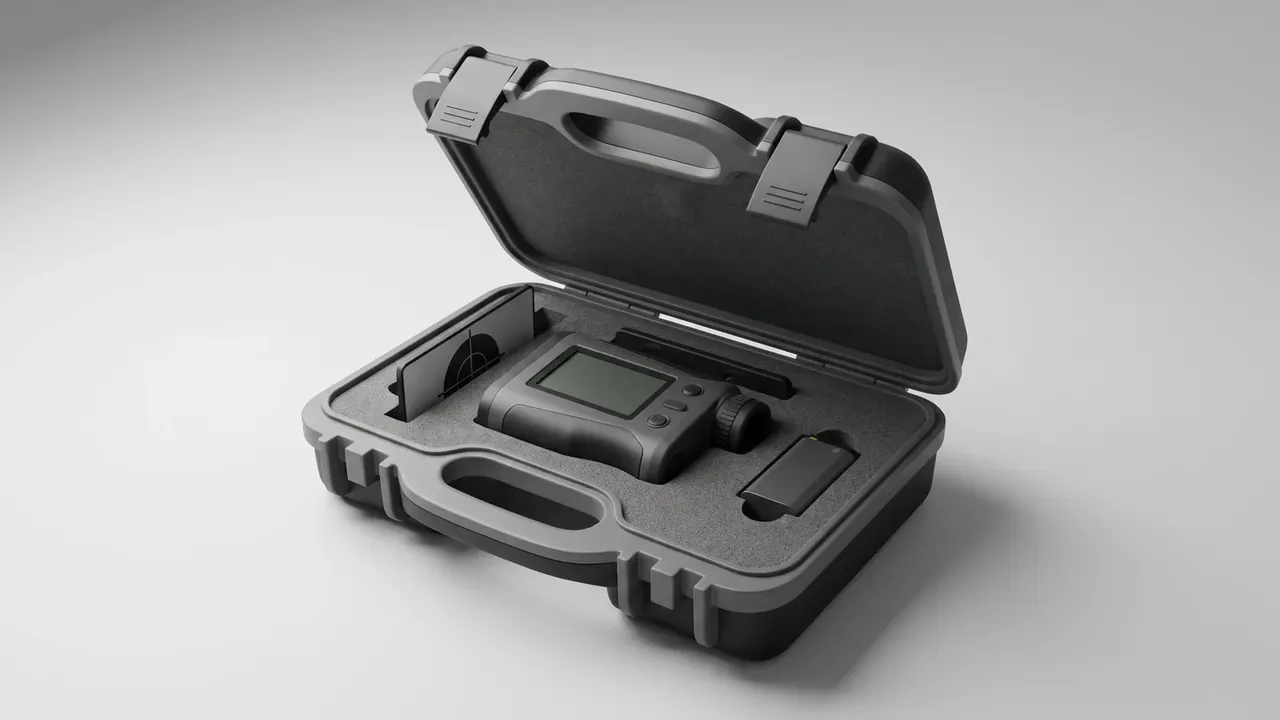
Both ends need a number: thirty minutes of 100 C steam shrinks a homopolymer body 0.3 percent against 0.15 percent for copolymer, and at minus 25 C a 1.2 m drop cracks 30 percent of homopolymer corners against under 8 percent for copolymer. A grade listed at 100 C still sags on a 120 C drying line.
4. Additives, odour and migration
Two boxes can share a melt flow and differ in additives. Antioxidant 1010 and 168 at a 1:1 ratio, 0.1 to 0.2 percent total, plus 0.3 percent light stabiliser outdoors; overshooting yellows the part, and a yellowness index past 3 sends the batch back.
Odour tracks MFR and drying: dry pellets at 80 C for 2 hours, hold melt at 200 to 230 C, keep residence under 5 minutes. Cheap resin with high residual monomer still smells after 4 hours.
5. Five checks in order
Run the five tests for a PP grade for plastic boxes in sequence and stop at the first failure.
| Check | How | Pass line | Common trap |
|---|---|---|---|
| Melt flow | Certificate or test | Matches wall and flow | Only PP stated |
| Food contact | Migration, sensory pages | Full GB 4806.7 | Industrial report reused |
| Heat | Deflection plus real cycle | Under 90 C continuous | Peak temperature only |
| Additives | Formula, yellowness index | 0.1 to 0.2 percent | Overdose yellows parts |
| Consistency | MFR across three lots | Spread within 15 percent | Silent resin change |
Price is the last hint: food grade virgin PP runs 900 to 1,200 RMB per tonne above industrial, and a quote 15 percent under the field means another resin.
Conclusion
Melt flow sets the moulding window, food papers compliance, heat the duty, additives the smell, and lot consistency the batch. Wired together, a PP grade for plastic boxes becomes a line in a purchase order rather than a supplier's word.
This article discusses only the container (case body) side of specifications and design intent, and does not cover any handling, loading or use of the contents.
Related Reading
- Portable plastic tool box materials
- Preparing resin before moulding
- Selecting an injection moulded case
- Quality control at assembly
Related Products
- 8 Series — Gun Cases; Military Equipment Cases; Camera Equipment Cases; Drone Cases; Watch Cases; Knife Cases; First Aid Cases; Electronics Equipment Cases
- WL8-2812 PP Gun Case — model WL8-2812
- All protective cases and toolboxes: 7 series, 158 models