

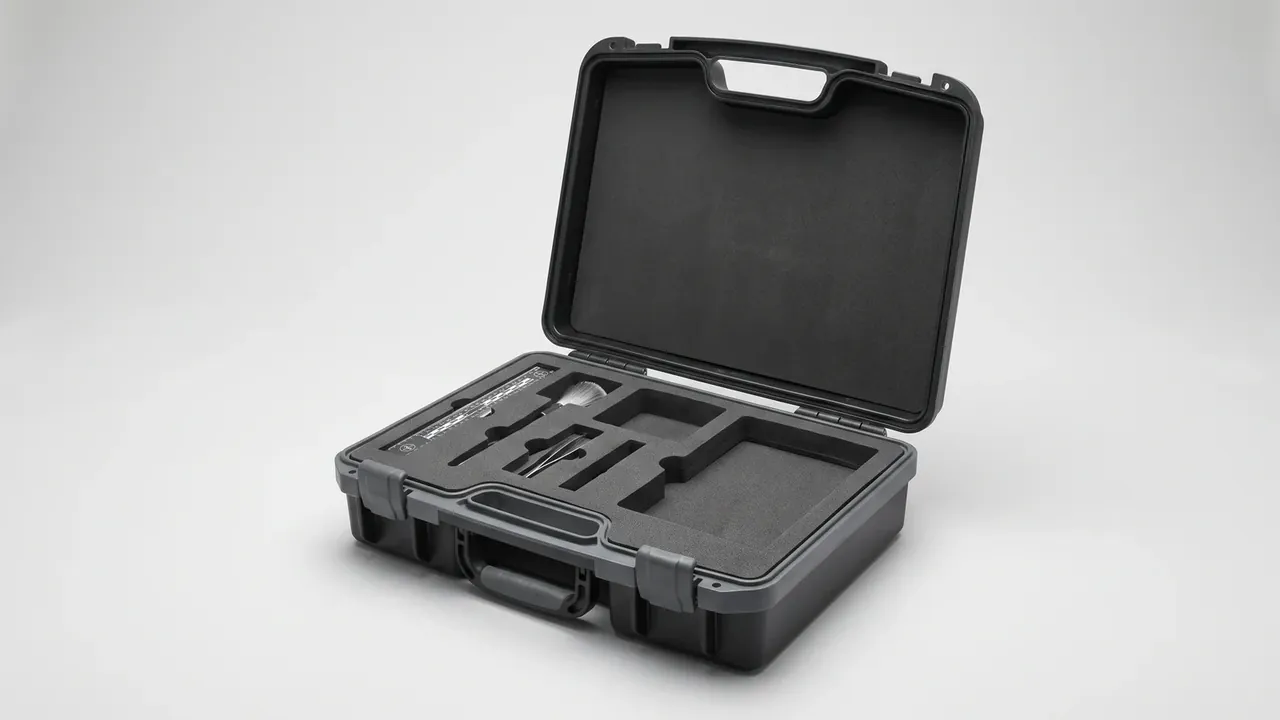
Quick answer: Five criteria settle the choice of PP grades for plastic cases: melt flow index, copolymer type, wall thickness against stacking load, low-temperature impact and the machine window. A 3.0 mm case carrying 25 kg is served by a block copolymer at 8 g/10min.
Table of contents
- How PP Grades for Plastic Cases Are Sorted
- Wall Thickness and Rib Spacing Set the Load Limit
- Low-Temperature Impact Against Filler Ratios
- Mould, Tonnage and the Processing Window
- Turning the Five Criteria into Acceptance Tests
- FAQ
1. How PP Grades for Plastic Cases Are Sorted
Datasheets list copolymer type, melt flow and filler. Homopolymer at 5 g/10min is stiff but holds only 4 kJ/m² of notched impact; block copolymer at the same flow reaches 12 kJ/m², which decides whether a corner cracks or dents.
Melt flow fixes the window: a 3.0 mm wall runs at 8–15 g/10min, and below 5 g/10min a 1.2 m path short-shoots until the barrel hits 235 °C and the tool 60 °C. Above 25 g/10min the melt flashes at the latches, adding 0.4 CNY in deflashing.
| Grade | Typical MFI, g/10min | Impact at −20 °C, kJ/m² | Flexural modulus, MPa | Wall range, mm |
|---|---|---|---|---|
| Homopolymer | 5–8 | 4 | 1 500 | 3.5–4.5 |
| Block copolymer | 8–15 | 12 | 1 100 | 2.8–3.5 |
| Random copolymer | 15–25 | 7 | 900 | 2.0–2.8 |
| 20% talc-filled copolymer | 10 | 9 | 1 800 | 3.0–4.0 |
| 20% glass-filled | 6 | 6 | 3 200 | above 4.0 |
2. Wall Thickness and Rib Spacing Set the Load Limit
A grade change lifts impact, never load capacity. At 3.0 mm wall and 60 mm rib spacing, a hand case deflects 2.4 mm at the lid centre under 96 kg; at 2.4 mm the same load gives 5.8 mm and the hinge boss whitens.
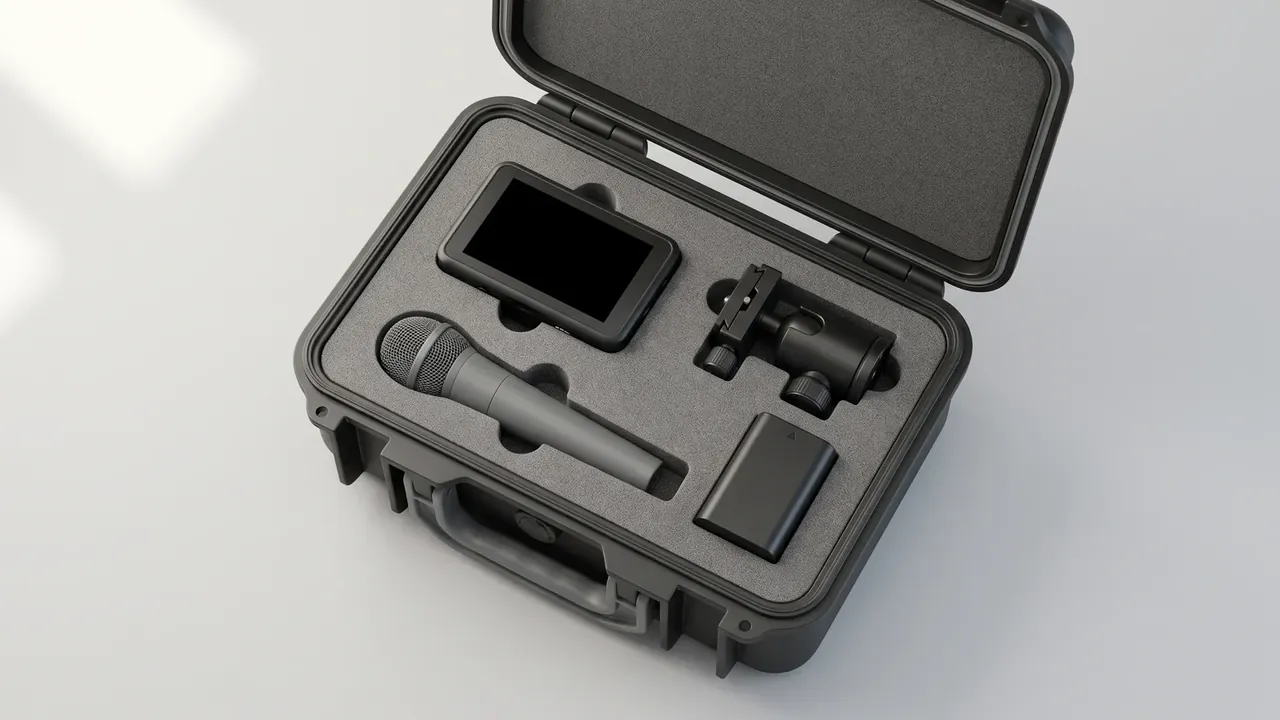
Ribs run at 0.6–0.7 of nominal wall, 1.8–2.1 mm against a 3.0 mm skin; thicker ribs sink 0.3 mm. Four tiers at 25 kg put 75 kg on the bottom case; a 1.5 mm foot-pad offset wobbles the third tier.
| Wall, mm | Case weight, kg | Static load, kg | Bottom case in stack, kg | Tonnage |
|---|---|---|---|---|
| 2.4 | 0.95 | 60 | 48 | 250 T |
| 3.0 | 1.15 | 96 | 75 | 350 T |
| 3.5 | 1.38 | 130 | 100 | 450 T |
| 4.2 | 1.72 | 180 | 140 | 550 T |
3. Low-Temperature Impact Against Filler Ratios
At −20 °C homopolymer impact falls from 4 to 2.5 kJ/m² and a 5 kg weight from 1.2 m goes through the base, while block copolymer falls only to 10 kJ/m². Talc adds stiffness at a cost: each 10% of filler takes 15% of impact, and a 20% talc grade moves from 1 100 to 1 800 MPa, shrinkage from 1.8% to 1.3%.
Glass fibre reaches 3 200 MPa but aligns with flow, so cross-flow impact is 6 kJ/m². Heavy flat cases can take such PP grades for plastic cases; hand cases with large radii should not.
4. Mould, Tonnage and the Processing Window
Once the grade is fixed, three knobs remain. PP grades for plastic cases at 3.0 mm run on a 350 T machine at 225 °C barrel, 45 °C tool and 45 MPa hold on a 55 s cycle; a 60 °C tool stretches the cycle to 68 s and output falls from 1 260 to 1 020 cases a day.
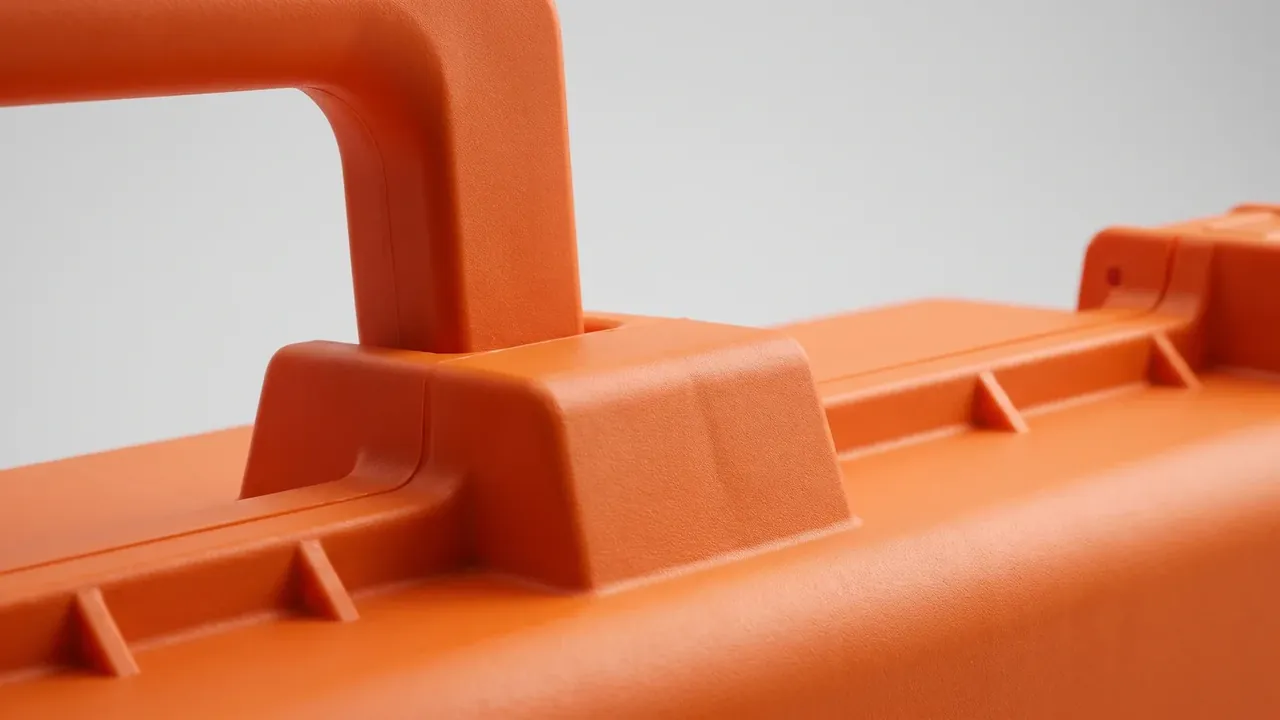
PP shrinks 1.3–1.8%, so cavities are cut per grade; change the filler and the lid gap moves from 0.4 to 0.9 mm, IP65 to IP54. A weight spread within ±1.5% says cooling is stable.
5. Turning the Five Criteria into Acceptance Tests
Five criteria become five tests: melt flow with copolymer type, wall and rib ratio, low-temperature impact, stacking load, processing window. First-article drops: six faces from 1.2 m plus a corner drop after 4 h at −20 °C.
Before sealing PP grades for plastic cases, check the hardware: hinge pins and latch springs need 48 h of neutral salt spray, since rust bleeds into the boss of a light case. Failures cluster at latch and hinge bosses, so keep those radii at 1.5 mm.
Conclusion
A grade is never one line on a quotation; it is a joint decision of flow, copolymer type, wall, filler and machine window. Fix load and drop targets first, then choose the resin. When you compare PP grades for plastic cases, sequence matters more than the verdict.
This article discusses only the container (case body) side of specifications and design intent, and does not cover any handling, loading or use of the contents.
Related Reading
- PP case versus ABS case
- Portable tool box material comparison
- Injection machine and processing window
- Small plastic case selection guide
Related Products
- 8 Series — Gun Cases; Military Equipment Cases; Camera Equipment Cases; Drone Cases; Watch Cases; Knife Cases; First Aid Cases; Electronics Equipment Cases
- WL8-2812 PP Gun Case — model WL8-2812
- All protective cases and toolboxes: 7 series, 158 models