

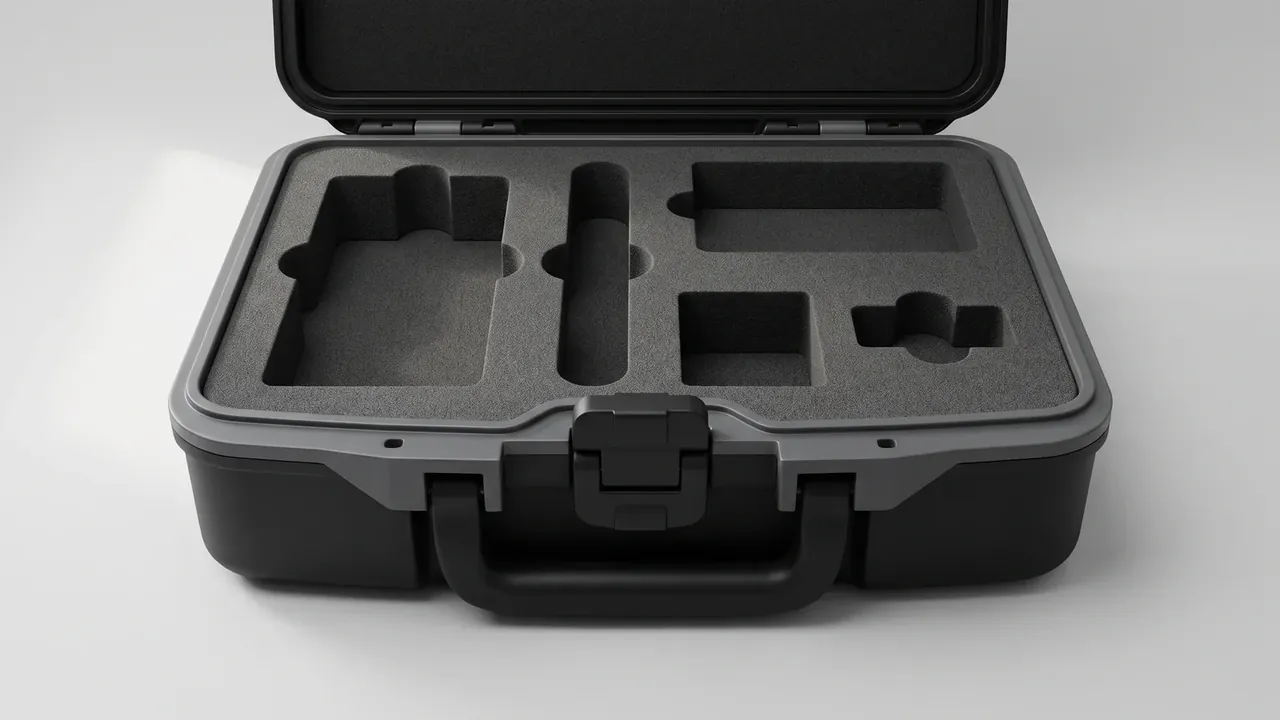
Quick answer: Fix the environment, then the cavity, then the resin. A portable outdoor case for field work is judged by the lowest temperature it meets, the hours in sun and the distance it is carried. Size the cavity around the largest instrument, confirm wall and rib pitch, then check seal, valve and tie-downs.
Table of contents
- Portable outdoor case sizing starts with the job
- Temperature windows drive resin and wall thickness
- UV salt fog and dust set the ageing clock
- Sealing must survive thermal cycling
- Carry hardware tie-downs and service intervals
- FAQ
1. Portable outdoor case sizing starts with the job
A portable outdoor case for survey work is sized by the trip, not the catalogue: count the nights out and the metres from vehicle to site, then add 15 to 20 mm on length and 25 mm on height to the largest instrument.
Geological crews need one long slot for a staff. Line inspectors with a flat imager live with 180 mm of height. Emergency teams packing breaching tools need 260 mm of depth.
| Job | Days | Cavity | Loaded |
|---|---|---|---|
| Survey | 2 to 4 | 520×380×210 mm | 22 kg |
| Line check | Day trip | 460×330×180 mm | 16 kg |
| Response | 5 to 7 | 600×420×260 mm | 28 kg |
Limits assume one person carrying 200 m unbroken; past that, add a harness.
2. Temperature windows drive resin and wall thickness
At -25 °C a homopolymer PP shell loses two thirds of its impact strength and a corner hitting frozen ground cracks. Block copolymer PP keeps over 60 percent, at a higher resin price.
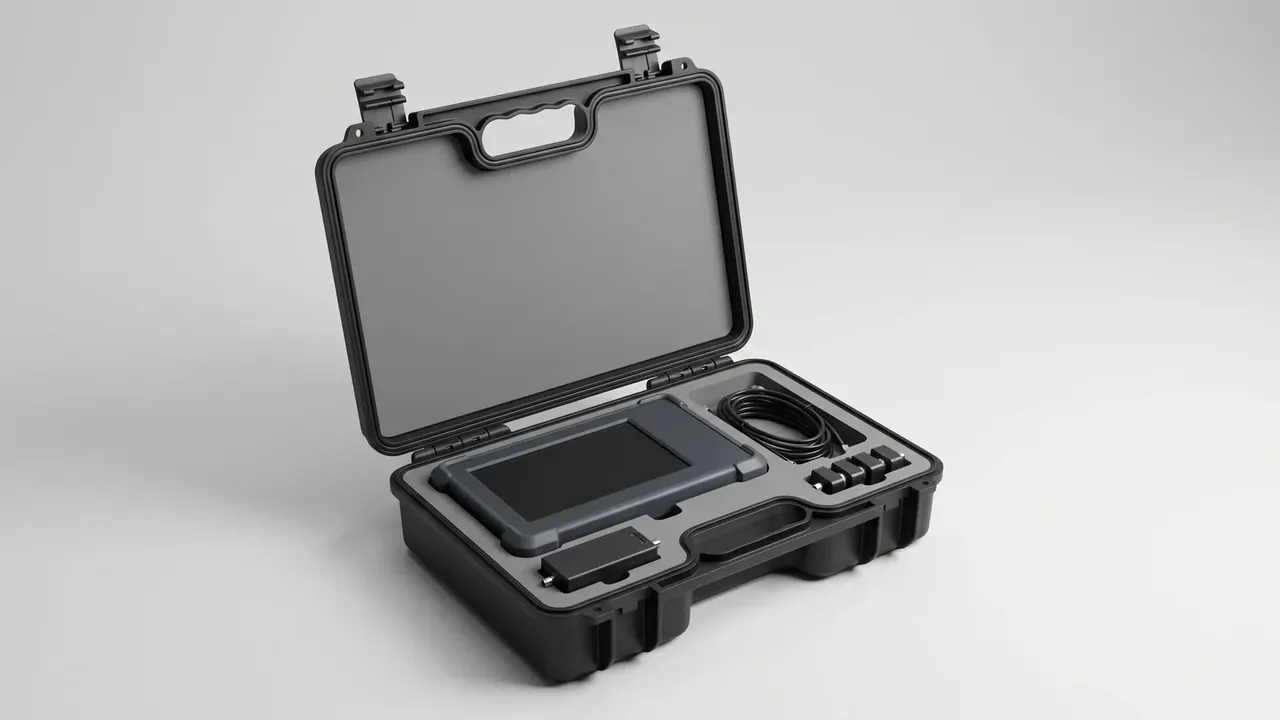
Heat arrives as solar gain: a sunlit shell reaches 72 °C, the cavity near the lid 5 to 8 °C more. At a 4.2 mm wall and 90 mm rib pitch, deflection reaches 1.1 mm, enough to eat gasket compression.
| Resin | Range °C | Drop at -25 °C | Growth at 72 °C |
|---|---|---|---|
| Homopolymer PP | -10 to 80 | cracks | 0.9% |
| Block copolymer PP | -30 to 95 | no crack | 0.7% |
| PP plus 15% talc | -25 to 100 | white edges | 0.4% |
Talc buys dimensional stability and costs whiteness at impact points; a Vicat point below 95 °C does not belong on a truck bed all summer.
3. UV salt fog and dust set the ageing clock
One year outdoors is about 1000 hours of xenon arc. A portable outdoor case passes at ΔE 3.5 or less; past 5 the shell has chalked and stabilisers under 0.2 percent fail by the second summer.
Coastal work attacks metal first: 240 hours of neutral salt spray on latch pins, rivets and handle inserts, red rust a fail. Stainless parts reach 480 hours but need an insulating washer against aluminium.
Dust hits the latch pivot and the gasket lip: five hours at 2 kg per cubic metre should leave nothing visible inside, and molybdenum disulphide grease halves pivot wear.
4. Sealing must survive thermal cycling
Move a portable outdoor case from a -25 °C camp into a 20 °C vehicle and the cavity air contracts, pressing the lid down; reverse the trip and pressure lifts it. After 30 cycles, compression set should stay under 30 percent, or the next closure leaks.
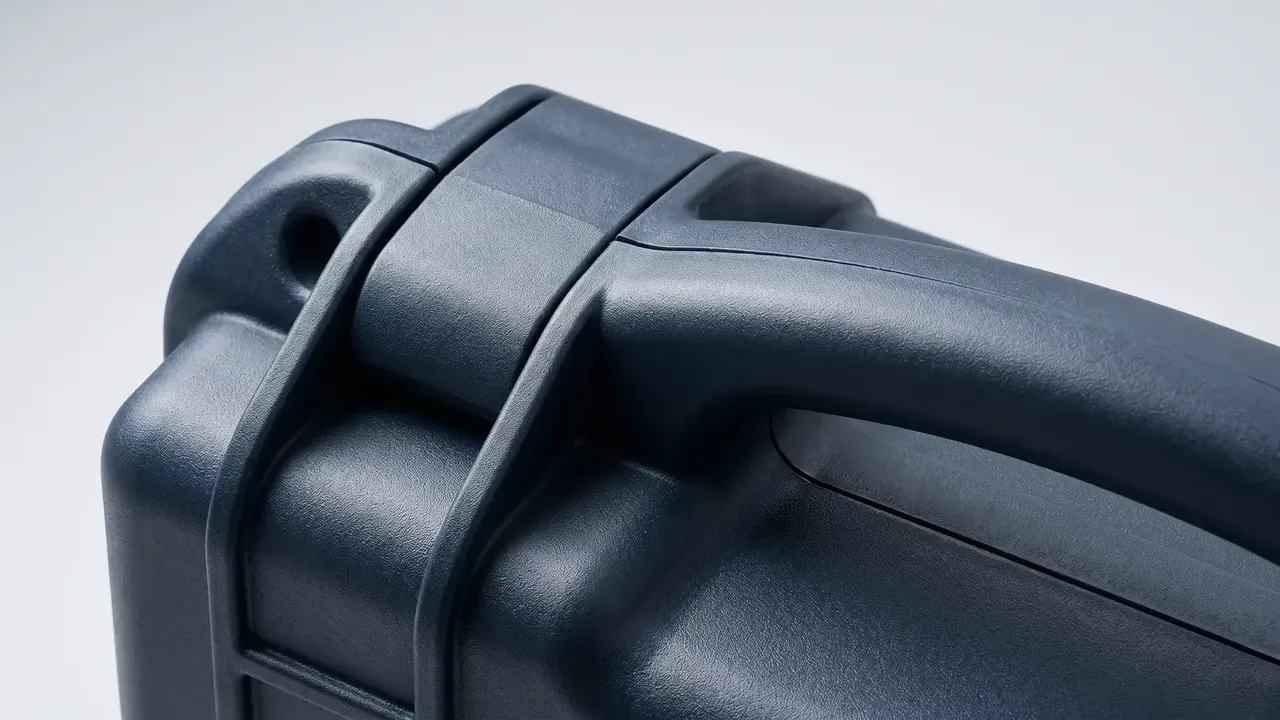
A double lip carries more margin than a single one but traps water between the lips. Valves crack at 0.25 bar to equalise swings without inverting in rain; the diaphragm is a two-year part.
5. Carry hardware tie-downs and service intervals
Handles fail first because load is concentrated: one should take 45 kg statically for 10 minutes without set, and 5000 loaded lifts without oval rivet holes.
Vehicle mounting uses four M8 inserts, at least 8 mm deep, at base-rib crossings; winter gloves need a 25 mm latch opening.
| Part | Interval | Reject |
|---|---|---|
| Gasket | 90 days | flat over 1.5 mm |
| Latch | 90 days | under 60 N |
| Handle | 180 days | set after 45 kg |
| Valve | 24 months | dead at 0.25 bar |
Quarterly inspection is the default; response teams compress it to 30 days.
Conclusion
Sizing a portable outdoor case means turning temperature, radiation, salt and carrying distance into numbers, then checking whether resin, wall, seal and hardware answer them. The case that lasts is rarely the one with the longest datasheet, but the one whose figures match the site: that is the point of choosing a portable outdoor case by criteria.
This article discusses only the container (case body) side of specifications and design intent, and does not cover any handling, loading or use of the contents.
Related Reading
- How a multi-purpose outdoor case is built
- Reading the seal standards for waterproof hard cases
- How dustproof cases behave in abrasive dust
- Wall thickness and moulding in rotomoulded cases
Related Products
- 8 Series — Gun Cases; Military Equipment Cases; Camera Equipment Cases; Drone Cases; Watch Cases; Knife Cases; First Aid Cases; Electronics Equipment Cases
- WL8-2812 PP Gun Case — model WL8-2812
- All protective cases and toolboxes: 7 series, 158 models