

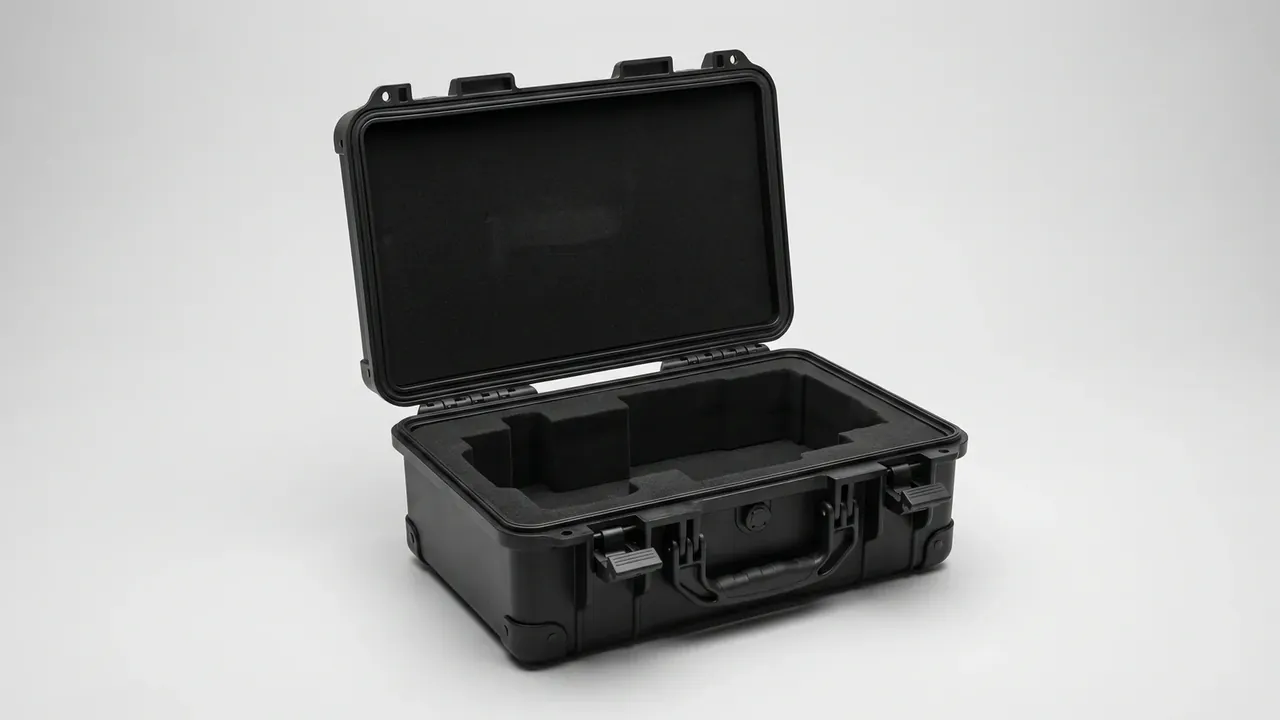
Quick answer: Fix drop height and ingress rating first, then check gasket compression, latch holding force and salt spray hours. Once those five match a portable protective case to the site, size and colour are the easy part.
Table of contents
- Portable Protective Case Ratings and Their Three Layers
- Drop Height and Impact Energy
- Gasket Compression and Latch Spacing
- Salt Spray and Metal Hardware
- Five Checkpoints and the Sampling Sequence
- FAQ
1. Portable Protective Case Ratings and Their Three Layers
An IP number answers only two questions: dust and water. A portable protective case also meets impact from a drop and corrosion from salt air, and a shortfall in either layer voids the printed rating.
Shell thickness and corner radius decide how impact energy reaches the cavity; a compressed gasket closes the gap; a rusted hinge pin or valve membrane leaves a case that will not seal.
| Rating | Water test | Typical site | Usual failure |
|---|---|---|---|
| IP54 | splashes any direction | indoor aisles | latch not seated |
| IP65 | 6.3 mm jet, 3 minutes | open yard | gasket under-compressed |
| IP67 | 1 m immersion, 30 minutes | flooded track | valve membrane aged |
| IP68 | 1.5 m for 60 minutes | immersion duty | leak test every unit |
Indoor aisles under 200 m rarely need more than IP54; every step up adds gasket thickness and latch force.
2. Drop Height and Impact Energy
Three variables decide a drop: the mass in the cavity, which face lands first, and whether the floor is concrete or steel. The same case at 8 kg and at 15 kg behaves differently from 1.2 m onto a corner.
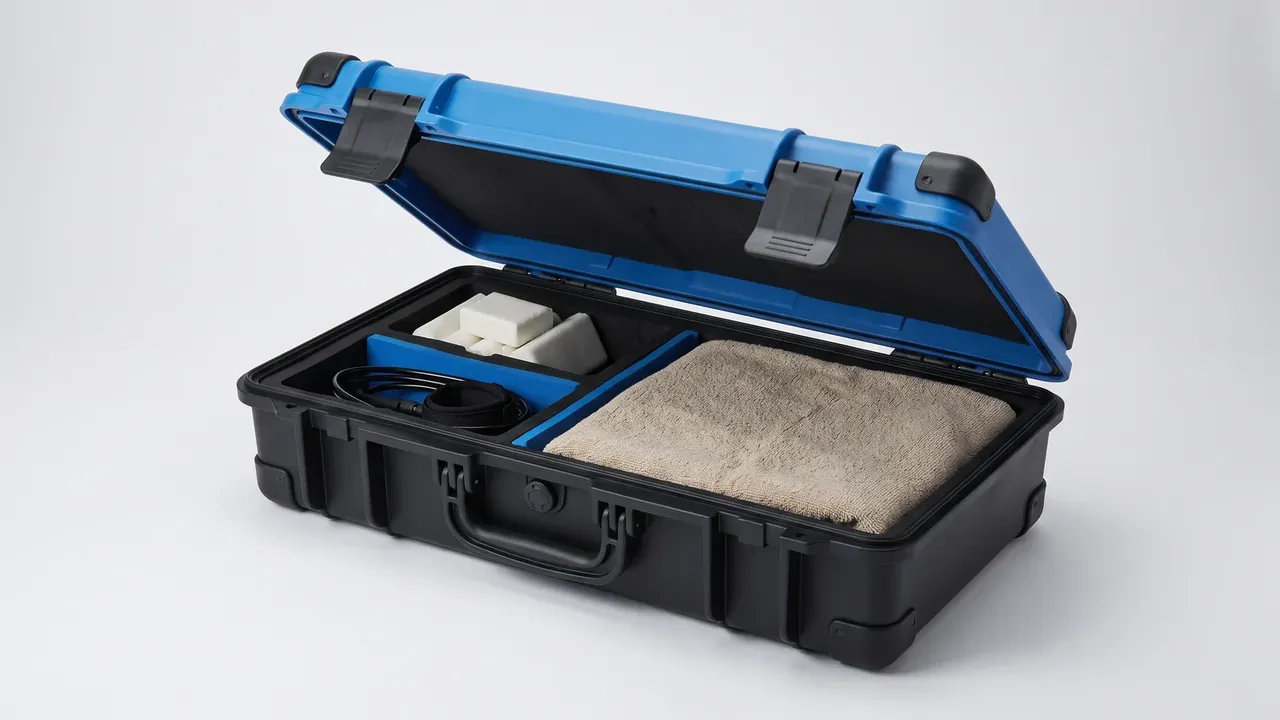
A corner drop is harsher than a face drop: energy concentrates on one edge point and peak acceleration runs sixty percent above a face drop at the same height.
| Attitude | Height | What it tests | Pass mark |
|---|---|---|---|
| Corner | 1.2 m | corner radius, foam fit | parts shift under 2 mm |
| Edge | 1.2 m | rib continuity | no whitening cracks |
| Face | 1.5 m | rebound, foam bond | foam stays seated |
| Cold corner | minus 20 C | embrittlement | no through-crack |
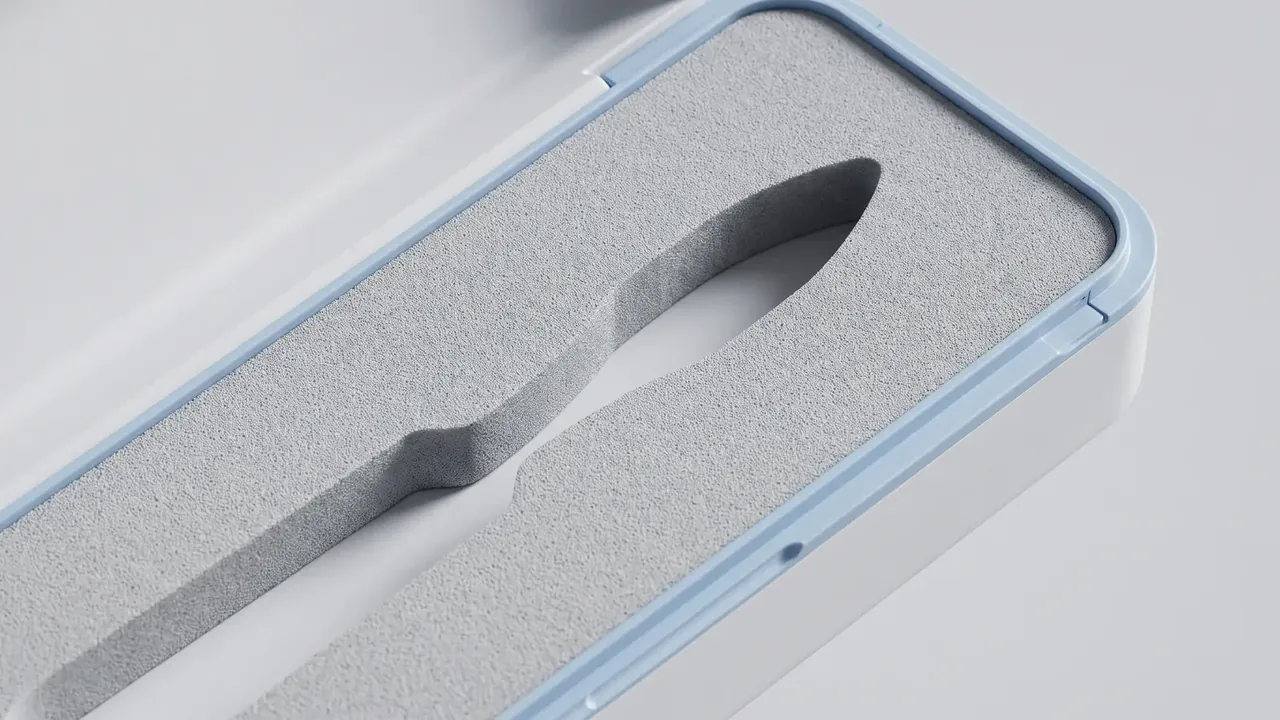
Foam carries the other half. For a portable protective case, specify 30 kg per cubic metre EPE or 38 kg per cubic metre PU, cut 3 mm tight, or the load shifts on impact.
3. Gasket Compression and Latch Spacing
On a portable protective case, sealing depends on compression, not thickness. A silicone gasket with a 6 mm section closing to 4 mm sits near 33 percent compression. Below half it takes a permanent set; too light and the leak test fails.
Latch spacing sets the pressure map. A 600 mm case with two latches lifts about 0.8 mm at mid-span, and water enters there; a 0.05 mm feeler gauge run around the rim finds the gap.
A pressure valve is not optional. Cross a temperature band and internal pressure falls, the gasket is pulled out of shape, and the next opening becomes a fight. A valve cracking at 0.3 bar equalises without letting water in.
4. Salt Spray and Metal Hardware
Salt spray follows the neutral test: 5 percent sodium chloride at 35 C. Forty-eight hours covers humid inland stores, ninety-six hours coastal storage and long voyages; afterwards, cycle the latches 50 times by hand.
On a portable protective case, hardware alloy matters more than coating. A 304 stainless hinge pin at 4 mm, a nickel-plated 301 spring and a fluoro-rubber membrane outlast zinc-plated carbon steel, which shows white rust within 24 hours of fog.
5. Five Checkpoints and the Sampling Sequence
For a portable protective case, reduce the argument to five boxes you can tick: drop height of 1.2 m at the corner, IP65 with a stated depth, gasket compression of 30 to 40 percent, hardware at 96 hours of fog, and 180 N of latch holding force. Test in that order: load and drop first, packaging last. Reversed, the fix lands in the tool and the schedule slips a month.
Conclusion
Fix the drop, seal and salt spray data before arguing about size and finish. A feeler gauge and a push-pull gauge at acceptance beat ten glossy brochures. Work the five checkpoints in order, and portable protective case selection becomes arithmetic you can audit.
This article discusses only the container (case body) side of specifications and design intent, and does not cover any handling, loading or use of the contents.
Related Reading
- Deployable hard case selection guide
- Drone case selection guide
- Case selection by industry
- Colour standards for protective cases
Related Products
- 8 Series — Gun Cases; Military Equipment Cases; Camera Equipment Cases; Drone Cases; Watch Cases; Knife Cases; First Aid Cases; Electronics Equipment Cases
- WL8-2812 PP Gun Case — model WL8-2812
- All protective cases and toolboxes: 7 series, 158 models