

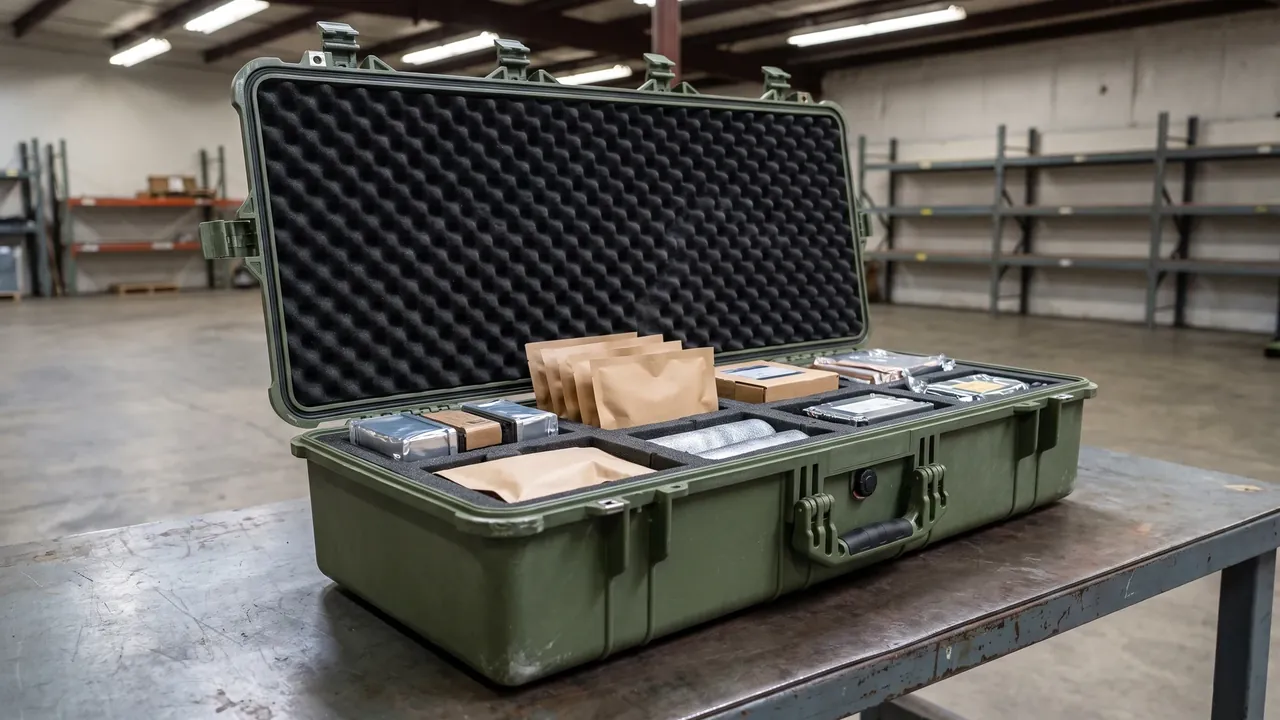
Quick answer: The difference between suppliers usually sits in the resin bag. Confirm homopolymer or block copolymer, check melt index against the 8–25 g/10min window, then ask about low-temperature modification. A 2.0 mm wall, index 12–18 and 6 kJ/m² at minus 25 °C are the lines to hold.
Table of contents
- Resin families behind a Portable PP case
- Matching melt index to wall and machine
- Low-temperature impact modification
- Shrinkage control on the mould
- Incoming and first-article checks
- FAQ
1. Resin families behind a Portable PP case
Two Portable PP case samples can look identical and behave nothing alike. Homopolymer is stiff at 1500 MPa, so a thin wall holds shape but turns brittle in the cold. Block copolymer grafts ethylene into the chain, drops modulus to 1100 MPa and multiplies cold impact.
Melt index separates them. Homopolymer runs 8–12 g/10min at 230 °C and 2.16 kg, copolymer 15–25. A high index fills thin sections; a low one starves the flow end.
| Resin | Melt index | Modulus | Cold behaviour |
|---|---|---|---|
| Homopolymer | 8–12 | 1500 MPa | brittle at minus 10 °C |
| Block copolymer | 15–25 | 1100 MPa | usable at minus 20 °C |
| Random copolymer | 20–30 | 1000 MPa | clear, moderate toughness |
| Talc-filled | 10–15 | 1800 MPa | stiff, lower toughness |
2. Matching melt index to wall and machine
A 2.0 mm wall over a 1.2 m flow is stable at index 12–18. Below 8 the thin end short-shots and shows weld lines; above 25 a Portable PP case fills easily but short chains split along ribs.
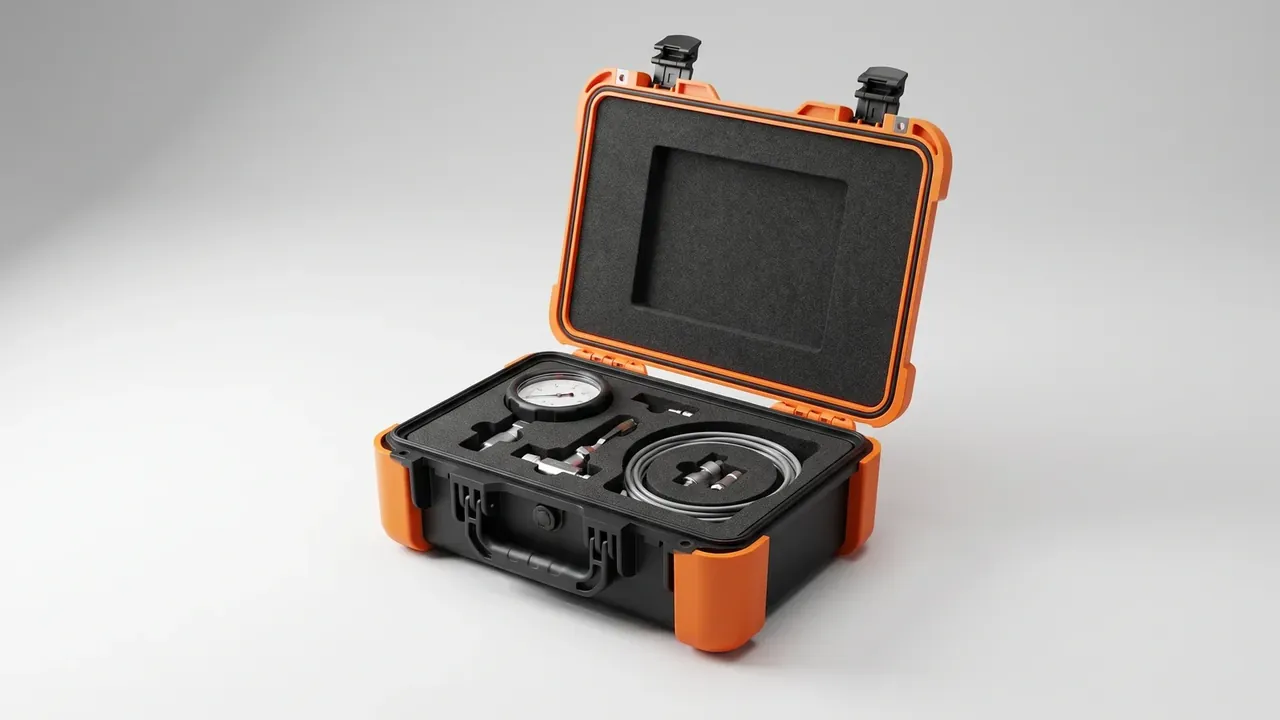
Clamp force sets machine size: 0.18 m² at 35 MPa needs 380 to 650 tonnes. Melt runs 210–230 °C, mould 40–60 °C; a cold mould dulls the grain.
Watch batch drift: lots differing by over ±2 g/10min need a new fill profile, or the next short-shots.
3. Low-temperature impact modification
Homopolymer embrittles near minus 10 °C, a line winter transport crosses daily. The answer for a Portable PP case is 8–12 percent polyolefin elastomer, lifting notched impact at minus 25 °C above 6 kJ/m² so corners stop breaking off whole.
Modification costs modulus and gloss. Adding 10–15 percent talc restores modulus above 1600 MPa and pulls shrinkage from 1.6 to about 1.0 percent. Push the filler further and impact falls again.
| System | Addition | Impact | Cost |
|---|---|---|---|
| Unmodified | none | 3 kJ/m² | lowest |
| Elastomer | 8–12% | 6–8 kJ/m² | modulus down 20% |
| Elastomer and talc | 8 and 12% | 5–7 kJ/m² | duller surface |
| Heavy talc | above 20% | 3 kJ/m² | toughness lost |
Drying is not optional: two hours at 80 °C holds moisture under 0.05 percent, or silver streaks show.
4. Shrinkage control on the mould
Polypropylene shrinks 1.4–1.8 percent, so a 500 mm body needs a cavity 7–9 mm oversize. Get it wrong and hinges sit off position while latches miss.
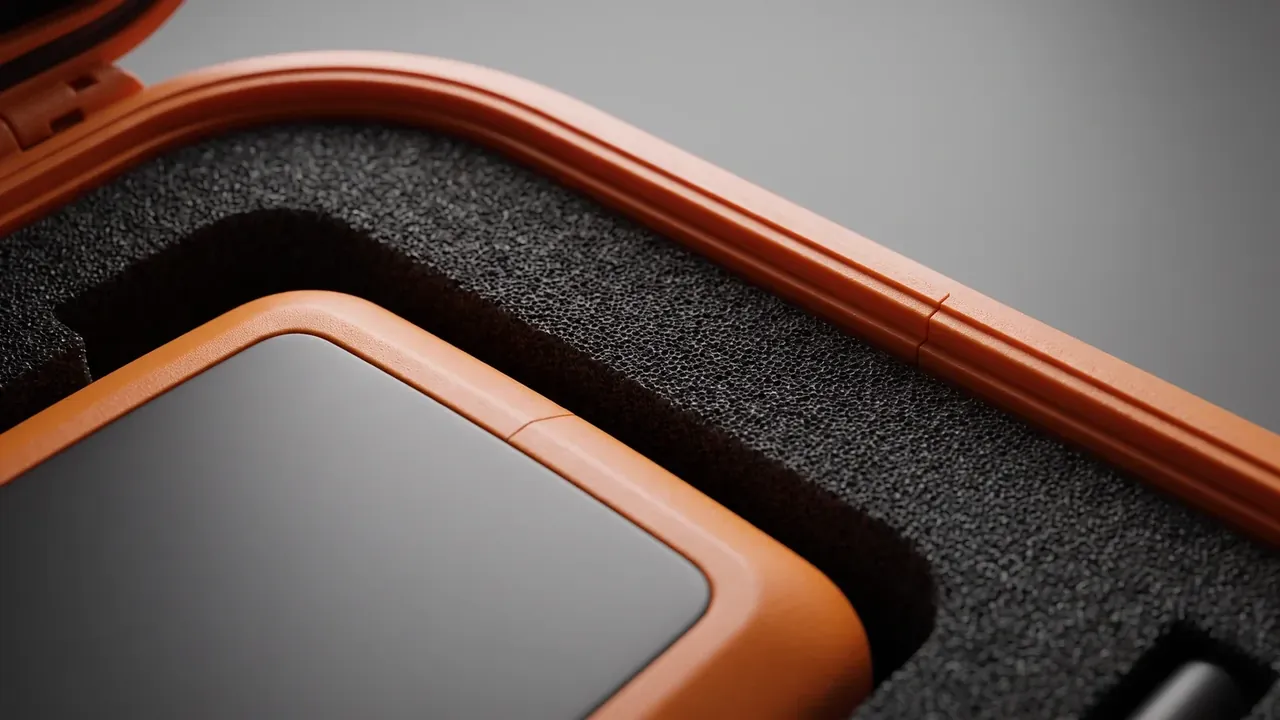
Anisotropy beats the average: flow and cross direction differ by 0.2–0.4 percent, so a square part drifts towards a diamond. A Portable PP case hinge seat carries 0.3 mm of compensation.
5. Incoming and first-article checks
Three incoming values block most failures: index, density and moisture. In range the window repeats; out of range, tuning moves the problem.
| Item | Criterion | Method |
|---|---|---|
| Melt index | 8–25 g/10min | 230 °C, 2.16 kg |
| Density | 0.905 ± 0.005 | immersion |
| Moisture | 0.05% max | loss on drying |
| Wall | 2.0 ± 0.1 mm | ultrasonic, nine points |
| Cold drop | 1 m, six faces at minus 25 °C | 2 h soak first |
| Hinge life | 50,000 cycles | 3 kg load |
| Colour | delta E within 1.0 | light booth |
First-article work measures six faces, floor 1.85 mm. Hinges are overlooked: failures cluster near cycle 20,000 because a weld line sits at the root.
Conclusion
There is no best resin, only a match: temperature picks the family, wall and flow pick the index window, tolerance picks filled or unfilled, hinges pick the toughening level. Put those four into the technical agreement and ask for measured values, not a sample in the hand. Screen them in that order, and a Portable PP case becomes comparable on paper.
This article discusses only the container (case body) side of specifications and design intent, and does not cover any handling, loading or use of the contents.
Related Reading
- Choosing a PP plastic case: resin and structure
- PP cases against ABS cases
- How an injection moulded protective case is formed
- What to check in a moisture-proof case
Related Products
- 8 Series — Gun Cases; Military Equipment Cases; Camera Equipment Cases; Drone Cases; Watch Cases; Knife Cases; First Aid Cases; Electronics Equipment Cases
- WL8-2812 PP Gun Case — model WL8-2812
- All protective cases and toolboxes: 7 series, 158 models