

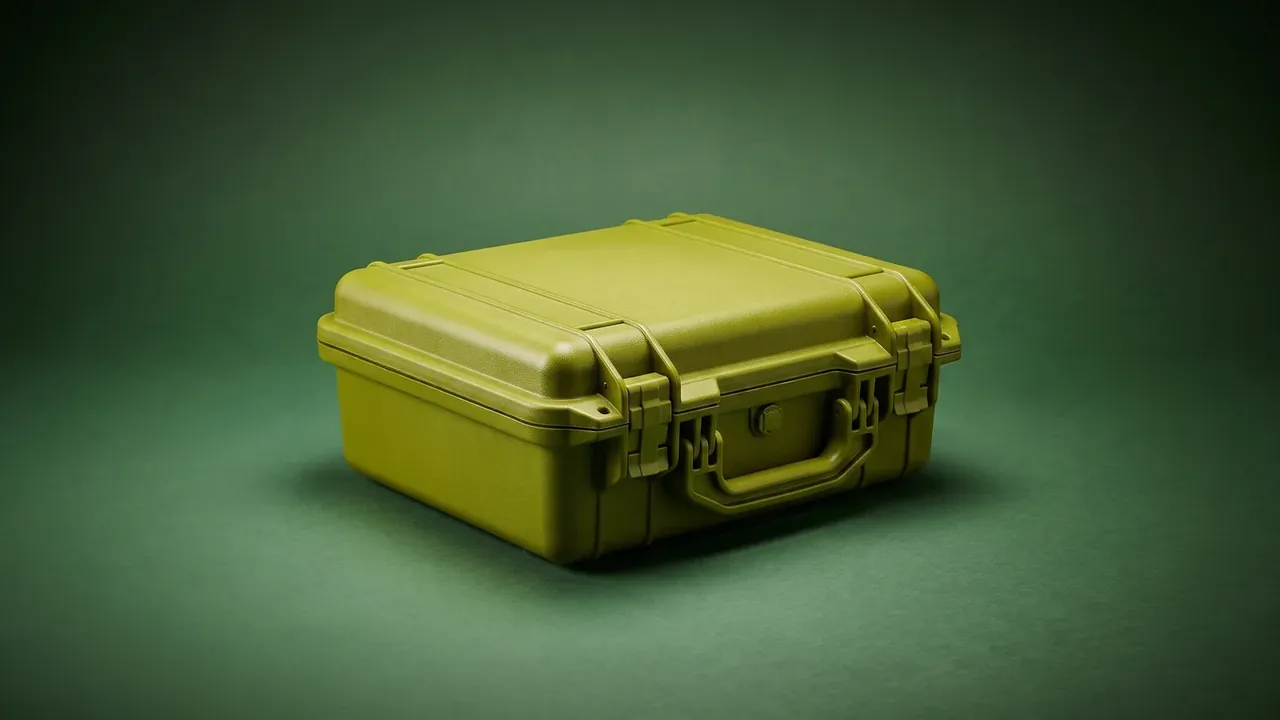
Quick answer: A portable instrument case is judged when the lid opens, not when it drops. Three numbers decide the fit: liner compression of 20 to 30 percent, an interior returning to 20 ±2 °C within four hours, and surface resistance between 10⁶ and 10⁹ ohms.
Table of contents
- Portable Instrument Case Applications in Four Field Scenes
- Setting Up the Calibration Bench Inside the Case
- How Shock and Thermal Control Share the Transport Leg
- ESD Control and Earthing Practice
- A Configuration Matrix by Scene
- FAQ
1. Portable Instrument Case Applications in Four Field Scenes
Four settings dominate: factory calibration, power and rail inspection, petrochemical checks, and inter-lab transfers. The line between them is whether equipment must measure the moment it lands.
The same volume reviews differently. A 3 to 8 mm dip in a workshop floor leaves one corner hanging and a bubble level drifts; a 55 °C cabin condenses equipment carried from an air-conditioned room.
| Scene | Site conditions | Priority | Typical failure |
|---|---|---|---|
| Factory calibration | Dust, uneven floor | Lid as bench | Base rocks, drift |
| Power and rail | 55 °C cabin | Cooling layer | Condensation |
| Petrochemical | Flammable gas, 85% RH | Conductive liner | Undrained charge |
| Lab transfer | Sorting, handling | Six-sided foam | Latches popped |
Read the last column as a failure list. Datasheets quote sizes and load rating, not these.
2. Setting Up the Calibration Bench Inside the Case
A portable instrument case in the field runs open, lift, place, read. If any step needs a second hand, it has failed. The lid holds 100° to 110°: lower blocks the view, higher tips a 3 kg instrument.
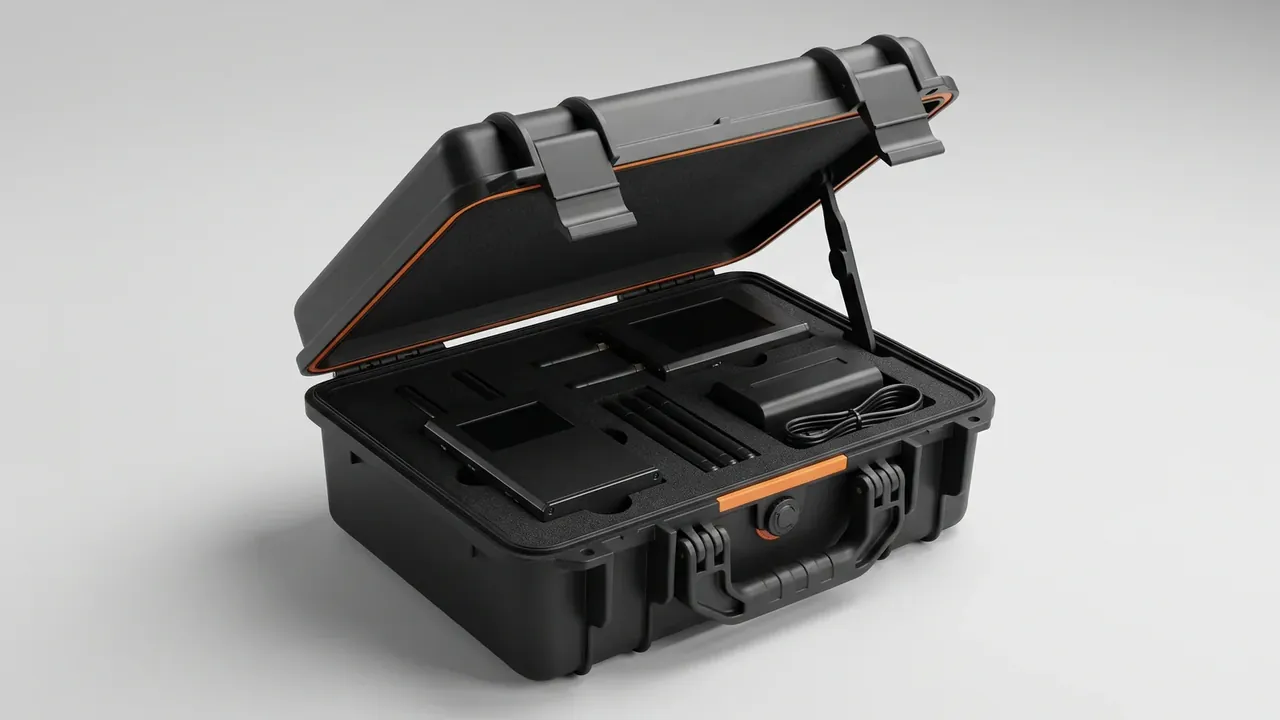
Depth is the tallest item plus 25 mm of finger clearance. Density follows weight: 30 kg/m³ PE below 1 kg, 45 kg/m³ EVA to 4 kg, 60 kg/m³ above; cutouts take 1.5 mm per side.
A 15° panel angle suits a standing reader, from 20 mm of foam at the rear edge.
3. How Shock and Thermal Control Share the Transport Leg
Shock and thermal control inside a portable instrument case compete for one layer of space. Thicker foam leaves less room for packs, and a pack close to the equipment cuts the damping path with a rigid wall.
Vibration runs at 3 g RMS random, drop at 1.2 m on six faces. Liner compression climbs from 20 to 35 percent there, so a design value never sits high in the range.
An 18 L interior at 40 °C ambient holds under 25 °C for four hours on a 400 g pack, eight hours on 900 g at a cost of 30 mm of depth. A 35 °C workshop to an 18 °C metrology room leaves 3 kPa of negative pressure, cleared by a 3 mm valve.
4. ESD Control and Earthing Practice
Static is not optional in a portable instrument case. At 30% relative humidity a plastic wall rubbed in transit reaches 8 kV, enough to damage an unprotected input stage, showing up later as zero offset.
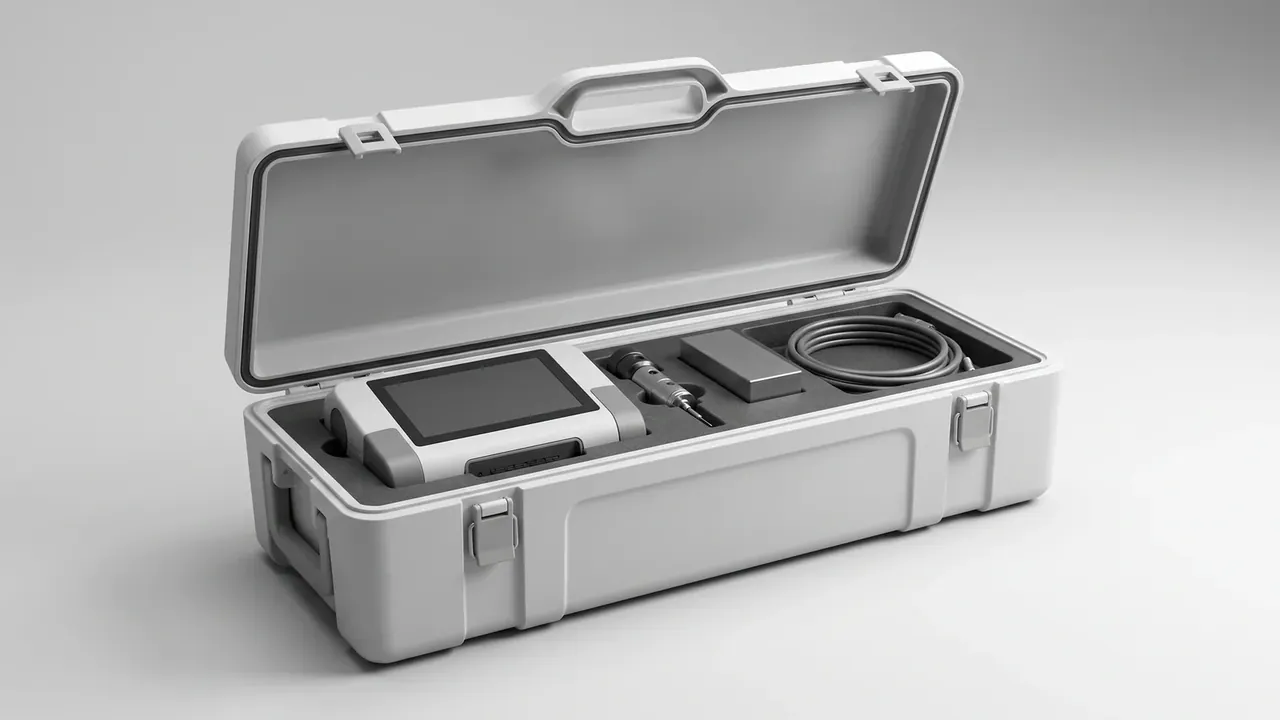
Surface resistance belongs between 10⁶ and 10⁹ ohms: high enough to avoid a discharge at contact, low enough to drain. Conductive foam at 10³ to 10⁵ ohms rings sensitive modules; the earth post bonds through 1 MΩ and drains in under two seconds.
A 0.5 mm film over the foam is enough, with clearance cut from 1.5 mm to 1 mm.
5. A Configuration Matrix by Scene
| Item | Calibration | Power and rail | Petrochemical | Lab transfer |
|---|---|---|---|---|
| Interior | 420×320×180 mm | 380×280×150 mm | 420×320×180 mm | 460×340×200 mm |
| Foam | 45 kg/m³ EVA | 30 kg/m³ PE | 45 kg/m³ EVA | 30 kg/m³ PE |
| Thermal pack | none | 400 g | none | 200 g |
| Static control | none | none | film, earth post | film |
| Empty weight | 4.6 kg | 4.2 kg | 4.8 kg | 5.1 kg |
Empty weight varies by under 1 kg in a portable instrument case, so weight separates nothing; the combination does. One person should not carry over 12 kg all day, ruling out two columns.
Conclusion
Scene sets configuration, configuration sets numbers, and only then does shape matter. Write compression, recovery time and resistance into the spec before asking for dimensions, and rework falls. A portable instrument case is a portable set of site conditions.
This article discusses only the container (case body) side of specifications and design intent, and does not cover any handling, loading or use of the contents.
Related Reading
- Three design numbers behind an instrument case
- How to read an instrument case datasheet
- Cutout design for foam inserts
- Damping structure of a shockproof case
Related Products
- 8 Series — Gun Cases; Military Equipment Cases; Camera Equipment Cases; Drone Cases; Watch Cases; Knife Cases; First Aid Cases; Electronics Equipment Cases
- WL8-2812 PP Gun Case — model WL8-2812
- All protective cases and toolboxes: 7 series, 158 models