

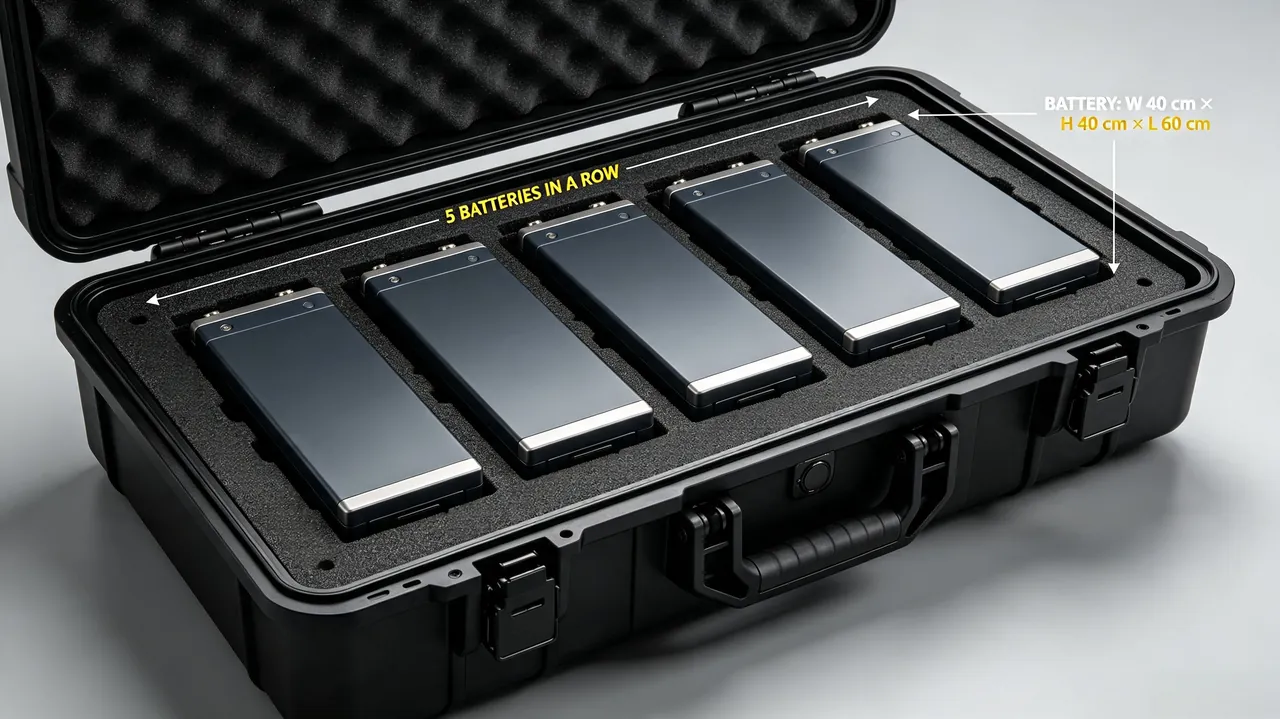
Quick answer: A battery case is specified in one order: cavity, insulation, venting, stacking, sealing. The first two fix dimensions and the rest follow.
Table of contents
- Five Criteria for a Battery Case
- Cavity Size from Module Outline
- Insulation Thickness and Back Plate Rise
- Vent Area and Opening Pressure
- Stacking Load and Fork Pockets
- FAQ
1. Five Criteria for a Battery Case
Order matters. Measure the module outline to fix the cavity, size insulation by the allowed temperature rise, set vent area by capacity, pick stacking by warehouse height, and leave sealing for last. Reverse two steps and a small saving becomes a new tool. Cavity and stacking are hard limits; insulation, venting and sealing trade off against each other.
| Criterion | Typical value | Failure mode |
|---|---|---|
| Cavity | 800 x 600 x 350 mm | Lid will not close |
| Insulation | 3 mm aerogel, 15 mm gap | Back plate overheats |
| Vent | 1.6 sq cm per kWh | Gasket pushed open |
| Stacking | Three high, 25 mm feet | Bottom unit collapses |
2. Cavity Size from Module Outline
Cavity follows the module outline, not the cell count. Twelve 590 x 390 x 200 mm modules in three columns of four, 8 mm apart with 8 mm at each end, give 800 mm length and 600 mm depth; a 250 mm base holds them, 100 mm in the lid carries busbars.
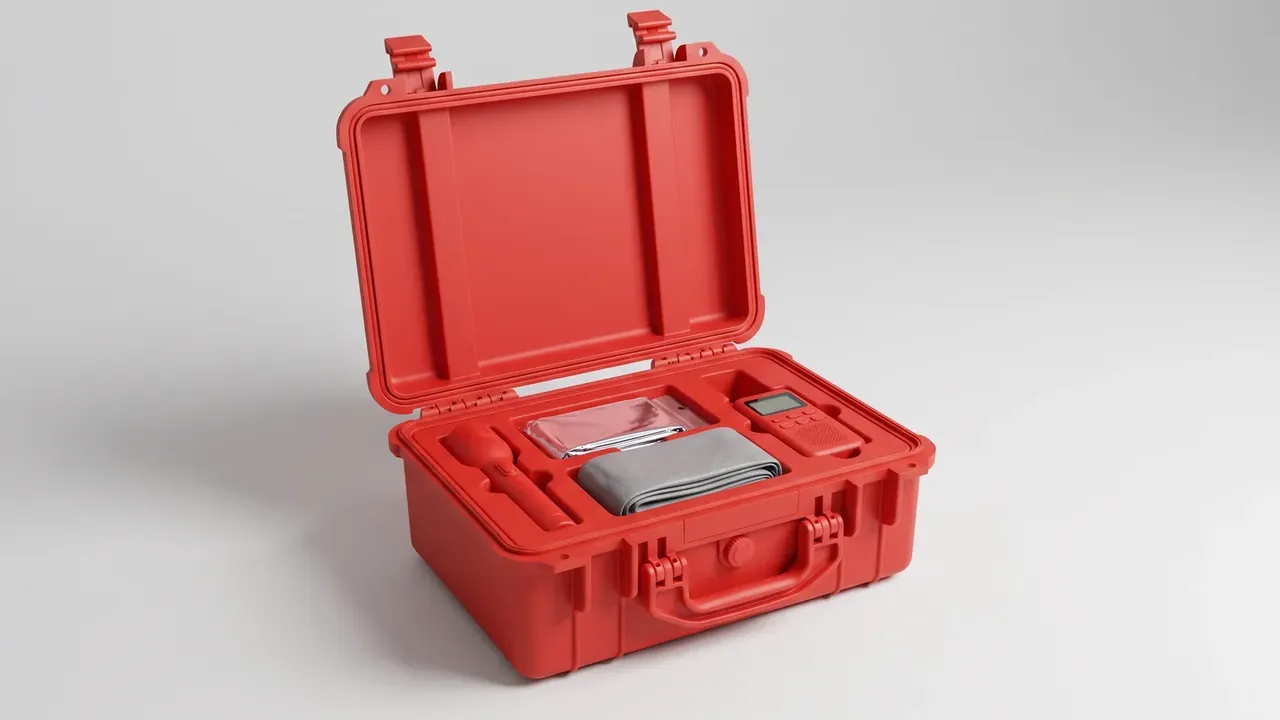
Modules swell about 3 percent, which is 6 mm across a 200 mm stack, so 8 mm covers the growth and still leaves finger room. Height is where drawings fail: add base, module, terminal, harness and lid, or the terminals press the lid ribs and the insulation gets shaved.
3. Insulation Thickness and Back Plate Rise
Insulation slows propagation rather than blocking it. Aerogel at 0.020 W/mK in 3 mm plus a 15 mm air gap beats 10 mm of plain foam at similar cost.
Write the acceptance test as a number: 300 C flame on one face for 30 minutes, back plate rise under 40 K.
| Build | Thickness | Rise |
|---|---|---|
| Aerogel | 3+15 mm | 32 K |
| Ceramic fibre | 6 mm | 45 K |
| Plain EVA | 10 mm | 70 K |
Thermal bridges matter more than thickness: a 1.5 mm steel wall carries heat past the aerogel, so wrap the divider 20 mm and add a 2 mm pad.
4. Vent Area and Opening Pressure
The tighter the battery case, the more it needs a controlled vent path: gas generation outruns what a gasket can leak, and pressure finds the thinnest seam.
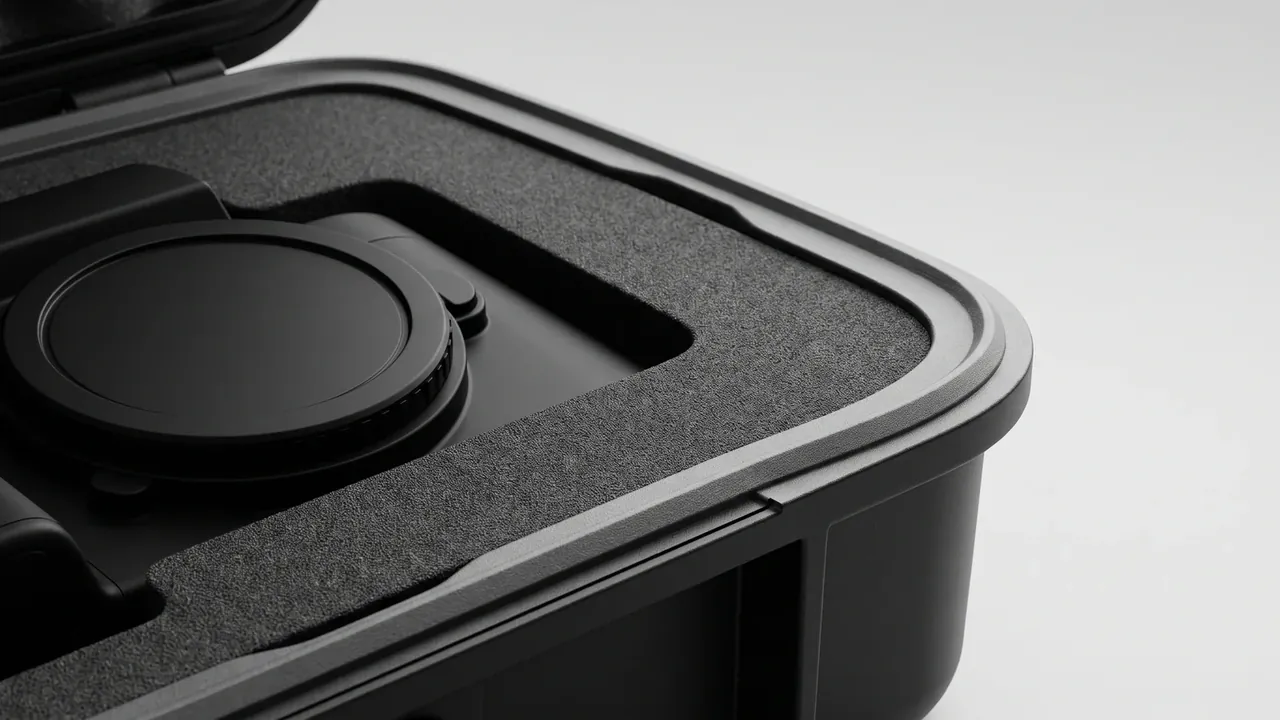
Size the vent by capacity at 1.6 sq cm per kWh, so a 5 kWh module needs 8 sq cm, which is two 22 mm valves. Set opening pressure at 8 kPa: below 6 kPa valves chatter on the road, above 12 kPa the shell deforms first. Angle the port 30 degrees above horizontal with a splash lip, channel 1.2 times the port area.
5. Stacking Load and Fork Pockets
Stacking is the most underrated item. Three units high at 400 kg each means the bottom one carries 800 kg, which sets rib density, foot area and lid stiffness.
Feet go to 25 mm minimum, fork pockets to 120 x 45 mm at 60 mm above the floor with a 3 mm flange, or the fork tips crack the edge. A 6 mm locating groove with 2 mm clearance stops lateral shift, and hardware should run 480 hours of salt spray before a coastal warehouse whitens it.
| Stack | Load per unit | Bottom load | Feet | Fixing |
|---|---|---|---|---|
| Two high | 400 kg | 400 kg | 20 mm | Two wraps of film |
| Three high | 400 kg | 800 kg | 25 mm | Film plus corners |
| Four high | 400 kg | 1200 kg | 32 mm | Steel straps, four points |
Conclusion
Five criteria come down to three acts: size the cavity from the module outline plus allowance, pair insulation with venting, and fix stacking and feet by warehouse height. A wrong cavity means a new tool, a mismatched insulation and vent pair shows up in an abnormal event, and a wrong stack fails at the first merge of stores. Get all three into the drawing and the battery case is chosen correctly.
This article discusses only the container (case body) side of specifications and design intent, and does not cover any handling, loading or use of the contents.
Related Reading
- How battery safety cases are specified
- Battery safety cases against alternatives
- What warehouse stacking demands of a case
- Preventing damage in storage and transport
Related Products
- 8 Series — Gun Cases; Military Equipment Cases; Camera Equipment Cases; Drone Cases; Watch Cases; Knife Cases; First Aid Cases; Electronics Equipment Cases
- WL8-2812 PP Gun Case — model WL8-2812
- All protective cases and toolboxes: 7 series, 158 models