

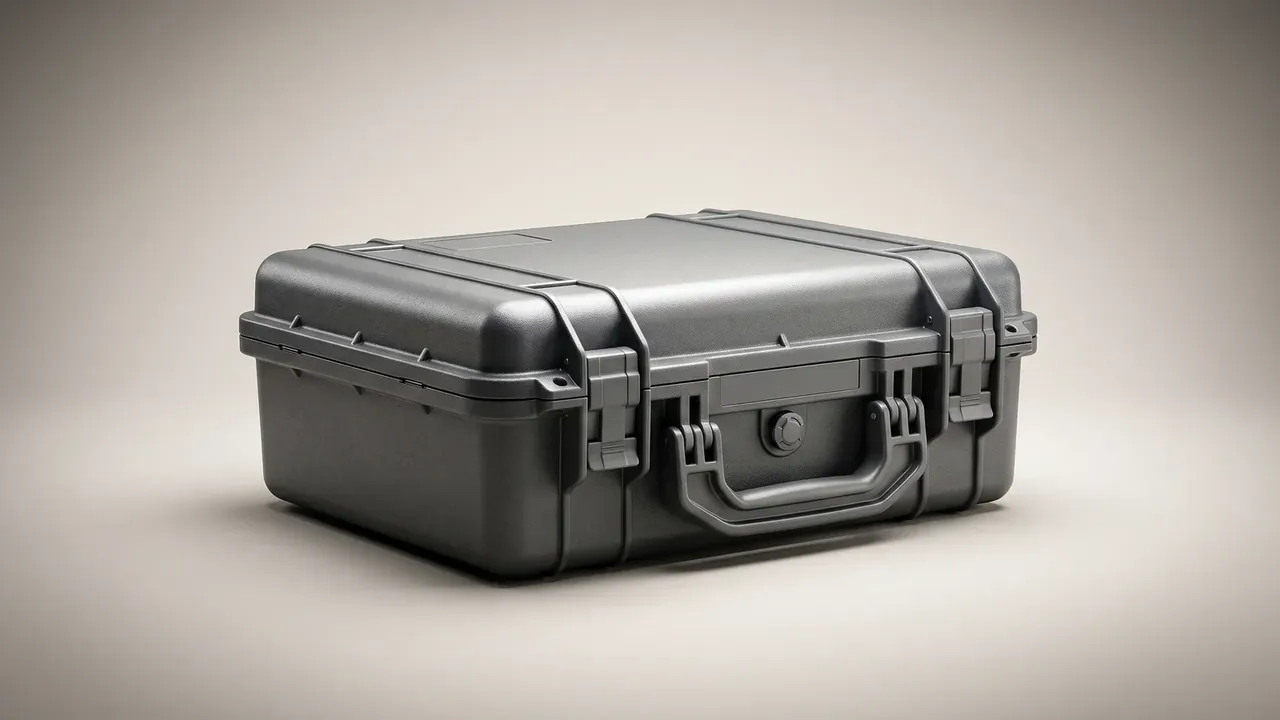
Quick answer: Choose the resin before the shape. A plastic battery case is settled by five numbers — oxygen index, 24-hour electrolyte mass change, wall at the rib root, melt window and batch retention — and only afterwards by price.
Table of contents
- Five checkpoints for a plastic battery case
- Checkpoint one: resin grade and flame retardancy
- Checkpoint two: electrolyte resistance in three readings
- Checkpoint three: wall thickness and rib layout
- Checkpoints four and five: moulding window and batch release
- FAQ
1. Five checkpoints for a plastic battery case
Two suppliers can quote the same 520 × 380 × 220 mm outline 18 RMB apart; the difference sits in the wall, not the drawing.
Run them in order: resin and flame retardancy, electrolyte resistance, wall thickness, moulding window, batch release.
| Checkpoint | Ask for | Pass value | Failure sign |
|---|---|---|---|
| Resin and flame retardancy | Base grade, oxygen index | Flame-retardant PP, OI above 27 | Burns on, drips ignite cotton |
| Electrolyte resistance | Mass and tensile after soak | 24 h change ≤1.5% | Whitening, lifted edges |
| Wall thickness | Side, base, lid, rib root | Side 2.2 to 2.8 mm | Bulges under a stack |
| Moulding window | Melt, mould, cycle | 215 to 230 °C, 55 s | Sink marks, split weld lines |
2. Checkpoint one: resin grade and flame retardancy
Copolymer PP is the usual base for a plastic battery case, with flame retardancy from the additive package. Brominated systems are efficient but raise migration questions; halogen-free grades give lower smoke at about ten percent less notched impact, recovered by 0.2 mm of wall.
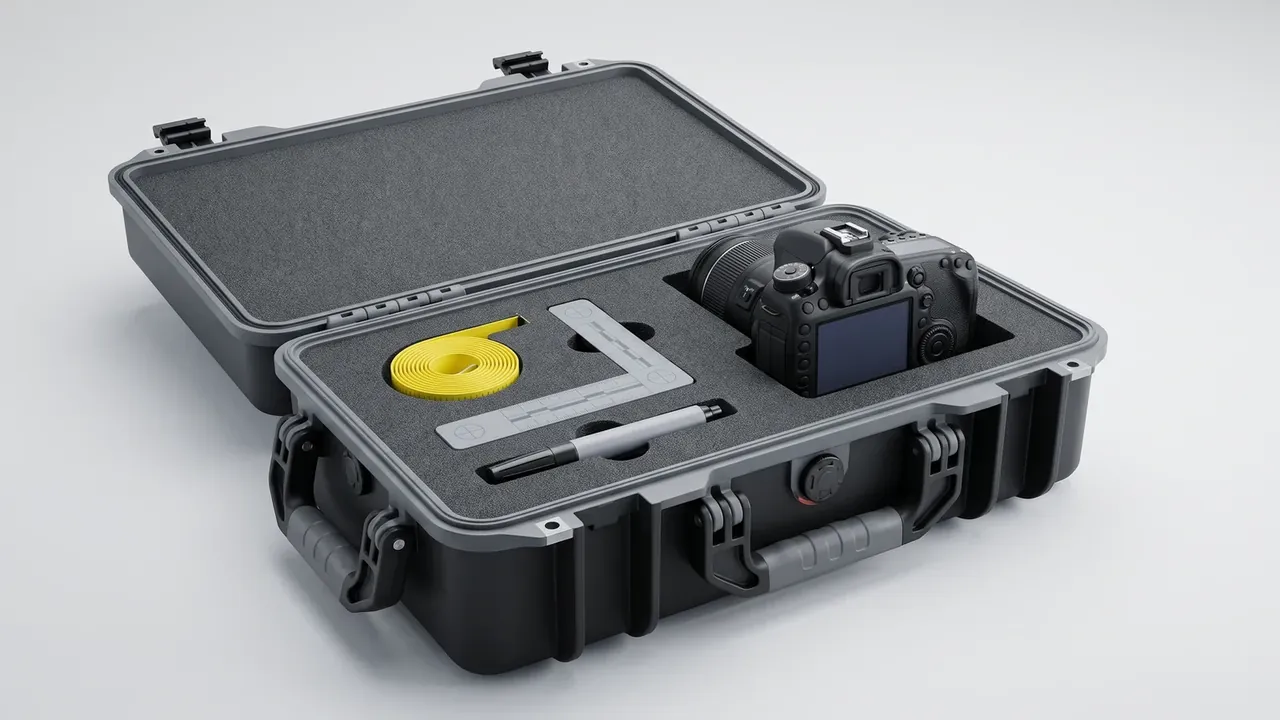
Oxygen index exposes a weak compound before UL94 does: below 22 it burns on under a sustained flame, above 26 self-extinction becomes realistic. Five bars, median value, GB/T 2406.
UL94 must be read at thickness: a grade reaching V-0 at 3.0 mm may only reach V-2 at 1.5 mm, and this wall sits at 2.2 to 2.8 mm, so bars must match the thinnest wall.
3. Checkpoint two: electrolyte resistance in three readings
For a plastic battery case, soak a 100 × 100 × 2 mm plaque in 1 mol/L LiPF6 carbonate electrolyte at 23 °C for 24 hours, wipe, rest an hour, weigh. Pass means under 1.5 percent mass change, over 85 percent tensile retention and no whitening — all three at once.
Lead-acid work adds 30 percent sulphuric acid at 1.28 g/cm³ for 72 hours; PP handles acid better, so the soak rarely limits the choice. Weak points are the gasket and the metal insert, where five percent swell pushes a latch out.
Give liquid somewhere to go: a 1.5 mm lip per compartment, an 8 mm sump at the bottom corners, a 3 mm dam between rows.
4. Checkpoint three: wall thickness and rib layout
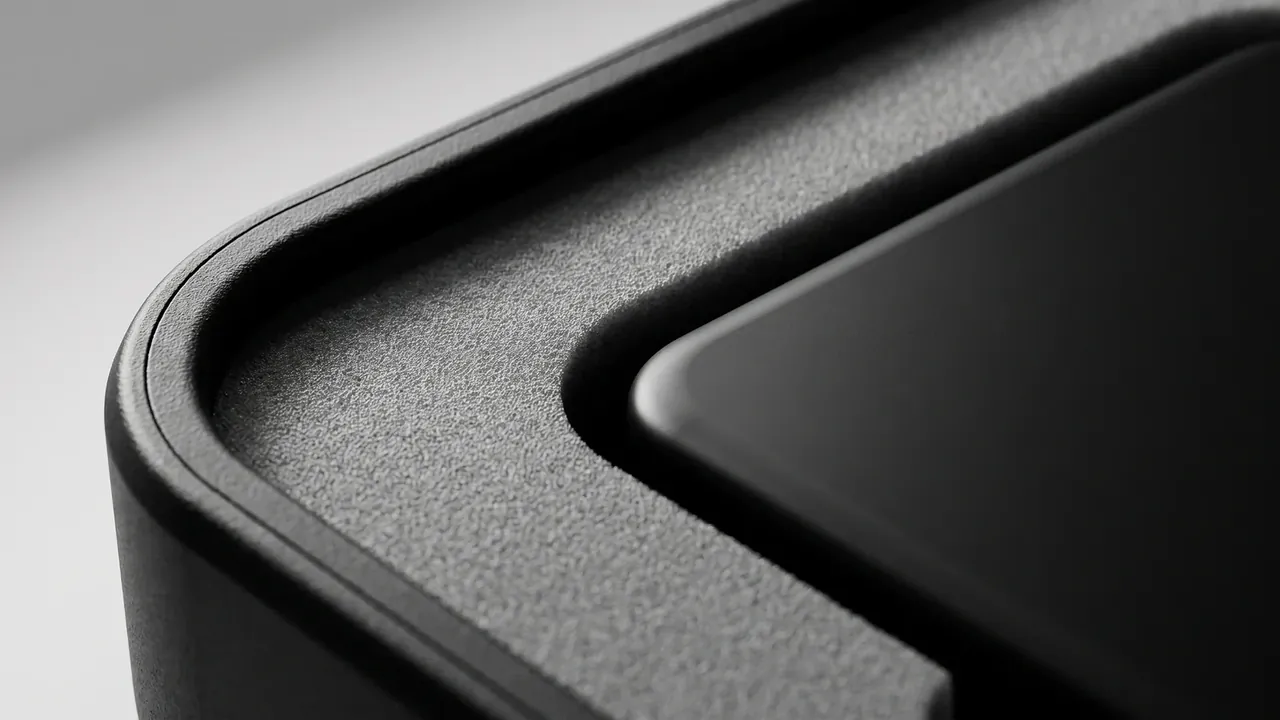
Thicker is not safer for a plastic battery case. Below 2.0 mm the side bulges past 4 mm after 350 kg stands on it for a day; above 3.5 mm the shrinkage differential moves to the corners. 2.2 to 2.8 mm side, 3.0 mm base and 2.4 mm lid is the band a mould holds.
| Location | Target | Floor | Measure with |
|---|---|---|---|
| Side wall | 2.2 to 2.8 mm | 2.0 mm | Ultrasonic, 5 points per face |
| Base | 3.0 mm | 2.6 mm | Centre plus 4 corners |
| Lid | 2.4 mm | 2.2 mm | 9 points across the top |
| Rib root | 1.5 mm | 1.2 mm | Sectioned sample |
Vertical ribs at 45 mm pitch, 0.6 of the wall thick, 1.5 mm root radius; keep the spread between ultrasonic points under 0.4 mm.
5. Checkpoints four and five: moulding window and batch release
Melt 215 to 230 °C, mould 45 °C plus or minus 3, packing 35 MPa, cooling 25 s, cycle 55 s. A 650-tonne clamp with a 65 mm screw covers the 520 × 380 × 220 mm plastic battery case; an 800-tonne machine only adds flash risk.
Release runs in three steps: dimensional report on the first shot, one part weighed every two hours (4.2 kg, plus or minus 1.5 percent), three retention samples per batch. Drop is 1.2 m onto six faces after four hours at minus 20 °C; salt spray, 480 hours neutral, covers inserts only.
Conclusion
Two plastic battery case designs look identical on a pallet and behave nothing alike: the difference lives in the compound, in 2.2 to 2.8 mm of wall, in three readings after a soak. Settle the material first, and the plastic battery case that arrives will survive electrolyte, cold and stacking.
This article discusses only the container (case body) side of specifications and design intent, and does not cover any handling, loading or use of the contents.
Related Reading
- Dividers and pressure relief in battery safety cases
- How to specify a PP plastic case
- PP cases against ABS cases
- Moulding and release checks for injection-moulded cases
Related Products
- 8 Series — Gun Cases; Military Equipment Cases; Camera Equipment Cases; Drone Cases; Watch Cases; Knife Cases; First Aid Cases; Electronics Equipment Cases
- WL8-2812 PP Gun Case — model WL8-2812
- All protective cases and toolboxes: 7 series, 158 models