

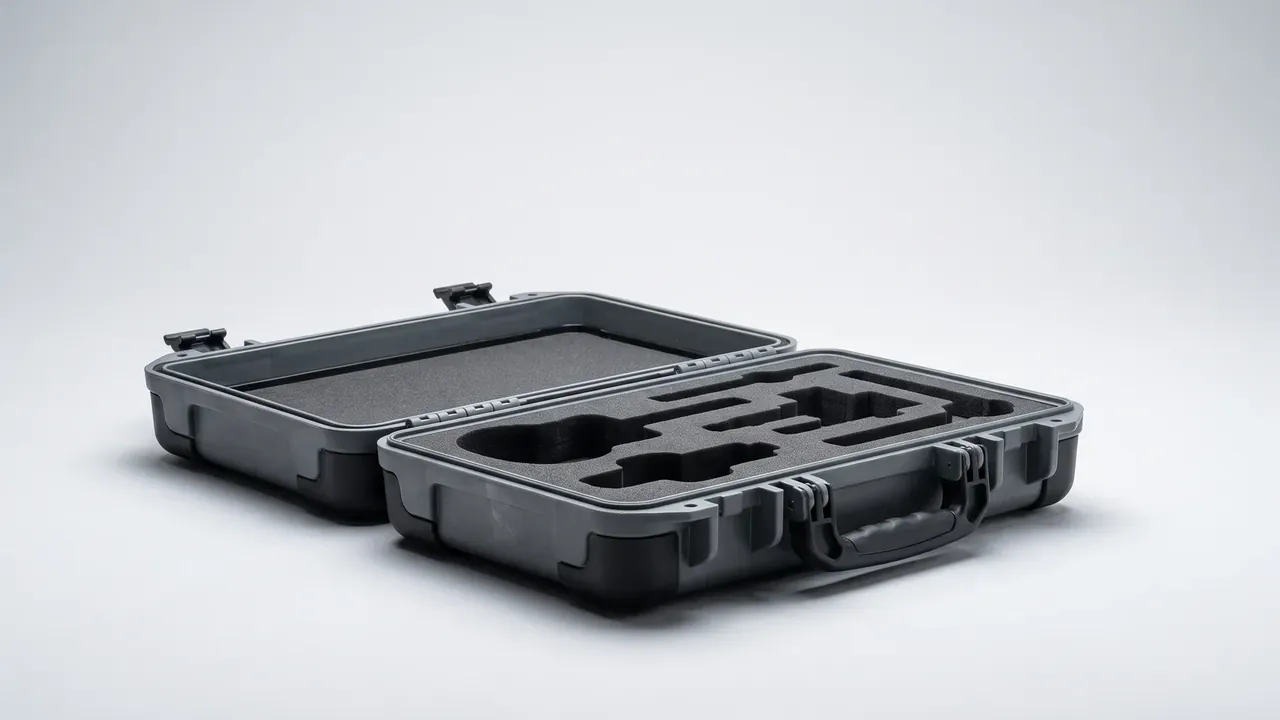
Quick answer: Fix the compartments before the shell. A battery box is decided by cell diameter, divider wall, terminal clearance, handle load and latch force. On a one-hand box the risk is a cell sliding until its terminals touch metal.
Table of contents
- Five checkpoints for a battery box
- Compartments: working back from the cell diameter
- Short-circuit protection in three layers
- One-hand carry: handle, latches and balance
- Labelling, counting and turnaround
- FAQ
1. Five checkpoints for a battery box
Two boxes can hold the same 24 cells of 18650 format and feel nothing alike: one leaves the bench at 1.1 kg, the other at 1.6 kg with a white line at the handle root within three months.
Work the five in order: cell diameter, divider walls, terminal clearance, handle and latches, numbering. The first two decide whether the cells fit, the rest whether the box carries all day and can be counted.
2. Compartments: working back from the cell diameter
A bore is not a fraction of the cavity. An 18650 measures 18.4 mm across and 65.0 mm long, so the bore runs 22.5 mm wide with 2 mm per side and 68 mm deep.
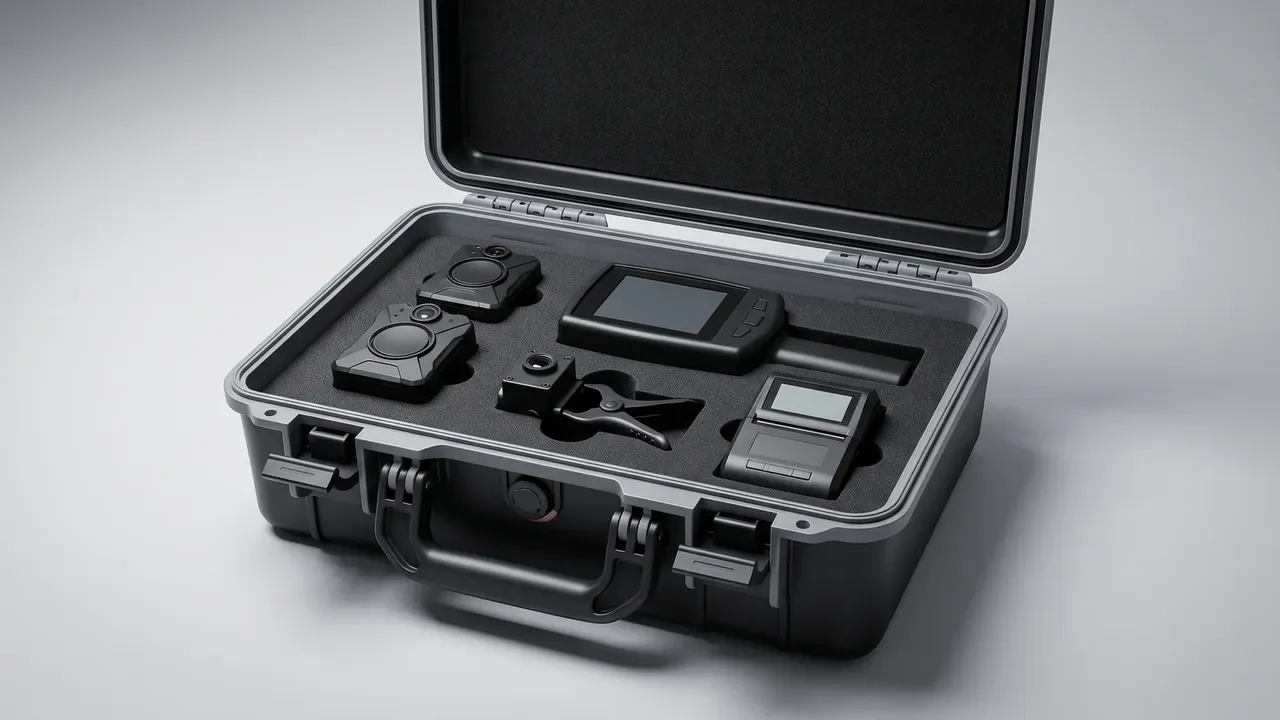
Dividers carry the load. Below 1.2 mm the mould short-shoots and the ejector whitens the rib; 1.5 mm at a 25.4 mm pitch leaves 2.9 mm between cells. A 21700 bore follows at 26 mm and 74 mm.
| Layout | Bore and depth | Cell | Footprint | Empty weight |
|---|---|---|---|---|
| 2 × 4, eight bores | 22.5 × 68 mm | 18650 | 101.6 × 50.8 mm | 0.7 kg |
| 4 × 4, sixteen | 22.5 × 68 mm | 18650 | 101.6 × 101.6 mm | 0.9 kg |
| 6 × 4, twenty-four | 22.5 × 68 mm | 18650 | 152.4 × 101.6 mm | 1.1 kg |
| 4 × 3, twelve | 26 × 74 mm | 21700 | 116 × 87 mm | 1.3 kg |
Bore centres hold plus or minus 0.3 mm; beyond that the lid foam misses the mouths and closing pushes cells sideways.
3. Short-circuit protection in three layers
Inside a battery box the everyday risk is a terminal touching metal. Three layers, in order; a gap in any of them is a gap.
Layer one is physical: a 1.5 mm divider to the floor and a 1.0 mm step in each bore. Layer two is terminal coverage: 3 mm EVA in the lid compresses each cell by 1 mm, with optional 2 mm caps. Layer three is inspection: 20 megohms at 500 V between bores.
| Layer | What is done | Pass | How to check |
|---|---|---|---|
| Physical | 1.5 mm divider, 1.0 mm step | Bores isolated | Feeler gauge will not pass |
| Terminal | 3 mm EVA lid, 2 mm caps | 1 mm compression closed | Carbon paper shows even contact |
| Inspection | Insulation between bores | 20 megohms at 500 V | Megohmmeter, bore by bore |
Do not drill drain holes in the bore floor: indoors they admit dust and swarf. Vent through a 0.8 mm gap at the divider top.
4. One-hand carry: handle, latches and balance
A 500-metre walk with 1.1 kg in one hand comes down to three numbers: a 28 mm grip, a 3 mm radius at the handle root, and a loaded centre of gravity within 15 mm of the handle line. A narrower grip cuts into the fingers; a wide offset swings the box against the leg.
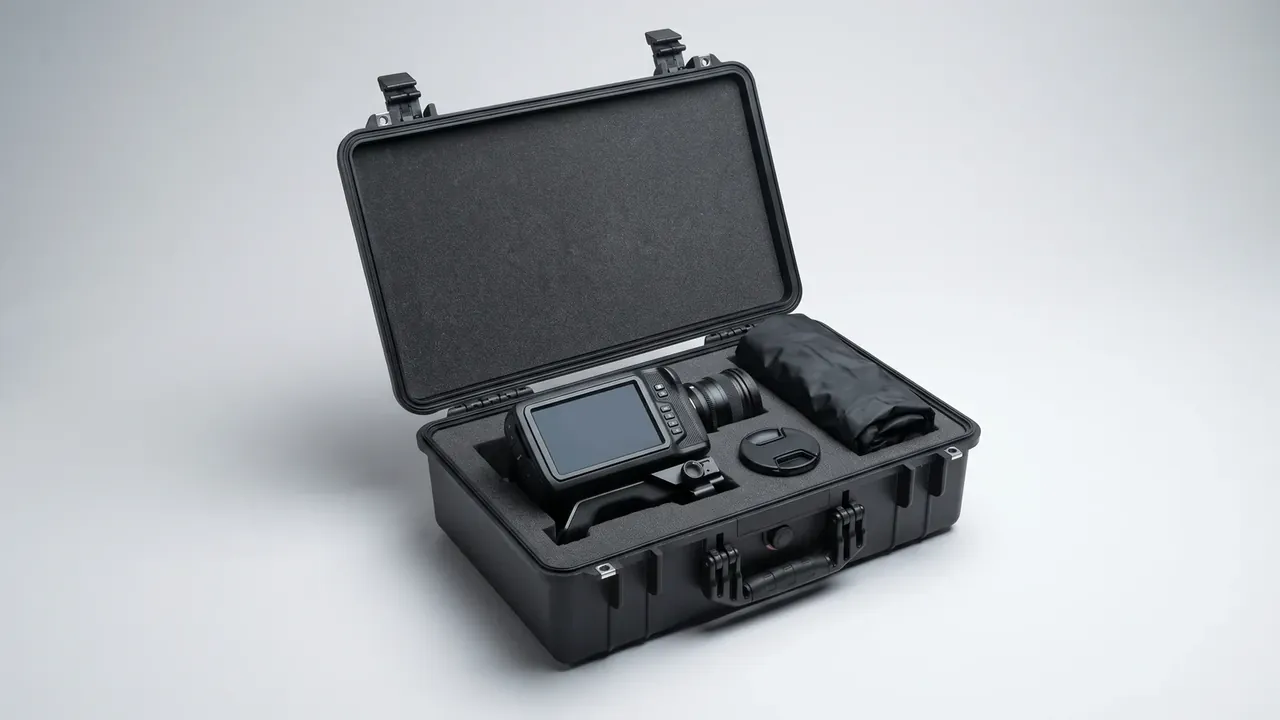
A 12 kg static load for an hour is about five times the loaded weight, the margin a handle root needs. Latches are cycled 5,000 times at 25 to 35 N. Release adds four hours at minus 10 °C then a 1.0 m drop on six faces, and 48 hours at 60 °C with bore shrinkage under 0.4 percent.
Drop the loaded box with real cells: a cylinder rolls along the bore where a steel weight does not.
5. Labelling, counting and turnaround
Half the value of a battery box sits in counting. Moulded numbers raised 0.4 mm outlast any label, and a notch in each bore shows a reversed cell at a glance.
Batch colour does the rest: one colour per batch, so the store knows which box ships first without opening it, and a missing cell shows as an empty numbered bore. Add a 60 × 40 mm label patch in the lid, and stack no more than five high.
Conclusion
The difference between two battery box designs sits in a 22.5 mm bore, a 1.5 mm divider, a 25.4 mm pitch and a 12 kg handle load. Settle bores before colour, and the battery box you receive will still carry cleanly after a year.
This article discusses only the container (case body) side of specifications and design intent, and does not cover any handling, loading or use of the contents.
Related Reading
- Small plastic case sizes and compartment layouts
- Divider structures and where to compromise
- Battery safety cases against alternatives
- Handles and latches on portable tool boxes
Related Products
- 8 Series — Gun Cases; Military Equipment Cases; Camera Equipment Cases; Drone Cases; Watch Cases; Knife Cases; First Aid Cases; Electronics Equipment Cases
- WL8-2812 PP Gun Case — model WL8-2812
- All protective cases and toolboxes: 7 series, 158 models