

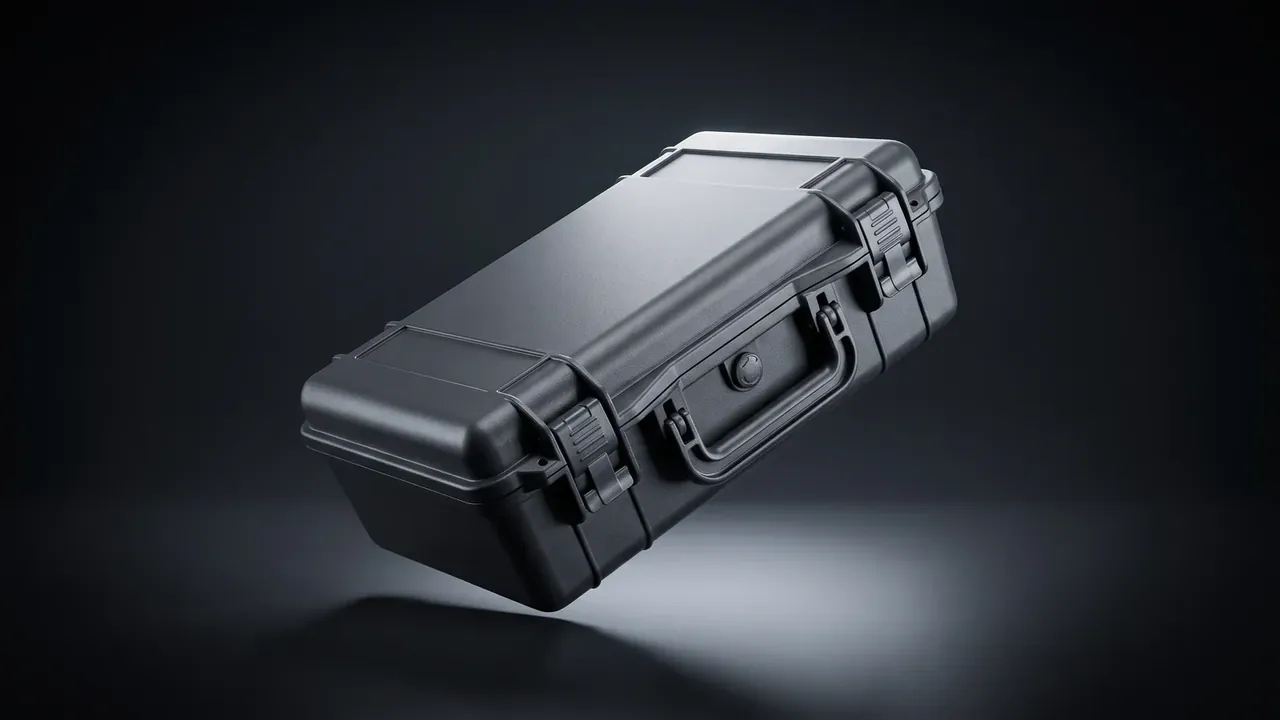
Quick answer: Most of the gap between two plastic battery box quotes sits in the tool. Confirm one wall datum, ask for clamp force and cavity count, check insert torque, then lock batch consistency.
Table of contents
- How a Plastic Battery Box Sets Its Walls
- Clamp Force and Cavity Layout
- Inserts and Metal Hardware Fit
- Batch Consistency in Three Tolerances
- Trial Shots and Acceptance Rules
- FAQ
1. How a Plastic Battery Box Sets Its Walls
A plastic battery box is nearly always an injection molded part, and the tool decides whether it keeps shape after thousands of lid cycles. Start from one wall datum: a 3.0 mm base, a 2.6 mm side wall and a 2.8 mm lid. A spread wider than 0.4 mm lets the thick zone cool late, so flatness collapses before the part leaves the press.
Ribs stay at 60 percent of the wall, or 1.8 mm, with a 1.2 degree draft; the latch seat rises to 4.0 mm locally at 1.5 degrees.
| Section | Nominal wall | Rib | Draft | Typical defect |
|---|---|---|---|---|
| Base | 3.0 mm | 1.8 mm | 1.2° | Sink, rocking |
| Side wall | 2.6 mm | none | 1.0° | Drag marks |
| Lid | 2.8 mm | 1.7 mm | 1.2° | Waviness |
| Latch seat | 4.0 mm | 2.4 mm | 1.5° | Root cracking |
Stacking claims follow this table, never precede it, because the wall datum sets the load path.
2. Clamp Force and Cavity Layout
Clamp force for a plastic battery box follows projected area. A 400 by 300 mm footprint projects about 1,200 square centimeters per cavity. At 0.5 tonne per square centimeter, a 380 tonne press is the floor. Two cavities double the projection and need 650 tonne or more, or flash appears at the end of fill.
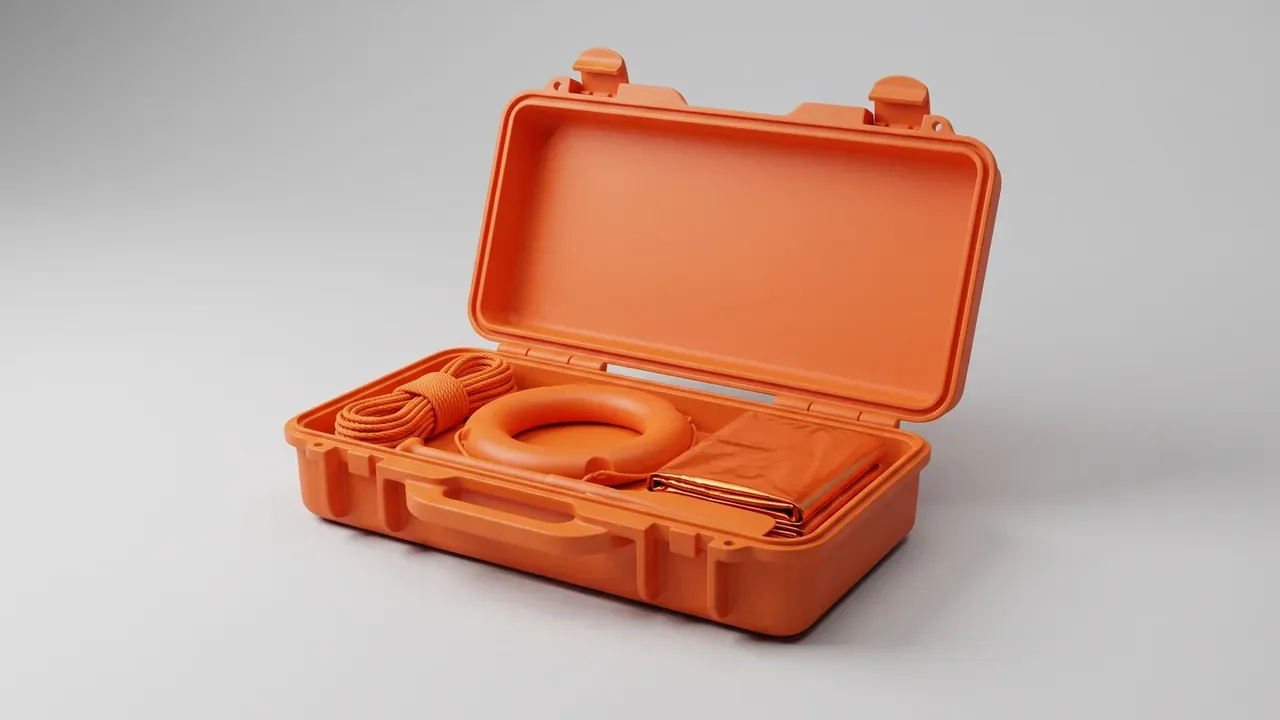
Cavity layout sets warp direction. Two mirrored cavities gated at the midpoint of the long side cancel shrinkage stress and hold lid warpage under 0.6 mm. A corner gate makes cases tight on one side, loose on the other; keep offset within 3 mm.
3. Inserts and Metal Hardware Fit
Threaded inserts beat tapped resin. An M5 brass nut pressed in hot should hold 1.2 N·m without spinning and resist 600 N of pull-out. Leave 1.5 mm of plastic around the insert; a thinner ring splits during pressing.
Specify hinge pins and catch hooks against 96 hours of salt spray. A 304 stainless pin shows no red rust after that exposure, while a plain zinc-plated part spots at 48 hours. Allow 0.15 mm clearance so thermal expansion neither seizes nor rattles.
4. Batch Consistency in Three Tolerances
Batch consistency for a plastic battery box rests on color, weight and size. Hold color difference within ΔE 1.5 so a pallet reads as one color. Keep part weight within plus or minus 1.8 percent, since regrind above 20 percent drifts. Hold external dimensions within 0.35 mm so lids stay interchangeable.
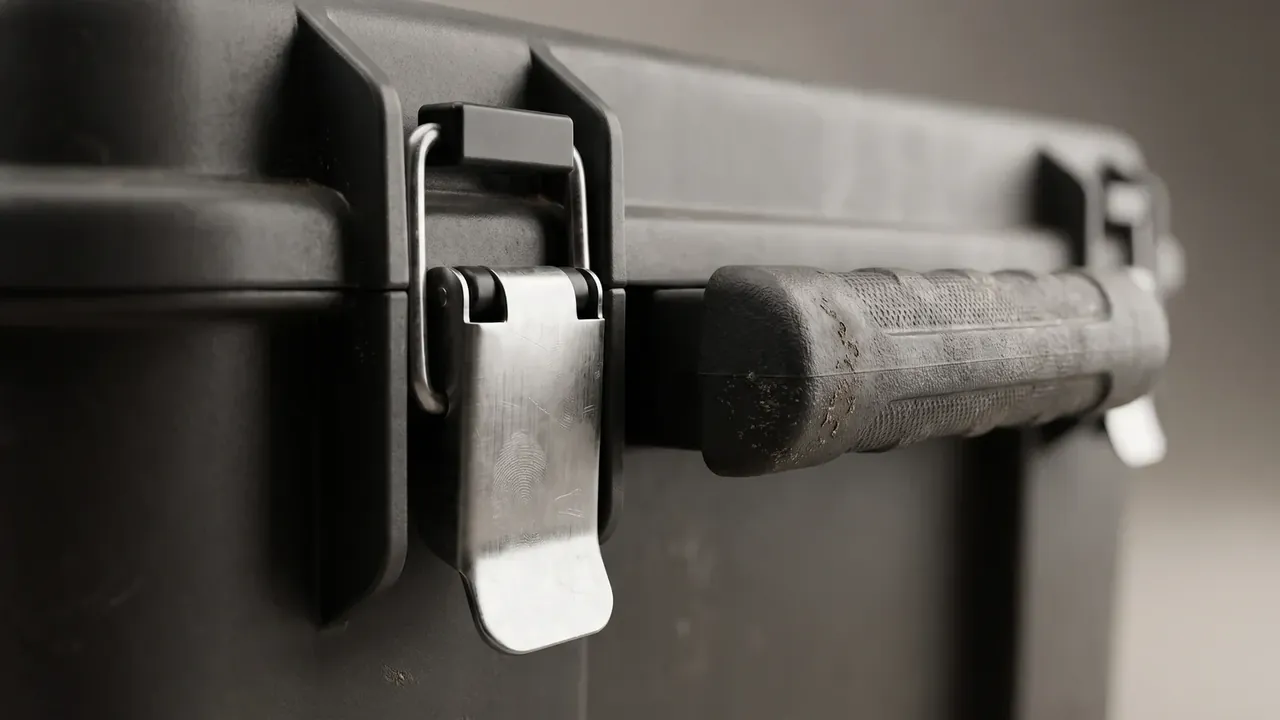
Audit by sampling five parts every two hours against a color chip. A 300,000-shot tool also needs cavity polishing at 200,000, or flash climbs by shot 220,000.
5. Trial Shots and Acceptance Rules
A plastic battery box trial runs three consecutive shots, four parts each, twelve in total, measured fully. Watch lid gap, lid warpage and insert height: gap under 0.3 mm, warpage under 0.6 mm, insert face 0.1 to 0.2 mm above the plastic.
| Check | Sample | Limit | Record |
|---|---|---|---|
| Wall thickness | 2 per shot | 0.15 mm spread | Micrometer |
| Lid gap | 2 per shot | 0.3 mm max | Feeler gauge |
| Lid warpage | 2 per shot | 0.6 mm max | Plate and dial gauge |
| Insert torque | 5 per lot | 1.2 N·m, no spin | Torque wrench |
| Color | 3 per lot | ΔE 1.5 max | Spectrophotometer |
Lead time tracks tool status: a new tool reaches trial in about 25 days, a modification takes 7 to 10, and the first 500 units add 5.
Conclusion
Choosing a plastic battery box is really choosing a tool and a set of process rules. One wall datum, clamp force with margin, insert torque and three batch tolerances can all be settled before the drawing is released. Signed first samples turn those promises into evidence: that is how a plastic battery box order stays repeatable.
This article discusses only the container (case body) side of specifications and design intent, and does not cover any handling, loading or use of the contents.
Related Reading
- Battery safety case selection guide: a five-step checklist
- Battery safety case versus alternatives: structure, cost and lead time
- Rotomolded case selection: wall, tool and volume in order
- Plastic tool box materials compared: PP, ABS and HDPE
Related Products
- 8 Series — Gun Cases; Military Equipment Cases; Camera Equipment Cases; Drone Cases; Watch Cases; Knife Cases; First Aid Cases; Electronics Equipment Cases
- WL8-2812 PP Gun Case — model WL8-2812
- All protective cases and toolboxes: 7 series, 158 models