

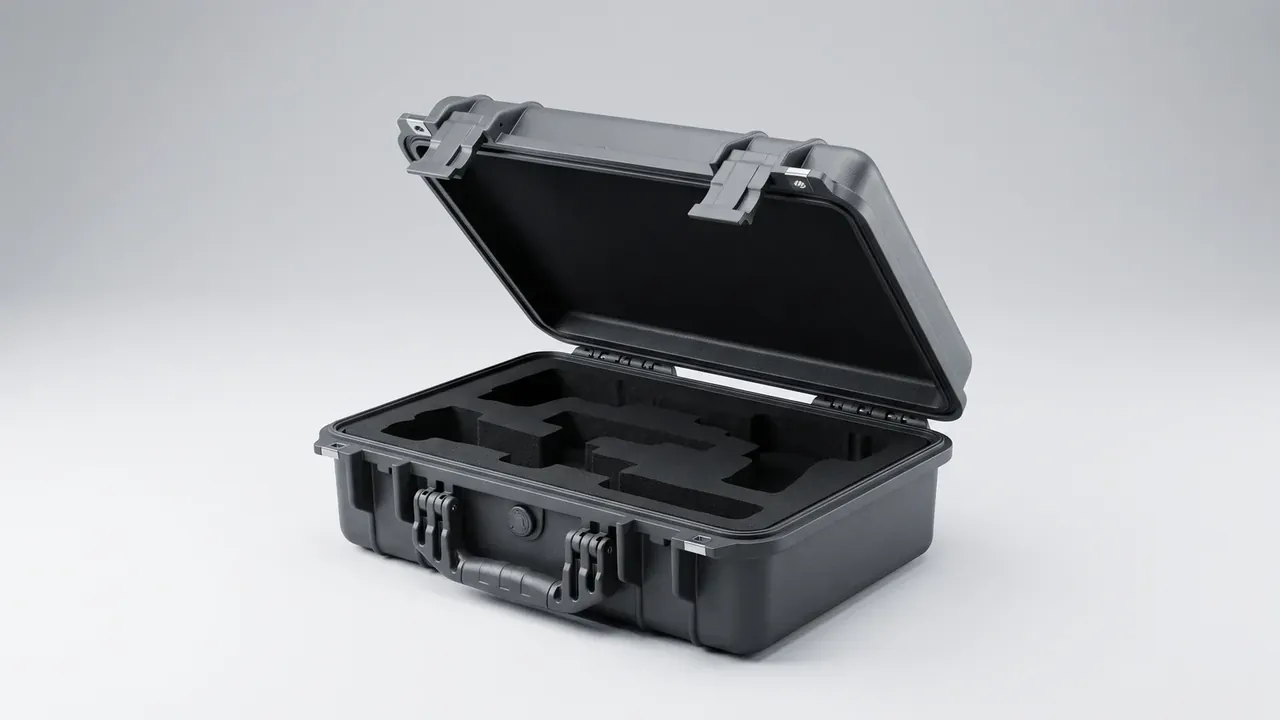
Quick answer: Fix the cavity and cushion first, then outer size and volumetric weight, and only then reports and latches. Reverse that order and parcels come back for repacking, or you pay freight on weight that carries nothing.
Table of contents
- Why the Cavity Comes First in a Battery Shipping Box
- Outer Dimensions and Volumetric Weight
- Matching Test Reports to Carrier Acceptance
- Latches, Sealing and Terminal Isolation
- Trial Run and Where the Money Goes
- FAQ
1. Why the Cavity Comes First in a Battery Shipping Box
A parcel is judged differently from a pallet. For a Battery shipping box the cavity and cushion come first, because courier drop height is banded by weight and 1.2 m on six faces is the usual mark below 1.5 kg. Allow 4 mm per side: less pinches the harness, more lets the pack shift.
Cushioning works in layers: a 20 mm EPE base takes the energy, 10 mm on top preloads the lid, and 2 mm PP dividers separate cells. Hold EPE compression near 25 percent.
| Component | Value | Reason |
|---|---|---|
| Cavity allowance | 4 mm per side | under 3 mm pinches wiring |
| Base cushion | 20 mm EPE | enough below 1.5 kg |
| Top preload | 10 mm | stops bounce after closing |
| Divider | 2 mm PP | cells never touch |
| Depth allowance | 8 mm | room for the harness |
2. Outer Dimensions and Volumetric Weight
Outer size is derived, not chosen. Couriers divide length by width by height in centimetres by 6000, so a 300 by 220 by 120 mm Battery shipping box measures 7920 cm³, bills at 1.32 kg and rounds to 1.5 kg against a 1.1 kg pack.
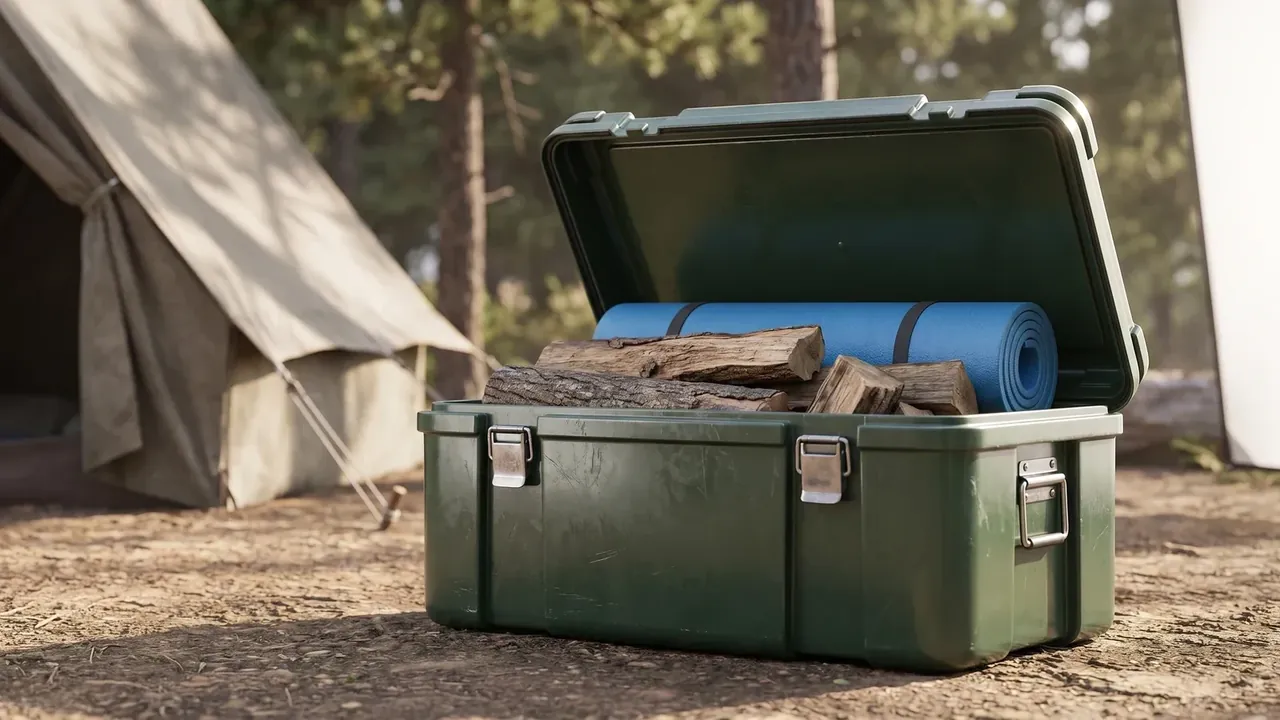
Build outward: 40 mm of cushion, two 5 mm walls, 2 mm of shut-off. A 2.5 mm PP body at this size runs on a 380 tonne press; thinning to 2.0 mm cracks the latch seat within 5,000 cycles.
| Outer size mm | Volume cm³ | Volumetric kg | Actual kg | Billed kg |
|---|---|---|---|---|
| 280×200×110 | 6160 | 1.03 | 0.9 | 1.5 |
| 300×220×120 | 7920 | 1.32 | 1.1 | 1.5 |
| 350×250×150 | 13125 | 2.19 | 1.8 | 2.5 |
| 400×300×160 | 19200 | 3.20 | 2.6 | 3.5 |
3. Matching Test Reports to Carrier Acceptance
Paperwork shows alignment with carrier acceptance, never a regulatory finding. A UN38.3 summary, a transport appraisal or MSDS, and a packaged drop record must describe one revision of one Battery shipping box; change the wall or cavity and the record lapses.
Net weight per parcel follows the published threshold, commonly near 2.5 kg, and that number drives the cavity, since 2.4 kg and 2.6 kg cannot share a foam die.
4. Latches, Sealing and Terminal Isolation
Two latches suit a parcel-sized Battery shipping box at 3 mm preload, with 35 to 55 N of opening force. A stainless pin in a PP seat grows under 0.2 mm across 5,000 cycles.
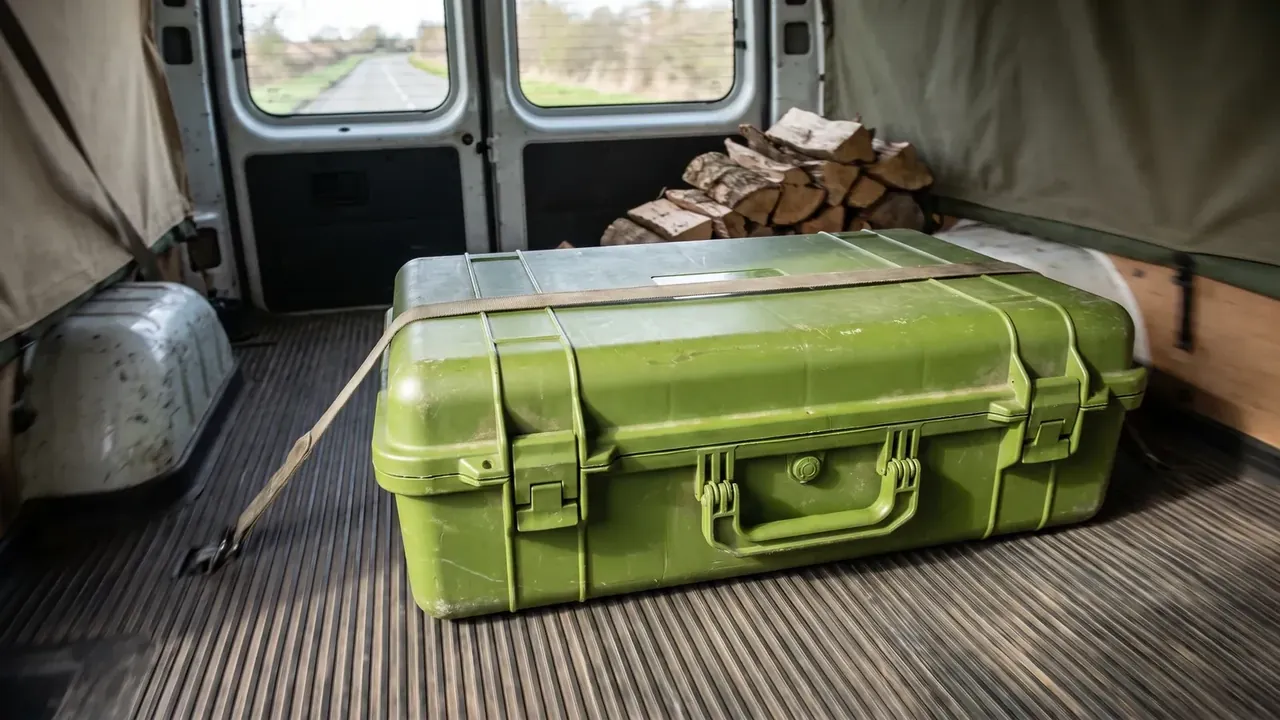
IP54 covers dust and splash and suits one parcel, while IP67 pushes gasket compression to 30 percent and stiffens each latch. Metal parts take 72 hours of salt spray.
Terminal isolation separates this box from a general case: opposing poles never share a bay, dividers stand 10 mm above the posts, and harnesses are tied into slots.
5. Trial Run and Where the Money Goes
Keep a 500 piece trial to five checks: cavity size, opening force, drop, stacking and label position. Remake the first article after any tooling change, since one moved dimension moves the latch seat.
On 1,000 pieces the body mould runs RMB 60,000 to 90,000, the foam die 2,500 to 4,000, the label plate 600 to 1,200. Cutting three colours to one pays for a 20 mm base cushion.
| Check | Pass mark | Sampling |
|---|---|---|
| Cavity size | within 1 mm | 1 per 200 pieces |
| Opening force | 35 to 55 N | 5 per lot |
| Drop | 1.2 m, six faces | 3 loaded units |
| Stacking | 24 hours, no set | 2 units |
| Label position | 20 mm from edge | full inspection |
| Salt spray | 72 hours, no rust | 2 per lot |
Conclusion
The criteria run in order: cavity and cushion decide whether the pack sits still, outer size what freight costs, reports acceptance, hardware what happens in transit, trial whether a run comes back. The hard part is not finding a box but finding a Battery shipping box where every link was calculated.
This article discusses only the container (case body) side of specifications and design intent, and does not cover any handling, loading or use of the contents.
Related Reading
- Choosing a battery safety case
- Battery safety cases against alternatives
- Questions when choosing a shipping case
- Shipping case problems and fixes
Related Products
- 8 Series — Gun Cases; Military Equipment Cases; Camera Equipment Cases; Drone Cases; Watch Cases; Knife Cases; First Aid Cases; Electronics Equipment Cases
- WL8-2812 PP Gun Case — model WL8-2812
- All protective cases and toolboxes: 7 series, 158 models