

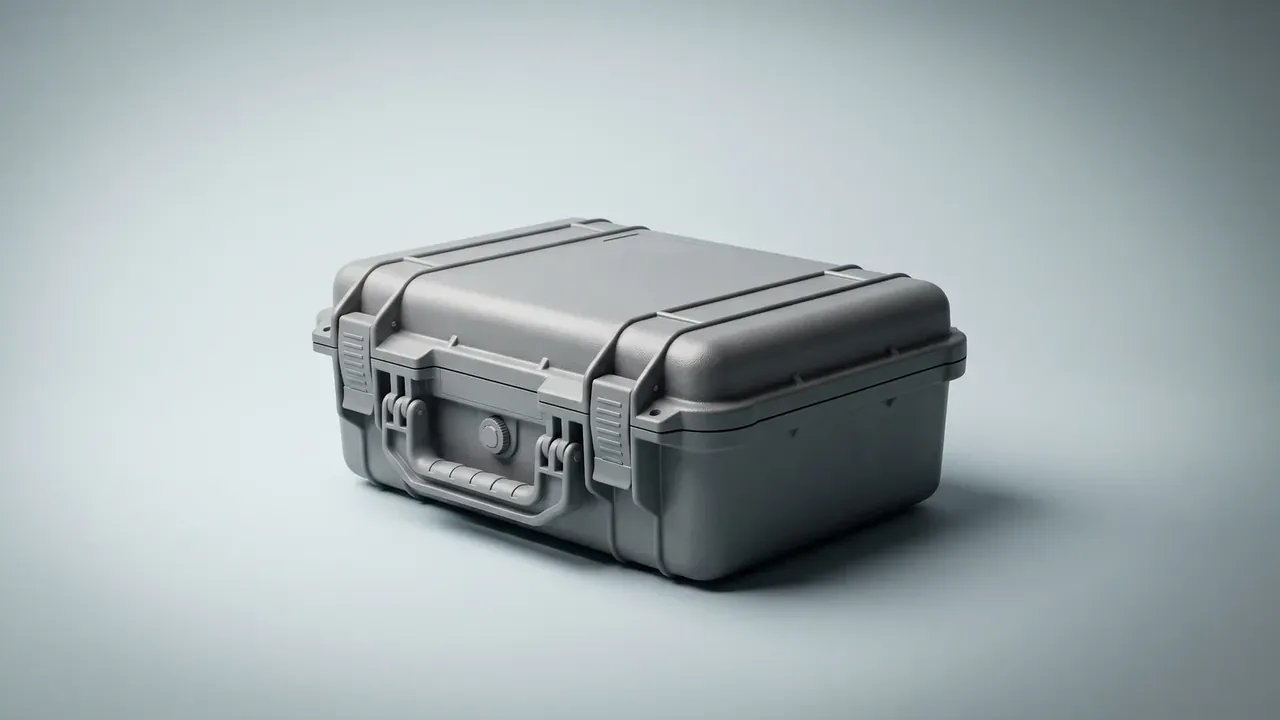
Quick answer: For warehouse use, settle zoning and bay count first, then shelf pitch and stack height, then moisture, labels and stock maths. Buy a Battery storage box before zoning and one box holds three voltages.
Table of contents
- Zoning Comes Before Dimensions in a Battery Storage Box
- Shelf Pitch and Stack Height
- Moisture Control You Can Audit
- Counting and Label Placement
- Spare Stock and How Many Boxes
- FAQ
1. Zoning Comes Before Dimensions in a Battery Storage Box
In a warehouse the first criterion for a Battery storage box is zoning, not shell shape. One box holding mixed voltages turns every pick into a search and every count into a guess. Split by voltage band and turnover: fast movers at waist, slow movers high, quarantine apart.
Bay count matters more than outer size. Six bays of 120 by 90 by 60 mm hold one SKU each, twelve across two stacked layers; 3 mm PP dividers slide out whole, and a 2 mm bay-floor radius stops cells wedging. Choose the shell last: bays times volume, plus dividers, plus 5 mm.
| Zone | Contents | Bays | Bay size mm | Replenishment |
|---|---|---|---|---|
| A | fast movers | 6 | 120×90×60 | daily |
| B | routine spares | 6 | 120×90×60 | weekly |
| C | inspection, returns | 4 | 150×110×80 | per batch |
| D | large packs | 2 | 220×160×120 | monthly |
2. Shelf Pitch and Stack Height
Pitch follows box height plus the reaching hand. A Battery storage box 180 mm tall wants 420 mm between shelves, enough for two stacked with 60 mm of grip; four tiers reach 1800 mm. Squeezing pitch to 300 mm adds a tier and a bend at every pick.
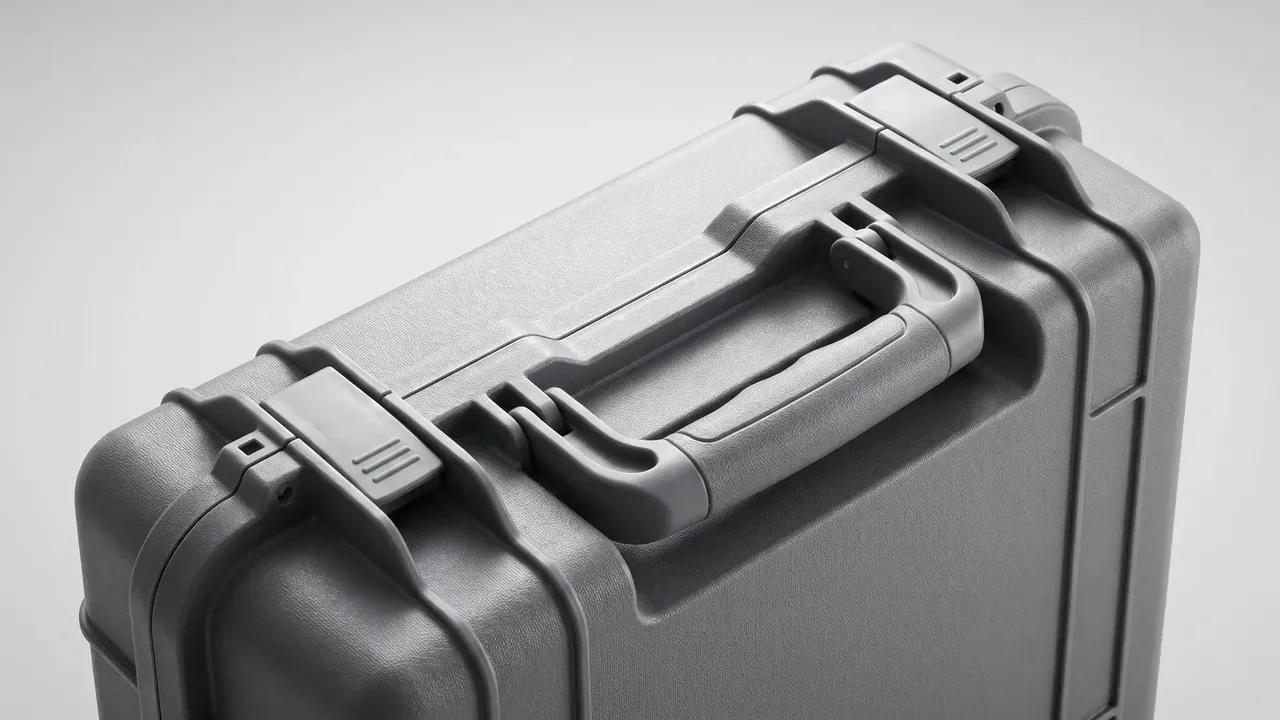
Five high at 25 kg puts 100 kg on the bottom unit, so three floor ribs at least 4 mm tall spread the load; over 2 mm of set after 24 hours means the wall is light. A 900 mm shelf span under 100 kg should deflect under 3 mm, or stacks lean.
3. Moisture Control You Can Audit
A sachet in the corner is not moisture control. Hold the area below 40 percent RH and between 5 and 35 degrees, allow 100 g of silica per 0.05 m³, swap every 30 days, and place indicator cards top, middle and bottom.
Sealing and venting belong together: a gasket blocks damp air, a quarter-turn valve allows a day of airing each season change, and the pair prevents condensate. The dated log inside the lid outranks the chemical: it shows which zone stays wet.
| Ambient RH | Silica gel | Change cycle | Monitoring |
|---|---|---|---|
| below 40% | 100 g per 0.05 m³ | 30 days | three cards |
| 40 to 60% | 150 g per 0.05 m³ | 20 days | cards plus probe |
| above 60% | 200 g per 0.05 m³ | 15 days | daily log |
4. Counting and Label Placement
Counting speed on a Battery storage box comes from label position. Put a 60 by 40 mm label with a 25 mm QR code on the top right of the short side, 15 mm from the edge, repeated on both sides so nobody lifts the box.

Three tiers of code, box, bay and batch, drive first-in-first-out; one scan reads all three lines, which is how variance falls below 0.5 percent. Four lid colours mark zones while the code carries the data.
5. Spare Stock and How Many Boxes
Box count follows stock days and capacity, not empty shelf space. Eight picks a day at 15 days of safety stock is 120 pieces; at 60 per box that is two in rotation plus one in transit, three per station.
| Daily picks | Safety days | Capacity | Boxes |
|---|---|---|---|
| 4 | 15 | 60 | 2 |
| 8 | 15 | 60 | 3 |
| 15 | 20 | 60 | 6 |
| 25 | 20 | 80 | 8 |
Wear matters too: a fast zone opens about 2,000 times a year, the latch spring fatigues first, and from year three plan on replacing 10 percent annually.
Conclusion
The criteria chain: zoning sets the bays, bays set the cavity, cavity and pitch set the stack, moisture and labels keep the numbers honest, stock maths sets the order. Guess at any link and the cost returns as variance. Finding a box is easy; keeping every Battery storage box on that chain is the work.
This article discusses only the container (case body) side of specifications and design intent, and does not cover any handling, loading or use of the contents.
Related Reading
- How cases are stored in a warehouse
- Preventing damage in case storage
- Choosing a lockable storage box
- Standards for foam inventory
Related Products
- 8 Series — Gun Cases; Military Equipment Cases; Camera Equipment Cases; Drone Cases; Watch Cases; Knife Cases; First Aid Cases; Electronics Equipment Cases
- WL8-2812 PP Gun Case — model WL8-2812
- All protective cases and toolboxes: 7 series, 158 models