

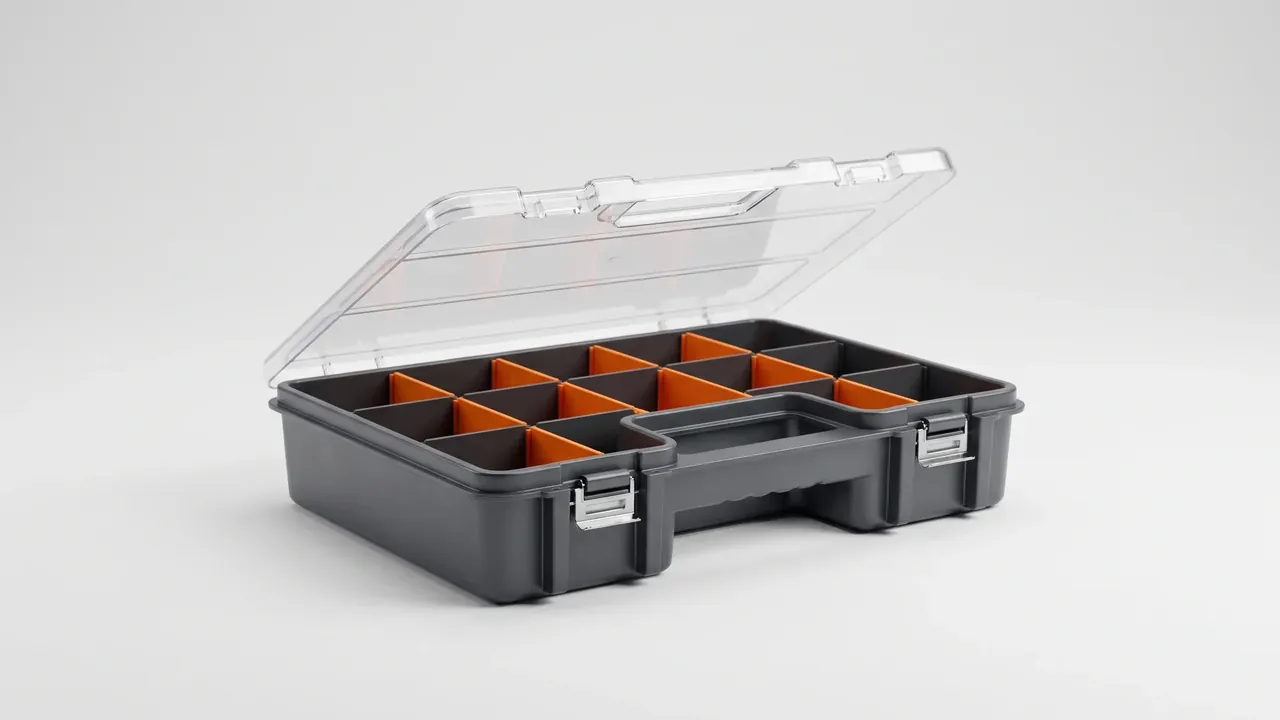
Quick answer: A multi-function tool box is chosen by how it opens, then by where it goes. Single-flip, tray and drawer layouts set weight and internal height; field, training, transit and storage sites each add one constraint.
Table of contents
- Three Layouts a Multi-function Tool Box Uses
- Field Service Work Inside a Cabin Aisle
- Training Benches: Corners and Stops
- Closed Transit: Pressure and Latches
- One Case, Many Uses Through Re-Inserts
- FAQ
1. Three Layouts a Multi-function Tool Box Uses
Sorting a multi-function tool box by opening layout saves more time than sorting by contents. A single-flip lid retrieves fastest; a double tray spreads two batches; three drawers keep everyday items on top.
Weight follows the layout: single-flip 3.2 kg, double tray 3.6 kg, three drawers 4.4 kg. Loaded to 18 kg the drawer version costs most to carry, and past 20 kg the handle gives way to a trolley.
| Layout | Levels | Weight | Internal height |
|---|---|---|---|
| Single flip | 1 | 3.2 kg | 120 mm |
| Double tray | 2 | 3.6 kg | 150 mm |
| Three drawers | 3 | 4.4 kg | 185 mm |
2. Field Service Work Inside a Cabin Aisle
Field service aboard an aircraft is the most underrated duty for a multi-function tool box. Cabins give 410 mm of aisle against a 489 mm case, so the box sits at an angle and the lid takes half the width, hence the 105 degree stop.
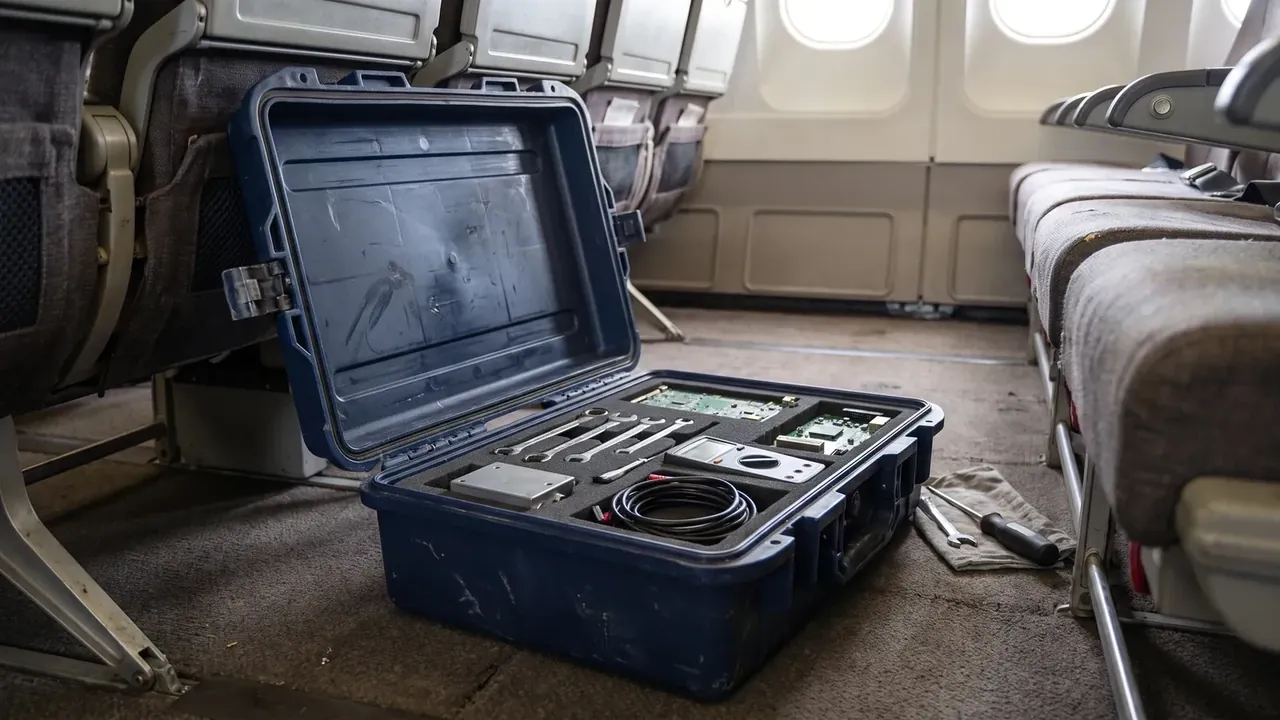
The footprint is easy to reckon: 489 mm of case plus a 25 mm lid leaves under 100 mm to pass. Hold length under 420 mm, or move storage into the lid at 95 degrees.
Slots run 3 mm deeper than the part, so nothing slides at 30 degrees of tilt, with 1.5 mm EVA beneath and 4 mm rubber corners for a 1.2 m drop.
3. Training Benches: Corners and Stops
On a training bench the first constraint on a multi-function tool box is safety, not capacity. Corners carry an R8 radius, the lid edge a 2 mm chamfer, and the stop keeps the lid off fingers.
Numbering sits inside the lid, one case per bench; twelve are counted in 30 seconds.
| Site | Radius | Stop | Load per slot | Numbering |
|---|---|---|---|---|
| Training bench | R8 | 105 degrees | 6 kg | Inside lid |
| Field service | R5 | 100 degrees | 8 kg | Lid plus side |
| Storage turnover | R5 | 95 degrees | 10 kg | Front stencil |
Drawer slides need a detent at eighty percent extension; pulled fully out, the centre of gravity passes the front edge and the case tips.
4. Closed Transit: Pressure and Latches
Once the case closes for transit, pressure becomes a variable. Cruise differential runs near 60 kPa, and a case in the hold sees about 26 kPa of swing; the tighter the seal, the less it equalises.
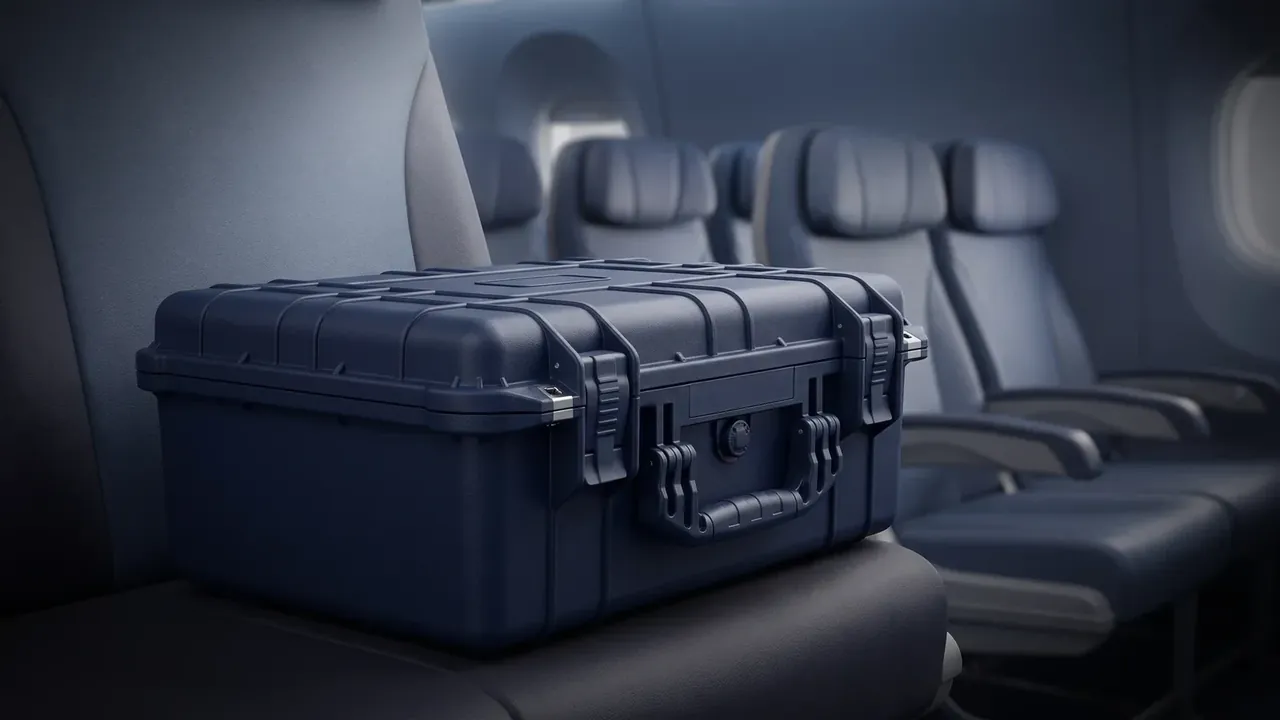
A valve opening at 3 kPa with an ePTFE membrane lets air pass and holds water. Without it the differential pins the lid, and forcing a latch rated at 180 N bends the tongue for good.
Height limits follow the mode: a bin allows 250 mm against a 220 mm case, and four-high pallets press 75 kg on the top face, with 8 mm boss engagement.
5. One Case, Many Uses Through Re-Inserts
Whether one case serves many duties comes down to changeover. Swapping foam for a tray takes 90 seconds; past three minutes, the duties should not share a body.
Extraction force sits near 25 N, enough for a finger and not enough to fall out; tray-to-wall clearance is 1 mm, located by two base ribs rather than interference.
| Duty | Insert | Changeover | Extraction | Add-on |
|---|---|---|---|---|
| Field service | Foam slots, straps | 90 s | 25 N | Lid panel |
| Training bench | Shallow tray | 60 s | 20 N | Bench card |
| Storage turnover | Cavity, dividers | 45 s | 30 N | Label window |
Lid panels, straps and tool-roll bays clip onto one 4 mm catch, so a change of scene swaps the accessory, not the shell.
Conclusion
Three layouts set weight and internal height; four sites add aisle clearance, corner radius and stop, pressure and stacking, changeover time. The value of a multi-function tool box lies not in slot count but in one body taking different inserts, which is where a multi-function tool box specification begins.
This article discusses only the container (case body) side of specifications and design intent, and does not cover any handling, loading or use of the contents.
Related Reading
- Tool box organiser layouts
- Why tool box lids sag
- Hand-carry hard case duties
- Choosing internal dividers
Related Products
- 8 Series — Gun Cases; Military Equipment Cases; Camera Equipment Cases; Drone Cases; Watch Cases; Knife Cases; First Aid Cases; Electronics Equipment Cases
- WL8-2812 PP Gun Case — model WL8-2812
- All protective cases and toolboxes: 7 series, 158 models