

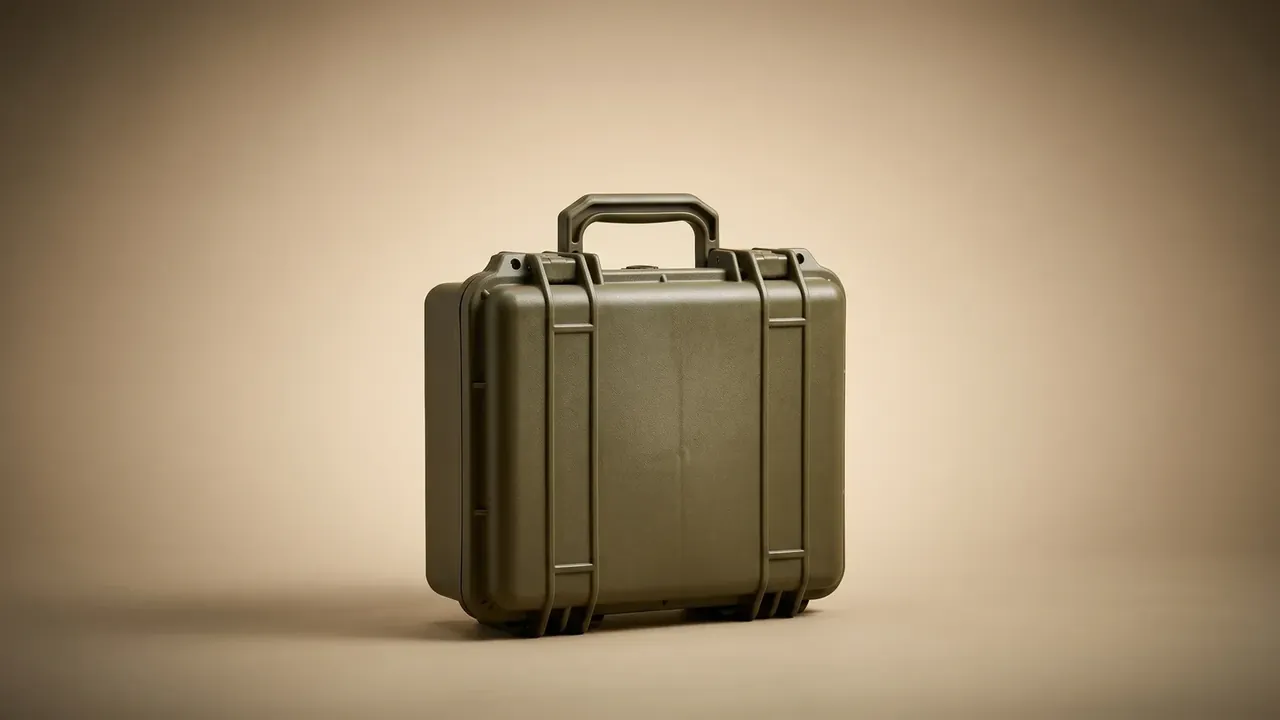
Quick answer: Fix wall thickness from robot mass and route, size the cushion from the drop height your customer tests, then close the outer dimensions against stacking load and pallet footprint.
Table of contents
- Five Criteria for a Robot Shipping Case
- From Robot Mass to Wall Thickness
- Cushion Depth versus Drop Height
- Stacking Load and Pallet Size
- Sea versus Road Freight
- FAQ
1. Five Criteria for a Robot Shipping Case
Start with one machine, not a catalogue. Four inputs settle everything downstream: mass, centre of gravity, removable parts, and the route the unit travels. Once those are fixed, wall thickness, cushion grade, rib layout and latches all follow.
Mass sets thickness, drop height sets cushion, and both set the cavity that pallet width then pushes back. Scoring a robot shipping case in parallel freezes the shell first, though it should be frozen last.
| Criterion | What it changes | Cost of getting it wrong |
|---|---|---|
| Mass and centre of gravity | Wall grade, base ribs | Base sag when lifted |
| Test drop height | Cushion thickness, density | Joints over shock limit |
| Pallet and hold width | Outer length, foot pads | One tier lost per load |
| Climate and route | Gasket, desiccant pockets | Condensation, rust |
On a robot shipping case, outer dimensions are the expensive revision and wall thickness the cheap one.
2. From Robot Mass to Wall Thickness
Take an 85 kg six-axis arm. With a dynamic factor of 3, peak load lands near 255 kg, shared across four base ribs and four corner blocks. A 1.3 m reach model carries its mass higher, so lateral acceleration adds a side-wall push.
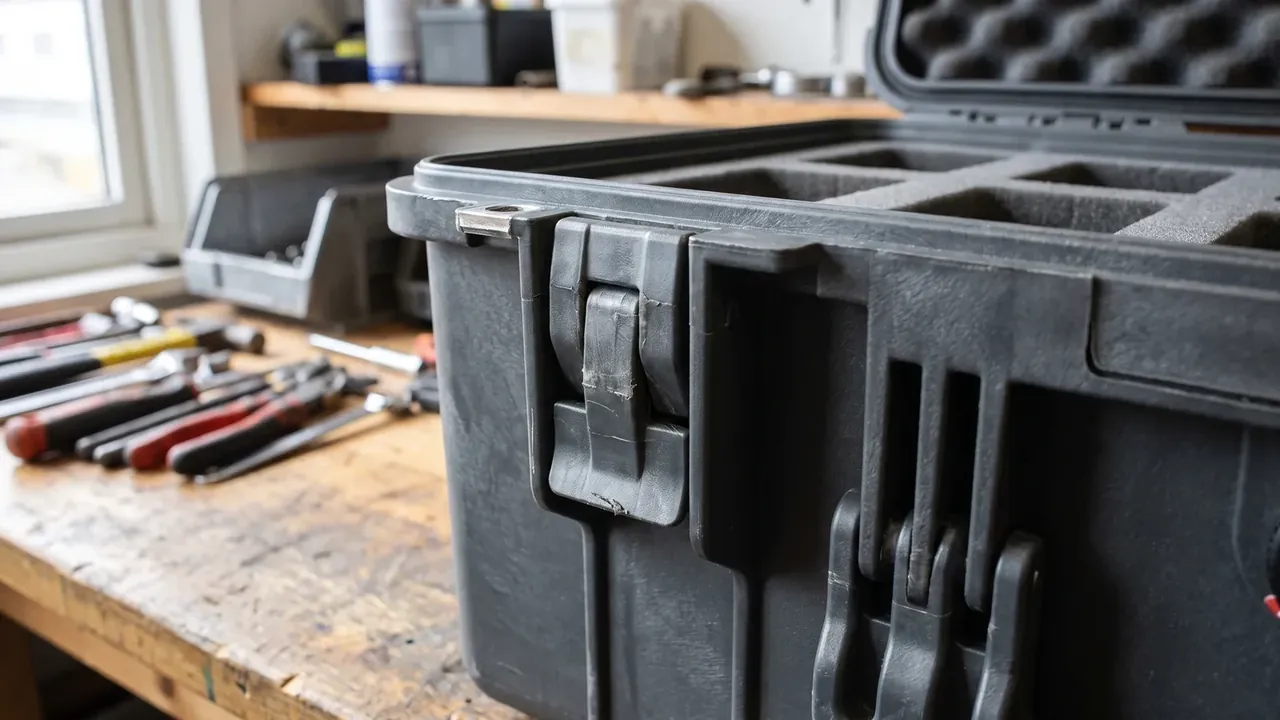
Three wall grades cover most of the range: 4.5 mm below 30 kg, 6.0 mm from 30 to 80 kg, 8.0 mm above 80 kg, all running on an 1850 tonne press at ±0.3 mm. Above 90 kg, add a base cross rib at 12 mm height and 180 mm pitch, or the floor bows when a forklift lifts one side.
Corner blocks take moulded inserts, and lifting points should hold 1200 N without pull-out.
3. Cushion Depth versus Drop Height
Thicker foam is not automatically safer. Every extra millimetre steals cavity space and grows the shell, so fewer units fit per load. Work from the tested drop height, then solve for thickness from mass and contact area.
A robot shipping case for an 85 kg unit at a 0.8 m test drop wants 50 mm of EVA or 55 mm of EPP. EVA is specified at 45 kg/m³ and EPP at 30 kg/m³; absorption at equal thickness is close, and cycle count separates them. Round trips favour EPP, one-way delivery favours EVA.
Second and third axis housings bulge outward on six-axis arms. Add a 15 mm local block over nominal thickness, or they crush first in a whole-unit test.
4. Stacking Load and Pallet Size
A robot shipping case at 120 kg gross stacked four high puts 360 kg of static load on the bottom lid. It all lands on the lid ribs, which must line up with the foot pads above; offset past 30 mm and the lid dishes.
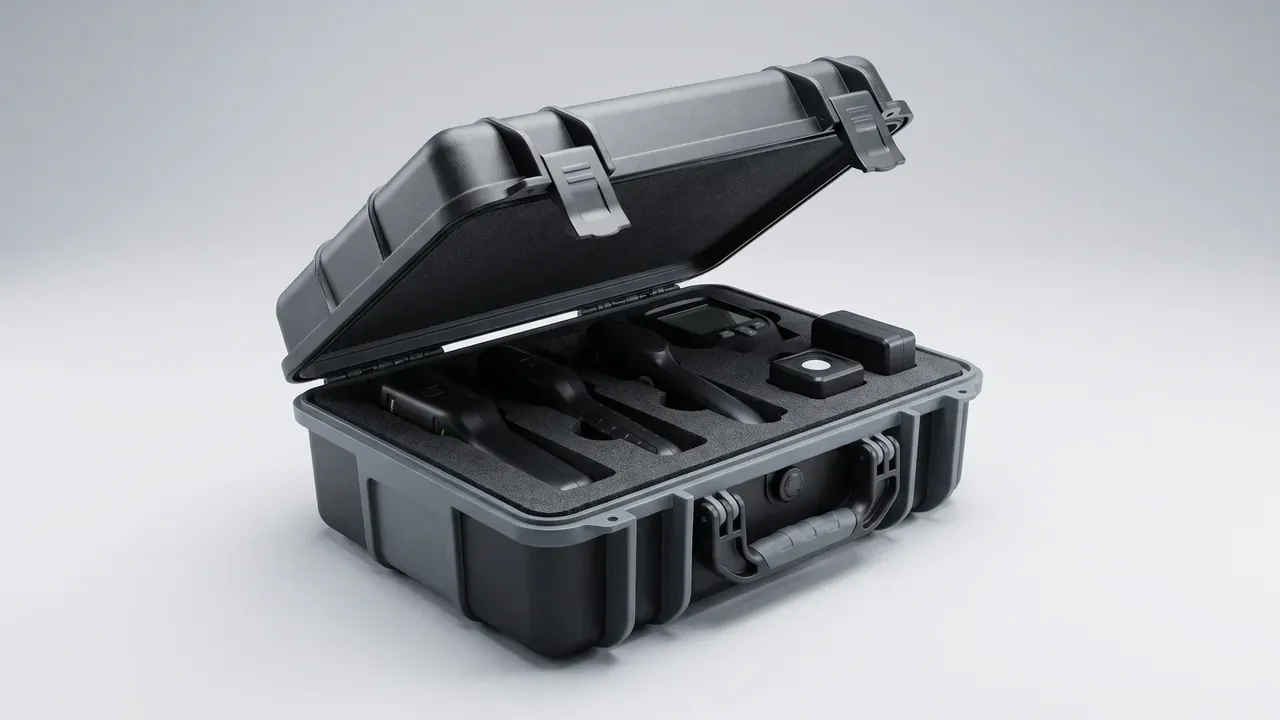
The pallet is the 1200 × 1000 mm standard, so the base is moulded at 1180 × 980 mm with 10 mm clearance per side. Foot pads sit over the two stringers. A 40HQ gives 2350 mm internal width: two rows, no third.
5. Sea versus Road Freight
A sea route means 25 days at 85% relative humidity with a −5 °C to 45 °C swing. Hold gasket compression near 30%: less leaks, more takes a permanent set and fails the second shipment. Allow 200 g of desiccant per cubic metre of cavity.
| Route | Dominant risk | Case-side response |
|---|---|---|
| Full load, sea | Humidity, condensation, stack load | Gasket, desiccant, stack step |
| Road line haul | Vibration, braking | Four-point straps, foam stops |
| Air freight | Low pressure, handling drops | Relief valve, corner build-up |
| Multimodal | Repeated handling, thermal cycles | Perimeter blocks, double wall |
Road transport needs four straps rated 2000 daN, anchored on moulded bosses rather than latches. Hardware should also survive 48 hours of salt spray; stainless keepers pass, zinc-plated parts show white rust near 24 hours.
Conclusion
The five criteria are a cost curve: early decisions are cheap to revisit, late ones are not. Mass first, drop height second, pallet width last, and the rest is verification. Teams that keep this order tool once, for a robot shipping case that passes the first drop test.
This article discusses only the container (case body) side of specifications and design intent, and does not cover any handling, loading or use of the contents.
Related Reading
- Drone case selection: five key parameters
- Wall thickness and ratings on heavy duty cases
- How custom foam inserts are layered and cut
- Deployable hard case selection
Related Products
- 8 Series — Gun Cases; Military Equipment Cases; Camera Equipment Cases; Drone Cases; Watch Cases; Knife Cases; First Aid Cases; Electronics Equipment Cases
- WL8-2812 PP Gun Case — model WL8-2812
- All protective cases and toolboxes: 7 series, 158 models