

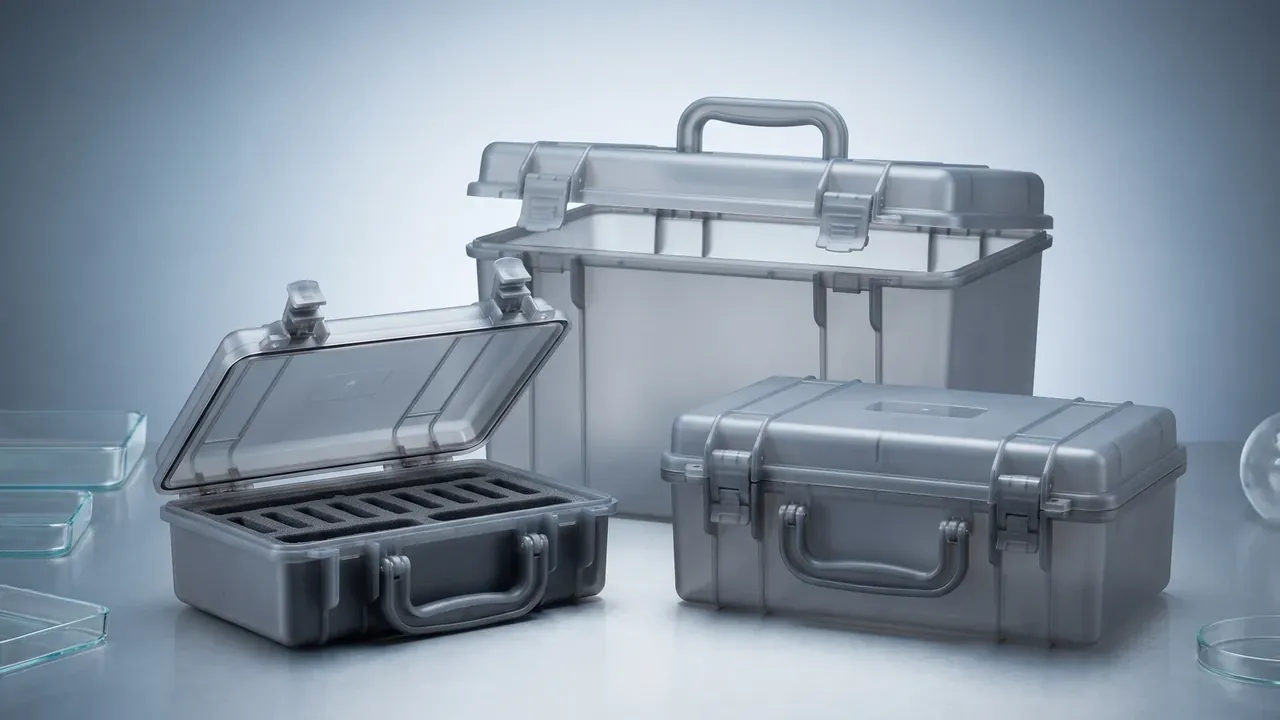
Quick answer: Acceptance of a waterproof safety case has two levels. Twelve samples carry the type test through immersion, drop, ageing and handle load; each delivery then samples 80 units with zero acceptance on critical items. Mixing the levels is the usual mistake.
Table of contents
- Two levels of waterproof safety case acceptance
- Six type tests and the order they run in
- Sampling plan and acceptance numbers
- Critical defects and disposition
- Retest, rework and release records
- FAQ
1. Two levels of waterproof safety case acceptance
A type test asks whether the design survives: frame, gasket, latches and handle under extreme conditions, decided once and kept as the baseline. Batch inspection asks whether this delivery is the same object, or whether material, cavity count or injection settings drifted.
Draw the boundary in the contract. Any change of structure, wall thickness, gasket supplier or cavity count triggers a new type test; a colour or print change does not. A waterproof safety case type test takes twelve samples, four from each of three cavities.
| Level | Trigger | Samples |
|---|---|---|
| Type test | New part or structural change | 12 |
| Batch inspection | Every delivery | 80 |
2. Six type tests and the order they run in
The order cannot be shuffled: pre-conditioning, immersion, drop, handle load, salt spray, cold opening. Ageing before immersion follows the real failure path; the reverse leaves the gasket saturated and the ageing result optimistic.
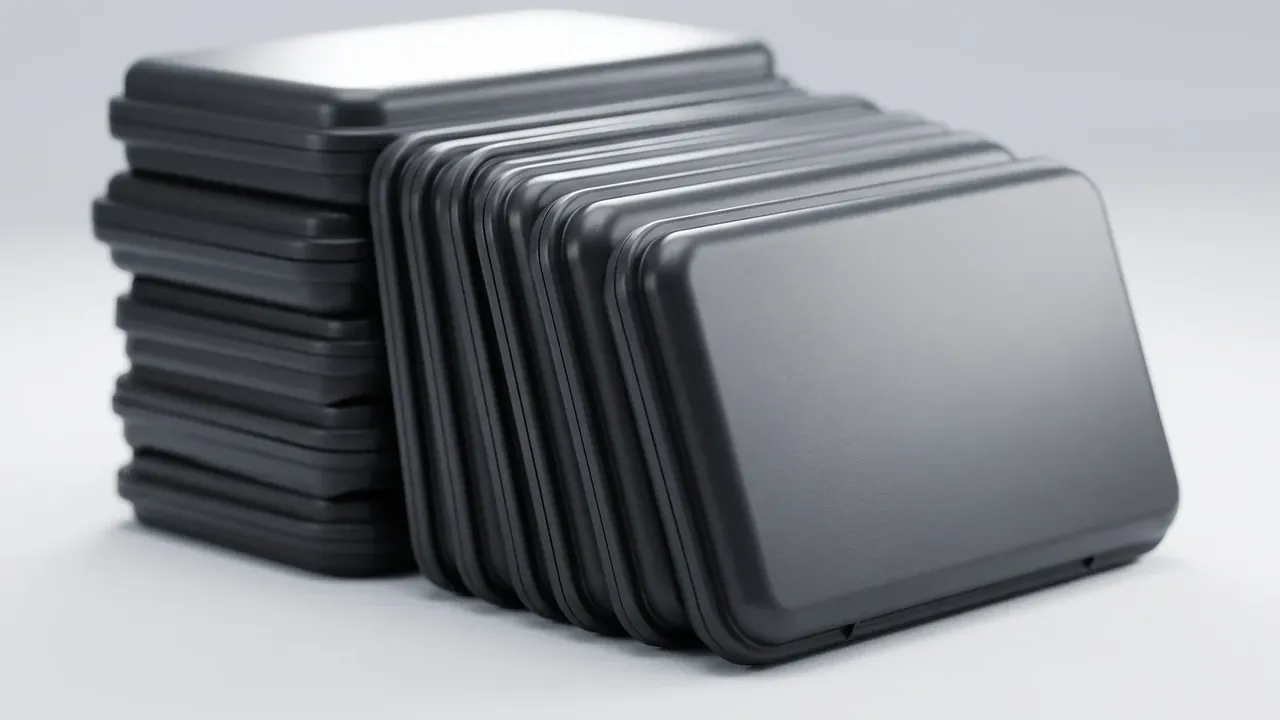
Pre-conditioning runs 72 hours at 80 °C. Immersion follows at 1 m above the lid for 30 minutes, then 15 minutes drying before opening. The drop is 1.8 m on one corner, and immersion repeats after it, where a shifted flange shows. Handle load is four times the payload, salt spray 480 hours with pitting capped at 0.1 mm, and cold opening runs three closures at minus 30 °C.
| Test | Condition | Verdict |
|---|---|---|
| Immersion | Lid 1 m under, 30 minutes | No ingress |
| Drop | 1.8 m, corner and faces | No crack |
| Salt spray | 480 hours | Pitting 0.1 mm or less |
| Cold opening | Minus 30 °C, 3 cycles | Latch intact |
3. Sampling plan and acceptance numbers
Fix a waterproof safety case sampling plan in writing and the verdict becomes repeatable. Under GB/T 2828.1 at inspection level II, a lot of 501 to 1200 units samples 80; below 500 it samples 50. Acceptance quality limits run at 0.65 for critical items with acceptance 0 and rejection 1, 1.5 for major, 4.0 for minor.
Only three items are critical: sealing, latches, handle, and one failure stops the lot. Major items are wall and cavity size, tolerating two failures; minor items are appearance, print and packing. Draw from the top, middle and bottom of the pallet, never from the row one cavity filled.
| Class | Items | AQL | Accept |
|---|---|---|---|
| Critical | Sealing, latches, handle | 0.65 | 0 |
| Major | Wall, cavity size | 1.5 | 2 |
| Minor | Appearance, print, packing | 4.0 | 5 |
4. Critical defects and disposition
A critical defect is never accepted by concession. Sealing, latches and handle decide how the body behaves in an incident, so a concession simply moves the risk to the user. Put that line in the contract.
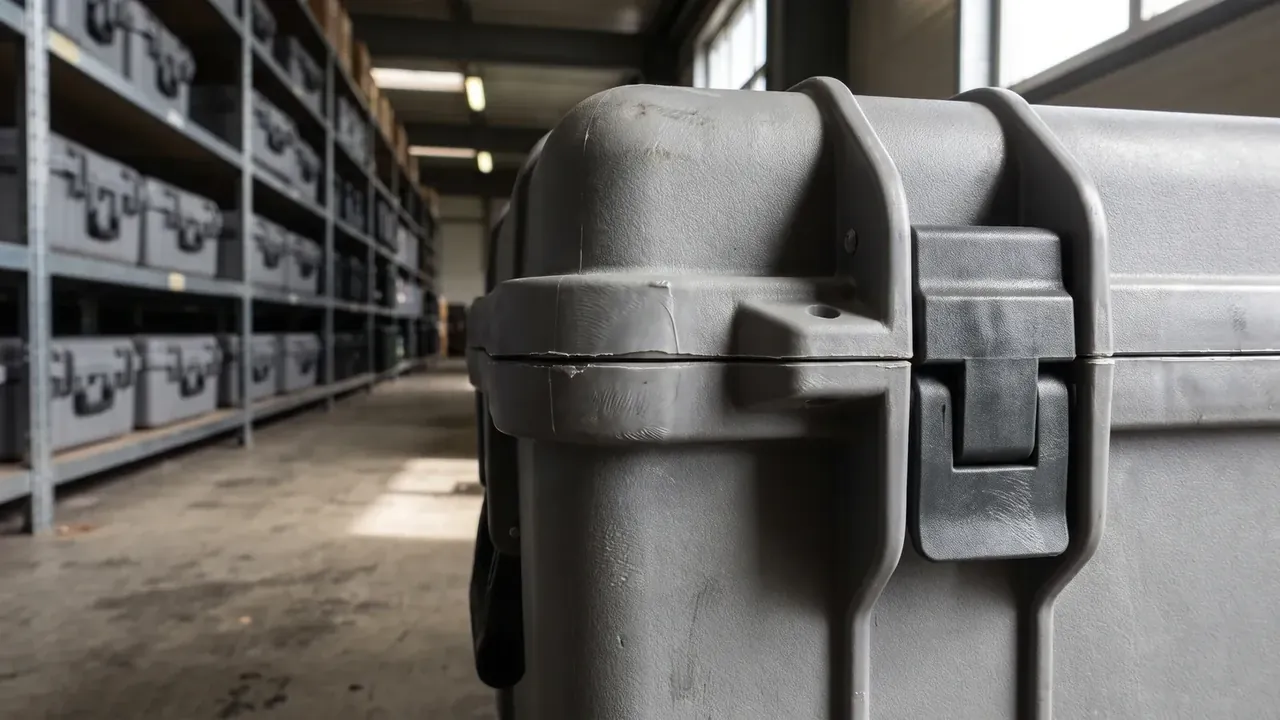
Disposition runs in four steps: segregate, label, review, rework. Segregation within 24 hours, labels carrying batch and cavity, review signed by quality, process and purchasing, one rework pass, then a fresh sample of 80 at zero. Major items may take a concession on a written deviation naming quantity, defect and use limit.
| Defect class | Disposition | Signature |
|---|---|---|
| Critical | Return the lot | Quality manager |
| Major | Concession with deviation | User and quality |
| Minor | Rework or sort | Line supervisor |
5. Retest, rework and release records
A waterproof safety case gets one retest only. A failed 80 doubles to 160 at zero acceptance; a single critical failure inside those 160 scraps the lot, which stops testing until a batch passes.
Release needs four papers: declaration of conformity, sampling record, a type test report inside its 24 months, and any deviation. A gasket change repeats immersion and salt spray; a structural change repeats everything. Every change gets a date and report number in the log.
Conclusion
The point of a standard is not severity but levels: the type test fixes the baseline, batch inspection guards consistency, critical items allow nothing. Write sample size, AQL and disposition into the contract and the argument ends. Do that and acceptance of a waterproof safety case becomes a rule anyone can repeat.
This article discusses only the container (case body) side of specifications and design intent, and does not cover any handling, loading or use of the contents.
Related Reading
- How a waterproof hard case is built and sealed
- Incoming inspection in military supply chains
- Production inspection for travel cases
- Standard documents a protective case maker keeps
Related Products
- 8 Series — Gun Cases; Military Equipment Cases; Camera Equipment Cases; Drone Cases; Watch Cases; Knife Cases; First Aid Cases; Electronics Equipment Cases
- WL8-2812 PP Gun Case — model WL8-2812
- All protective cases and toolboxes: 7 series, 158 models