

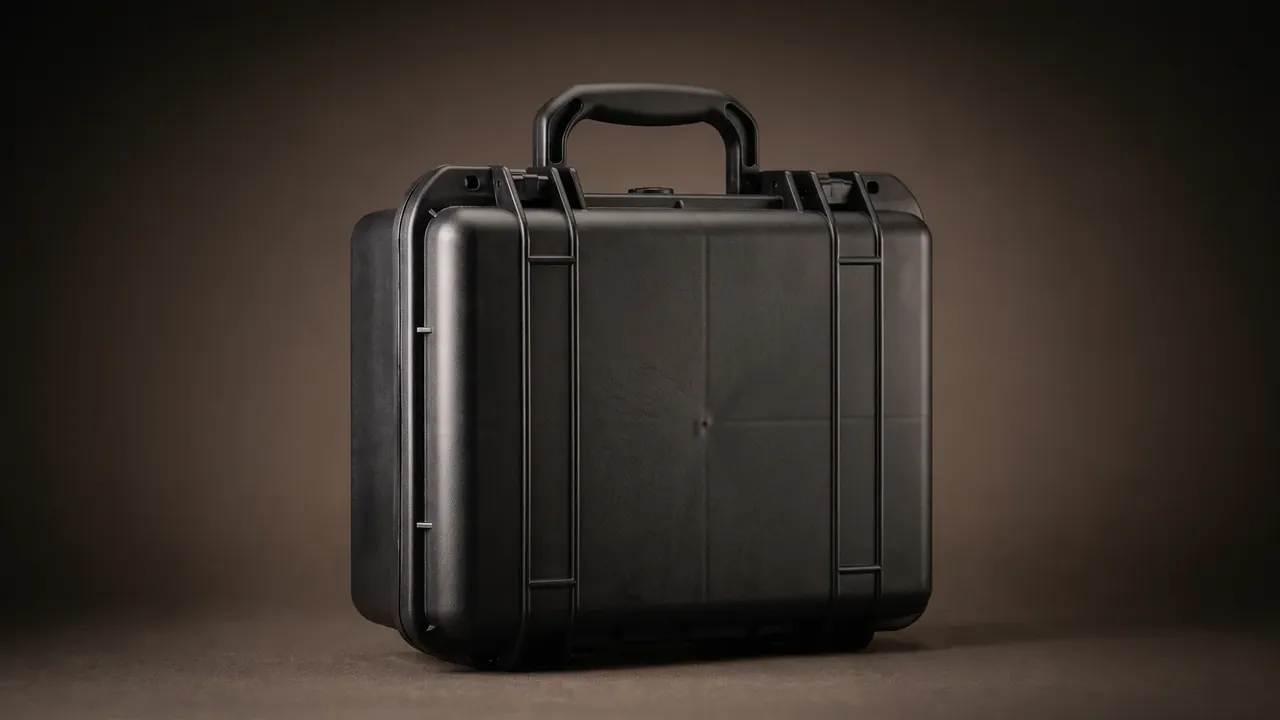
Quick answer: A Waterproof military case is accepted against an environmental spectrum, not an appearance score. Heat at 55 °C for 48 hours, cold at −46 °C for 24 hours and three thermal shocks come first; immersion at 1.5 metres for 60 minutes, 96 hours of salt spray and six hours of sand dust follow.
Table of contents
- Where Waterproof Military Case Acceptance Standards Come From
- High and Low Temperature and Thermal Shock
- Immersion Salt Spray and Sand Dust
- Vibration Drop and Stacking
- Latches Handle and Lot Marking
- FAQ
1. Where Waterproof Military Case Acceptance Standards Come From
The standard for a Waterproof military case is a chain. One end is the service spectrum: heat, cold, thermal shock, damp heat, salt spray, sand dust, mould, vibration, drop, each tied to a method number.
Sources are the GJB 150A series and MIL-STD-810. A method number says how to run a test, never how far a product must pass.
| Test | Condition | Main verdict |
|---|---|---|
| Heat | 55 °C, 48 h | no softening, gasket set ≤20% |
| Cold | −46 °C, 24 h | no crack, no brittle latch |
| Thermal shock | −46 to 71 °C, 3 cycles | no crack at the latch boss |
| Damp heat | 40 °C, 95% RH, 240 h | no red rust, gain ≤2 g |
2. High and Low Temperature and Thermal Shock
Heat runs at 55 °C for 48 hours, like a closed vehicle. Three verdicts: no softening, gasket set under 20 percent, latch force within 15 percent of its room value. That line is the one most often dropped.
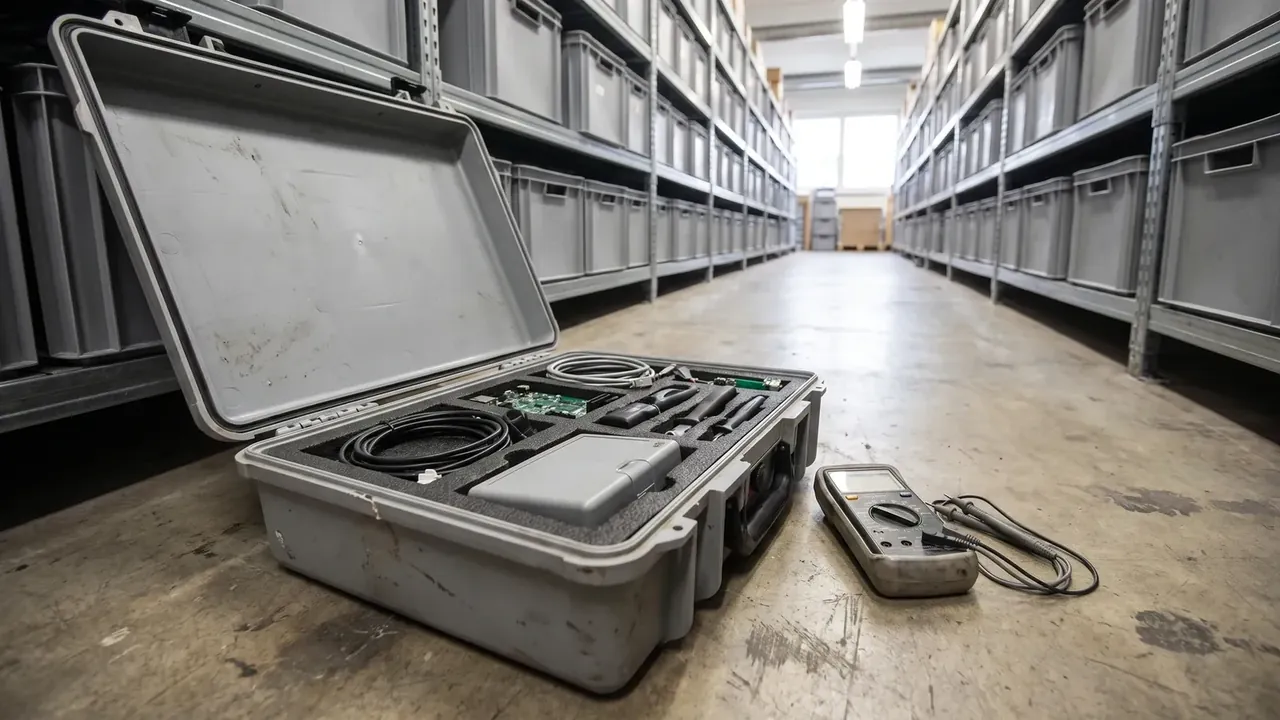
Cold runs at −46 °C for 24 hours, then a 1.2 metre drop within five minutes: no crack, no latch release, no brittle hinge. Rotomoulded HDPE keeps toughness below −40 °C while moulded ABS turns brittle.
Thermal shock runs −46 to 71 °C over three cycles of four hours: no crack at the latch boss root, where wall thickness changes fastest.
3. Immersion Salt Spray and Sand Dust
Immersion matters more than any IP claim: 1.5 metres for 60 minutes, above the 1 metre of IP67, with under 1 g of gain on weighed paper. The case is opened at once: a shell can pass and drip from the groove.
Salt spray is neutral for 96 hours at 5 percent sodium chloride, accepted at grade 9 or better, plated parts grade 7. Sand dust runs 1.5 g per cubic metre at 8.9 m per second for six hours: latches must work, with no grit in the sealing face.
| Test | Condition | Verdict | After the test |
|---|---|---|---|
| Immersion | 1.5 m, 60 min | gain ≤1 g | check groove at once |
| Salt spray | neutral, 96 h | grade 9 or better | check latches and pins |
| Sand dust | 1.5 g/m³, 8.9 m/s, 6 h | latches work, no grit | teardown the gasket |
4. Vibration Drop and Stacking
Vibration sweeps 5 to 500 Hz for one hour per axis at 1.5 g: fasteners stay tight, latches do not spring, the liner does not separate.
For a Waterproof military case, drop is the costliest item: 25 kg payload, 1.2 metres, 26 drops over six faces, twelve edges and eight corners, from four hours at −40 °C. No through crack, no shifted seal, no released latch, opening force still 50 to 150 N.
Stacking applies 500 kg for 24 hours, equal to four loaded cases of the same size: 3 mm of top deflection at most, 1.5 mm residual set. A case that fails stacking loses gasket rebound and water resistance.
5. Latches Handle and Lot Marking
Latches are accepted over 10,000 cycles, preload logged every 1,000, a fall beyond 15 percent read as short life. Walls are at least 3.0 mm with no point below 2.7 mm. The handle carries 40 kg for 10 minutes.
Marking starts traceability: lot code, material grade, ingress rating and month of manufacture, moulded or laser-etched against 50 ethanol wipes. Rework takes a suffix, not an overwritten code.
| Inspection | Scope | Frequency | Verdict |
|---|---|---|---|
| Type test | all spectrum items | new design or material | all pass |
| Factory test | appearance, size, air, marking | every lot | tiered defects |
| Re-test | immersion, latch life | two years or after rework | single item pass |
Conclusion
A Waterproof military case standard turns an environmental spectrum into reproducible numbers: temperature and hours, depth and minutes, wind speed, load and cycles. Method gives the procedure, the clause the magnitude. Immersion gain, salt grade and stacking set are settled on the bench, which is how a Waterproof military case proves its rating.
This article discusses only the container (case body) side of specifications and design intent, and does not cover any handling, loading or use of the contents.
Related Reading
- Acceptance limits for military packing boxes
- Rotomoulding and wall control for military cases
- Securing military cases for air transport
- How a military case body is built
Related Products
- 8 Series — Gun Cases; Military Equipment Cases; Camera Equipment Cases; Drone Cases; Watch Cases; Knife Cases; First Aid Cases; Electronics Equipment Cases
- WL8-2812 PP Gun Case — model WL8-2812
- All protective cases and toolboxes: 7 series, 158 models