

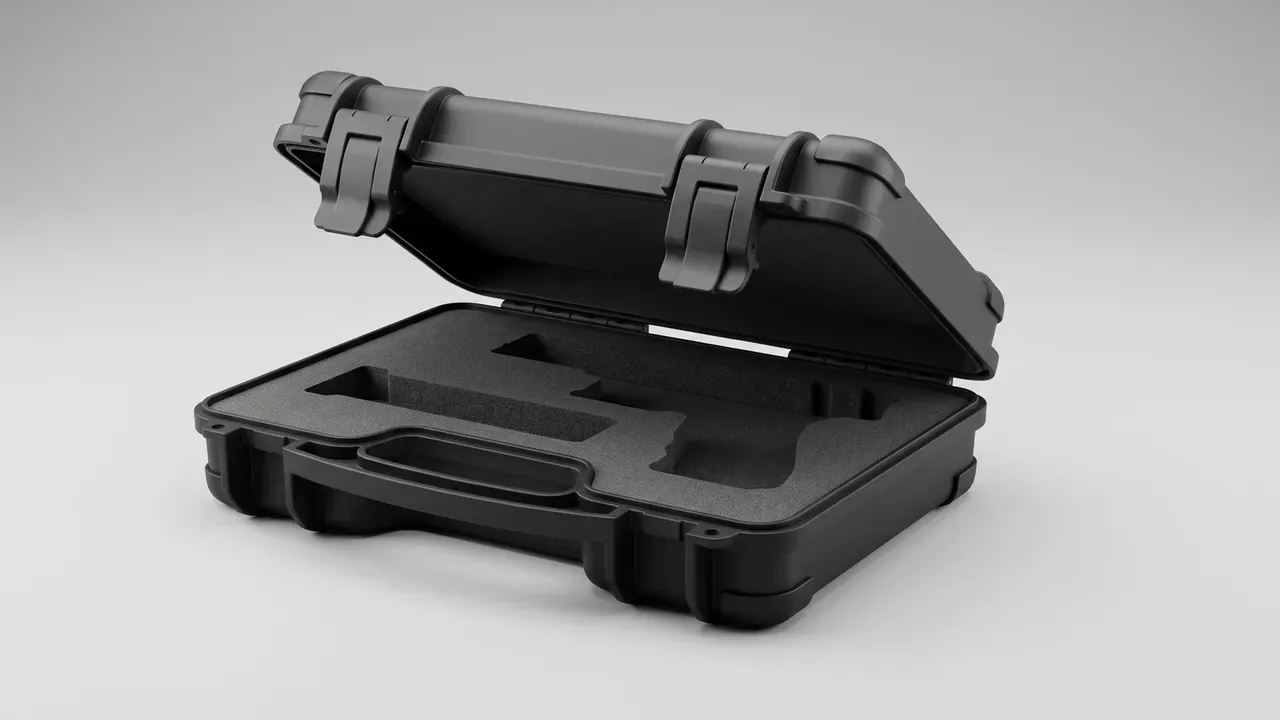
Quick answer: Accept a waterproof gun case against numbers, not one IP rating: cavity tolerance ±1.5 mm, O-ring compression 25.7%, latch retention 120 N, and cavity shift under 2 mm after a 1.2 m drop.
Table of contents
- What a Waterproof Gun Case Acceptance Test Must Cover
- Internal Cavity and Foam Fit Checks
- Seals, Relief Valve and Latch Verification
- Hardware and Hinge Mechanical Checks
- Immersion, Drop and Salt Spray Criteria
- FAQ
1. What a Waterproof Gun Case Acceptance Test Must Cover
Buyers of a waterproof gun case often settle for one line on a certificate. An IPX7 mark describes an outcome, not a process: one report arrives, and nobody learns whether the next batch matches.
A workable scheme splits the case into three tracks — shell, foam, hardware — each with its own thresholds, merged at whole-case testing. These map onto five gates: incoming, first article, patrol, final inspection, type test.
| Gate | Object | Basis for judgement | Record |
|---|---|---|---|
| Incoming | PP granulate, foam, gasket | Density, melt index, hardness | Certificate |
| First article | First moulding, first foam set | Cavity size and position, latch force | Article sheet |
| Patrol | 5 units every 2 hours | Appearance, flash, groove, valve flow | Patrol log |
| Final | Assembled case | Gaps, torque, air tightness | Final report |
| Type test | Sampled cases | Immersion, drop, spray, cycling | Test report |
Type-test samples never return to stock: a submerged or dropped case looks intact, but its seal is already compressed.
2. Internal Cavity and Foam Fit Checks
Take a 460 mm × 350 mm × 160 mm envelope case: cavity length and width should hold ±1.5 mm, depth ±1.0 mm, measured after 24 hours at 23 °C.
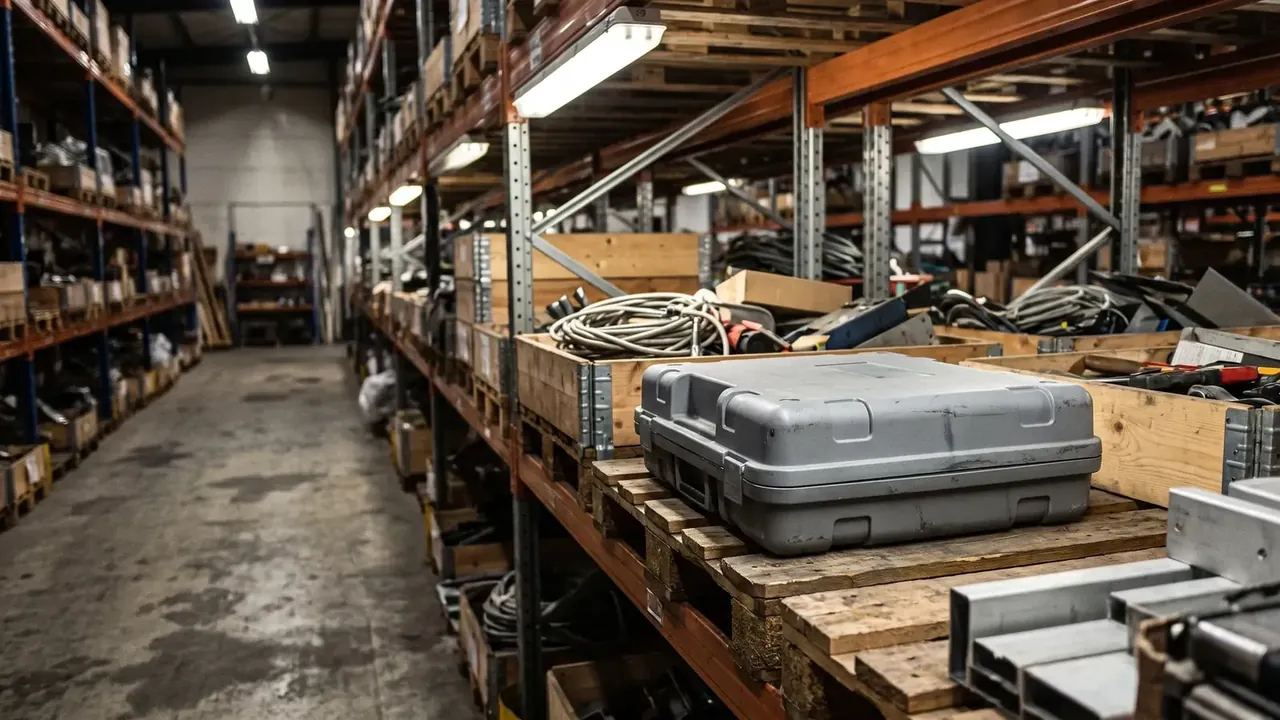
Allow 0.5 to 1.0 mm clearance per side: below 0.5 mm the item will not seat, above 1.0 mm it slides. Load a master sample, close the lid, shake the case; no rattle means pass.
Foam needs two figures: apparent density of 38 kg/m³ plus or minus 2 kg/m³, and compression set below 5% after 22 hours at 23 °C under 25% compression. Foam that passes density but fails set collapses on the first trip.
3. Seals, Relief Valve and Latch Verification
The object under judgement is the ring and its groove. A waterproof gun case typically uses a nitrile O-ring of 3.5 mm cord in a 2.6 mm deep, 4.2 mm wide groove, giving 25.7% compression inside the 20% to 30% band. Change any of the three and immersion must be repeated.
Specify a 0.4 mm radius at the groove mouth and Ra 1.6 on the walls, or the ring is cut by a sharp edge. The relief valve needs three checks: cracking near 3.5 kPa, 0.6 L/min at 10 kPa, no leak with 20 kPa outside for 60 seconds. Latches hold 120 N each, sides within 20 N.
4. Hardware and Hinge Mechanical Checks
Hinge hardware is what visual inspection forgives most easily. A waterproof gun case hinge pin is usually 304 stainless, 4 mm diameter, with 0.10 to 0.15 mm clearance per side: too tight binds in cold, too loose lets the lid rock.
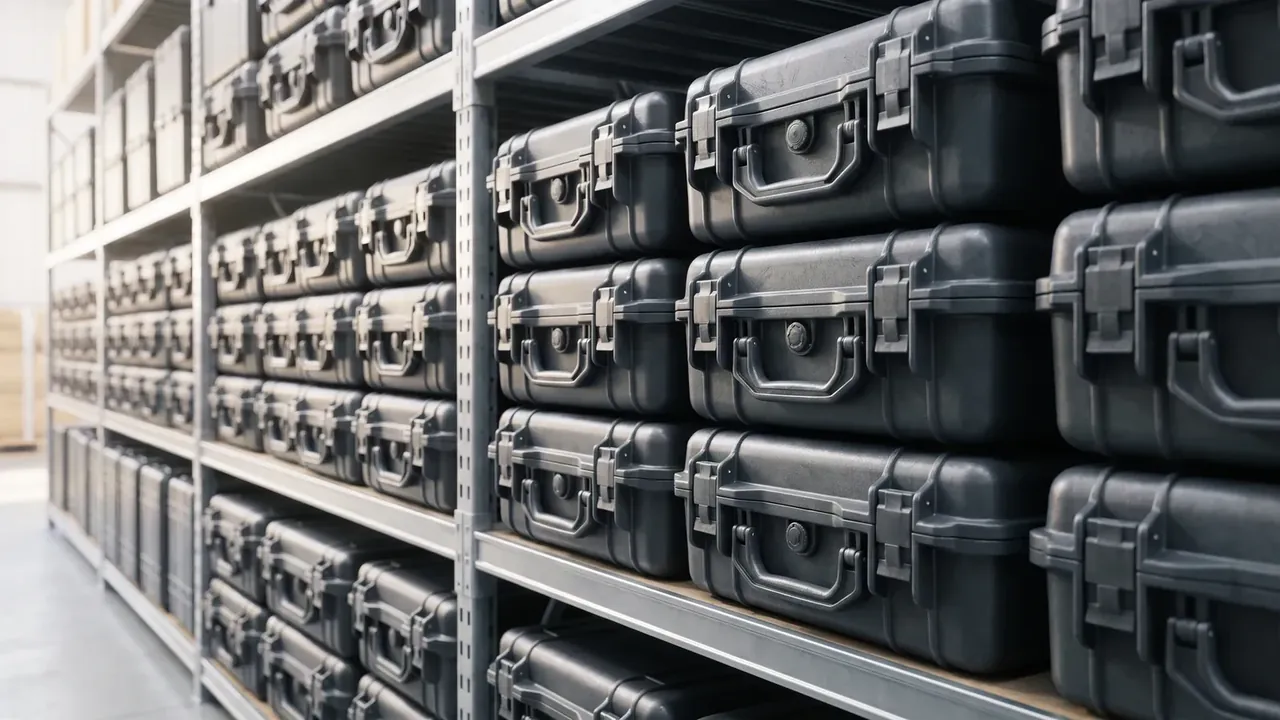
Torque belongs in the work instruction: 1.8 N·m for an M5 screw into a plastic boss, 1.2 N·m for an M4. Handles take twice working weight: 24 kg for 10 minutes on a 12 kg case. Metal parts then face 48 hours of salt spray.
5. Immersion, Drop and Salt Spray Criteria
Whole-case testing merges the tracks: tightness screens missing gaskets, immersion follows, destructive tests last.
| Test | Condition | Samples | Pass criteria |
|---|---|---|---|
| Air tightness | 20 kPa held 60 s | 100% | Drop ≤ 0.5 kPa |
| Short immersion | 1 m, 30 min, water within 5 °C | 3 | No water or trace |
| Full drop | 1.2 m, six faces, three edges, one corner, 8 kg ballast | 3 | No cracks, shift ≤ 2 mm |
| Thermal cycling | -20 to 55 °C, 4 h each, 5 cycles | 2 | Seal recovers |
| Salt spray | 48 h continuous | 3 sets | No red rust |
Drop corners, then edges, then faces, aiming at the weakest bottom corner. After 30 minutes, measure shift at four corners and the centre. Sampling follows GB/T 2828.1 level II, AQL 1.0 major, 2.5 minor.
Conclusion
Fix the cavity tolerance, compression ratio, latch retention, drop height and AQL level, and both sides know what to check and reject. Run the table across three batches, and a waterproof gun case becomes consistent rather than occasionally good.
This article discusses only the container (case body) side of specifications and design intent, and does not cover any handling, loading or use of the contents.
Related Reading
- Acceptance criteria for waterproof hard cases
- Inspection points for firearm transport cases
- How a gun case production audit works
- Assembly quality control for case bodies
Related Products
- 8 Series — Gun Cases; Military Equipment Cases; Camera Equipment Cases; Drone Cases; Watch Cases; Knife Cases; First Aid Cases; Electronics Equipment Cases
- WL8-2812 PP Gun Case — model WL8-2812
- All protective cases and toolboxes: 7 series, 158 models