

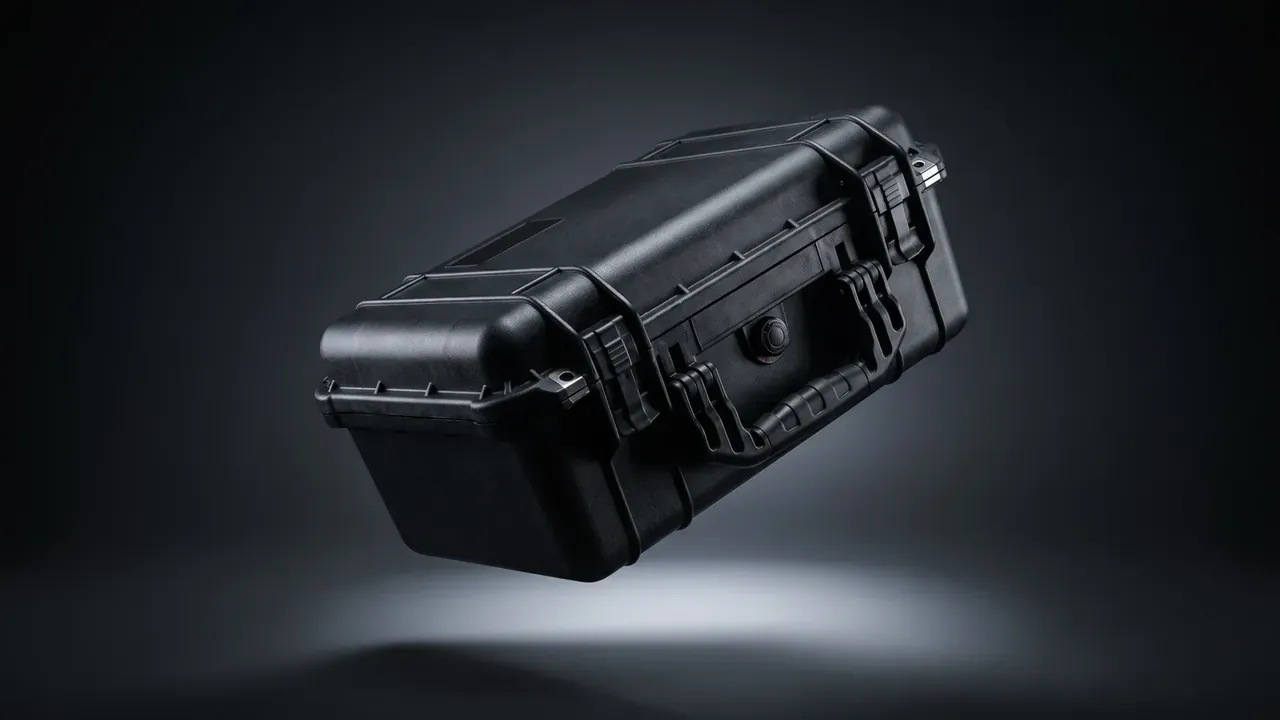
Quick answer: Inspect a waterproof ammunition box in three stages: load, seal, test. Check 3.5 mm walls, 400 kg on a five-high stack, 30% gasket compression, and no cracks after a 1.0 m corner drop.
Table of contents
- How the Inspection Sequence for a Waterproof Ammunition Box Is Ordered
- Body Strength and Stacking Load Criteria
- Seals, Desiccant and Pressure Equalisation Checks
- Drop, Vibration and Thermal Cycling Tests
- Marking, Traceability and Retained Samples
- FAQ
1. How the Inspection Sequence for a Waterproof Ammunition Box Is Ordered
What separates a waterproof ammunition box from an ordinary bin is load, not shape. A 600 mm × 400 mm × 300 mm unit weighs 6.2 kg empty and often 25 kg loaded.
Inspection follows that stress path: walls, seal, then destructive tests. Reverse it and immersion on a dropped case cannot separate an existing leak from drop damage.
| Stage | Item | Criterion | Sample |
|---|---|---|---|
| Structure | Walls, base, ribs | 3.5 mm wall, 5.0 mm base | 3 per batch |
| Load | Five-high stack | 400 kg, 24 h, set ≤ 3 mm | 1 set per batch |
| Seal | Gasket, valve | 30% compression, 4.0 kPa | 3 per batch |
| Environment | Drop, vibration, cycling, spray | Section 4 | Type test |
| Marking | Batch code, mould, date | 12-character code legible | 100% |
2. Body Strength and Stacking Load Criteria
Thicker walls are not automatically better. Standard units run 3.5 mm on walls and 5.0 mm on the base, corners thickened to 6 mm, vertical ribs every 60 mm. Past 5 mm the weight merely transfers to the case below.
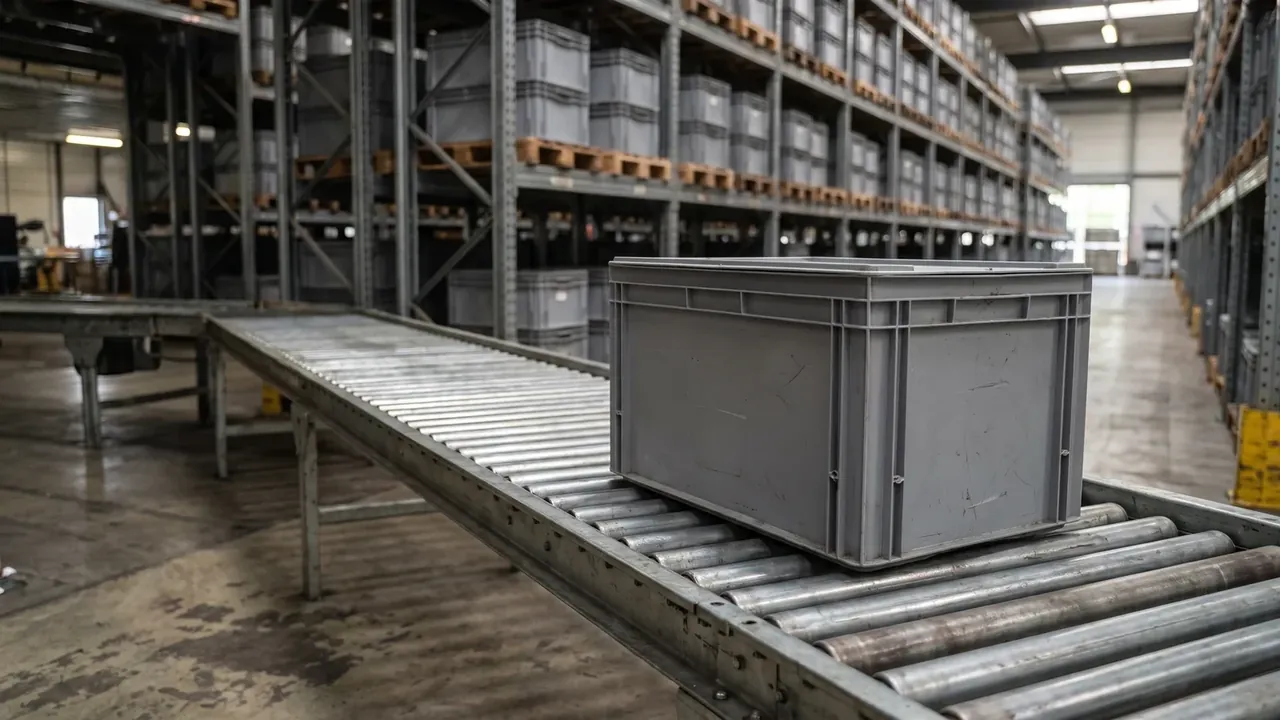
A five-layer stack puts 400 kg on the bottom unit for 24 hours, with permanent base deflection at or below 3 mm. For a waterproof ammunition box that beats wall thickness, because creep depends on time.
Handles are tested separately: 50 kg on a 25 kg case for 10 minutes, with 2 mm movement at most.
3. Seals, Desiccant and Pressure Equalisation Checks
Waterproofing here means moisture protection. The usual spec is a double-lip EPDM gasket, Shore A 65, in a 6 mm groove at 30% compression; check lip, joint and corners.
A 120 mL desiccant well holding 100 g of molecular sieve must keep humidity at or below 40% RH after 72 hours at 40 °C and 90% RH outside; replace gaskets compressed below 25%.
The pressure valve should crack near 4.0 kPa, pass 0.8 L/min at 10 kPa, and hold 25 kPa outside for 60 seconds. Without it, cooling from 60 °C to -25 °C leaves the lid held by vacuum.
4. Drop, Vibration and Thermal Cycling Tests
Write environmental criteria item by item. Drop a waterproof ammunition box 1.0 m on a corner and an edge with 20 kg of sand inside; sweep 10 to 55 Hz at 0.75 mm for 30 minutes per axis; cycle -25 °C to 60 °C, 3 hours each, six times.
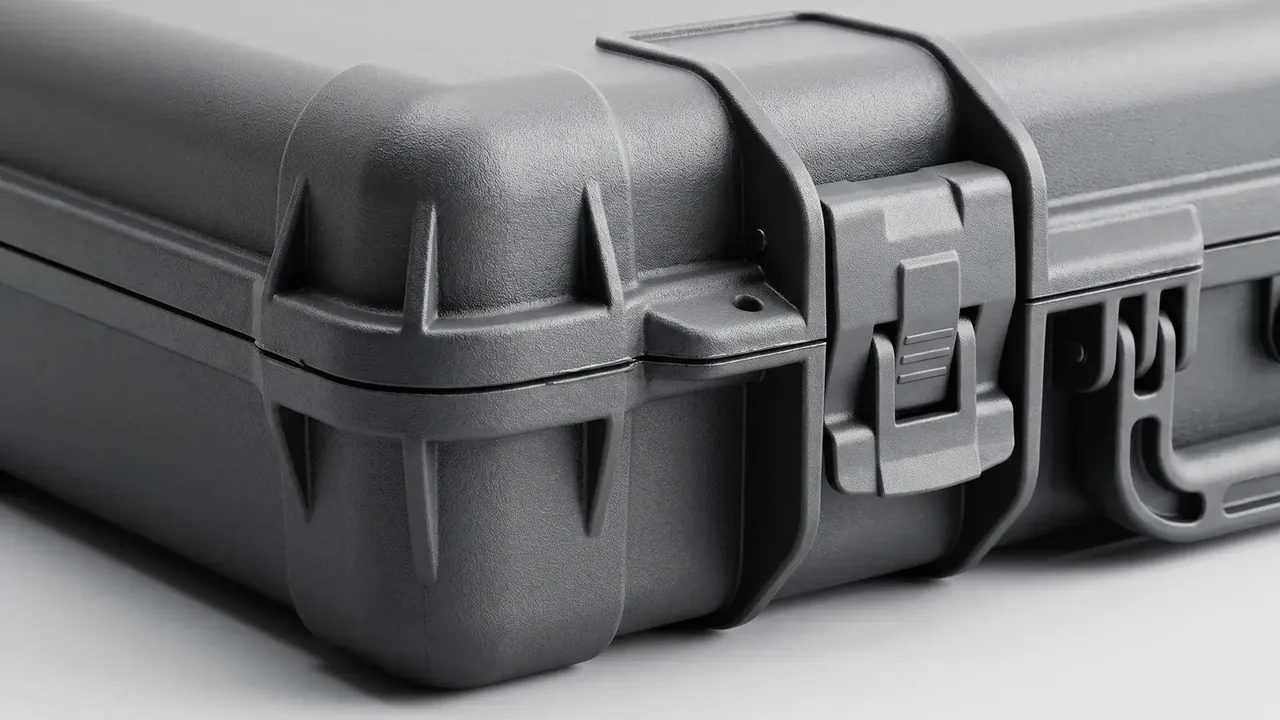
Drop results are not judged on appearance: check for cracks, confirm the latches work, then repeat the air test. Corner cracks show only under raked light.
After six cycles, rest two hours and measure gasket set, at or below 15%. Vibration exposes loose screws and hinge pins.
| Test | Condition | Samples | Pass criteria |
|---|---|---|---|
| Corner drop | 1.0 m, corner and edge, 20 kg | 3 | No cracks, latches work |
| Sweep vibration | 10 to 55 Hz, 0.75 mm, 30 min per axis | 2 | No loose screws |
| Thermal cycling | -25 °C to 60 °C, 3 h each, 6 cycles | 2 | Gasket set ≤ 15% |
| Neutral salt spray | 72 h continuous | 3 sets | No red rust |
| Stack hold | 5 layers, 400 kg, 24 h | 5 | Base set ≤ 3 mm |
5. Marking, Traceability and Retained Samples
Leave a 60 mm × 40 mm label area and print a 12-character code: four for year and month, four for mould, four for serial. Use laser or in-mould labelling; inkjet wipes off with solvent.
Labels must survive 50 alcohol wipes and 24 hours between -30 °C and 80 °C without lifting; in-mould labels last as long as the case.
Retain two cases per batch for 24 months; sampling follows GB/T 2828.1 level II at AQL 1.5 major, 4.0 minor.
Conclusion
Fix 3.5 mm walls, 400 kg held 24 hours, 30% gasket compression, a 1.0 m corner drop and 72 hours of salt spray, and both sides know what to reject. Run those items across three batches, and a waterproof ammunition box becomes dependable, not merely compliant.
This article discusses only the container (case body) side of specifications and design intent, and does not cover any handling, loading or use of the contents.
Related Reading
- Structure and specification limits for ammunition boxes
- How the seal on a waterproof hard case is designed
- Selection points for moisture-proof cases
- Routine maintenance for ammunition storage containers
Related Products
- 8 Series — Gun Cases; Military Equipment Cases; Camera Equipment Cases; Drone Cases; Watch Cases; Knife Cases; First Aid Cases; Electronics Equipment Cases
- WL8-2812 PP Gun Case — model WL8-2812
- All protective cases and toolboxes: 7 series, 158 models