

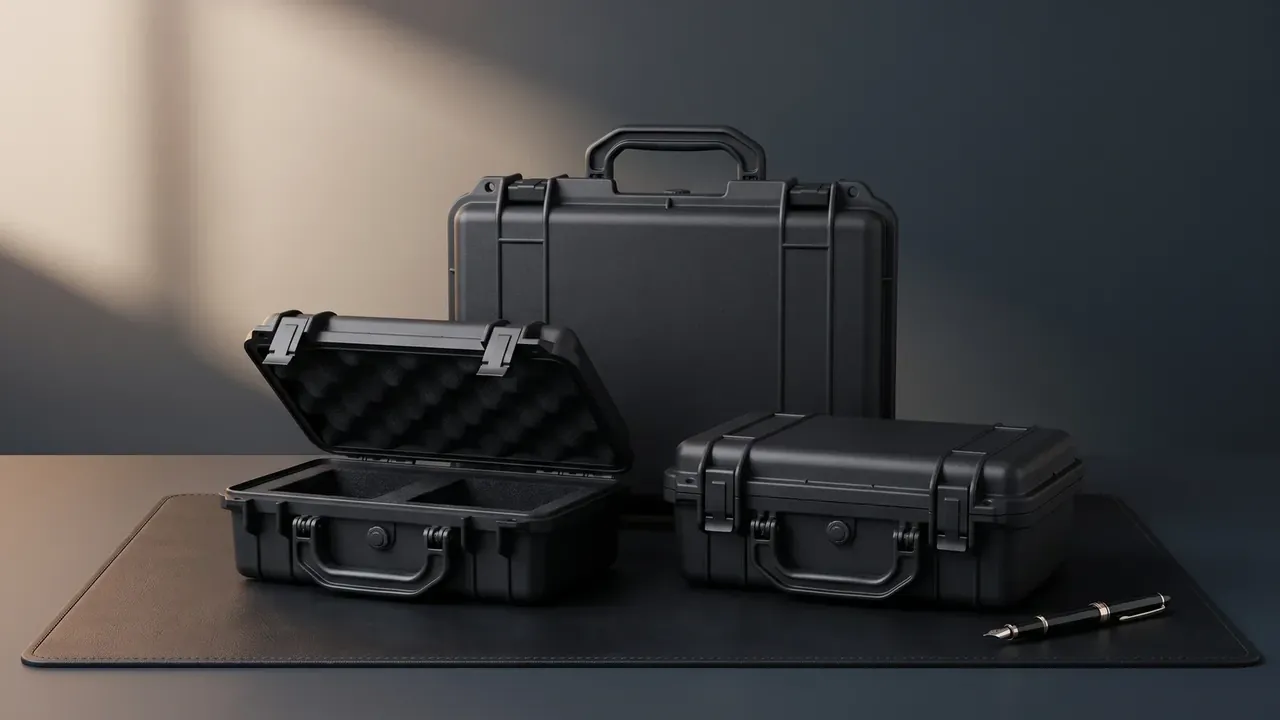
Quick answer: A waterproof chemical case is accepted in four layers: incoming, first-off, patrol and type test. Density of 0.945 to 0.960 g/cm³, compression of 22% to 28% and a 1.5 kPa drop at 20 kPa are the limits to measure first.
Table of contents
- How Acceptance Checks for a Waterproof Chemical Case Are Layered
- Verifying Resin and Chemical Resistance
- Seal Geometry and Air-Holding Tests
- Drop, Stacking and Salt Spray Judgments
- Sampling Plans and Batch Decisions
- FAQ
1. How Acceptance Checks for a Waterproof Chemical Case Are Layered
Disputes over a waterproof chemical case rarely concern whether water entered, only who owns the leak, so the standard cuts responsibility at the process step.
The type layer is usually empty: the order names an immersion grade and nothing records media compatibility. Its samples are destructive, so they are built apart.
| Layer | Object | Criterion | Frequency |
|---|---|---|---|
| Incoming | HDPE, gaskets | 0.945 to 0.960 g/cm³, 70 Shore A | Every batch |
| First-off | First shot per mould | Wall, groove, latch force | Mould change |
| Patrol | Running output | Appearance, 20 kPa hold | 5 units per 2 hours |
| Type test | Complete case | Soak, drop, stack, spray | 6 months |
2. Verifying Resin and Chemical Resistance
Resin first, wall second. The body is high-density polyethylene held between 0.945 and 0.960 g/cm³, with walls at 3.0 to 4.5 mm; ultrasonic gauging fails below 2.8 mm.
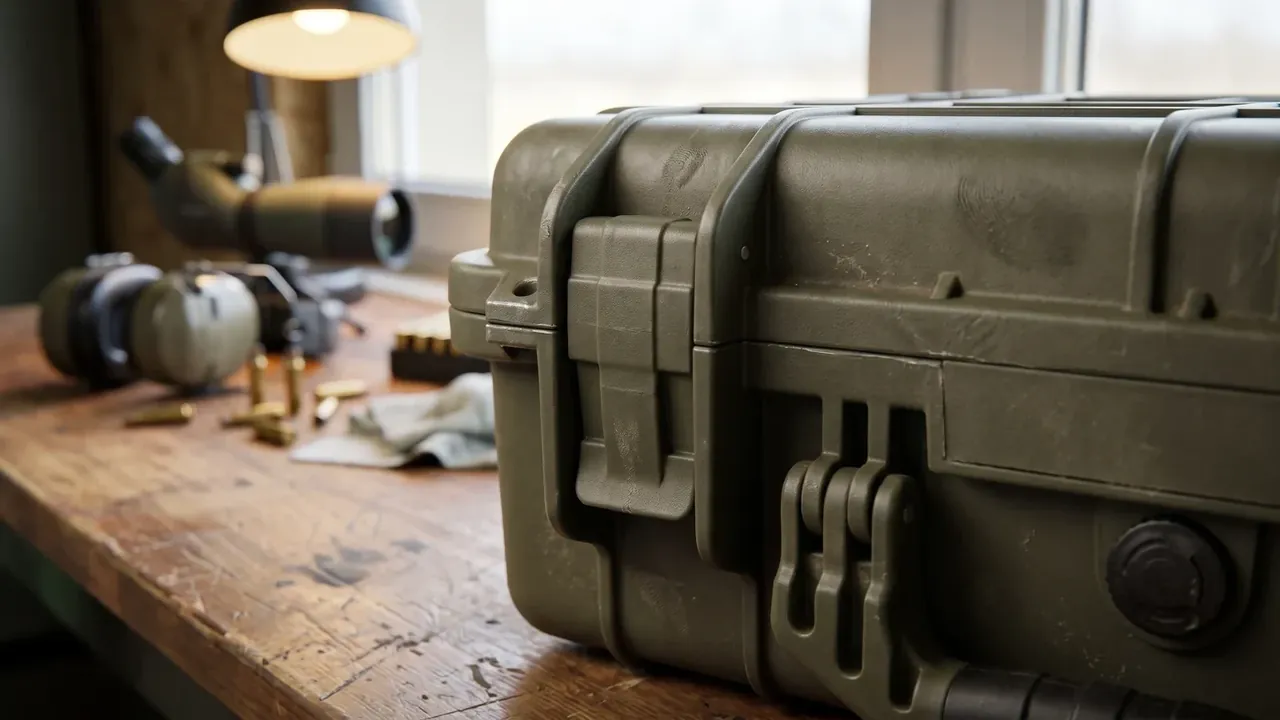
Media resistance needs a soak rather than a datasheet. Coupons from the same cavity sit at 40 °C for 72 hours and must show mass change within 3%; the assembled waterproof chemical case then takes a 24-hour internal fill.
| Media | Concentration | Condition | Limit |
|---|---|---|---|
| Sulphuric acid | 30% | 40 °C, 72 h | Mass change ≤ 3% |
| Sodium hydroxide | 40% | 40 °C, 72 h | Shift ≤ 5 Shore A |
The gasket fails before the body does: nitrile suits oil, EPDM covers acids, and fluoroelastomer resists solvents at four times the cost.
3. Seal Geometry and Air-Holding Tests
Groove geometry sets compression. A groove 8.0 mm wide and 5.0 mm deep for a 6.0 mm cord lands at 22% to 28% when the lid closes; past 30% the cord takes a permanent set.
Air holding is judged on positive pressure: charge to 20 kPa, stabilise 30 seconds, then allow a 1.5 kPa drop in 60 seconds. Negative pressure does not convert, so the report must name it.
The valve is the item inspectors skip: it opens at 8 kPa differential, and the back-flow check is to fill the case, stand it two hours and look for water.
4. Drop, Stacking and Salt Spray Judgments
Mechanical tests on a waterproof chemical case run least to most destructive, so stacking precedes drop. The sample spends four hours at minus 18 °C, then takes six faces, three edges and one corner from 1.2 m.
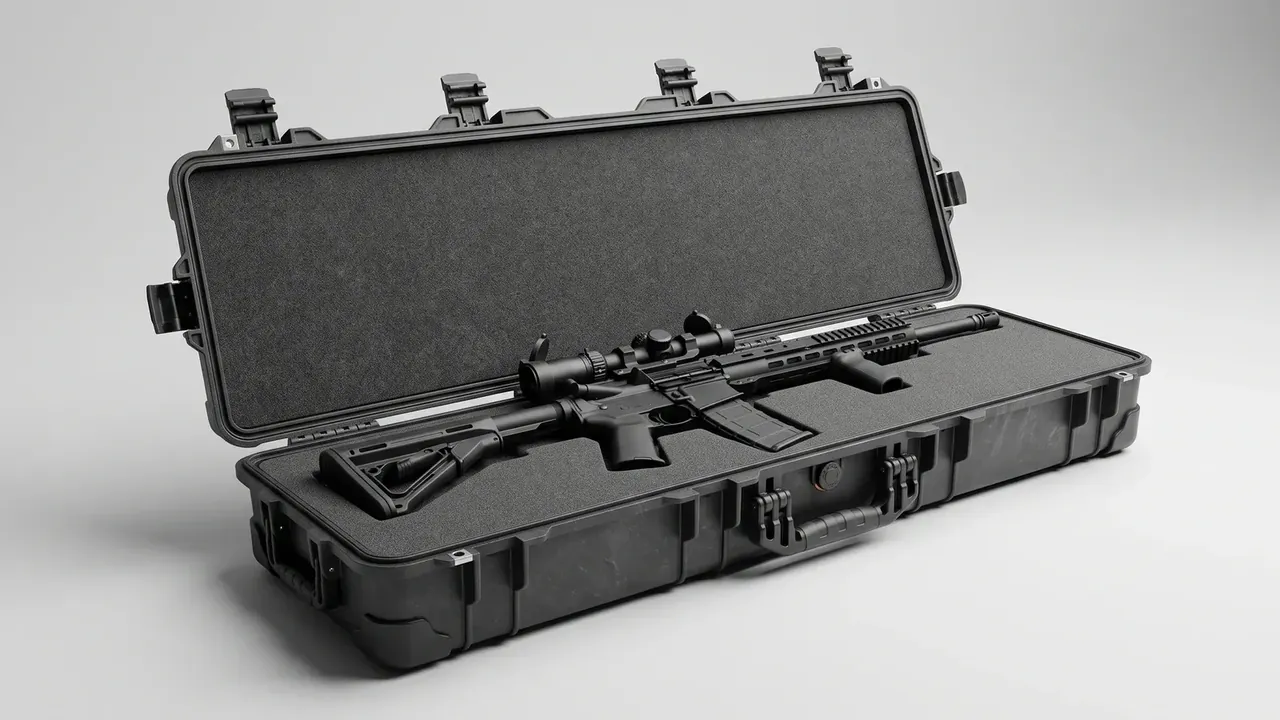
Stacking puts three tiers up with 180 kg on the top lid for 48 hours, with height change inside 2 mm.
| Test | Condition | Limit |
|---|---|---|
| Drop | −18 °C, 1.2 m, six faces | No through-crack |
| Stacking | 3 tiers, 180 kg, 48 h | Change ≤ 2 mm |
| Salt spray | Neutral, 48 h | No red rust |
5. Sampling Plans and Batch Decisions
For a waterproof chemical case, sampling follows an adjusting attribute plan at general level II. Appearance carries an AQL of 2.5 and function 0.65, judged apart, and exceeding Ac on either rejects the batch.
| Lot size | Sample | Appearance Ac / Re | Function Ac / Re |
|---|---|---|---|
| 151 to 280 | 32 | 2 / 3 | 0 / 1 |
| 281 to 500 | 50 | 3 / 4 | 0 / 1 |
Every sample carries a number linked to machine, cavity and shift, kept three years. Solvent service needs surface resistance of 10 to the 6th to 10 to the 9th ohm, and labels must survive 50 solvent rubs.
Conclusion
An acceptance standard is not a filter for rejecting suppliers; it turns each judgment into a repeatable action. Tie the four layers into one chain and batch variation stays inside a band you can defend, which is what a waterproof chemical case standard should deliver.
This article discusses only the container (case body) side of specifications and design intent, and does not cover any handling, loading or use of the contents.
Related Reading
- Military chemical agent container standards
- Waterproof hard case standards: ratings and tests
- Military supply case inspection
- Case assembly quality control
Related Products
- 8 Series — Gun Cases; Military Equipment Cases; Camera Equipment Cases; Drone Cases; Watch Cases; Knife Cases; First Aid Cases; Electronics Equipment Cases
- WL8-2812 PP Gun Case — model WL8-2812
- All protective cases and toolboxes: 7 series, 158 models