

Quick answer: Standards for a military chemical agent container reduce to four measurable groups: sealing, compatibility, mechanics and records. All four need numbers before acceptance means anything.
Table of contents
- How many standards does a military chemical agent container answer to
- Sealing: the IP rating is only the first layer
- Material and wall thickness: chemical resistance versus impact
- Venting: managing pressure differential with one valve
- Marking, numbering and acceptance records
- FAQ
1. How many standards does a military chemical agent container answer to
Three lines matter once the paperwork is stripped: transport regulation, military standard and general test method. The first sorts cases into packing grades by hazard; the second writes environmental endurance; the third prescribes how stacking, drops and vibration are run.
Regulation asks whether a case holds a spill inside a boundary, so drop height and closure strength get the most words. Military standards care about damp heat and salt fog; test methods only set tiers and height.
| Line | What it governs | Case-side item |
|---|---|---|
| Transport regulation | Packing grade, drop, sealing | Closure strength, pressure decay |
| Military standard | Environmental endurance | Thermal cycling, damp heat, salt fog |
2. Sealing: the IP rating is only the first layer
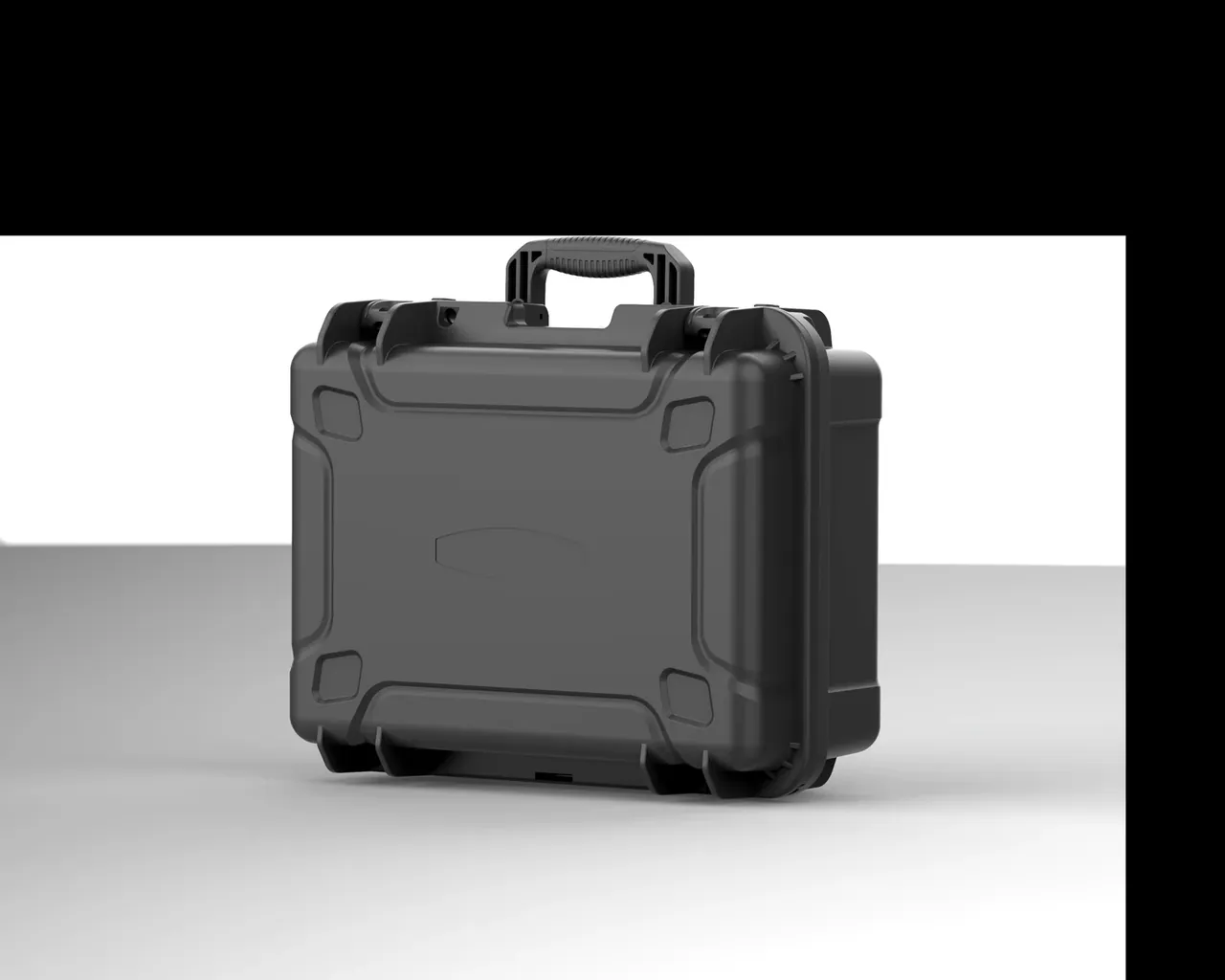
The first IP digit covers dust, six meaning dust-tight; the second covers water, five for jets, seven for immersion, eight for continuous. IP67 means one metre for thirty minutes; IP68 leaves depth and duration to the parties, so an unqualified claim is no specification. IP judges liquid, not gas: a splash-proof gasket may still pass vapour.
Hence the added decay test: charge to twenty kilopascals, hold sixty seconds, allow one kilopascal of drop, tiered by volume. It catches weld lines and latch bosses that immersion misses.
The sealing face lives on compression. Silicone and EPDM sit best at twenty to thirty percent; below fifteen the surface stays open, above thirty-five the rubber sets.
| Criterion | Typical value | Method |
|---|---|---|
| Protection rating | IP67, one metre, thirty minutes | Open and inspect after immersion |
| Pressure decay | 20 kPa held 60 s, drop ≤1 kPa | Differential gauge |
3. Material and wall thickness: chemical resistance versus impact
PP has the widest chemical spectrum but embrittles in cold; HDPE keeps cold toughness but resists aromatics less well; PC takes impact yet stress-cracks on ketones and esters. Selection is not the best resin but the one compatible with the cleaners used.
Thickness and stiffness are not linear. A rotomolded shell has no weld, so four to six millimetres gives rigidity, and ribs decide crush. a base-junction ring lets four millimetres carry two tiers.
Hardware is missed most often: zinc-plated pins and rivets show white rust within forty-eight hours of salt fog, so chemical service calls for stainless or zinc-flake.
4. Venting: managing pressure differential with one valve
Seal a case well and differential pressure follows. Ten degrees of swing opens several kilopascals; an air-freight hold widens it. The lid bows and the next opening becomes a fight.
A breather valve cracking between ten and thirty kilopascals solves it. Below that it stays shut and the decay criterion holds; above it the difference dumps. Keep it out of collection corners; pointing the port upward lets condensate freeze it shut.
Diaphragms are fluoroelastomer or expanded PTFE and swell in solvent. Read cracking pressure at every re-check: high means hardened, low means swollen.
5. Marking, numbering and acceptance records
Four-sided marking, a unique number and a matching record put a case into traceability. Name, number, pictogram and batch go on all four sides, because one blank face disappears under stacking.
Molded characters last as long as the shell but need a tool change; print wipes off with solvent. Mold the primary mark and label the variable data.
Sample five percent of a batch across production dates, check records in full, and repeat the decay test every two years, or annually for rotating stock.
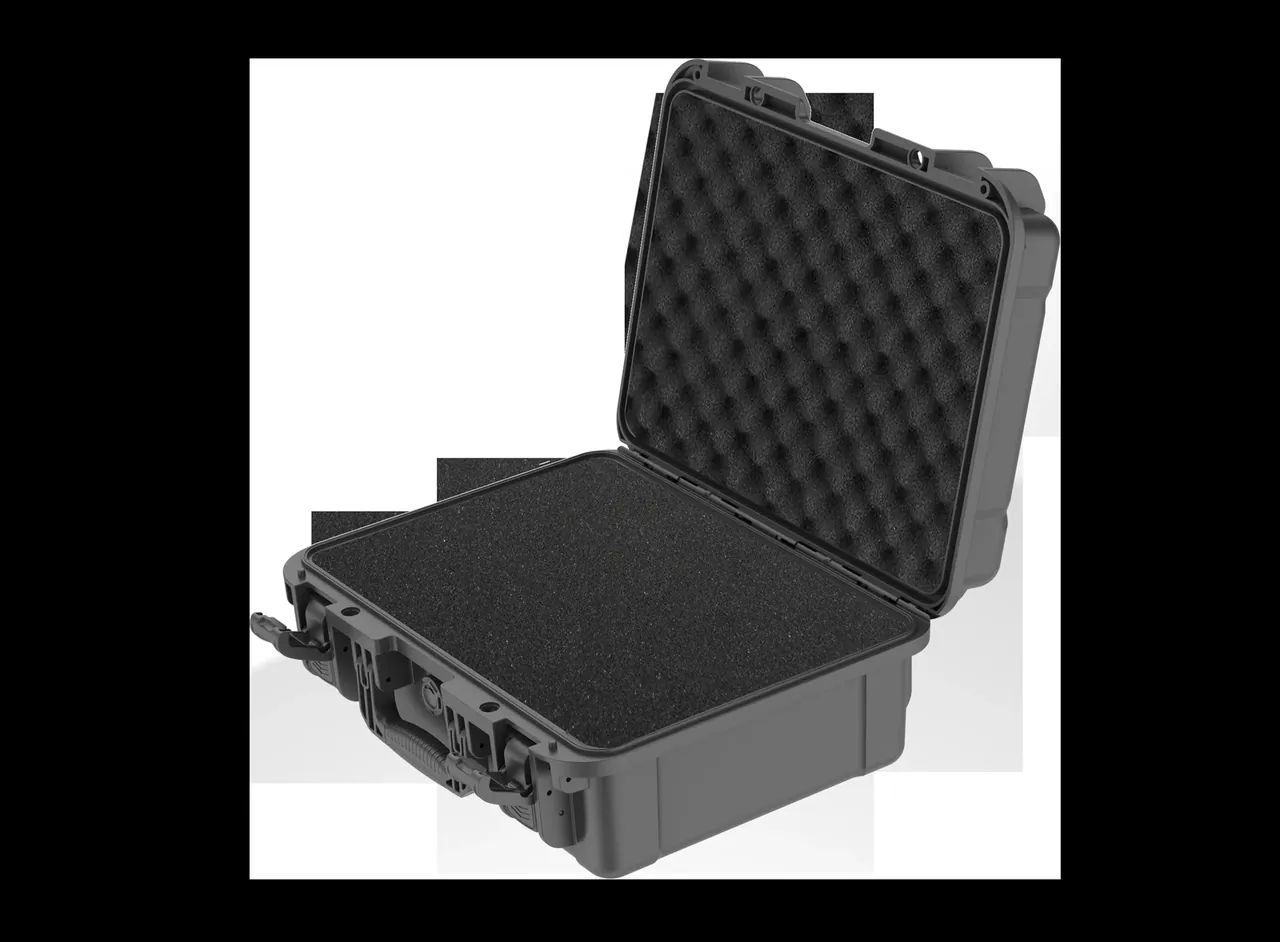
Conclusion
Standards land on a case as four numbers: decay rate, compatibility, wall thickness with stack tiers, and marking with records. If a military chemical agent container sheet has room for one line, make it the decay rate.
This article covers container-side specifications and design implications only, not the handling, loading or use of the contents.
Related Reading
- Choosing an explosive storage case
- Gasket material selection for cases
- Seal strip compression and ageing
- IP67 versus IP68 explained
Related Products
- 8 Series — Gun Cases; Military Equipment Cases; Camera Equipment Cases; Drone Cases; Watch Cases; Knife Cases; First Aid Cases; Electronics Equipment Cases
- WL8-2812 PP Gun Case — model WL8-2812
- All protective cases and toolboxes: 7 series, 158 models