

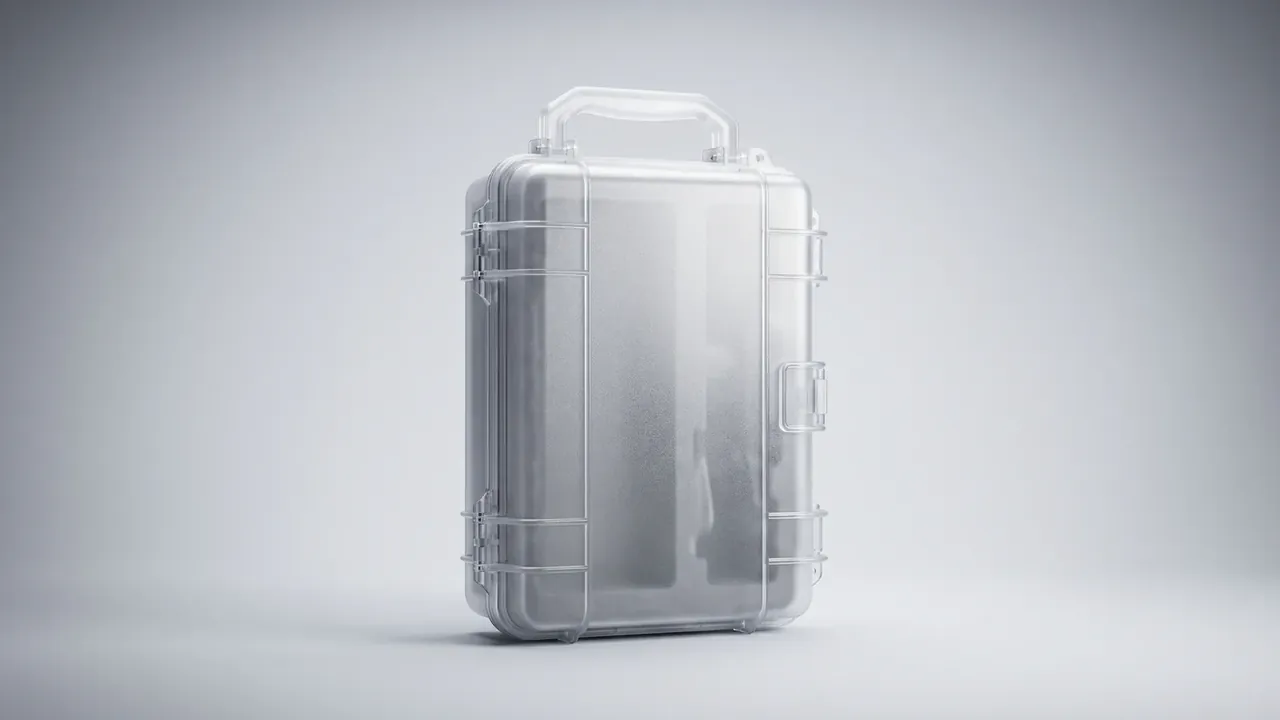
Quick answer: Firearm case quotes rarely differ on quality; they differ on which process the volume justifies. Five thresholds cover quantity, wall, seal, foam and cavities, each with a price step.
Table of contents
- Five Cost Thresholds for a Firearm Case
- Threshold One: Order Quantity Picks the Process
- Thresholds Two and Three: Wall Thickness and Seal Type
- Threshold Four: Foam Density and Support
- Threshold Five: Cavity Count and Lead Time
- FAQ
1. Five Cost Thresholds for a Firearm Case
For one drawing, a blow moulder quotes 180 and an injection moulder 260. The gap is rarely margin; it is the volume each process needs.
The five thresholds sit on a cost boundary: quantity picks the process, wall the drop height, seal the service interval, foam the support life, cavities the lead time.
| Threshold | Boundary | What changes | Price step |
|---|---|---|---|
| Volume | 500 and 2,000 | Blow to injection | Unit down 20 percent |
| Wall | 2.5 and 3.5 mm | Drop rating 1 m to 1.5 m | Unit up 12 percent |
| Seal | Flat gasket to O-ring | Service 2 years to 5 | Tooling plus 12,000 |
| Foam | 25 and 45 kg/m3 | Load 3 kg to 8 kg | Material up 18 percent |
| Cavities | One to four | Lead time 18 to 30 days | Unit down 22 percent |
Written into an enquiry sheet, they make quotes comparable.
2. Threshold One: Order Quantity Picks the Process
Under 500 units a year a hollow blow mould costs about 30,000 and its wall is fair, which is enough. Above 2,000 an injection tool at 80,000 to 150,000 spreads to 40 or 75 per firearm case.
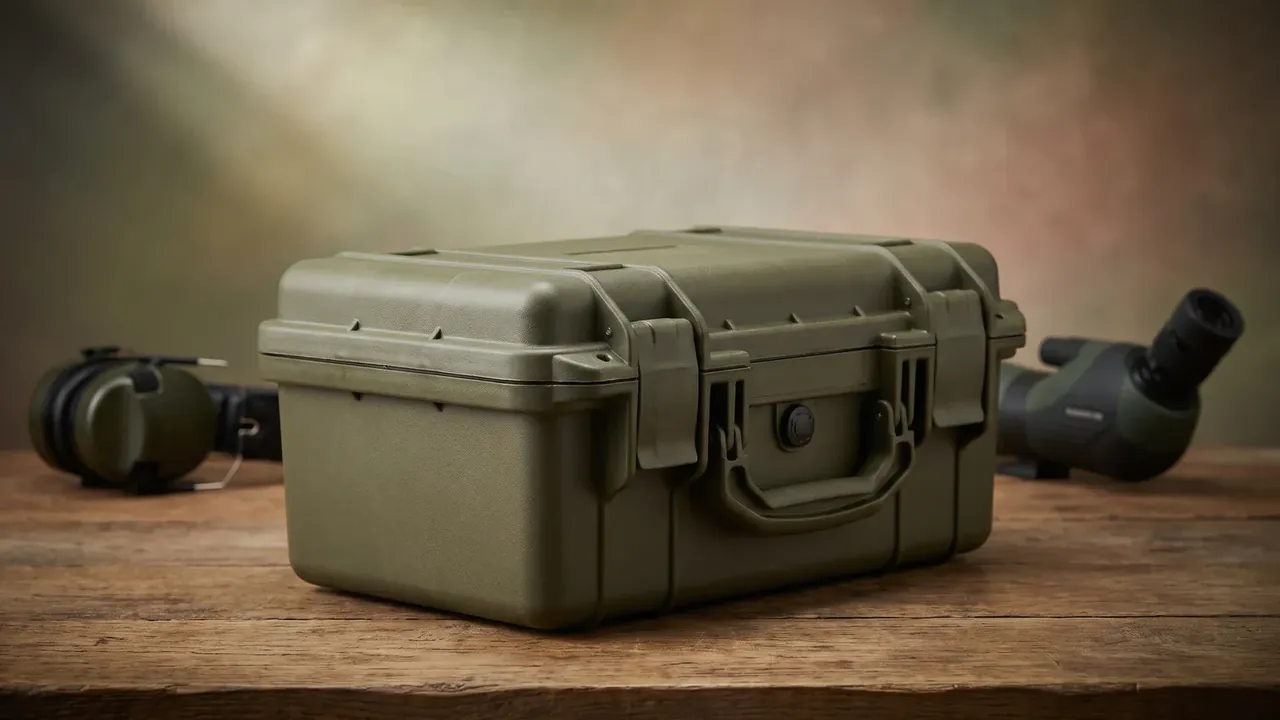
The 500 to 2,000 band is awkward: blow moulding stays pricey and an injection tool will not amortise, so projects thicken the wall and take empty weight from 4.2 to 5.1 kg.
Above 1.2 m in length, standard blow moulding runs out of clamp tonnage, so injection or rotomoulding takes over and the threshold drops to 300 units. Ribs differ: blow moulding forms coarse ribs only, injection knits a fine grid with 8 percent less material.
3. Thresholds Two and Three: Wall Thickness and Seal Type
A 2.5 mm wall with two lateral ribs survives a 1 m drop; a loaded 1.5 m drop needs 3.5 mm, which adds 0.9 kg and about 12 percent to unit cost.
| Process | Volume band | Tooling | First batch |
|---|---|---|---|
| Blow moulding | 300 to 2,000 | About 30,000 | 20 days |
| Injection | 2,000 and above | 80,000 to 150,000 | 30 days |
| Rotomoulding | Large bodies | About 50,000 | 25 days |
A flat gasket seals on 2 mm of compression and costs little, but every closure compresses it again, and after two years it stops recovering. An O-ring at 25 percent compression runs five years for one extra groove.
Salt spray for 48 hours is the usual acceptance line for latches and pins; in a coastal store that clause belongs in the contract.
4. Threshold Four: Foam Density and Support
Polyethylene at 25 kg/m3 carries units up to 3 kg; past 5 kg you need 45 kg/m3, or the slot floor takes a permanent set within three months and the unit sinks 4 mm.
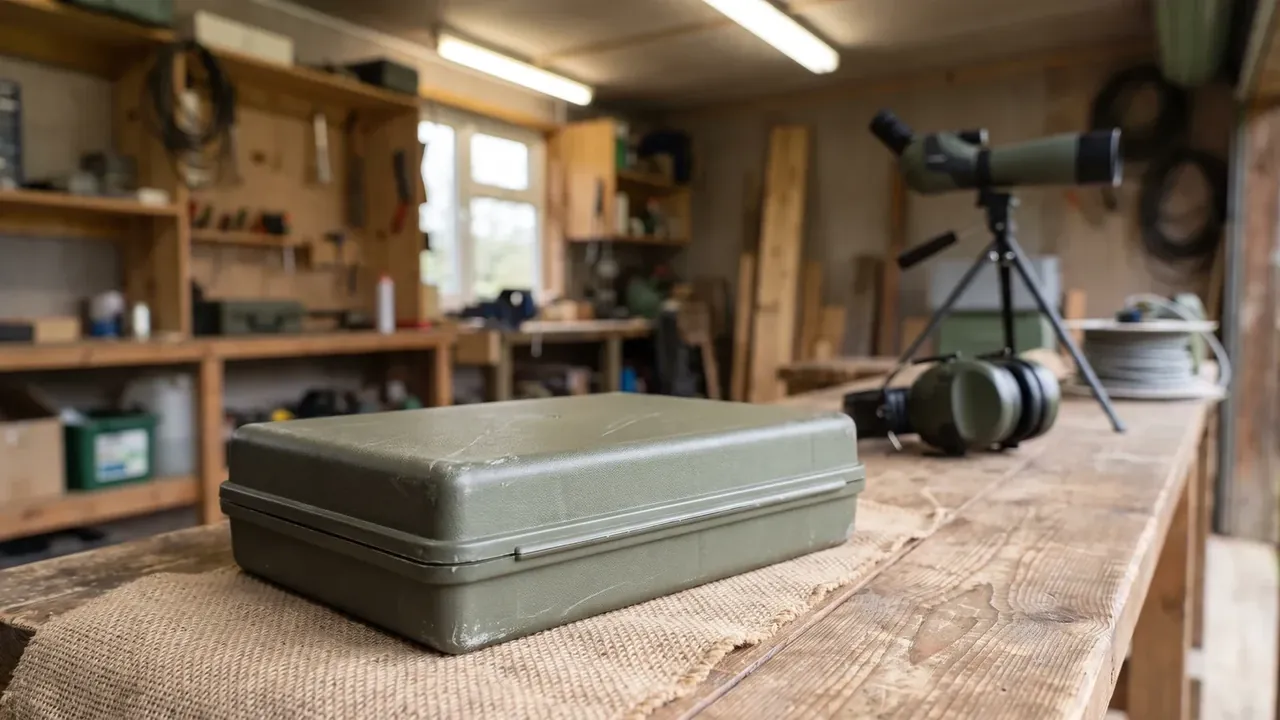
On a 600 mm case that adds 0.6 kg of foam and about 18 percent in material cost.
Pads at 45 kg/m3 under load points alone land under 6 percent. Cutting tolerance follows density: 1 mm at 45 kg/m3, 3 mm at 25 kg/m3.
5. Threshold Five: Cavity Count and Lead Time
A single-cavity tool ships in 18 days and takes 300 units; a four-cavity tool needs 30 days, cuts unit cost by 22 percent and lifts the minimum to 1,200.
| Cavities | Minimum order | Relative unit cost | First batch |
|---|---|---|---|
| One | 300 units | 100 | 18 days |
| Two | 600 units | 88 | 24 days |
| Four | 1,200 units | 78 | 30 days |
Lead time carries a hidden stock cost: 30 days means 1.5 months of safety stock, 18 days only three weeks.
Past four cavities savings flatten, since cooling time and clamp tonnage limit output. A firearm case tool also locks the specification for its life.
Conclusion
Every threshold has a price step you can calculate before signing, so the comparison is not unit price but whether process, wall, seal, foam and cavities sit inside your volume band. Ask for each line separately, and choosing a firearm case stops being a matter of feel.
This article discusses only the container (case body) side of specifications and design intent, and does not cover any handling, loading or use of the contents.
Related Reading
- Acceptance standards for firearm transport cases
- Hard specifications for military firearm case selection
- Density and slot specifications for custom foam inserts
- How sealing classes are judged on waterproof hard cases
Related Products
- 8 Series — Gun Cases; Military Equipment Cases; Camera Equipment Cases; Drone Cases; Watch Cases; Knife Cases; First Aid Cases; Electronics Equipment Cases
- WL8-2812 PP Gun Case — model WL8-2812
- All protective cases and toolboxes: 7 series, 158 models