

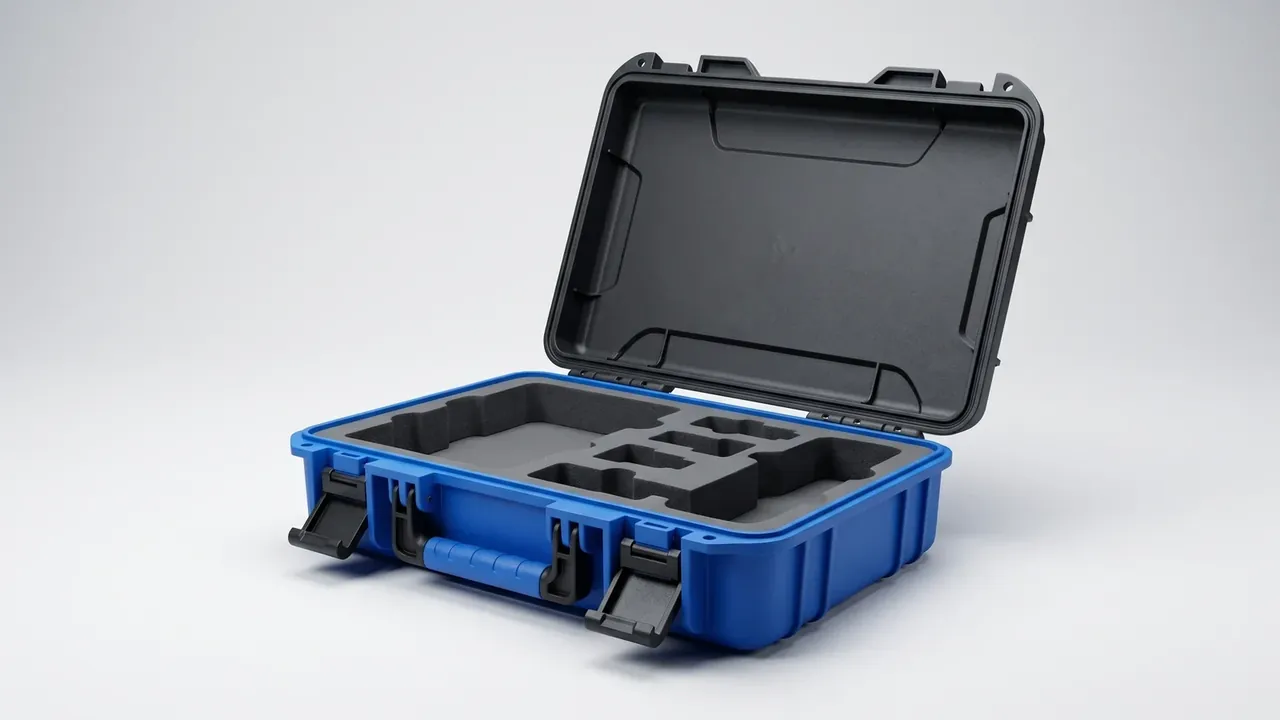
Quick answer: Fix how the gun box is stored and carried, then check footprint, base thickness, sealing and latches. Ranked in that order, the sheet narrows to two or three models before you ask for a price.
Table of contents
- Five Decision Criteria for a Gun Box
- Footprint and Stacking Before Capacity
- Wall Thickness and Base Load
- Sealing and Desiccant Cycles
- Latches and Marking for Handover
- FAQ
1. Five Decision Criteria for a Gun Box
Five gates decide whether the product works in service: storage and handling, footprint, thickness and base load, sealing, and latches with marking. The order matters, because each gate narrows the next. Stacked three high, the base carries the main load, so thickness follows the stack rather than the gasket.
Rank the five rather than scoring them. One unit put capacity first and bought two hundred oversized units; the shelving gave 1.6 m of clear height, two tiers fit, and each empty gun box weighed 3 kg more than needed.
| Criterion | Settle this first | Typical value | Cost of getting it wrong |
|---|---|---|---|
| Handling | Shelved, stacked or vehicle-borne | Three-high stack | Overshoot or shortfall |
| Footprint | Shelf height and pallet plan | 1220 x 420 x 210 mm | Wasted headroom |
| Thickness | Units sitting on top | 4.0 mm base wall | Base bows under load |
2. Footprint and Stacking Before Capacity
Footprint must satisfy shelf clearance, pallet plan and aisle radius at once. On a 1200 x 1000 mm pallet, a 1220 x 420 x 210 mm body loads twelve per tier; at 1350 mm long, only eight fit.
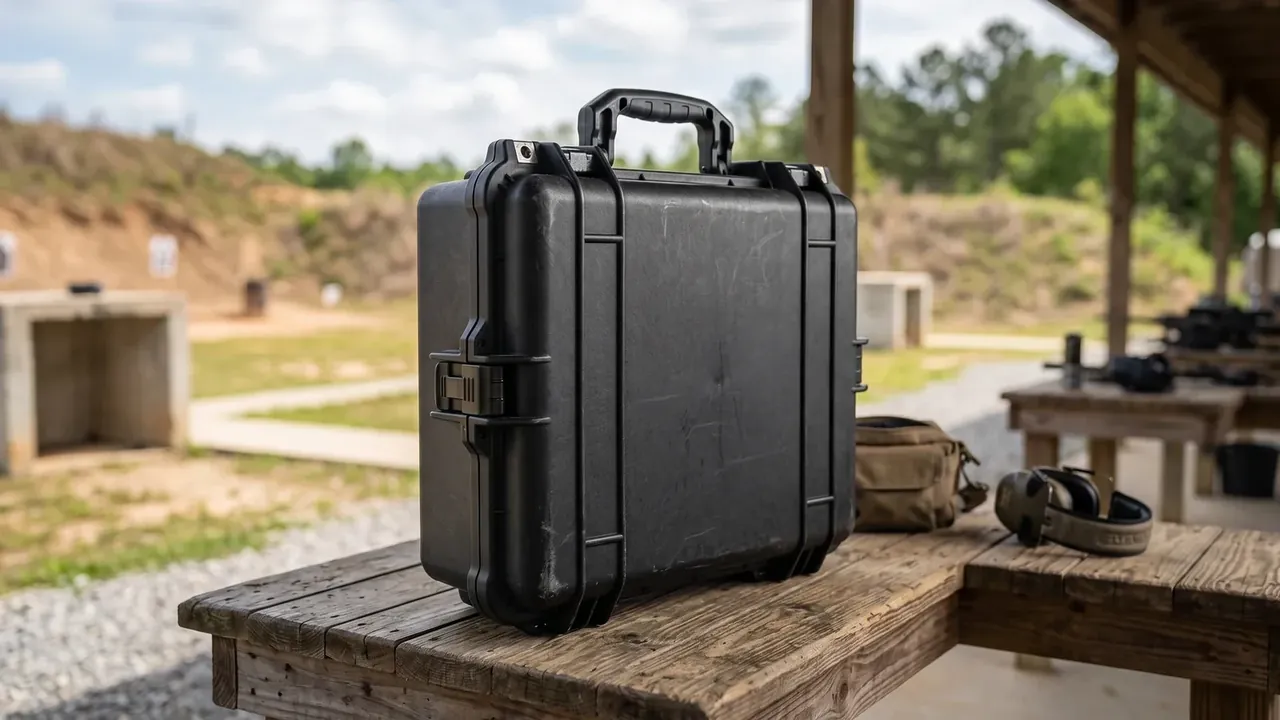
Stack height sets vertical duty. Three tiers mean the bottom unit carries two above it: at 25 kg gross the lid sees 50 kg, and a 1.5 safety factor puts rib spacing under 120 mm. Two tiers let the same gun box shed 0.4 mm of wall, and interlocking recesses hold stack offset under 5 mm.
3. Wall Thickness and Base Load
Thickness is easy to leave vague, because quotations say reinforced and never say where. Ask for three numbers: base, side and lid. For a 1220 x 420 x 210 mm body, 4.0 mm, 2.8 mm and 3.0 mm balance load against a 5.2 kg tare.
Deflection can be estimated. With four corner supports, the unsupported span runs about sixty percent of the length; at 25 kg, sag beyond 2 mm turns permanent within months and the lid stops seating. A cross-hatched rib grid 8 mm tall holds it under 0.8 mm.
| Item | Light duty | Standard | Heavy duty |
|---|---|---|---|
| Base wall | 2.8 mm | 4.0 mm | 5.0 mm |
| Unit weight | 3.9 kg | 5.2 kg | 6.8 kg |
| Recommended stack | Two tiers | Three tiers | Four tiers |
4. Sealing and Desiccant Cycles
Sealing comes from one gasket, not from cranking the latches. A 6 mm EPDM profile should sit at 25 to 30 percent compression: over-compress it and the rubber stops recovering, under-compress it and air migrates through the flange.
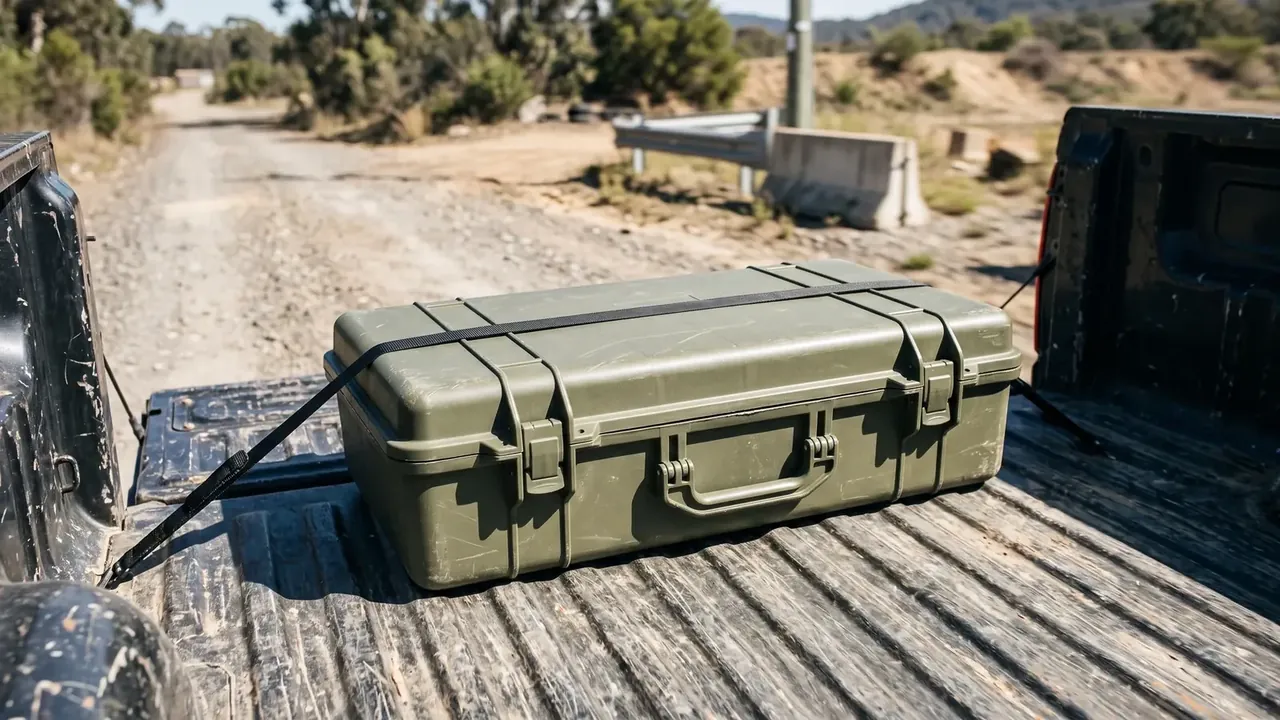
Desiccant life is arithmetic. Fifty grams of silica gel in a 60 litre cavity saturates in about 90 days at 60 percent humidity, and in 35 days at 85 percent. Where a gun box opens daily, add a 4 mm breather port: open on arrival, close before dispatch, and the gasket stops being pushed open.
5. Latches and Marking for Handover
All-plastic catches are light and never rust, which suits frequent opening. Both styles need a 4.5 mm seal hole through the closed catch, or a gun box handover rests on signature alone.
Marking carries the rest of the trail. Reserve 100 x 60 mm on the short side for barcode and batch, repeat the number on the lid, and a two-hundred-unit count drops from 40 minutes to 12.
| Trace item | Carrier | Check at handover |
|---|---|---|
| Batch number | Barcode label, short side | Scan on receipt |
| Seal state | Seal hole with tag | Visual check |
Conclusion
Ranked properly, selection becomes subtraction: lock the stacking pattern, then let thickness and sealing follow it. The best unit is rarely the most expensive; it is the one whose base ribs and label position match the site. Specify the gun box by numbers, and it will behave like the one you tested.
This article discusses only the container (case body) side of specifications and design intent, and does not cover any handling, loading or use of the contents.
Related Reading
- How the military firearm storage box is built
- Carrying and corner protection on long weapon cases
- Maintenance intervals for submachine gun storage boxes
- A selection framework for firearm storage cases
Related Products
- 8 Series — Gun Cases; Military Equipment Cases; Camera Equipment Cases; Drone Cases; Watch Cases; Knife Cases; First Aid Cases; Electronics Equipment Cases
- WL8-2812 PP Gun Case — model WL8-2812
- All protective cases and toolboxes: 7 series, 158 models