

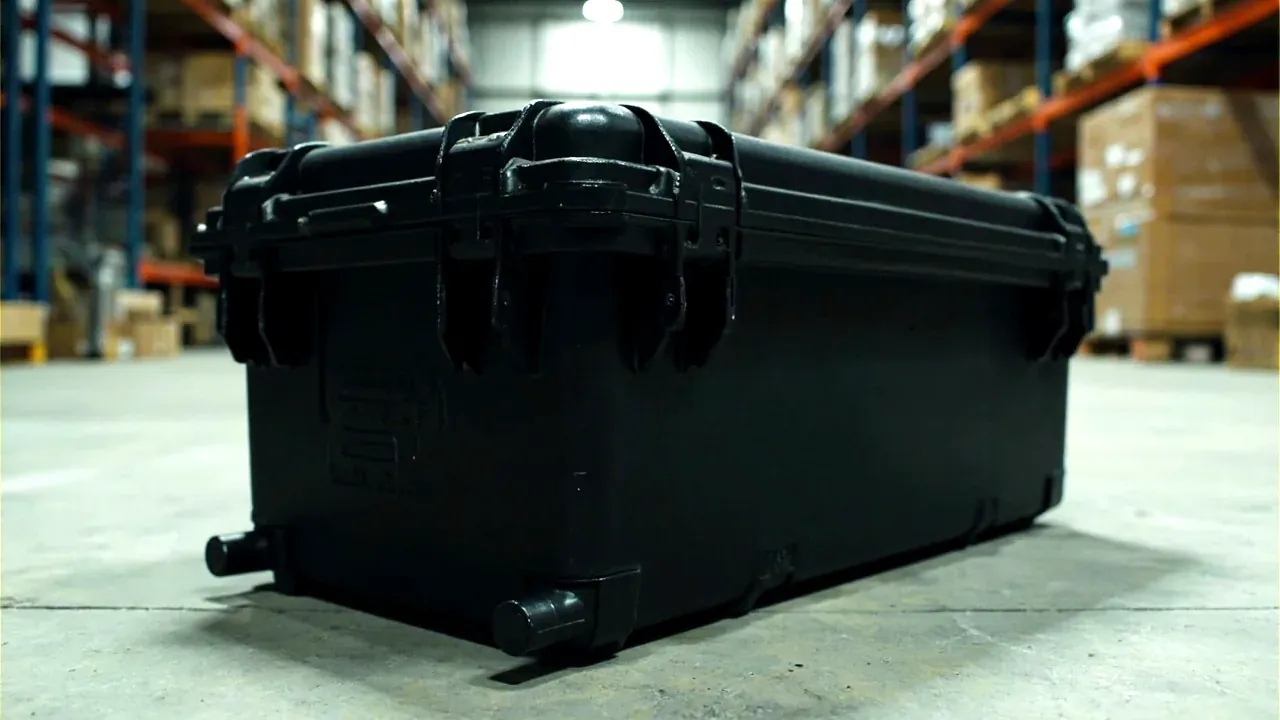
Quick answer: Ask where the length is measured: a long weapon case is a rotomolded shell whose outside comes from one inside figure, the clear cavity length. That length splits into a cradle, a support run and an end allowance that also acts as crush travel. Blocks sit no more than 350 mm apart, ends keep 20 to 30 mm, and the carry method follows loaded weight and balance. Each zone has one dimension worth writing down.
Table of contents
- Definition: clear length first, outline second
- Cavity: three length zones and end travel
- Supports and latches: splitting the impact path
- Carrying: handle, straps, wheels and balance
- Acceptance: four numbers decide the delivery
- FAQ
1. Definition: clear length first, outline second
A long weapon case is a rotomolded shell whose outline is derived from one inside figure: the clear cavity length. The distance between the two end support faces is drawn first, then width, height and wall thickness, because the outer length includes both.
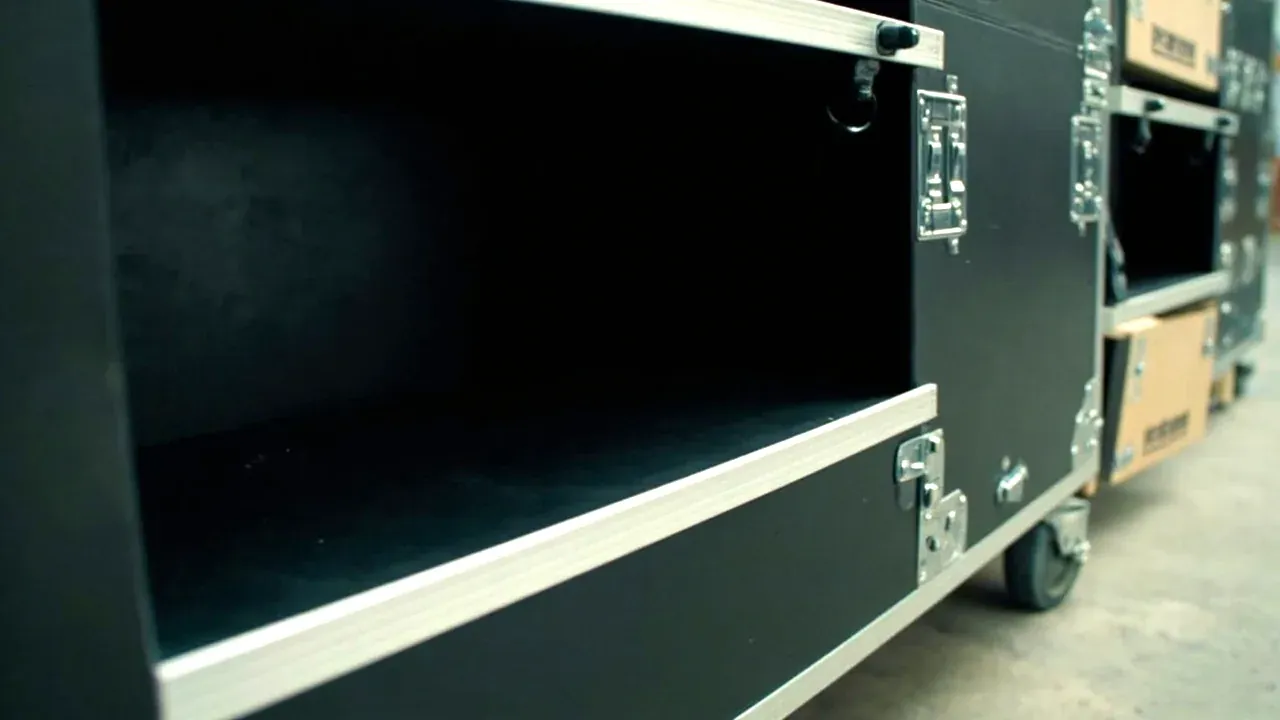
So the clear length needs its own row, with its datum named. Quote the outer figure alone and the risk moves to the user. In a long weapon case, add 10 mm of handling clearance at each end before the mould is cut.
| Zone | Job | Share of length | If it is wrong |
|---|---|---|---|
| Cradle | wraps the fixed end | about 20 percent | the end rocks in its slot |
| Support run | continuous support along the length | about 70 percent | the middle sags between blocks |
| Allowance | absorbs tolerance and crush travel | about 10 percent | the item presses on the end wall |
2. Cavity: three length zones and end travel
Inside, the cavity splits into a cradle, a continuous support run and a far allowance. The cradle wraps at least a third of the outline with a 2 mm chamfer, since square edges crumble first; the allowance runs 20 to 30 mm and works as crush travel.
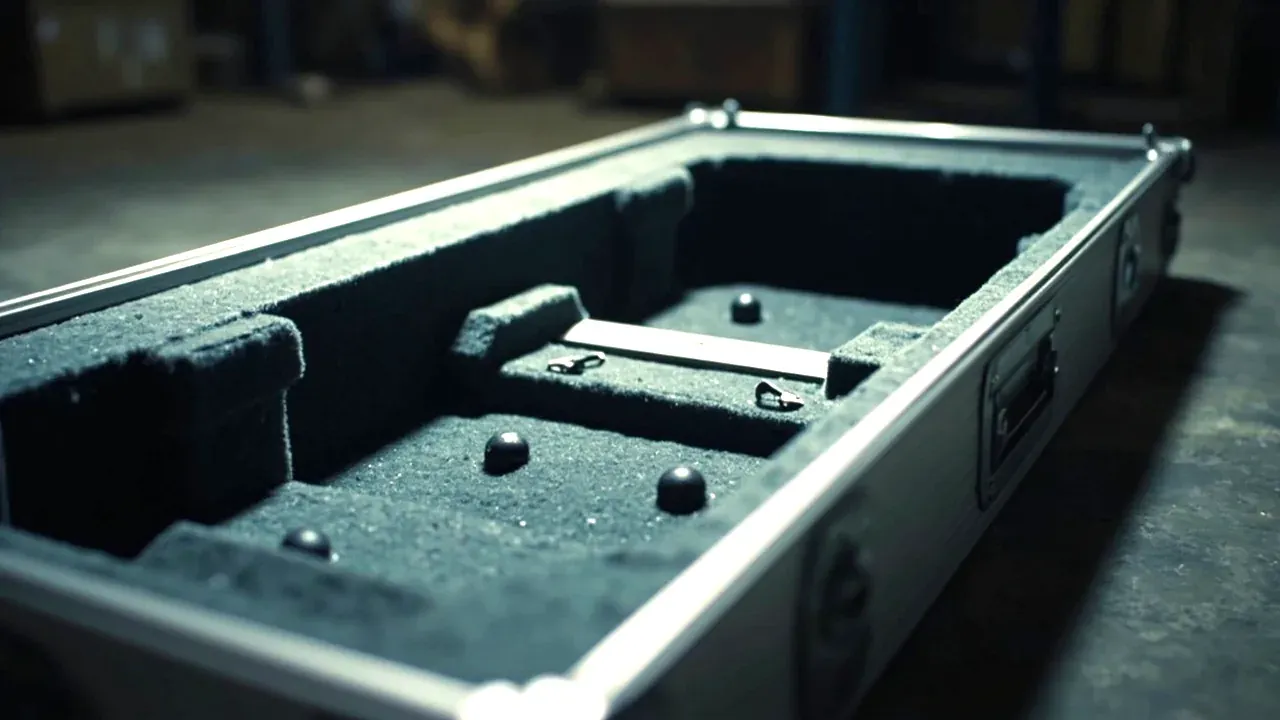
Never pack that allowance solid, or travel drops to zero and impact reaches the end wall. A long weapon case uses closed-cell polyethylene below the density of the locating foam, so the end crushes first and the foam behind it stays intact.
3. Supports and latches: splitting the impact path
Damage in a long item starts where it spans unsupported. With 300 mm of free span, vibration works the foam until the slot widens and the item slides. In a long weapon case, blocks sit at a third of the item length, never beyond 350 mm, all at one density.
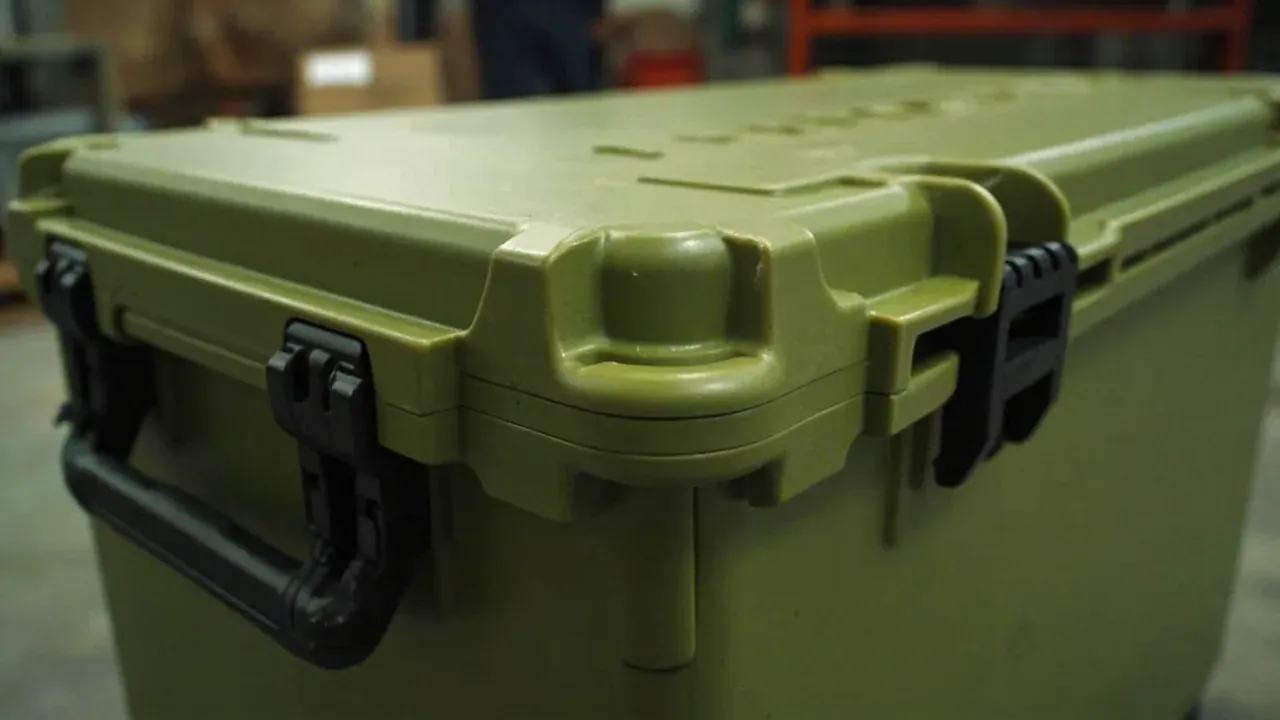
Latches cover the lid span. Past 400 mm without one, the lid breathes and the gasket opens. A long weapon case takes three latches to 900 mm and four at 1200, keeping guards and latches on separate load paths.
4. Carrying: handle, straps, wheels and balance
Weight and balance pick the carry method. The moulded handle sits on the centre line, its axis through the loaded centre of gravity; shift that centre by a tenth of the length and a long weapon case noses down in one hand.
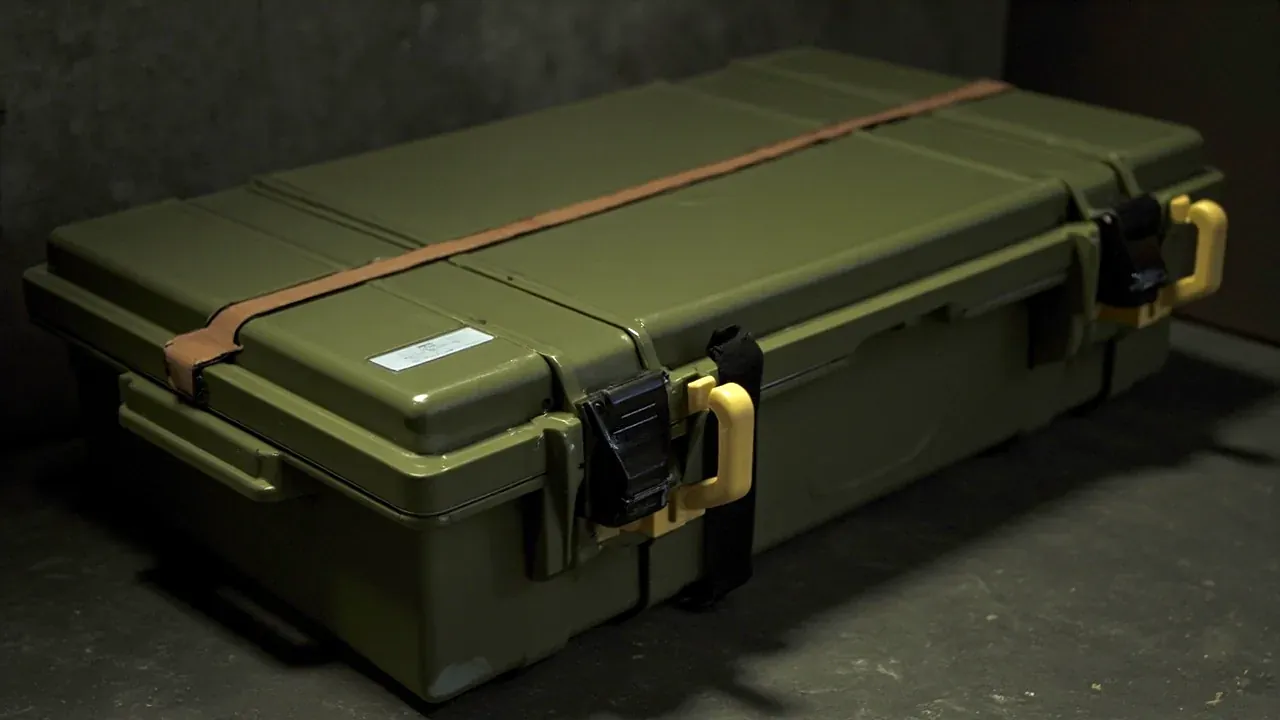
Wheels go under the end face at least 60 percent of the width apart, or the case tips when pushed sideways. Treat 18 kg as the one-hand ceiling and move to two people or wheels above it; moulded feet 15 mm high keep the base off wet floors.
5. Acceptance: four numbers decide the delivery
Acceptance measures four things: clear length, support spacing, end travel and loaded balance. A tape and a flat pad are enough. Check length between the furthest support faces and query the drawing beyond 3 mm of error.
Work in order. A short cavity cannot be rescued by any liner, poor spacing loses location however exact the length, and a long weapon case that ignores weight cannot be lifted. Put those steps on the goods-in form, where numbers survive.
Conclusion
Judge a long weapon case in three moves: clear length, supports, carry. Confirm the length is taken between support faces with the allowance intact, check block spacing against the ceiling, then match loaded weight to the handle axis. All three are tape checks at goods-in and all three can still move on the drawing. Length is the one figure no liner can fix once the mould is cut.
This article covers container-side specifications and design implications only, not the handling, loading or use of the contents.
Related Reading
- Four ways a long weapon case differs
- How to Choose a Tactical Storage Box: A Multi-Scenario Gui…
- Rotomolded Cases: Rotational-Moulded Shell Structure & Pro…
- Transit Cases: Reusable Equipment & Instrument Protection
Related Products
- 8 Series — Gun Cases; Military Equipment Cases; Camera Equipment Cases; Drone Cases; Watch Cases; Knife Cases; First Aid Cases; Electronics Equipment Cases
- WL8-2812 PP Gun Case — model WL8-2812
- All protective cases and toolboxes: 7 series, 158 models