

Quick answer: Both can be the same length outside. A long weapon case differs in four dimensions: locating accuracy, liner fit, latch count and end impact. A general long case answers whether the item fits; this one answers whether it returns to the same place every time. All four can be measured on a sample with a tape and calipers, before any quotation, and none of them shows in a photograph. A supplier who names all four is easier to compare.
Table of contents
- Two goals: it fits, or it returns
- Four dimensions at the same length
- Location and liner fit: where the millimetres go
- Latches and corners: two paths that must stay apart
- Four boundaries where a general case is enough
- FAQ
1. Two goals: it fits, or it returns
A general long case exists so the item fits: cavity long and wide enough, lid closed, two people able to lift it. A long weapon case exists so the item returns, unchanged by a rough road.
Side by side the two look alike and weigh within a few kilograms. Open the lid and the gap appears: whether slots follow the outline, whether support is a point or a face, how many latches there are, whether a long weapon case guards each corner separately.
2. Four dimensions at the same length
Start with the conclusion: a general long case is not zero on any of the four, it carries less margin. A long weapon case puts margin where it shows and hides, and pays in weight and price.
Compare figures, not adjectives. In a long weapon case, location reads as slot clearance per side, liner fit as point, line or face contact, latch count as the longest span without one, and end resistance as whether a guard swaps alone.
| Dimension | General long case | Long weapon case | How to measure |
|---|---|---|---|
| Location | 5 to 10 mm per side | 2 to 3 mm per side | feeler gauge at the slot wall |
| Liner fit | grid or solid block, point contact | cut to outline, face contact | does the slot follow each turn |
| Latches | two, span may exceed 600 mm | three or four, span under 400 mm | distance between adjacent latches |
| End impact | single wall with radii | replaceable guard plus 20 mm travel | press the guard, check if it unbolts |
3. Location and liner fit: where the millimetres go
Location rests on two numbers: clearance per side and slot depth. Two to three millimetres lets an item in and out without rattle; past five it slides and strikes the slot wall. Depth is item height plus 5 mm.
Liner fit means the slot wall follows the outline. A grid gives point contact and impact gathers there; a long weapon case cuts to the outline, so contact is a face and pressure per unit area falls sharply.
4. Latches and corners: two paths that must stay apart
More latches is not the aim; covering the lid span is. Beyond 400 mm the lid flexes on a long run, the gasket separates and moisture follows. A long weapon case spaces them every 300 to 400 mm.
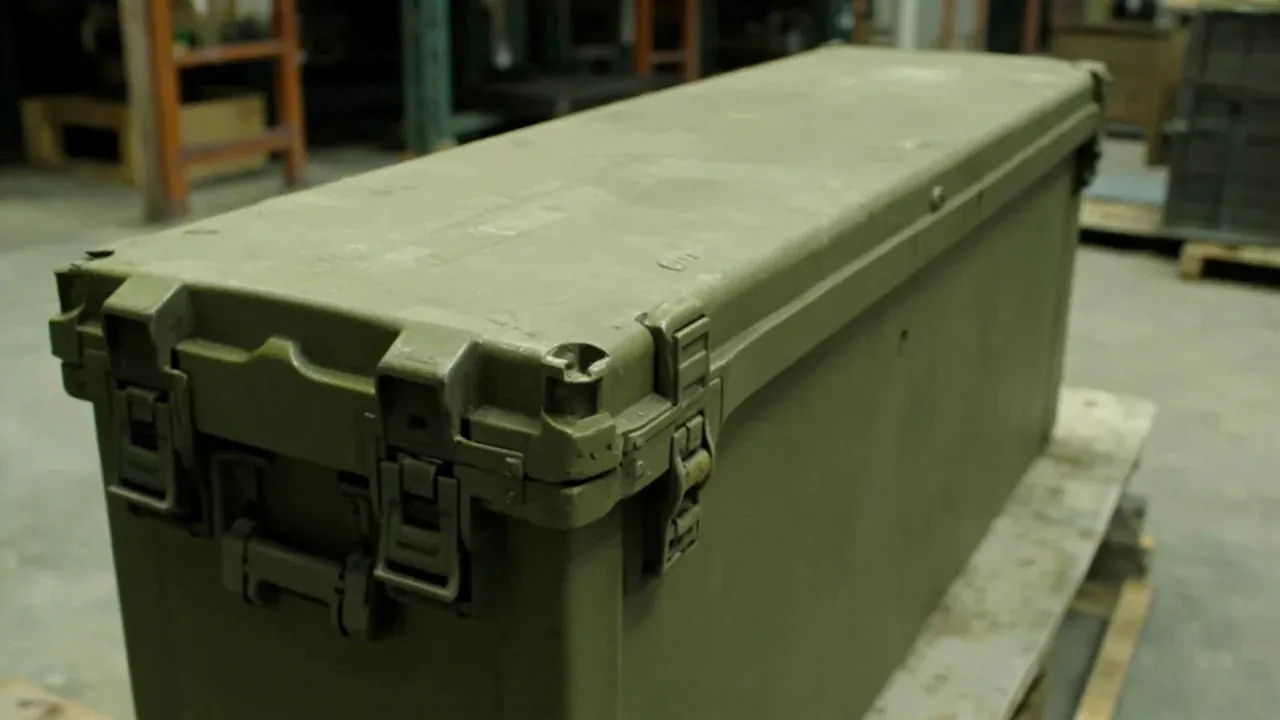
Corners raise two questions: can the guard be replaced alone, is the cushion independent of the liner. A moulded guard turns one crack into a full repair; cushion built into the liner vanishes with the next revision.
5. Four boundaries where a general case is enough
Honestly, a general long case covers plenty of work: ten moves a year or fewer, legs under two hours, nothing delicate inside, an item with its own hard shell. With all four true, the margin of a long weapon case goes unused while its weight is paid.
Break one and the margin earns: frequent handling wears the slot, a long rough leg tests latch spacing, delicate accessories suffer centimetre travel. Run one loaded short trip and check whether the item stayed put.
Conclusion
Choose in order: frequency and trip length first, then the dimension that fails first. Loose location takes a new liner, a wide latch span takes one more latch, a cracked corner takes a guard. A long weapon case is not a universal replacement; it sells measurable margin, and inside the four boundaries that margin buys nothing. Pay for the dimension that fails in your own use, not for the category.
This article covers container-side specifications and design implications only, not the handling, loading or use of the contents.
Related Reading
- Cavity length and support in a long weapon case
- Tactical Hard Case: Protection Ratings and Internal Modules
- Transit Cases: Reusable Equipment & Instrument Protection
- Lid latches and sealing
Related Products
- 8 Series — Gun Cases; Military Equipment Cases; Camera Equipment Cases; Drone Cases; Watch Cases; Knife Cases; First Aid Cases; Electronics Equipment Cases
- WL8-2812 PP Gun Case — model WL8-2812
- All protective cases and toolboxes: 7 series, 158 models