

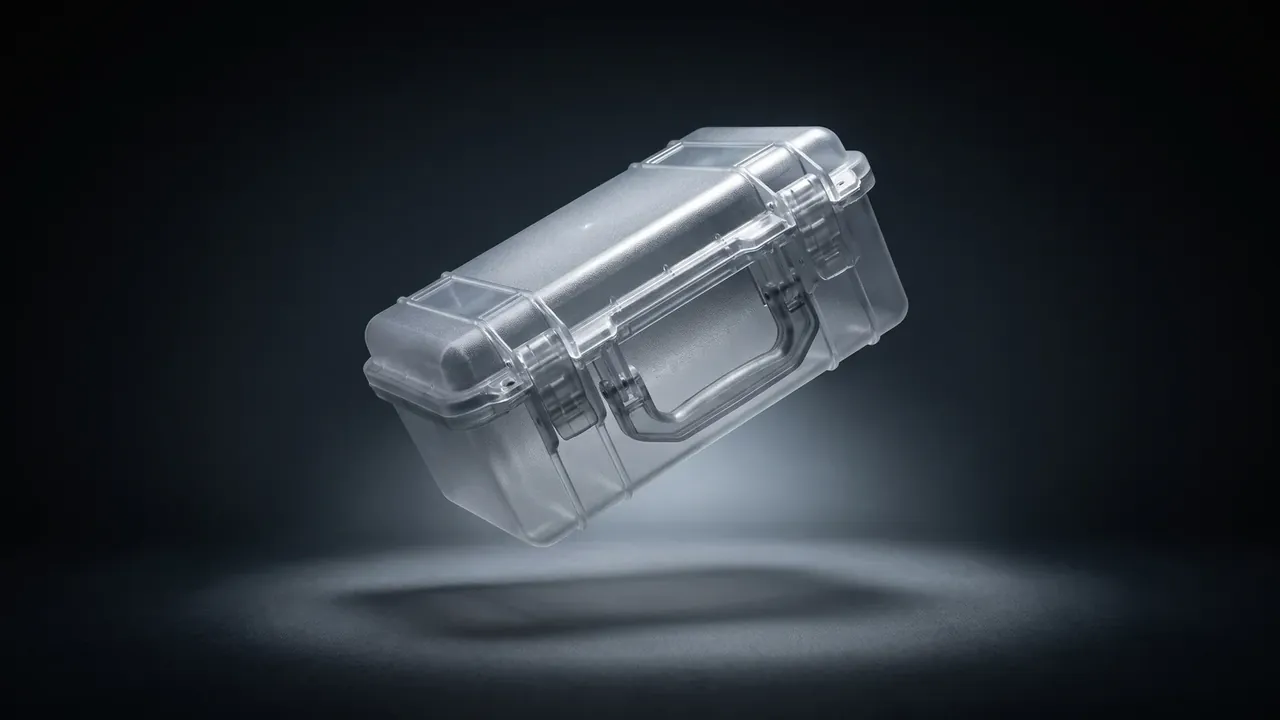
Quick answer: Start with how the case will be carried, then set interior length, wall structure and drop rating, sealing with pressure relief, and latch points with marking. Turn each into a number before comparing prices.
Table of contents
- Five Decision Criteria for a Gun Case
- Carry Method Sets the Case Shape
- Interior Length for the Longest Configuration
- Wall Structure and Drop Height
- Sealing Pressure and Latch Points
- FAQ
1. Five Decision Criteria for a Gun Case
This product is not a storage bin; it travels with a person, so the first question is how it leaves the building: one hand, two shoulders, or a car boot. Only then do length, wall and drop rating, sealing and latches fall into order.
Reversing that order costs money: one buyer chose a 1150 mm interior, but the boot measured 1050 mm, so the gun case went in diagonally.
| Criterion | Settle this first | Typical value | Cost of getting it wrong |
|---|---|---|---|
| Carry method | Hand, shoulder or vehicle | 300 m one-hand carry | Poor balance, sore wrist |
| Wall and drop | Likely fall height | 1.2 m six-face drop | Corner cracks |
| Latches | Who opens it, how traced | Four latches, matched labels | Handover disputes |
2. Carry Method Sets the Case Shape
A hand-carried gun case needs the handle over the centre of gravity, with a 95 to 110 mm grip so a gloved hand still closes on it. Offset it and the wrist pays within 300 m. Static load runs at three times payload.
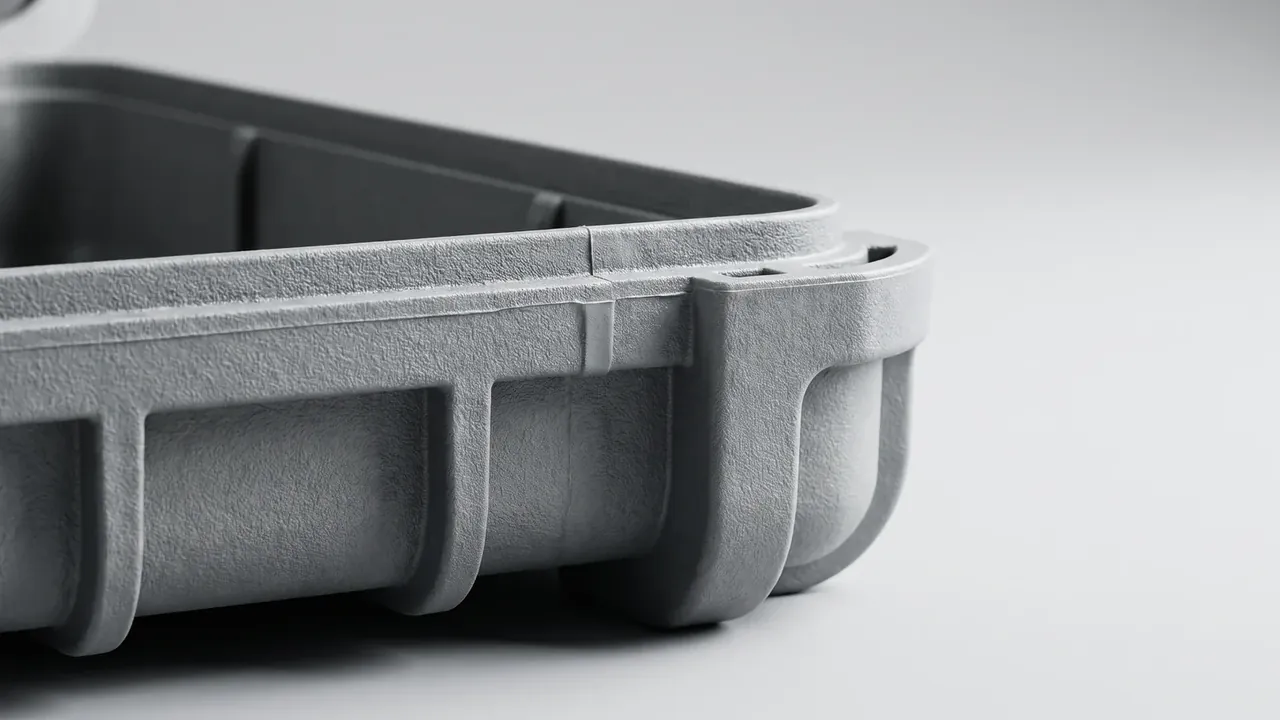
Vehicle use is about the base and the stack. Four anti-slip ribs meeting matching grooves hold lateral offset under 3 mm when two cases ride together, and R8 corners slide between seats without marking trim. Shoulder models need 15 mm of clearance behind the back panel and metal D-rings.
3. Interior Length for the Longest Configuration
Measure the longest configuration, not the bare unit. A folding stock adds 120 to 180 mm when extended, a muzzle device 60 mm, and an optic 45 mm of height. A 1010 x 300 x 135 mm interior takes a 960 mm extended length with 25 mm clearance at each end.
| Interior length | Depth | Fits | Case weight |
|---|---|---|---|
| 780 mm | 110 mm | Folding stock, short build | 3.6 kg |
| 1010 mm | 135 mm | Standard extended build | 4.9 kg |
| 1150 mm | 145 mm | Long barrel with optic | 5.9 kg |
Foam slots run about sixty percent of interior depth: 60 mm in 30 kg/m³ PE, 15 mm walls so nothing snags, and 20 mm of solid material between slots so a drop does not crush neighbours.
4. Wall Structure and Drop Height
Structure beats thickness. A 3.2 mm wall with double-thickness corners and a ring of ribs survives a 1.2 m six-face drop without cracking, while a flat panel of the same thickness whitens at 0.9 m. Ask for the drop report, not the wall figure.
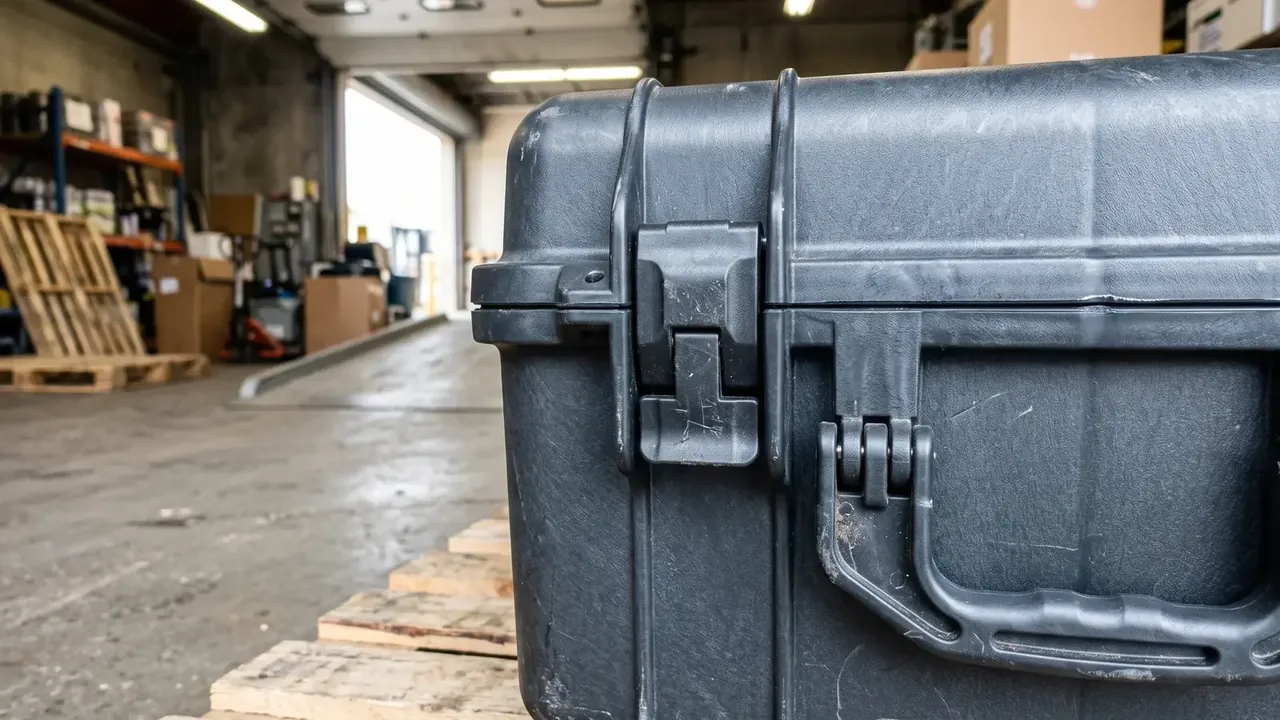
The hinge is the second weak point. A 3 mm stainless pin with bushings over seventy percent of the case length still closes square after 20,000 cycles; plastic bushes need checking near 10,000. Polypropylene also loses about forty percent of its impact strength at minus 20 degrees, so cold users need a low-temperature compound or 5 mm of EVA inside.
5. Sealing Pressure and Latch Points
Write the rating with its test conditions: IP67 means one metre of water for thirty minutes, and only if the gasket is compressed and every latch closed. A 55 Shore A gasket resists heat sag and cold stiffening; a 0.35 bar relief valve stops a 40 degree swing from locking the lid.
Latch count and placement belong together. Four latches seal more evenly than two plus a centre catch; the leak rate differs by about thirty percent. They must close one-handed, so the operator knows the gun case is shut.
| Item | Common mismatch | Field symptom | Fix |
|---|---|---|---|
| Gasket hardness | 70 Shore A specified | Lid will not compress cold | Change to 55 |
| Latch count | Two latches only | Lid bows at mid-span | Move to four |
Conclusion
With the criteria reduced to numbers, price comparisons mean something: two cases claim a 1010 mm interior, yet one latch apart changes how the gun case behaves. Fix the carry method and drop height first; everything else about the gun case follows.
This article discusses only the container (case body) side of specifications and design intent, and does not cover any handling, loading or use of the contents.
Related Reading
- Gun case options compared with alternatives
- Selection points for rifle cases
- Material comparison for firearm protective cases
- Production steps and cycle times for hard cases
Related Products
- 8 Series — Gun Cases; Military Equipment Cases; Camera Equipment Cases; Drone Cases; Watch Cases; Knife Cases; First Aid Cases; Electronics Equipment Cases
- WL8-2812 PP Gun Case — model WL8-2812
- All protective cases and toolboxes: 7 series, 158 models