

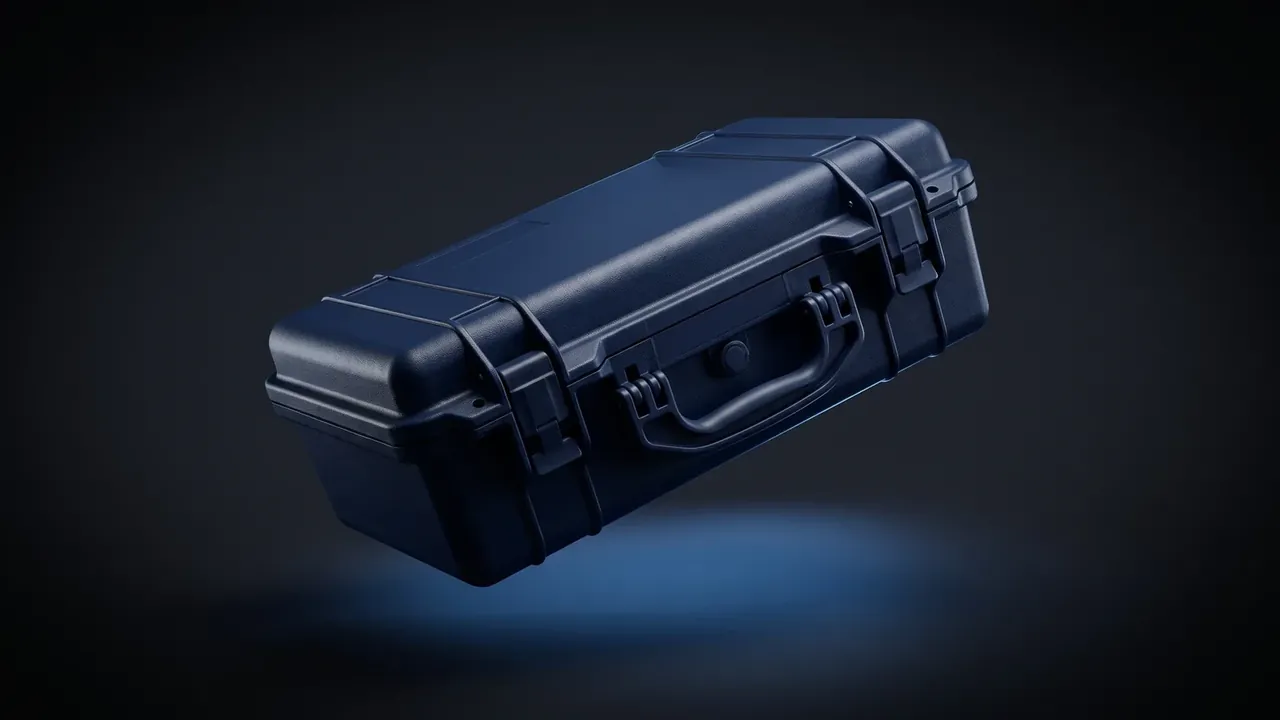
Quick answer: Skip the brochure and carry three public clauses to the site: MIL-STD-810H Method 502.7 and 516.8 cover cold and shock, IEC 60529 IPX7 covers sealing, and IEC 62262 IK08 covers a 5 J strike. Fix the action and brands become comparable.
Table of contents
- Where a plastic case brand separates before packing
- First check: wall thickness, ribs and body stiffness
- Second check: latches, sealing and IP rating retests
- Third check: cold, shock and salt fog on a timeline
- Folding three checks into one comparison sheet
- FAQ
1. Where a plastic case brand separates before packing
Two cases built to the same drawing often behave differently after one drop from the same height, because the action used to test them differs.
| Route | Action on site | What it exposes | Clause |
|---|---|---|---|
| Read the brochure | Study the parameter page and report | Report matches sample | IEC 60529 rating |
| Weigh and measure | Three units, weighed and gauged | Wall drift between batches | Drawing tolerance |
| Retest to clause | Cold, drop, immersion on site | Weak points, seal failure | MIL-STD-810H 502.7, 516.8 |
The gap between one plastic case brand and another is rarely a process step; it is the tolerance spread inside one batch. A body specified at 4.5 mm sits between 4.4 and 4.6 mm at a stable plant, while a loose one drifts from 4.1 to 4.8 mm, which one unit hides and the fifth layer does not. Latches behave the same: 1 mm of difference in engagement depth changes gasket compression, and the IPX7 result splits. A brochure prints design values, not process capability. Test several brands with one action and the scatter ranks that capability. So the first question is not price but whether the supplier lets you walk the plant with calipers and a clause list.
2. First check: wall thickness, ribs and body stiffness
Stiffness is not one wall reading but the load path walls and ribs form together. Measure in the wrong place and the number means nothing.
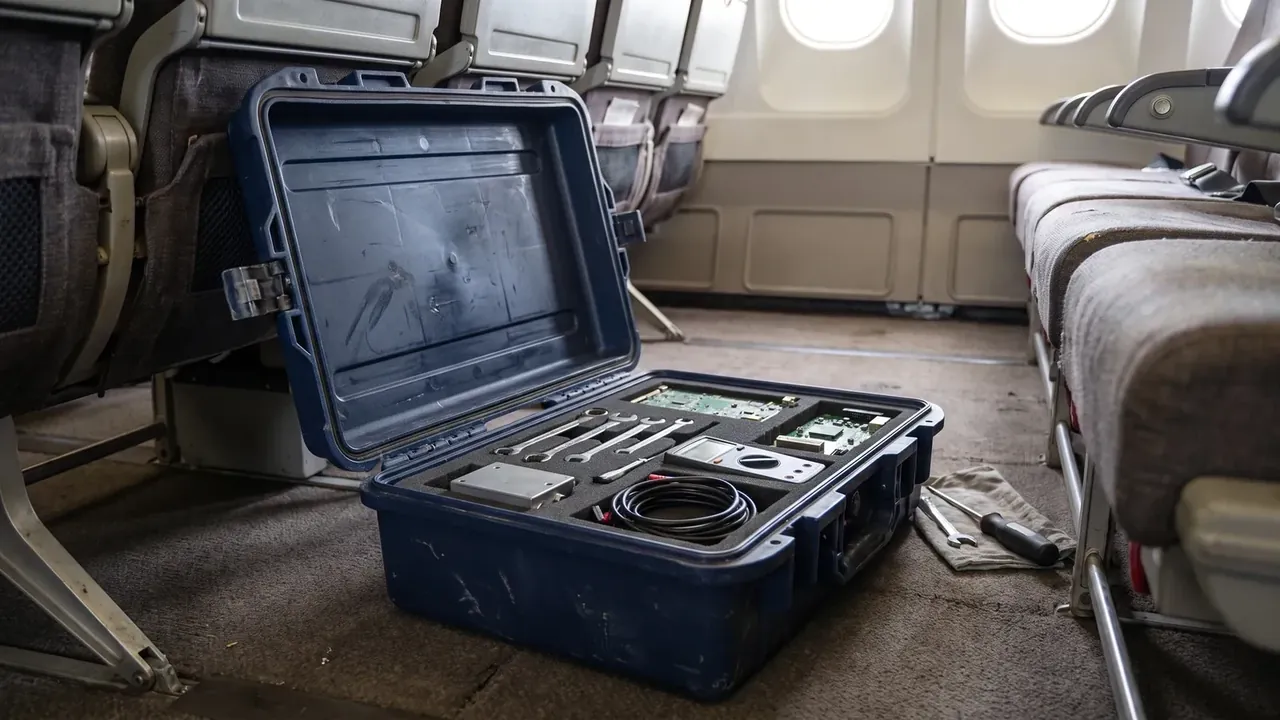
Fix the points: four inner corners of the base, the middle of the long side, the lid centre, five in total, three readings each, median recorded. Run three samples and read the range, not the average; above 0.3 mm, mould temperature or melt flow is unstable and batch consistency of that plastic case brand deserves a second look.
Read ribs by direction: a base rib should run unbroken between load points, while short disconnected ribs are decoration. Turn the empty case over, press the base centre with the palm: sharp cracks mean separation, a sound body sinks and springs back.
Static load needs a plate and weights: 120 kg for 24 hours, then gauge the base centre, where anything above 2 mm rules out five layers.
3. Second check: latches, sealing and IP rating retests
Sealing is what the latches press out, not a credit the gasket earns alone. Follow the force: gauge, immerse, disassemble.
- Count the latches: one front latch tends to open the lid edge on a 1.2 m corner drop, while two hold the gap under 2 mm;
- Gauge engagement: close the latch and slip a feeler into the lid-to-body joint, where a gap above 0.5 mm means short compression;
- Inspect the gasket: the channel must run continuous, with no splice at the corners;
- Immerse: per IEC 60529 IPX7, hold 1 m deep for 30 minutes, dry, open, check the inner wall.
4. Third check: cold, shock and salt fog on a timeline
Environmental items are skipped first, because they cost time; without it you trust a report, and the report often misses the hardware.
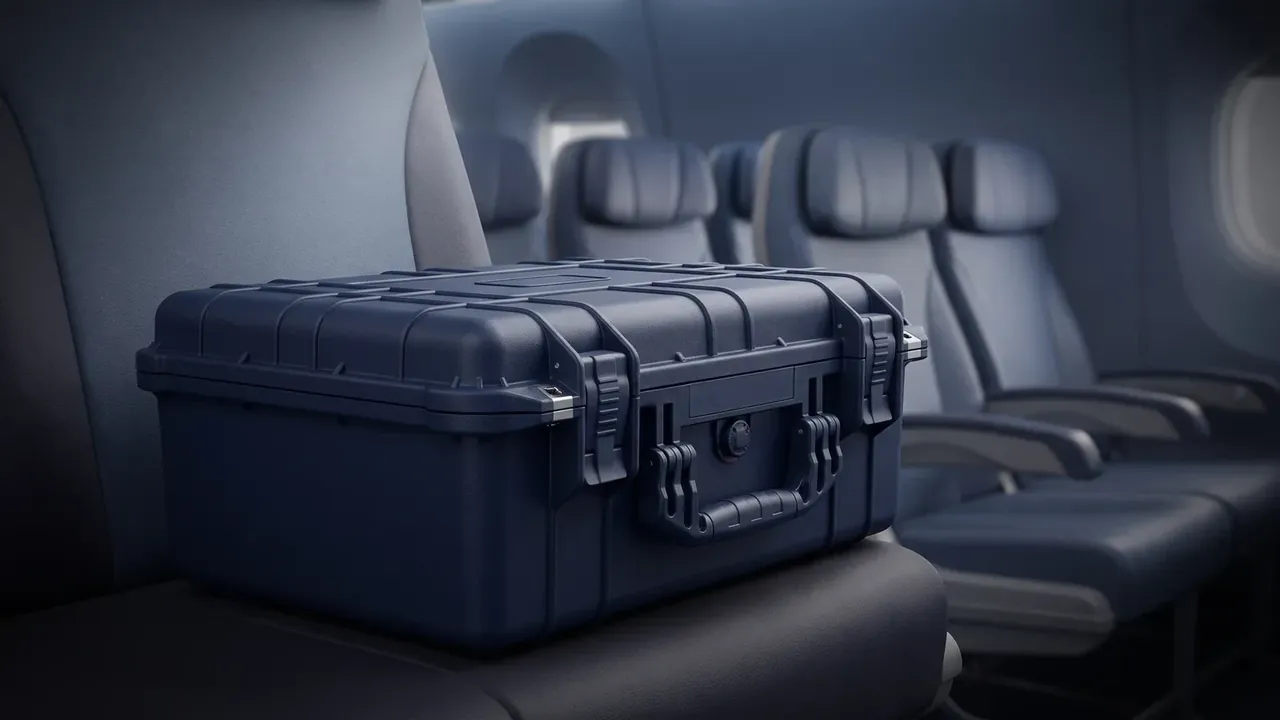
| Item | Clause | Reproducible action | Pass line |
|---|---|---|---|
| Cold operation | MIL-STD-810H 502.7 | Soak 4 hours at -20 °C, work the latches | No crack, no gasket shrink |
| Corner drop | MIL-STD-810H 516.8 | Loaded, 1.2 m, each corner and face | Lid shut, gap under 2 mm |
| Salt fog | MIL-STD-810H 509.7 | 96 hours neutral fog, strip hardware | Rust under 5 percent, latches free |
| Impact | IEC 62262 IK08 | 5 J hammer on the thinnest wall | No puncture or through crack |
Ninety-six hours of salt fog is the dividing line. There the red rust on latch springs and rivets returns to the same spot, the weak point that any plastic case brand inherits until the hardware changes. Cold and drop merge: soak four hours at -20 °C, then run the six-face drop within 3 minutes, while the material is cold and least tough.
5. Folding three checks into one comparison sheet
A comparison sheet is not a scorecard; it is one record produced by one action set. Five columns: item, clause, action, reading, verdict.
- Wall thickness: five points, three samples, record the range;
- Stiffness: 120 kg for 24 hours, gauge base deflection;
- Sealing: IPX7 immersion 30 minutes, check the inner wall;
- Environment: 4 hours at -20 °C, then a 1.2 m six-face drop;
- Salt fog: 96 hours, then strip latches and log rust position and area.
The record must tie to a serial number, so a failure traces to a mould and a shift. After-sales strength of a plastic case brand shows here: a supplier that takes the sheet over has its data connected.
Conclusion
The three check groups answer one question: is deviation in this batch under control. Clauses fix the action, records turn it into evidence, and only the two produce a comparable verdict. Choosing a plastic case brand is not about reputation; it is whether the supplier lets you finish the action set.
This article discusses only the container (case body) side of specifications and design intent, and does not cover any handling, loading or use of the contents.
Related Reading
- Gun case selection guide
- What to check in a showroom visit
- Drone case selection guide
- Military box selection guide
Related Products
- 8 Series — Gun Cases; Military Equipment Cases; Camera Equipment Cases; Drone Cases; Watch Cases; Knife Cases; First Aid Cases; Electronics Equipment Cases
- WL8-2812 PP Gun Case — model WL8-2812
- All protective cases and toolboxes: 7 series, 158 models